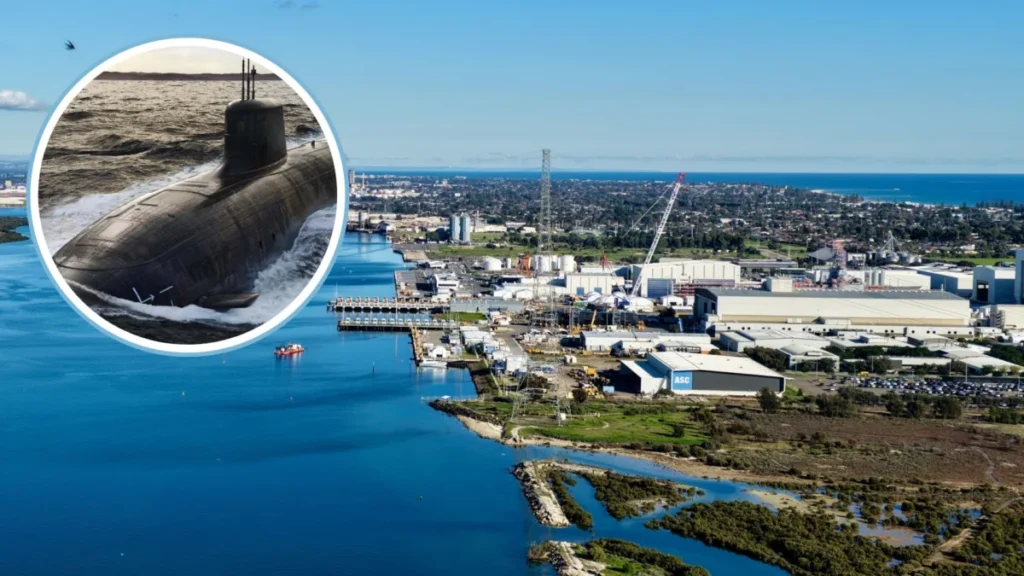
Australia has formally announced the selection of a joint venture between U.S. engineering giant Amentum and the multinational construction firm Laing O’Rourke as its Capability Partner for the development of a pivotal new shipyard. This facility, located at Osborne near Adelaide in South Australia, is earmarked to become the construction hub for Australia’s future fleet of nuclear-powered submarines, known as the SSN-AUKUS class. The partnership, named by Australian Naval Infrastructure (ANI), signifies a concrete step forward in transforming the strategic aspirations of the AUKUS security pact into tangible industrial capacity, anchoring a critical component of the alliance’s long-term vision.
The AUKUS Imperative: A Strategic Shift for Regional Stability
The announcement underscores the rapid progression of the AUKUS security pact, a landmark trilateral agreement forged in September 2021 between Australia, the United Kingdom, and the United States. This alliance was fundamentally established to enhance security and stability in the Indo-Pacific region, primarily through two pillars. Pillar One focuses on the delivery of conventionally armed, nuclear-powered submarines to Australia, while Pillar Two emphasizes collaboration on advanced capabilities such as artificial intelligence, quantum technologies, and undersea capabilities.
Australia’s decision to acquire nuclear-powered submarines represents a monumental shift in its defense strategy, moving away from its long-standing reliance on conventionally powered vessels. The previous plan, which involved acquiring French-designed Attack-class conventional submarines, was controversially scrapped in favor of the AUKUS agreement. This strategic pivot was driven by a recognized need for a more potent and enduring undersea capability to navigate the increasingly complex and contested geopolitical landscape of the Indo-Pacific. Nuclear-powered submarines offer superior speed, stealth, and endurance compared to their conventional counterparts, allowing them to remain submerged for months, cover vast distances without surfacing, and deploy rapidly to critical areas. This enhanced capability is deemed essential for Australia to effectively deter potential adversaries and contribute meaningfully to regional security operations alongside its AUKUS partners.
Osborne’s Transformation: Building a Nuclear Hub
The chosen site at Osborne, already a significant hub for Australian naval construction, is poised for an unprecedented transformation. Australian Naval Infrastructure (ANI), the government entity responsible for delivering the infrastructure required for naval shipbuilding, will integrate the Amentum and Laing O’Rourke team into its Integrated Delivery Office. This long-term arrangement positions the joint venture at the heart of the shipyard’s development, entrusting them with crucial responsibilities that extend far beyond conventional construction management.
Their mandate includes overseeing the complex nuclear-related elements of the program, a task demanding unparalleled expertise in safety, regulatory compliance, and specialized engineering. The team will provide overarching safety leadership, a paramount concern when dealing with nuclear technology, and coordinate an extensive array of work packages. A major challenge will involve meticulously managing the interfaces between nuclear and conventional construction areas, ensuring seamless integration while maintaining stringent safety and security protocols. This dedicated construction site will be Australia’s first for nuclear-powered submarines, necessitating the development of highly specialized infrastructure for every stage of the submarine lifecycle, from assembly and outfitting to rigorous testing and commissioning.
A Partnership Forged in Expertise: Amentum and Laing O’Rourke’s Crucial Roles
The selection of Amentum and Laing O’Rourke reflects a deliberate strategy to harness world-leading expertise for this ambitious national undertaking. Amentum, a U.S. engineering and technical services firm, brings decades of invaluable experience from its involvement in numerous nuclear submarine programs within the United States. Their extensive background encompasses critical areas such as nuclear licensing, compliance with independent regulatory bodies, and the intricate management of nuclear infrastructure projects. This deep institutional knowledge of nuclear operations and safety protocols is indispensable for establishing Australia’s first such facility.
Mark Whitney, president of Amentum Energy & Environment, emphasized the profound significance of the project, describing it as a "defining opportunity for Australia’s nuclear future." He articulated that Amentum has the unique privilege to "be part of a once-in-a-generation national endeavor," an effort poised to shape Australia’s nuclear capability for decades to come. Kim Katheklakis, Amentum Australia’s managing director, further elaborated on the team’s commitment to providing practical leadership throughout the project’s delivery. Their responsibilities will span a broad spectrum, including governance frameworks, logistics optimization, commissioning procedures, and the implementation of cutting-edge digital engineering solutions. Ensuring supply-chain quality and integrity, a critical aspect for nuclear-grade components, will also form a major part of their comprehensive effort.
Laing O’Rourke, with its extensive global experience in delivering large-scale, complex infrastructure projects, complements Amentum’s nuclear specialization. Their expertise in managing vast construction sites, coordinating diverse contractor teams, and implementing robust project management methodologies will be crucial for the physical realization of the shipyard. This joint venture, therefore, combines nuclear systems integration and regulatory compliance with significant heavy civil and industrial construction capabilities, forming a potent combination essential for the success of the Osborne facility.
The SSN-AUKUS Pathway: A Phased Approach and Chronology
The journey to Australia’s first nuclear-powered submarines is a multi-decade, phased undertaking. The initial AUKUS announcement in September 2021 laid the groundwork, signaling the intent for Australia to acquire this capability. In March 2023, the leaders of the AUKUS nations unveiled the detailed pathway for Australia’s acquisition of conventionally armed, nuclear-powered submarines.
This pathway outlines a three-phase approach:
- Phase One (Early 2030s): Australia will initially acquire at least three U.S. Virginia-class nuclear-powered submarines, with the potential for up to five, to establish immediate operational capability and train its crews. Concurrently, Australian sailors will embed with U.S. and UK navies to gain crucial operational experience.
- Phase Two (Late 2030s): The United Kingdom will deliver its first SSN-AUKUS submarines, a new trilateral design drawing on both UK Astute-class and US Virginia-class technology, incorporating advanced capabilities.
- Phase Three (Early 2040s onwards): Australia will commence building its own SSN-AUKUS submarines at the Osborne facility, with the first Australian-built vessel expected to be delivered in the early 2040s. The long-term plan envisions Australia operating a fleet of eight SSN-AUKUS submarines, built and sustained domestically, by the 2050s.
The selection of Amentum and Laing O’Rourke as the Capability Partner for the Osborne shipyard is a critical milestone within this ambitious timeline, shifting the program from strategic planning into the concrete phase of industrial construction. This move ensures that the foundational infrastructure will be in place to support the domestic build phase, which represents the ultimate goal of achieving a sovereign nuclear-powered submarine capability.
Economic Engine and Workforce Development: Investment and Job Creation
The AUKUS submarine program, and specifically the Osborne shipyard project, is projected to be an unprecedented economic engine for Australia. The broader AUKUS effort is estimated to cost Australia approximately AU$368 billion (approximately US$245 billion) over the next three decades, making it the largest single defense investment in the nation’s history. A substantial portion of this investment will be directed towards establishing and sustaining the industrial base in South Australia.
The Australian government anticipates that the broader AUKUS effort will create thousands of highly skilled jobs, particularly in South Australia. Estimates suggest the program could generate up to 20,000 direct jobs across the defense industry and supporting sectors over its lifespan, with a significant concentration in advanced manufacturing, engineering, and highly specialized trades. The Osborne precinct, already a major center for Australian naval construction with ongoing projects like the Hunter-class frigates, will significantly expand its role and workforce. This includes positions in project management, nuclear engineering, safety regulation, construction, and supply chain logistics. The economic benefits are expected to ripple through the local and national economies, fostering growth in related industries and developing a highly skilled workforce that will serve Australia for generations.
Navigating Nuclear Complexities: Safety, Regulation, and Non-Proliferation
The establishment of a nuclear-powered submarine construction facility in Australia introduces a myriad of technical and regulatory complexities that extend far beyond conventional shipyard construction. Foremost among these is the imperative to establish and maintain an uncompromising safety culture and a robust regulatory framework. Amentum and Laing O’Rourke’s role will involve helping establish the necessary systems and processes to manage what is arguably one of Australia’s most technically demanding defense programs. This includes developing specialized supply chains capable of delivering nuclear-grade components and materials, ensuring their quality and traceability.
Australia’s commitment to the Nuclear Non-Proliferation Treaty (NPT) and its international obligations under the International Atomic Energy Agency (IAEA) are central to the AUKUS agreement. The SSN-AUKUS submarines will be conventionally armed, meaning they will not carry nuclear weapons. This distinction is critical for Australia to uphold its non-proliferation commitments while still acquiring nuclear propulsion technology. The IAEA will play a vital oversight role, developing enhanced safeguards to ensure that nuclear material used in the submarines is not diverted for weapons purposes. The Osborne shipyard will therefore need to operate under the strictest international nuclear safety and security standards, ensuring complete transparency and accountability. Developing domestic regulatory expertise to manage these complex requirements will be a significant undertaking, requiring collaboration with U.S. and UK nuclear authorities.
Global Strategic Implications and Regional Dynamics
For the United States, a successful Australian submarine industry, anchored by facilities like Osborne, is seen as a crucial step towards strengthening allied capacity in a strategically vital region. It deepens industrial links among the three AUKUS partners, fostering greater interoperability and resilience across their defense supply chains. This shared industrial base enhances the collective ability of the AUKUS nations to project power and maintain a stable balance in the Indo-Pacific, a region experiencing heightened geopolitical competition, particularly from China. The new Australian shipyard could eventually become another important industrial node supporting allied submarine operations across the Indo-Pacific, providing maintenance and sustainment capabilities for U.S. and UK nuclear submarines operating in the region.
The AUKUS pact and the associated submarine program have garnered mixed reactions internationally. While welcomed by allies such as Japan and South Korea, who see it as a bolster to regional security, it has drawn strong criticism from China, which views the alliance as destabilizing and a proliferation risk. Some ASEAN nations have expressed concerns about an escalating arms race in the region, while others have adopted a more cautious wait-and-see approach. Australia’s unwavering commitment to non-proliferation and transparent engagement with the IAEA is vital for addressing these regional concerns and maintaining international confidence.
A Decades-Long Endeavor: The Road Ahead
The Osborne shipyard project now transitions into a critical phase where engineering precision, construction efficiency, and comprehensive workforce development will carry as much importance as the initial diplomatic achievements of AUKUS. Developing the industrial capacity for nuclear-powered submarines requires far more than constructing buildings; it necessitates the establishment of a generational skilled workforce, capable of supporting nuclear submarine construction and sustainment over several decades. This includes specialized training programs, educational pathways, and a long-term commitment to nurturing expertise in nuclear science, engineering, and manufacturing.
Australia has unequivocally committed to building a sovereign nuclear-powered submarine capability, a testament to its strategic foresight and long-term defense planning. Amentum and Laing O’Rourke, through their joint venture, now bear a significant responsibility in creating the robust industrial foundation required to transform this ambitious national goal into a tangible reality. Their work at Osborne will not only deliver a state-of-the-art shipyard but also contribute to shaping Australia’s future as a key player in Indo-Pacific security, bolstering the AUKUS alliance, and setting new benchmarks for complex defense infrastructure projects globally. This endeavor represents a profound investment in Australia’s future security, technological prowess, and economic prosperity for decades to come.