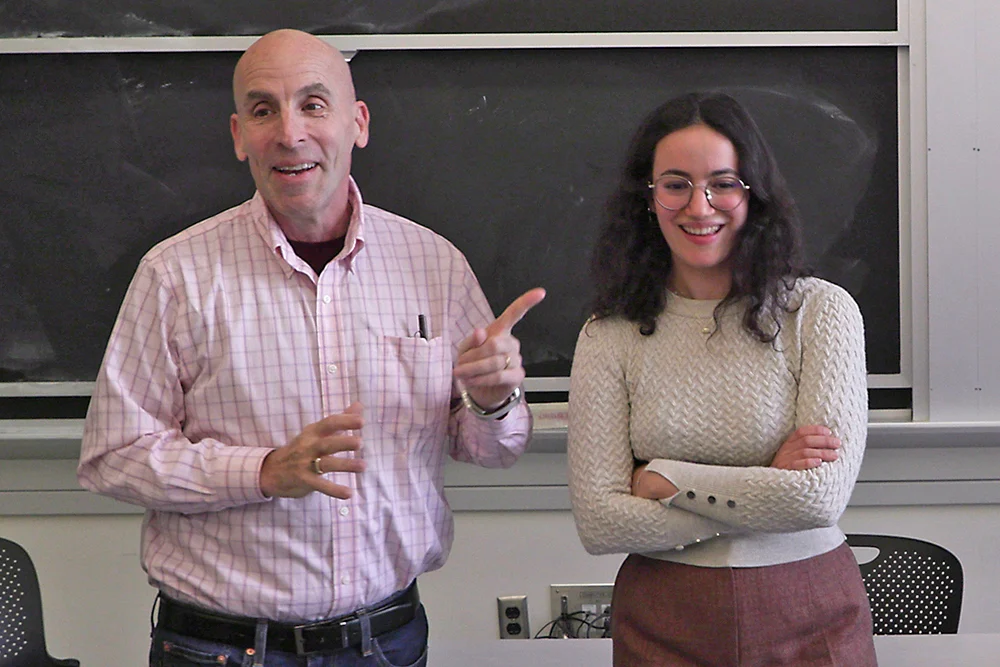
The Massachusetts Institute of Technology’s (MIT) Department of Mechanical Engineering (MechE) has launched a groundbreaking educational initiative, the "Founder’s Journey" course, designed to immerse students in the intricate realities of launching and scaling hardware startups. This pioneering program, which commenced in Spring 2025, leverages the unparalleled entrepreneurial wisdom of MIT’s vast alumni network, connecting aspiring innovators directly with the luminaries who have successfully navigated the challenging landscape of high-tech venture creation. The course, officially designated 2.S977/2.S979, specifically targets the unique complexities inherent in hardware development, from conceptualization and fundraising to supply chain management and global market penetration.
Fostering a Culture of Innovation: MIT’s Enduring Legacy
MIT has long stood as a global beacon of innovation, a crucible where groundbreaking research transforms into tangible solutions that reshape industries and daily life. The institution’s commitment to hands-on learning, interdisciplinary collaboration, and a relentless pursuit of knowledge has organically cultivated an environment ripe for entrepreneurship. This rich legacy is underscored by impressive statistics: a 2015 report on MIT’s global entrepreneurial impact revealed that over 30,000 active companies founded by MIT alumni worldwide collectively employ some 4.6 million people. This economic footprint rivals that of many nations, demonstrating the profound societal and economic contributions stemming from the institute’s ecosystem.
The "Founder’s Journey" class represents a strategic enhancement of this already robust entrepreneurial culture within the Mechanical Engineering department. John Hart, the Class of 1922 Professor and head of MechE, articulated the program’s vision: “There are so many amazing entrepreneurial stories among our alumni. We want to bring those stories to our students and our community and build networks with our incredible alumni founders. Through the Founder’s Journey class and other new programs, we want to cultivate interest in entrepreneurship among our students and expand opportunities to bring MechE-born technologies to the world.” This statement highlights a dual objective: inspiring the next generation of founders and accelerating the commercialization of cutting-edge mechanical engineering research.
The Genesis of "Founder’s Journey": A Collaborative Vision
The idea for the "Founder’s Journey" course germinated from a recognized need to provide a structured, yet authentic, learning experience for students interested in entrepreneurship, particularly in the hardware sector. While theoretical knowledge is abundant, the practical, often messy, realities of startup life are best learned from those who have lived them. The course was co-developed and co-led by Ken Zolot, a senior lecturer at MIT known for his expertise in entrepreneurship education, and Marina Hatsopoulos SM ’93, the founding CEO of Z Corp., an early pioneer in the 3D printing market.
Hatsopoulos emphasized the practical wisdom the course aims to impart: “So much of this has been done before. I want them to understand that this is a well-trod path.” This perspective is crucial for demystifying the entrepreneurial process, showing students that while innovation is key, the fundamental challenges and strategies for overcoming them often follow recurring patterns. By learning from the successes and failures of predecessors, students can gain invaluable foresight, avoid common pitfalls, and approach their ventures with greater confidence and strategic clarity.
Curriculum Unpacked: Navigating Hardware Startup Challenges
The "Founder’s Journey" curriculum is meticulously structured to mirror the lifecycle of a hardware startup, focusing on real-life challenges from inception to scale. Each week of the semester-long course is dedicated to a critical aspect of startup development, presented by the instructors and augmented by insights from a rotating roster of accomplished alumni guest speakers. These sessions cover a comprehensive array of topics essential for hardware ventures, including:
- Ideation and Product-Market Fit: Identifying unmet needs and developing innovative solutions that resonate with target customers.
- Team Building and Leadership: Assembling a capable and cohesive team, fostering a strong company culture, and leading through uncertainty.
- Intellectual Property and Legal Foundations: Protecting innovations, navigating patent landscapes, and establishing a solid legal framework.
- Fundraising Strategies: Understanding different funding rounds (seed, Series A, B, etc.), engaging with venture capitalists, and mastering the art of the pitch.
- Prototyping and Product Development: Iterative design, rapid prototyping, and moving from concept to minimum viable product (MVP).
- Supply Chain Management and Manufacturing: Sourcing components, establishing manufacturing partnerships, scaling production, and managing logistics – particularly complex for hardware.
- Marketing and Sales: Developing go-to-market strategies, building brand recognition, and acquiring customers.
- Scaling and Growth: Expanding operations, entering new markets, and managing rapid growth while maintaining quality and vision.
- Exit Strategies: Understanding acquisition pathways, IPOs, and other long-term visions for a successful venture.
The guest speakers, founders of companies spanning robotics, energy, 3D printing, consumer products, and other frontier technologies, bring these theoretical concepts to life through personal anecdotes, case studies, and candid discussions about their triumphs and setbacks. Students actively engage by preparing questions for these speakers and participating in follow-on discussions and reflective exercises, transforming passive listening into an interactive learning experience. This approach aims to "find and activate their entrepreneurial energy," challenging students to apply critical thinking to real-world scenarios.
A Galaxy of Alumni Founders: Inspiring the Next Generation
The course’s most distinctive feature is its direct access to an unparalleled lineup of MIT alumni, each a titan in their respective fields. John Hart himself, co-founder of VulcanForms – a company born from his collaboration with fellow co-founder Martin Feldmann MEng ’14 – shared his journey, emphasizing the profound impact of academic research translating into industrial innovation. The impressive roster of guest speakers includes:
-
Colin Angle ’89, SM ’91, co-founder of iRobot: A pioneer in consumer robotics, Angle articulated an early passion for building, stating, “This idea that you can create something from nothing, that you can have an idea and not just draw it, but build it and make it real, is something I’ve always loved.” Angle recounted starting iRobot in his living room with a grand vision: “We’re supposed to have robots. So, if not us, who? And if not now, when?” iRobot, now globally recognized for the Roomba autonomous vacuum cleaner, also developed the PackBot tactical mobile robot, saving thousands of lives in Afghanistan, and explored the Great Pyramid in Giza. Angle’s journey exemplifies the power of conviction and the ability to scale a company from a grand vision into a multi-faceted enterprise that touches both consumer markets and critical defense applications. The global robotics market, projected to reach over $70 billion by 2027, owes much of its consumer adoption to companies like iRobot.
-
Elise Strobach SM ’17, PhD ’20, CEO and co-founder of AeroShield: Strobach’s journey began in Professor Evelyn Wang’s lab, where her PhD research led to the development of transparent silica aerogels – a super-insulating material. Co-founding AeroShield Materials with Kyle Wilke PhD ’19 and Aaron Baskerville-Bridges SM ’20, MBA ’20, she found the freedom to pursue impactful solutions. “We have the freedom to find the best problem to solve and to continue to seek the best way to solve that problem.” Traditionally, aerogels had a hazy blue tint, limiting their widespread use. AeroShield’s breakthrough was creating a completely see-through material, opening new applications in energy-efficient windows, a critical need in the context of global climate change and building energy consumption. Her company’s achievement of having their work displayed at the Smithsonian National Air and Space Museum underscores the significant impact of their material science innovation. Strobach’s advice, “You don’t have to know everything to start. You just have to know that this is what you want to do and just get started,” resonates with many aspiring entrepreneurs facing the daunting unknown.
-
Maxim Lobovsky SM ’11, CEO and co-founder of Formlabs: Lobovsky’s entrepreneurial path in 3D printing began even before his time at the MIT Media Lab. With fellow graduates David Cranor SM ’11 and Natan Linder SM ’11, he founded Formlabs, aiming to democratize professional-level 3D printing by drastically reducing costs and improving usability. At a time when industrial 3D printers cost upwards of $100,000, Formlabs introduced a product starting around $3,000. Lobovsky described their approach as a "classic, disruptive innovation path," achieved through clever engineering and leveraging modern consumer electronics components like Blu-ray laser diodes. His story also includes a serendipitous twist: after a challenging initial fundraising period, an overheard conversation at a restaurant led to Mitch Kapor, founder of Lotus Software, leading their first funding round. Today, Formlabs is the largest supplier of professional stereolithography and selective laser sintering 3D printers globally, a testament to their disruptive vision in a market projected to exceed $50 billion by 2030.
-
Jon Hirschtick ’83, SM ’83, co-founder of SolidWorks and Onshape: Hirschtick, a veteran in computer-aided design (CAD) software, articulated his attraction to startups early on: “a sense of being able to realize your vision, express yourself; a sense of excitement, of making money, and even the idea of a chaotic environment.” Having built CAD software for over four decades, he views CAD as a "meta product design," creating tools that others use to design virtually every manufactured product today. His ventures, SolidWorks (acquired by Dassault Systèmes) and Onshape (acquired by PTC), have revolutionized product development, moving from desktop-based solutions to cloud-native platforms. Hirschtick’s candid reflection, “Visions and hallucinations, they look and feel the same. You only find out which is which once you really try to realize them,” serves as a powerful reminder of the inherent risks and uncertainties of entrepreneurship, emphasizing the courage and resilience required. The CAD software market alone is a multi-billion dollar industry, foundational to modern engineering and manufacturing.
Other notable alumni speakers included Mick Mountz (Kiva Systems, acquired by Amazon, revolutionizing warehouse automation), Greg Mark (Markforged, a leader in industrial 3D printing), Eran Egozy (Harmonix, co-creator of popular music rhythm games like Guitar Hero and Rock Band), Renuka Babu (DOTS Technology), Davide Marini (Inkbit), Loewen Cavill (Amira), and Seemantini Nadkarni (Coalesenz). These diverse backgrounds demonstrate the breadth of entrepreneurial opportunities stemming from MechE, encompassing hardware, software, and deep technology.
Broader Impact and Implications for MIT and Beyond
The "Founder’s Journey" course is more than just an academic offering; it’s a strategic investment in MIT’s future and its role in global innovation. Its implications are far-reaching:
- Empowering Student Innovators: By providing direct exposure to successful founders and the realities of startup life, the course equips students with practical knowledge, mentorship opportunities, and a realistic understanding of the entrepreneurial path. This demystifies the process, reduces apprehension, and fosters a proactive, problem-solving mindset. Students learn that even seasoned founders faced numerous hurdles, normalizing challenges and building resilience.
- Strengthening Alumni Networks: The program creates a formal bridge between current students and the vast, influential network of MIT alumni entrepreneurs. This strengthens institutional ties, facilitates mentorship, and opens doors for future collaborations, internships, and funding opportunities. It reinforces the idea of the "MIT family" extending throughout the global innovation ecosystem.
- Accelerating Technology Transfer: By specifically focusing on MechE-born technologies, the course acts as a catalyst for translating groundbreaking research from laboratories into market-ready products. This aligns with MIT’s mission to serve the nation and the world by bringing scientific and technological advancements to bear on critical societal challenges, from energy efficiency to advanced manufacturing and robotics.
- Reinforcing MIT’s Leadership: In an increasingly competitive global landscape for talent and innovation, programs like "Founder’s Journey" bolster MIT’s reputation as a premier institution for entrepreneurship. It attracts ambitious students passionate about creating impact and positions MIT at the forefront of educating the next generation of industry leaders and disruptors.
- Economic and Societal Contributions: The continued cultivation of hardware startups has significant economic implications. Hardware ventures often create high-value jobs, stimulate manufacturing, and address tangible global needs in sectors like climate tech, healthcare, and infrastructure. By supporting these capital-intensive and often complex ventures, MIT contributes directly to economic growth and societal progress.
The launch of the "Founder’s Journey" class in Spring 2025 marks a significant milestone for MIT’s Department of Mechanical Engineering. It embodies a proactive approach to entrepreneurial education, moving beyond theoretical frameworks to provide an immersive, experience-driven learning environment. By harnessing the collective wisdom and inspirational stories of its distinguished alumni, MIT is not just teaching entrepreneurship; it is actively shaping the future generation of innovators who will undoubtedly continue to build bigger things, create inventions previously thought impossible, and bring MechE-born technologies to the world.
A version of this story appears in the 2026 issue of MechE Connects, the Department of Mechanical Engineering’s magazine.






