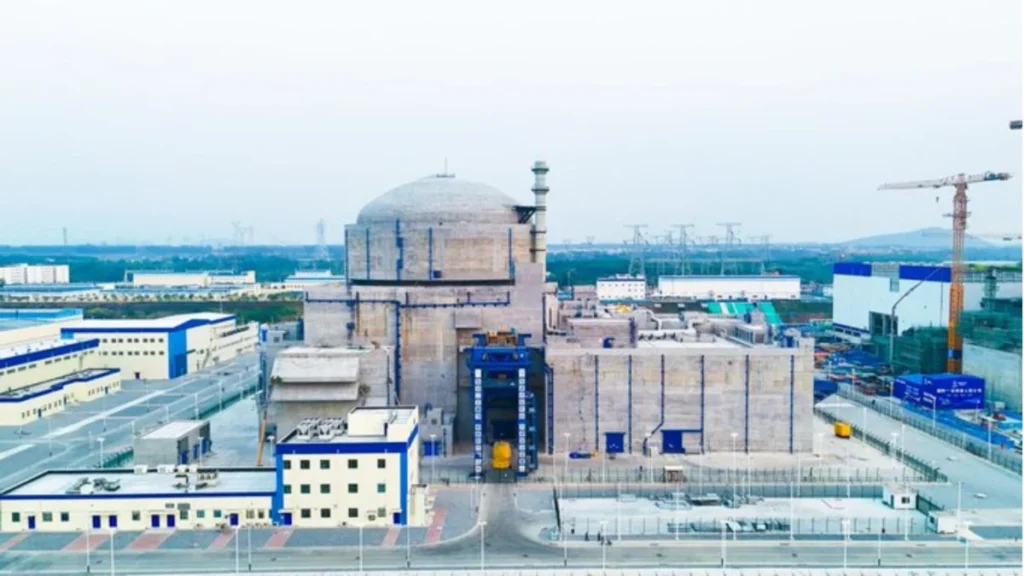
The indigenously developed Hualong One nuclear reactor has achieved a significant milestone, connecting to the grid for the first time in China’s southern Hainan province. This crucial step precedes its full commercial operation, underscoring China’s unwavering commitment to its ambitious net-zero targets by 2060. The reactor, a testament to advanced engineering, boasts state-of-the-art safety features and sophisticated digital management systems, positioning it as a cornerstone in the nation’s strategy to supply carbon-free energy on a grand scale. This development is not merely a regional achievement but a powerful statement on China’s consistent pursuit of climate goals, particularly when contrasted with the fluctuating climate commitments of some developed nations.
China’s Unwavering Climate Stance Amidst Global Shifts
While the global landscape of climate action has seen varied approaches, with nations like the United States exhibiting periods of withdrawal from international accords such as the Paris Agreement, China has remained steadfast in its commitments. The Asian giant has set an ambitious target to achieve peak carbon emissions by 2030 and carbon neutrality by 2060, a decade after the 2050 deadline often adopted by developed economies like the US and the UK. This long-term vision is being aggressively pursued through a multi-faceted energy strategy that combines extensive investment in renewable energy sources with a robust expansion of its nuclear power capacity. The recent grid connection of the Hualong One reactor in Hainan exemplifies this dual approach, highlighting the nation’s resolve to meet its escalating energy demands without compromising its environmental objectives.
The contrast in climate policy is stark. While the United Kingdom has recently contemplated new oil and gas drilling licenses in the North Sea, potentially pushing back its own climate targets, and the United States has navigated periods of policy reversals regarding environmental regulations, China’s consistent investment in large-scale clean energy projects, including nuclear power, stands as a beacon of hope for countries most vulnerable to the impacts of climate change. This steadfast approach demonstrates a clear understanding that comprehensive decarbonization requires diverse, reliable, and high-capacity clean energy sources to complement intermittent renewables.
The Hualong One: A Technological Deep Dive into Next-Generation Nuclear Power
The Hualong One reactor, designated as a Generation III pressurized water reactor (PWR), represents a significant leap forward in nuclear power technology. It was jointly developed by two of China’s leading nuclear power entities, the China General Nuclear Power Group (CGN) and the China National Nuclear Corporation (CNNC), consolidating indigenous expertise and fostering national technological self-reliance. This reactor design incorporates several advanced features that elevate its safety, efficiency, and operational robustness, distinguishing it from earlier generations of nuclear power plants.
One of its most notable safety innovations is the implementation of a double containment shell for radioactive material. The inner containment shell is constructed from 4.26 feet (1.3 meters) of reinforced concrete, meticulously lined with a six-millimeter steel plate. This robust inner barrier is designed to contain radioactive materials effectively in the unlikely event of an internal incident. Complementing this is an outer shell, nearly six feet (1.8 meters) thick, crafted from high-strength concrete. This formidable external structure provides critical protection against external physical attacks, including aircraft impacts, and safeguards the reactor from extreme natural events, thereby significantly enhancing overall plant resilience and public safety.
Beyond passive physical barriers, the Hualong One integrates an advanced passive emergency cooling system, a critical safety enhancement. This system is engineered to activate autonomously during an emergency, even in scenarios where there is a complete loss of power supply or human supervisory control. It operates on a principle of gravity feed, drawing water from a massive storage tank capable of holding up to 2,645 US tons (2,400 tonnes) of water. Once activated, this stored water can continuously cool the reactor core for up to 72 hours, providing operators with an extended window of time to diagnose the situation, implement corrective actions, and restore normal operations without immediate panic or critical meltdown risks. This 72-hour grace period is a significant improvement over previous reactor designs, offering unparalleled levels of accident mitigation capability.
Furthermore, the Hualong One leverages cutting-edge digital management systems, developed entirely in-house, to ensure optimal operational efficiency and security throughout its lifecycle. These systems integrate advanced technologies such as high-definition video surveillance, robust 5G communications for real-time data transmission, and artificial intelligence (AI) algorithms. AI-driven analytics enhance predictive maintenance capabilities, anomaly detection, and operational optimization, reducing human error and improving overall plant reliability. This comprehensive digital ecosystem allows for continuous, precise monitoring of the reactor and the entire power plant, setting a new benchmark for smart nuclear facility management. Each Hualong One nuclear reactor, once fully operational, is designed to produce a gross electric power output ranging from approximately 1,170 to 1,200 megawatts, contributing substantially to regional grid stability and energy supply.
A Chronology of Hualong One’s Ascent and Deployment
The grid connection in Hainan marks another significant chapter in the Hualong One’s journey, but it is not its inaugural connection. The very first Hualong One reactor, Fuqing Unit 5 in China’s Fujian province, achieved its initial grid connection in November 2020, followed by commercial operation in January 2021. This seminal event established Hualong One as the world’s first Generation III nuclear reactor to be fully operational, showcasing China’s capability to design, construct, and operate advanced nuclear power technology independently. Since then, additional Hualong One units have come online domestically, steadily contributing to China’s clean energy portfolio.
Beyond its borders, the Hualong One has also made its mark on the international stage. Pakistan’s Karachi Nuclear Power Plant Unit 2 (K-2) and Unit 3 (K-3) are both Hualong One reactors, achieving commercial operation in 2021 and 2022, respectively. These international projects underscore the design’s competitiveness and China’s growing influence as an exporter of advanced nuclear technology, offering a reliable, safe, and efficient option for nations seeking to decarbonize their energy sectors. The successful deployment in Pakistan demonstrates the Hualong One’s adaptability to diverse regulatory and operational environments, further solidifying its global reputation.
The current grid connection event specifically refers to Unit 3 of the Phase II Changjiang Nuclear Power Plant in Hainan. This plant is a critical component of Hainan’s energy infrastructure, with Phase I already comprising operational reactors. The integration of Hualong One Unit 3 into the grid initiates an extensive commissioning phase, involving rigorous efficiency and performance testing to ensure it meets all design specifications and safety standards before full commercial operation. This meticulous process is standard for all new nuclear reactors, ensuring maximum reliability and safety before they commence contributing to the national grid.
Hainan’s Green Energy Future and Broader National Implications
The Changjiang Nuclear Power Plant’s Phase II is set to host not one, but two 1.2 gigawatt (GW) Hualong One reactors. Once both Unit 3 and the subsequent Unit 4 are fully operational, this second phase of the power plant is projected to generate an impressive 18 billion kilowatt-hours (kWh) of electricity annually. The environmental benefits of this colossal output are substantial. It is estimated that this clean energy generation will prevent the burning of approximately 6.3 million tonnes of coal each year, a massive reduction in fossil fuel consumption. Consequently, it will also avert the release of an astounding 11.6 million tonnes of carbon dioxide into the atmosphere annually.
These figures are directly in line with Hainan province’s ambitious long-term climate strategy, which mirrors and reinforces the national goals. Hainan aims to achieve its peak emissions by 2030, followed by an aggressive reduction of its emissions by as much as 75 percent within the next 15 years, targeting 2045. Ultimately, the province is committed to achieving full carbon neutrality by 2060. For an island province like Hainan, which relies heavily on its pristine natural environment for tourism and sustainable development, a low-carbon footprint is not just an environmental imperative but also an economic necessity. The strategic deployment of advanced nuclear power is therefore a critical component of Hainan’s comprehensive decarbonization roadmap, providing stable, baseload power that complements its growing renewable energy capacity.
Nationally, China has been meticulously crafting similar region-specific carbon neutrality goals, recognizing the diverse energy landscapes and economic structures across its vast territory. These localized strategies are designed to collectively contribute to the overarching country-wide goal of achieving carbon neutrality by 2060. The robust expansion of nuclear power, alongside unprecedented investments in solar, wind, and hydropower, forms the bedrock of this national energy transition. As the world’s largest energy consumer and carbon emitter, China’s success in decarbonizing its economy has profound implications for global climate efforts.
China’s Holistic Energy Transition Strategy and Global Leadership
China’s approach to energy transition is characterized by a pragmatic and comprehensive strategy that acknowledges the immense scale of its energy demands. It is not solely reliant on nuclear power; rather, nuclear energy is a critical component of a broader strategy that also involves the aggressive rollout of large-scale renewable energy infrastructure. China has become a global leader in renewable energy deployment, consistently adding more solar and wind power capacity than any other nation. However, the intermittent nature of renewables necessitates a stable, baseload power source to ensure grid reliability, and this is where nuclear energy plays an indispensable role.
The development and deployment of the Hualong One reactor, therefore, are not isolated events but integral parts of a meticulously planned national energy strategy aimed at enhancing energy security, reducing reliance on fossil fuel imports, and achieving stringent environmental targets. By investing heavily in indigenous nuclear technology, China is not only securing its future energy supply but also positioning itself as a key player in the global nuclear energy market. This leadership is particularly relevant as many countries worldwide are revisiting nuclear power as a viable and essential component of their decarbonization strategies, recognizing its capacity to provide continuous, low-carbon electricity.
Statements from Chinese officials consistently underscore the national pride associated with the Hualong One’s indigenous development and its contribution to global climate action. They highlight the rigorous safety standards and advanced technological capabilities of the reactor, aiming to build public trust and confidence in nuclear power. International energy analysts frequently note that China’s sustained commitment to nuclear power development, coupled with its massive investments in renewables, demonstrates a serious and effective approach to addressing climate change at a scale unmatched by most other nations. This proactive stance serves as a powerful example of how a rapidly developing economy can balance growth with environmental stewardship.
Looking Forward: The Future of Nuclear in China and Beyond
The successful grid connection of the Hualong One reactor in Hainan signals a promising trajectory for China’s energy future. With multiple Hualong One units under construction or planned across various provinces, the technology is set to become a dominant force in the country’s clean energy mix. China’s nuclear ambitions extend beyond the Hualong One, with ongoing research and development into even more advanced reactor designs, including small modular reactors (SMRs) and Generation IV technologies, which promise enhanced safety, efficiency, and waste management solutions.
While nuclear power presents challenges, such as high initial capital costs, long construction lead times, and the perennial issue of radioactive waste management, its advantages as a reliable, high-density, and carbon-free energy source are increasingly recognized globally. China’s continued investment and innovation in this sector are paving the way for a more diversified and sustainable energy landscape, both domestically and potentially across the Belt and Road Initiative nations where Chinese nuclear technology could play a transformative role. The Hualong One’s latest milestone in Hainan is thus more than just an engineering achievement; it is a reaffirmation of China’s unwavering commitment to a carbon-neutral future and its growing influence in shaping the global energy transition.