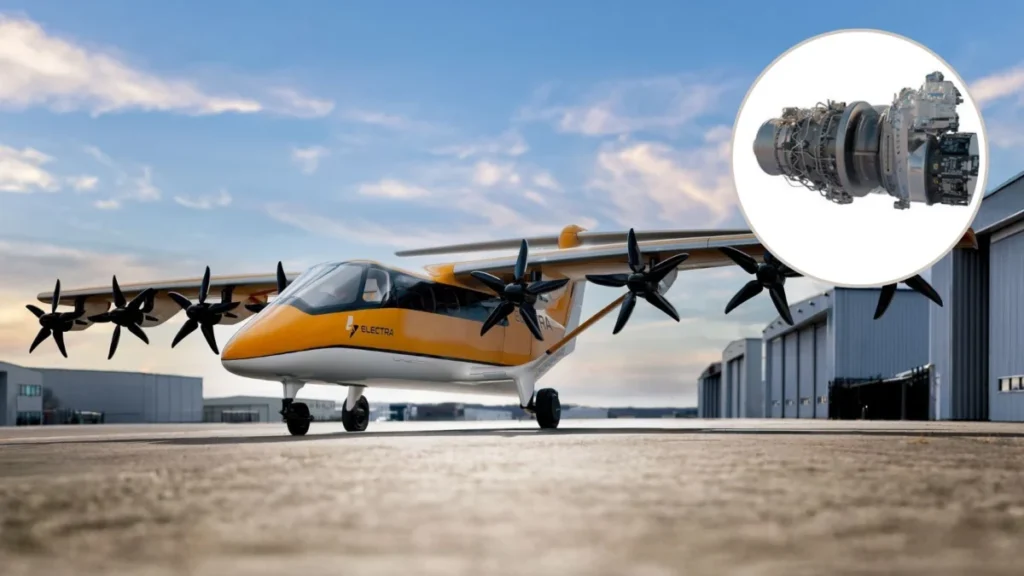
Electra, the innovative Virginia-based aircraft developer, has announced a landmark production agreement with Safran Helicopter Engines, designating the French aerospace giant as the exclusive supplier for the turbogenerator powering its EL9 Ultra Short aircraft. This pivotal deal, set to span the entire life of the EL9 program, solidifies a crucial propulsion partnership as Electra rapidly advances towards Federal Aviation Administration (FAA) certification and a targeted commercial service launch by 2030. The initial commitment under the agreement includes an order for 250 TG600 turbogenerators, with Electra anticipating a significant increase in production volumes to meet projected demand for its groundbreaking hybrid-electric aircraft. The EL9 is engineered to redefine regional air travel by operating from landing areas as short as 150 feet, a capability poised to unlock air access to locations traditionally unable to support conventional commercial aircraft operations.
This long-term partnership underscores a significant strategic alignment between Electra’s ambitious vision for "Direct Aviation" and Safran’s established expertise in high-performance aerospace propulsion and emerging hybrid-electric technologies. For Electra, securing a world-class engine manufacturer like Safran provides not only robust and reliable hardware but also invaluable technical support and certification experience. For Safran, the agreement formally inaugurates its turbogenerator business, marking a strategic diversification into the burgeoning market for hybrid-electric propulsion systems critical for the next generation of sustainable aviation. The collaboration is a testament to the aerospace industry’s accelerating pivot towards more environmentally friendly and operationally flexible aircraft solutions.
Unveiling the TG600 Turbogenerator: A Hybrid Powerhouse
At the heart of the EL9’s innovative propulsion system lies Safran’s TG600 turbogenerator, a meticulously engineered unit designed to deliver 600 kilowatts of electrical power. This output is central to the EL9’s hybrid-electric architecture, providing the necessary energy for its electric motors and onboard systems. The TG600 leverages a proven foundation, drawing heavily on the design and technological advancements of Safran’s Arrano helicopter engine. The Arrano, which powers Airbus Helicopters’ H160, is renowned for its efficiency, boasting an 18% improvement in fuel consumption compared to previous-generation engines in its class. This lineage ensures that the TG600 benefits from a robust, flight-proven core, adapted for the specific demands of generating continuous electrical power.
Beyond its turbine core, the TG600 seamlessly integrates two GENeUS electric generators, developed by Safran Electrical & Power, a subsidiary specializing in electrical systems for aircraft. This combination showcases Safran’s holistic approach to hybrid-electric propulsion, bringing together mechanical and electrical expertise within a single, optimized package. The development of the TG600 has progressed rapidly, with Safran successfully completing the first bench test of the flight-ready turbogenerator at its facility in Bordes, France, earlier this month. This critical milestone validated the system’s performance and reliability under simulated operational conditions, paving the way for its integration into the EL9. The hardware tested in Bordes is slated for use during the EL9’s initial flight-test campaign, underscoring the advanced stage of its development and readiness for real-world application.
The choice of a turbogenerator system for the EL9 is a pragmatic decision for an aircraft of its intended size, range, and mission profile. While purely electric aircraft are gaining traction for shorter urban air mobility routes, the turbogenerator offers a crucial advantage in extending range and payload capacity, overcoming the current limitations of battery energy density. By using a highly efficient turbine to generate electricity on demand for electric propulsors, the EL9 can achieve significantly longer mission profiles than a pure battery-electric aircraft, while still benefiting from reduced emissions, lower noise, and enhanced operational flexibility inherent in electric propulsion.
Electra’s Vision: Redefining Regional Air Mobility with "Direct Aviation"
Electra’s EL9 is not merely an aircraft; it represents a paradigm shift in regional transportation, encapsulated by the company’s concept of "Direct Aviation." Unlike conventional regional aircraft that necessitate long runways and rely on large, congested airport hubs, the EL9 employs a sophisticated blend of hybrid-electric propulsion and "blown-lift" technology to achieve its remarkable Ultra Short Takeoff and Landing (USTOL) capabilities. Blown-lift technology involves directing the slipstream from the aircraft’s propellers over the wings and flaps, significantly increasing lift at low airspeeds. This aerodynamic enhancement allows the EL9 to operate effectively from runways as short as 150 feet – a fraction of the distance required by typical regional jets or even turboprops.
This exceptional STOL capability has profound implications for regional connectivity. It opens up access to thousands of smaller airfields, general aviation airports, and even temporary landing strips that are currently inaccessible to commercial air service. By flying directly to and from locations closer to population centers and ultimate destinations, the EL9 promises to drastically reduce overall travel times, eliminate the need for lengthy ground commutes to major airports, and bypass the delays associated with navigating large air traffic hubs. For communities currently underserved by commercial airlines, "Direct Aviation" offers a lifeline, potentially stimulating economic development, improving access to healthcare, and enhancing social connectivity. The convenience of flying closer to one’s origin and destination could fundamentally reshape regional travel patterns, making air travel a viable and attractive option for shorter trips where it currently is not.
A Strategic Leap for Safran: Expanding into New Propulsion Frontiers
For Safran, this agreement with Electra marks a significant strategic entry into the rapidly evolving turbogenerator market. Cédric Goubet, CEO of Safran Helicopter Engines, emphasized this point, stating that the contract formally launches the company’s turbogenerator business. This move is indicative of a broader industry trend where traditional aerospace manufacturers are adapting their core competencies to meet the demands of sustainable and advanced air mobility. Safran’s deep heritage in gas turbine engines, exemplified by the Arrano, combined with its burgeoning expertise in electrical power generation through Safran Electrical & Power, positions it uniquely to capitalize on this emerging segment.
Goubet highlighted the synergy created by combining Safran’s world-class engine technology with its advanced electrical systems expertise. This integrated approach allows Safran to develop a comprehensive propulsion package that is precisely tailored to the specific performance goals and operational requirements of the EL9. By offering a complete turbogenerator solution, Safran is not just supplying components but providing an optimized, high-performance system that can be seamlessly integrated into Electra’s innovative airframe. This holistic strategy is likely to set a precedent for future collaborations in the hybrid-electric aviation space, demonstrating how established players can pivot and innovate to remain at the forefront of aerospace technology.
Navigating the Certification Pathway and Development Timeline
The journey from concept to commercial service for a novel aircraft like the EL9 is complex, requiring rigorous testing and adherence to stringent regulatory standards. Electra is actively pursuing FAA certification under Part 23 regulations. Part 23 of the Federal Aviation Regulations governs the airworthiness standards for normal, utility, acrobatic, and commuter category aircraft, typically covering aircraft up to 19,000 lbs maximum takeoff weight and 19 seats. While historically applied to conventional aircraft, the FAA has developed pathways, such as performance-based regulations and special conditions, to accommodate the certification of innovative designs like hybrid-electric and STOL aircraft. Electra’s ongoing work with the FAA under this framework is a critical step, establishing the certification basis that will guide the subsequent design, testing, and manufacturing processes.
The development timeline for the EL9 is ambitious yet achievable, reflecting the accelerated pace of innovation in the advanced air mobility sector. Electra projects the aircraft’s first flight to occur in late 2027 or early 2028. This initial flight-test campaign will be crucial for validating the aircraft’s aerodynamic performance, propulsion system integration, and flight characteristics in a real-world environment. Following successful flight testing and completion of the certification process, Electra is targeting an entry into commercial service by 2030. This timeline aligns with many industry forecasts for the widespread adoption of new generation aircraft capable of sustainable and efficient regional travel. The path to certification for hybrid-electric aircraft involves demonstrating safety and reliability across a complex interplay of mechanical, electrical, and software systems, requiring extensive testing and data validation.
Building Commercial Momentum: Market Projections and Early Adopters
The partnership with Safran is the latest in a series of significant commercial milestones for the EL9 program, signaling growing industry confidence in Electra’s vision. Earlier this year, Bristow Group, a leading global provider of industrial aviation services, signed a pre-delivery payment agreement with Electra. This agreement secured the first production delivery slot for the EL9 through binding commercial terms, contingent upon aircraft certification. Bristow’s commitment as an early adopter lends substantial credibility to Electra’s market potential and the operational viability of the EL9, suggesting a clear demand for its unique capabilities within established aviation service providers.
Complementing these early commercial wins, Electra has released compelling market projections for its "Direct Aviation" concept. These forecasts suggest a potential demand for between 12,000 and 16,000 EL9 aircraft during the first decade of Direct Aviation operations across the United States alone. If these projections materialize, the EL9 would indeed represent the emergence of a wholly new category of regional aircraft. This category distinctively combines the environmental benefits and operational flexibility of electric propulsion with the proven range and power of conventional turbine technology, offering a compelling bridge solution between traditional aviation and fully electric future designs. The scale of this projected demand underscores the transformative potential Electra envisions for regional air travel, addressing gaps in current infrastructure and service offerings.
The Broader Landscape of Hybrid-Electric Aviation and its Implications
The Electra-Safran partnership and the EL9 program are situated within a broader, global movement towards more sustainable and efficient aviation. The aerospace industry is undergoing a profound transformation, driven by environmental mandates, technological advancements, and a renewed focus on regional connectivity. Hybrid-electric propulsion, as exemplified by the EL9, is a critical component of this transition. It offers a practical pathway to significantly reduce fuel consumption and carbon emissions compared to traditional turbine-powered aircraft, while simultaneously providing extended range and payload capabilities that pure battery-electric systems currently cannot match for larger aircraft. The EL9’s ability to operate from short fields also addresses noise concerns, making it more amenable to operations closer to urban and suburban communities.
The implications of the EL9’s success are far-reaching. From an environmental perspective, widespread adoption of the EL9 could lead to a substantial reduction in the aviation sector’s carbon footprint for regional travel, especially if the turbogenerator also becomes compatible with Sustainable Aviation Fuels (SAFs) in the future. Operationally, it promises to revitalize countless small airports, transforming them into viable commercial gateways and alleviating congestion at major hubs. Economically, "Direct Aviation" could spur growth in regional economies by improving accessibility, fostering new businesses, and creating jobs across manufacturing, operations, and maintenance sectors. Technologically, the EL9’s development pushes the boundaries of integrated propulsion systems, advanced aerodynamics, and flight control, contributing invaluable knowledge to the wider aerospace industry.
In conclusion, the partnership between Electra and Safran Helicopter Engines represents a significant leap forward for the EL9 Ultra Short aircraft and the broader future of regional air mobility. By combining Electra’s innovative aircraft design and "Direct Aviation" vision with Safran’s proven propulsion expertise, the two companies are poised to deliver an aircraft capable of connecting communities that currently lack practical commercial air service. With its hybrid-electric propulsion, blown-lift technology, and ambitious operational targets, the EL9 stands as a beacon for a more accessible, efficient, and environmentally conscious era of air travel, fundamentally reshaping how people move between regions by the close of this decade.