The element14 Community, a prominent online platform within the Avnet ecosystem, has announced a comprehensive series of three technical webinars scheduled throughout July. These sessions are meticulously designed to equip engineers, developers, and industry professionals with advanced insights and practical strategies for navigating critical areas of modern electronics design: ensuring product quality in highly regulated industries, optimizing power management for cutting-edge applications, and developing robust smart home devices leveraging the transformative Matter standard. The initiative underscores element14’s commitment to fostering a knowledgeable and skilled engineering community, providing accessible educational resources in collaboration with leading technology partners.
A Strategic Investment in Engineering Excellence
In an era characterized by rapid technological advancement and increasingly stringent industry demands, continuous professional development is not merely beneficial but essential. The element14 Community, renowned for its rich repository of technical content, expert forums, and collaborative projects, serves as a vital hub for engineers globally. These upcoming webinars represent a strategic investment in the community’s collective expertise, addressing some of the most pressing challenges and opportunities facing the electronics sector today. By partnering with industry giants such as Emerson, NI, Microchip Technology, Tektronix, and Nordic Semiconductor, element14 ensures that participants gain direct access to cutting-edge knowledge and best practices from the forefront of innovation.
Avnet, the parent company of element14, has consistently emphasized the importance of supporting the entire product lifecycle, from initial concept and design through to manufacturing and market deployment. The element14 Community plays a crucial role in this broader strategy, acting as a knowledge-sharing platform that bridges the gap between theoretical understanding and practical application. These webinars are a natural extension of this mission, offering deep dives into specialized areas where expertise directly translates into competitive advantage and market success. The topics selected reflect current industry trends and future growth areas, ensuring maximum relevance for a diverse professional audience.
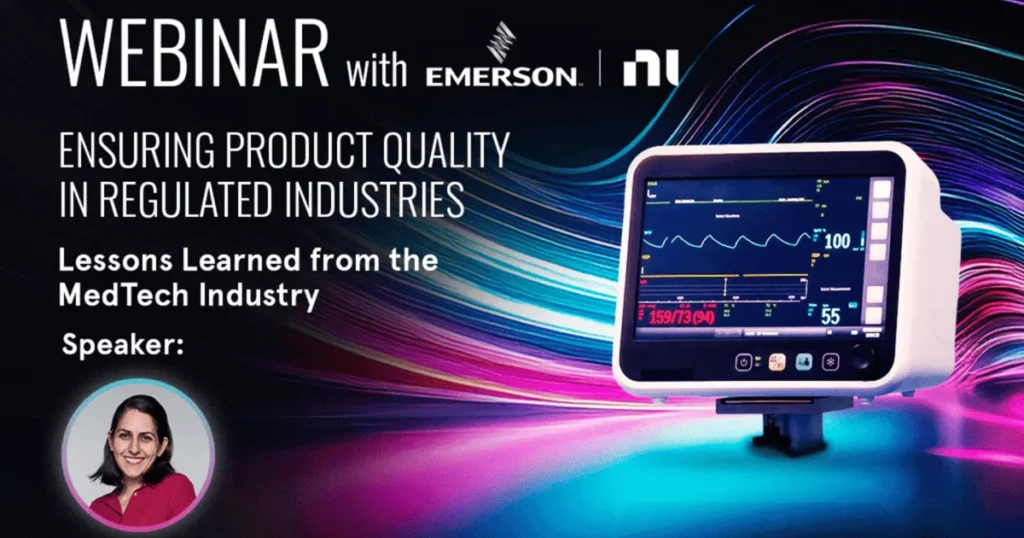
Webinar 1: Ensuring Product Quality in Regulated Industries – Lessons Learned from the MedTech Industry
The first webinar in the series, titled "Ensuring Product Quality in Regulated Industries – Lessons Learned from the MedTech Industry," is scheduled for July 16, from 3 pm to 4 pm BST. This session, presented in collaboration with Emerson and NI (National Instruments), promises to be particularly insightful for professionals operating within sectors where product reliability and safety are paramount. The medical technology (MedTech) industry serves as a prime example of such an environment, characterized by rigorous regulatory frameworks, complex device architectures, and an unwavering focus on patient outcomes.
The MedTech sector faces unique challenges, including lengthy product development cycles, the need for extensive verification and validation (V&V) processes, and strict adherence to international standards like ISO 13485 (Quality Management Systems for Medical Devices) and regulatory requirements such as the FDA’s 21 CFR Part 820 (Quality System Regulation) in the United States, and the Medical Device Regulation (MDR) and In Vitro Diagnostic Regulation (IVDR) in the European Union. These regulations demand meticulous documentation, comprehensive risk management, and robust quality assurance throughout the entire product lifecycle, from initial concept and design to manufacturing, post-market surveillance, and eventual decommissioning.
This webinar will explore how a platform-based approach to test and measurement can significantly mitigate these complexities. Traditional, disparate testing methods often lead to inefficiencies, data silos, and increased risk of errors, particularly as devices become more sophisticated, integrating multiple sensors, advanced software, and connectivity features. A unified, platform-based strategy offers a cohesive framework for managing test data, automating processes, and ensuring traceability across all development stages. Such platforms typically integrate hardware, software, and data analytics tools, providing a comprehensive solution for design validation, manufacturing test, and quality control.
The session is expected to cover a range of critical topics, including:
- Understanding the evolving regulatory landscape for medical devices and other highly regulated products.
- Strategies for implementing robust verification and validation (V&V) processes to meet compliance requirements.
- Leveraging modular and scalable test architectures to manage increasing device complexity and accelerate time-to-market.
- The role of data acquisition, analysis, and management in achieving end-to-end traceability and audit readiness.
- Best practices for risk assessment and mitigation within the product development lifecycle.
- Case studies and "lessons learned" from successful deployments in the MedTech industry, highlighting common pitfalls and effective solutions.
- Exploring the benefits of automated testing and digital transformation in quality assurance workflows.
The collaboration with Emerson, a global technology and engineering company, and NI, a leader in automated test and measurement systems, brings unparalleled expertise to this topic. Emerson’s deep understanding of industrial automation and control systems, combined with NI’s advanced hardware and software platforms (such as LabVIEW and TestStand), provides a holistic perspective on building resilient and compliant testing infrastructures.
Webinar 2: Designing for Efficiency: Validating Modern Embedded and Datacom PMIC Designs
The second webinar, "Designing for Efficiency: Validating Modern Embedded and Datacom PMIC Designs," will take place on July 23, from 3 pm to 4 pm BST. This session, featuring Microchip Technology and Tektronix, addresses the critical challenges in power management for today’s high-performance embedded systems and datacom applications. As devices become smaller, more powerful, and increasingly energy-conscious, the design and validation of Power Management Integrated Circuits (PMICs) have become paramount.
Modern embedded and datacom applications, ranging from edge AI devices and IoT gateways to networking infrastructure and data center components, demand compact size, exceptional power efficiency, and absolutely reliable power delivery. The drive for miniaturization means that PMICs must integrate multiple power rails and functionalities into a tiny footprint. Simultaneously, the need for efficiency is dictated by battery life requirements in portable devices, thermal management constraints in compact enclosures, and the overarching global push for reduced energy consumption in data centers and communication networks. Inefficient power delivery not only wastes energy but also generates excess heat, which can degrade performance and shorten the lifespan of electronic components.
Validating PMIC designs is a complex undertaking, requiring sophisticated measurement techniques to characterize their performance across various operating conditions. Engineers must meticulously analyze parameters such as voltage ripple, transient response, power conversion efficiency, quiescent current, and thermal behavior. The presence of high-frequency switching, dynamic load changes, and noise sensitivity in modern systems adds layers of complexity to the validation process.
This webinar will delve into practical methodologies and tools for effective PMIC validation, covering key aspects such as:

- Anatomy of modern PMICs and their architectures, including buck, boost, LDO regulators, and multi-channel solutions.
- Techniques for optimizing power conversion efficiency across varying load conditions.
- Advanced measurement strategies for characterizing voltage ripple and noise, a critical factor for system stability.
- Understanding and validating transient response to sudden load changes, crucial for dynamic power delivery.
- Thermal considerations in PMIC design and validation, including power dissipation and heat management.
- Best practices for load testing and stress testing PMICs to ensure robust performance under extreme conditions.
- Leveraging advanced test and measurement equipment, such as high-performance oscilloscopes, power analyzers, and electronic loads, for accurate characterization.
- Debugging common PMIC design issues and strategies for ensuring power integrity in complex systems.
Microchip Technology, a leading provider of embedded control solutions, including a broad portfolio of PMICs, brings deep design expertise to the table. Tektronix, a global leader in test and measurement equipment, particularly known for its oscilloscopes and power analysis solutions, will provide insights into the practical aspects of validating these designs. This collaboration offers attendees a unique perspective that spans both the design and the rigorous testing required for high-performance power management.
Webinar 3: How to Build a Smart Matter Device with Matter
Concluding the series, the webinar titled "How to Build a Smart Matter Device with Matter" will be held on July 30, from 3 pm to 4 pm BST. This session, organized in collaboration with Nordic Semiconductor, is particularly timely given the rapid expansion of the smart home market and the growing adoption of the Matter standard. The smart home industry has historically been plagued by fragmentation, with numerous proprietary ecosystems and communication protocols (Wi-Fi, Bluetooth, Zigbee, Z-Wave) often preventing devices from different manufacturers from interacting seamlessly.
Matter, an open-source connectivity standard developed by the Connectivity Standards Alliance (CSA), aims to address this very challenge. Backed by industry giants like Apple, Google, Amazon, Samsung, and over 600 other companies, Matter promises to unify the smart home ecosystem by providing a common language for devices to communicate, regardless of brand or underlying wireless technology. Built on IP (Internet Protocol), Matter supports Wi-Fi, Thread, and Ethernet as its primary communication protocols, with Bluetooth Low Energy (BLE) used for commissioning. This approach enables enhanced interoperability, simplified setup, improved security, and a more reliable user experience.
For developers and manufacturers, Matter represents a significant opportunity to reach a broader market by creating devices that are inherently compatible with a multitude of smart home platforms. However, developing Matter-compliant devices requires understanding its architecture, data model, security mechanisms, and commissioning processes.
The webinar agenda is designed to provide a comprehensive introduction to the Matter standard and guide participants through the practical steps of developing connected smart home devices. Key topics expected to be covered include:
- An introduction to the Matter standard: its genesis, goals, and the problems it solves in the smart home landscape.
- Deep dive into Matter’s architecture, including its data model, device types, and application clusters.
- Understanding the role of various communication protocols (Thread, Wi-Fi, Ethernet, Bluetooth LE) within the Matter ecosystem.
- The Matter commissioning process: how new devices are securely added to a smart home network.
- Security features inherent in the Matter standard, including device attestation and secure communication.
- Practical demonstrations of developing a simple Matter-enabled device using available SDKs and development tools.
- Integrating Matter devices with popular smart home ecosystems (e.g., Google Home, Apple Home, Amazon Alexa).
- Tips and best practices for accelerating Matter device development and ensuring compliance.
- Exploring the future roadmap and potential impact of Matter on the smart home and broader IoT markets.
Nordic Semiconductor, a leader in low-power wireless connectivity solutions, especially in Bluetooth Low Energy and Thread, is a key enabler of Matter technology. Their expertise in providing the underlying hardware and software platforms for Matter devices makes them an ideal partner for this educational session, offering invaluable insights into building robust and efficient Matter products.
Broader Impact and Implications for the Industry
The element14 Community’s webinar series arrives at a pivotal moment for the electronics industry. The demand for higher quality products in regulated sectors is intensifying, driven by consumer expectations and evolving legal frameworks. The imperative for energy efficiency in embedded and datacom applications is critical for sustainability and performance. And the quest for seamless interoperability in the smart home market is a long-standing challenge that Matter is finally beginning to address.
These webinars collectively offer immense value to the engineering community. For individual engineers and developers, they represent a free and accessible pathway to acquiring specialized knowledge that can significantly enhance their skill sets and career prospects. Staying abreast of the latest regulatory requirements, power management techniques, and connectivity standards is crucial for professional growth and for delivering innovative, market-ready products.
From an industry perspective, the series fosters a more informed and capable workforce, which in turn can accelerate product development cycles, reduce design errors, and improve overall product quality. For element14 and Avnet, these events reinforce their position as a central resource for technical education and community building, strengthening relationships with both engineers and leading technology providers. By facilitating the dissemination of expert knowledge, element14 actively contributes to the advancement of technology and the growth of various high-tech sectors.
The collaboration with key industry players like Emerson, NI, Microchip, Tektronix, and Nordic Semiconductor is also strategically significant. It demonstrates a commitment to open knowledge sharing and collaborative innovation, benefiting the entire ecosystem. These partners gain a platform to showcase their expertise and solutions to a highly engaged and relevant audience, potentially driving adoption of their technologies.
Looking ahead, the implications of such educational initiatives are far-reaching. Better-trained engineers in MedTech can lead to safer and more effective medical devices, positively impacting patient care. Enhanced expertise in power management contributes to more sustainable and efficient electronics, reducing energy consumption and operational costs across various industries. A deeper understanding of Matter accelerates the development of truly interoperable smart home devices, unlocking the full potential of connected living for consumers.
All webinars are free to attend and are open to a global audience, reflecting element14’s commitment to broad accessibility. The sessions are specifically tailored for engineers, developers, and technical professionals who are actively involved in designing reliable systems, optimizing power performance, and developing next-generation connected devices. Interested participants are encouraged to register promptly to secure their virtual seats and engage with industry experts.
For more information and to register for these insightful webinars, visit: https://community.element14.com/learn/events/