A groundbreaking advancement in additive manufacturing promises to unlock the potential of 3D printing for creating robust and complex metallic and ceramic components, overcoming long-standing limitations of existing technologies. Researchers at the École Polytechnique Fédérale de Lausanne (EPFL) have developed a novel approach that allows for the precise fabrication of dense, high-strength materials with significantly reduced shrinkage and porosity, paving the way for applications in advanced engineering, energy, and biomedical fields. This new method represents a paradigm shift, decoupling material selection from the initial 3D printing process.
The innovation stems from a re-imagining of vat photopolymerization, a widely used 3D printing technique. Traditionally, vat photopolymerization involves immersing a build platform in a vat of light-sensitive liquid resin. A light source, such as a laser or ultraviolet projector, then selectively cures or solidifies the resin layer by layer, building up a three-dimensional object. While this method excels at producing intricate geometries with high resolution, its practical applications have been historically constrained by the inherent properties of the photopolymerizable resins. These polymers, by their very nature, are limited to light-sensitive materials, often resulting in printed objects that are brittle or lack the mechanical robustness required for demanding industrial uses.
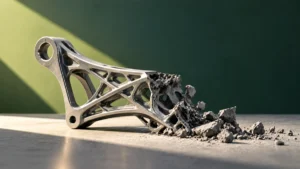
Previous attempts to overcome these limitations have focused on post-processing techniques. These methods typically involve 3D printing a polymer structure and then chemically transforming it into a metal or ceramic. However, these approaches have been plagued by significant drawbacks. Daryl Yee, who leads the Laboratory for the Chemistry of Materials and Manufacturing at EPFL’s School of Engineering, explained the core challenges: "These materials tend to be porous, which significantly reduces their strength, and the parts suffer from excessive shrinkage, which causes warping." This inherent porosity leads to weakened structures, while substantial shrinkage during the transformation process often distorts the printed object, rendering it unusable for precise applications. The cumulative effect of these issues has relegated many high-performance metal and ceramic 3D printing applications to niche or research-level endeavors.
The EPFL team’s breakthrough, detailed in a recent publication in the prestigious journal Advanced Materials, tackles these issues head-on by fundamentally altering the sequence of operations. Instead of attempting to solidify a resin already laden with metal compounds, their innovative strategy begins with a simpler, more accessible printing medium: a water-based gel known as a hydrogel. Hydrogels are biocompatible, readily available, and can be easily manipulated into complex three-dimensional structures using standard vat photopolymerization techniques. The researchers 3D print a precise framework using this hydrogel, creating a "blank" or template structure.
Following the initial printing, this hydrogel template undergoes a series of "growth cycles." In each cycle, the blank structure is submerged in a solution containing metal salts. Through a carefully controlled chemical conversion process, these dissolved metal salts are transformed into tiny, metal-containing nanoparticles. Crucially, these nanoparticles are deposited and spread uniformly throughout the hydrogel matrix. By repeating this infusion and conversion process multiple times – typically between five and ten cycles – the researchers are able to achieve exceptionally high concentrations of metal within the hydrogel structure. This layered approach ensures a uniform distribution of metal precursors throughout the entire object, a key factor in achieving superior material properties.
Once the desired metal content is achieved, the hydrogel matrix, having served its purpose as a scaffold, is removed through a simple heating process. This thermal treatment evaporates the water and degrades the hydrogel, leaving behind a dense, solid object composed of metal or ceramic. The final product precisely replicates the intricate geometry of the original hydrogel print. A significant advantage of this sequential approach is its versatility. Because the metal salts are introduced after the 3D printing of the scaffold, the same hydrogel template can be used to create a wide array of different materials. By simply changing the metal salts or ceramic precursors used in the infusion process, the researchers can fabricate objects from various metals, ceramics, or composite materials, all from the same initial print.
"Our work not only enables the fabrication of high-quality metals and ceramics with an accessible, low-cost 3D printing process; it also highlights a new paradigm in additive manufacturing where material selection occurs after 3D printing, rather than before," Yee summarized, underscoring the transformative nature of their findings. This shift in methodology offers unprecedented flexibility and opens up new avenues for material design and application.
Targeting Advanced 3D Architectures with Unprecedented Strength
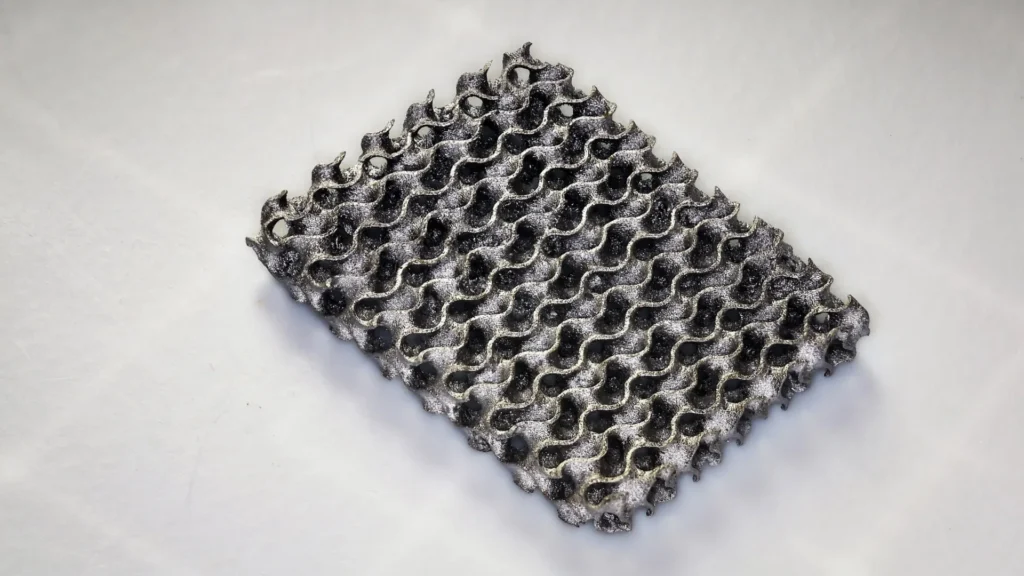
To demonstrate the capabilities of their new technique, the EPFL team focused on fabricating intricate mathematical lattice structures known as gyroids. Gyroids are complex, self-similar shapes that possess exceptional mechanical properties, including high strength-to-weight ratios, making them ideal for applications requiring both structural integrity and lightness. The researchers successfully produced gyroid structures from iron, silver, and copper, showcasing the technique’s ability to handle diverse metallic elements.
The strength of these newly fabricated materials was rigorously tested using a universal testing machine, a standard piece of equipment in materials science laboratories designed to measure mechanical properties such as tensile strength, compression, and bending. The gyroid samples were subjected to increasing pressure until failure. The results were remarkable.
"Our materials could withstand 20 times more pressure compared to those produced with previous methods, while exhibiting only 20% shrinkage versus 60-90%," stated PhD student Yiming Ji, the first author of the study. This dramatic improvement in mechanical performance, coupled with a substantial reduction in shrinkage, represents a significant leap forward. The reduced shrinkage is particularly critical for additive manufacturing, as it minimizes the dimensional inaccuracies and internal stresses that can compromise the integrity of printed parts. The ability to maintain geometric fidelity while achieving superior strength is a key enabler for complex designs.
Broad Implications Across Industries
The implications of this enhanced 3D printing capability are far-reaching, particularly for fields that demand materials that are simultaneously strong, lightweight, and geometrically complex. The scientists believe their technique is especially well-suited for the fabrication of advanced 3D architectures used in sectors such as sensors, biomedical devices, and components for energy conversion and storage.
For instance, in the realm of energy technologies, metal catalysts play a crucial role in facilitating chemical reactions that convert chemical energy into electricity, such as in fuel cells. The high surface area and precisely engineered structures that can be achieved with this new method are ideal for maximizing catalytic efficiency. Similarly, advanced cooling systems for energy devices, which require intricate internal channels for optimal heat dissipation, can now be fabricated with enhanced structural integrity.
The ability to create high-surface-area metal structures also opens doors for applications in filtration and adsorption, where large surface areas are essential for capturing and processing substances. Biomedical devices, such as porous implants designed to encourage bone ingrowth or scaffolds for tissue engineering, could benefit from the precise control over pore size and interconnectedness that this technique offers, along with the biocompatibility of certain ceramic outputs.
Future Directions and Industrial Adoption
Looking ahead, the EPFL team is actively pursuing strategies to further refine their process and facilitate its broader adoption by industry. A primary focus is on increasing the density of the fabricated materials, aiming to push the boundaries of mechanical performance even further. While the current density is already impressive, achieving near-theoretical densities would unlock even more demanding applications.
Another critical area of development is speed. The iterative nature of the infusion and conversion steps, while essential for achieving high material content, currently makes the process more time-consuming compared to some conventional 3D printing methods. "We are already working on bringing the total processing time down by using a robot to automate these steps," Yee commented, indicating a proactive approach to addressing the scalability and efficiency of the technique. Automation of these repetitive steps is a crucial pathway to reducing labor costs and increasing throughput, making the technology more economically viable for mass production.
The development timeline for this technology, while not explicitly stated, can be inferred from the stages of research and publication. The initial conceptualization and laboratory-scale experiments likely occurred over several years. The publication in Advanced Materials, a highly respected peer-reviewed journal, signifies a rigorous vetting process that typically follows extensive experimentation and validation. The subsequent work on automation and industrial uptake represents the next phase of development, often involving collaborations with industry partners and further refinement based on real-world application needs. This progression from fundamental research to applied engineering is a standard trajectory for significant technological advancements.
The potential for industrial uptake is substantial. Companies involved in aerospace, automotive, medical device manufacturing, and energy production, all of which rely on high-performance materials, are likely to be keenly interested in this development. The ability to produce custom-designed, high-strength metal and ceramic parts on demand, with a level of precision and material quality previously unattainable, could revolutionize product design and manufacturing processes.
In essence, the EPFL team’s innovation represents more than just an incremental improvement; it is a fundamental redefinition of how complex metal and ceramic components can be manufactured. By decoupling the printing of the form from the deposition of the material, they have created a versatile, powerful, and scalable additive manufacturing platform with the potential to drive significant advancements across a multitude of technological frontiers. The scientific community and industrial leaders alike will be watching closely as this promising technology continues to evolve and find its place in the manufacturing landscape of the future.