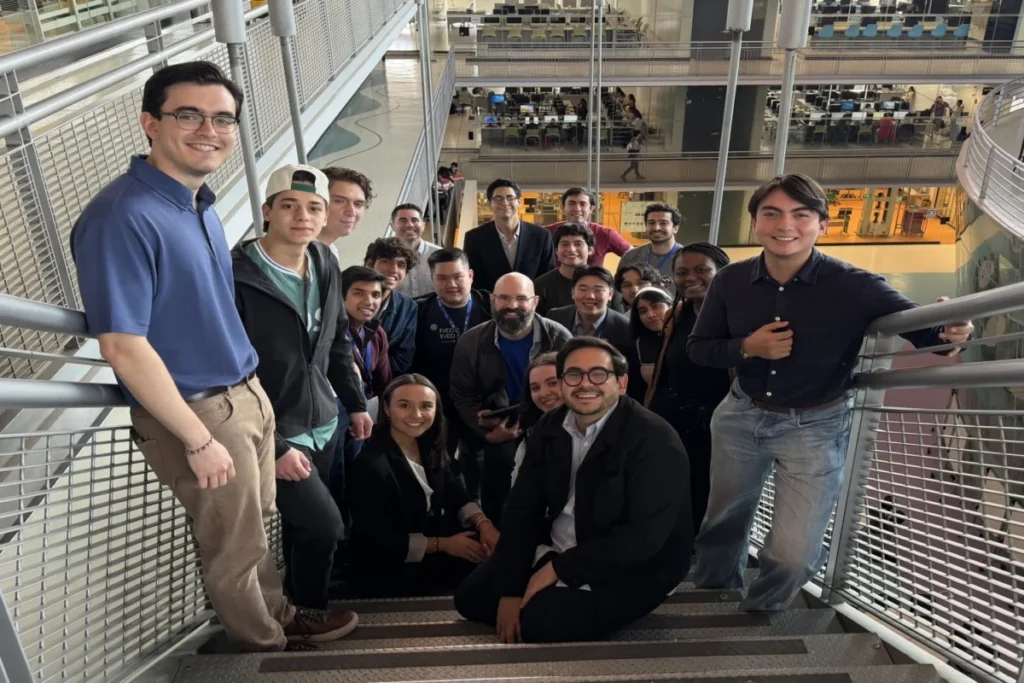
From its humble beginnings in the experimental labs of MIT’s Building 35, the Fiber (Fr) Extrusion (E) Device (D), or FrED, has embarked on a remarkable journey, transforming manufacturing education from a theoretical exercise into an immersive, hands-on experience. This low-cost, desktop fiber extrusion device, meticulously designed and assembled by students within an innovative educational factory at the Massachusetts Institute of Technology, has now established a significant presence in Monterrey, Mexico, and is poised for global expansion, fundamentally reshaping how future engineers are trained in the complexities of modern manufacturing.
The genesis of FrED represents a deliberate pedagogical shift within MIT, moving away from traditional textbook-based learning towards a dynamic, experiential model. This educational factory environment fosters a culture of continuous tinkering, experimentation, and seamless information exchange, mirroring the agile demands of contemporary industrial settings. The core philosophy is to provide students with a tangible, production-level context where they can engage with real-world manufacturing problems, collect authentic data, and innovate solutions, all within an academic framework.
A Transatlantic Partnership Forging New Pathways
Central to FrED’s burgeoning success is a robust and strategic collaboration between MIT and Tecnológico de Monterrey (Tec), a leading institution in Mexico. This partnership, expertly managed by MIT.nano, the institute’s advanced fabrication and characterization center, has been instrumental in refining the FrED concept. Over several years, FrED has been the subject of dozens of graduate theses and undergraduate research stays, serving as a living laboratory for academic inquiry and practical application. It has become an integral tool for studying manufacturing systems in a wide array of academic and professional courses, underpinning the establishment of dedicated FrED factories, first at MIT and subsequently across Tec’s campuses in Monterrey and Mexico City.
This unique educational model directly addresses a critical gap in traditional engineering curricula. As Brian W. Anthony, MIT.nano associate director and principal research scientist in the MIT Department of Mechanical Engineering (MechE), articulated at the second annual FrED summit in Mexico City, the initiative probes a profound question: "What does it mean to bring the factory to the learner?" Anthony emphasized the dual nature of FrED: not only is it a process that manufactures a fiber, but the FrED factory itself functions as both an education and practice factory, actively producing a real product. Unlike conventional learning factories where prototypes might be dismantled after a project, FrED factories genuinely ship their manufactured devices to online learners, educators at MIT and Tec, and soon, to an expanding network of international partners. This commitment to producing a sellable, functional product imbues the learning experience with a sense of genuine purpose and accountability, crucial for developing industry-ready engineers.
Strategic Expansion and Global Talent Cultivation
Designed from its inception for multi-node community scaling, FrED and its associated factory model have cultivated a vibrant, collaborative ecosystem that nurtures current and future manufacturing engineers. The next logical step in this ambitious vision is global expansion. During the FrED summit, Tec professor Pedro Ponce Cruz announced the imminent opening of a new FrED factory at Tec’s Saltillo campus in the upcoming academic year. This expansion within Mexico is a precursor to broader plans, with the team intending to establish additional factories across other campuses in both the United States and Mexico, laying the groundwork for a truly international footprint.
The impact of this collaboration on talent development is already substantial and widely recognized. Adriana Vargas Martinez, executive director of research strategy at Tec, proudly stated, "Together, we are helping build a global engineering talent pipeline." Through the FrED and FrED factory initiative, nearly 500 students have already received comprehensive training in advanced manufacturing automation. These students seamlessly transition from Tec classrooms into dynamic research laboratories and collaborative projects with MIT, gaining invaluable practical experience. Vargas Martinez also highlighted the significant research output, citing 25 peer-reviewed publications and an additional seven papers currently under development, demonstrating the project’s substantial contribution to the academic discourse. Beyond technical skills and research, the partnership places a high value on "international mobility," recognizing its importance in fostering cross-cultural understanding and diverse perspectives among the next generation of engineers. This emphasis on global exchange not only enriches individual learning experiences but also strengthens the collective capacity for innovation in a globally interconnected industry.
Navigating the Modern Manufacturing Landscape: Industry 4.0 and Deep-Tech Integration
The expansion of FrED aligns perfectly with a pivotal shift occurring in manufacturing, both within leading academic institutions like MIT and across the global industrial landscape. This paradigm shift, often termed "smart manufacturing" or "Industry 4.0," integrates cutting-edge technologies such as automation, machine learning, and artificial intelligence into every facet of the production process. Recognizing this critical evolution, MIT has prioritized initiatives like the MIT Initiative for New Manufacturing (INM), which actively supports novel manufacturing research, the development of new courses, workforce training programs, and the establishment of shared facilities to pilot production lines and immersive manufacturing experiences. FrED and the FrED factory are inherently designed to champion these efforts, offering a scalable and internationally applicable platform for addressing the challenges and opportunities of the Fourth Industrial Revolution.
Brian Anthony further elaborated on FrED’s unique problem-solving capability in this context. He noted, "FrED and the FrED factory is really, I think, solving at least one problem: how we give real, physically meaningful physical context and production-level data, production-level problems in an academic environment that is directly transferable to the knowledge that you need on the factory floor." Anthony underscored the inherent difficulty of extracting meaningful data from operational industrial factories. In contrast, FrED provides an unparalleled solution by offering a rich physical context combined with robust data science capabilities, creating an open platform and open data sets specifically designed for learning and experimentation. This accessibility to real-time, multi-modal production data is crucial for students to grasp the nuances of digital twins, advanced analytics, and AI-driven process improvement, transforming abstract concepts of AI/manufacturing integration into concrete, hands-on practice.
The next wave of research objectives within the FrED factory is ambitious and forward-looking. Future projects will concentrate on developing a realistic and interactive digital twin of the factory, exploring immersive technologies for collaborative learning environments, and integrating sophisticated agentic controllers. Furthermore, plans include incorporating new downstream manufacturing processes and machines that will utilize the fiber produced by FrED as their input, thereby extending the educational scope to cover a broader segment of the smart manufacturing value chain. These advanced goals will be pursued collaboratively by students from both MIT and Tecnológico de Monterrey as part of the FrED factory research stay program, ensuring a continuous cycle of innovation and knowledge transfer.
Experiential Learning and Cross-Cultural Collaboration: A Holistic Approach
The FrED factory research stay program exemplifies the depth of this international partnership, bringing Tec undergraduates to MIT to work side-by-side with their MIT counterparts. Crucially, these students are not merely observers but are fully integrated members of the research teams, contributing directly to ongoing projects. This immersive experience is designed to be transformative, empowering students to apply theoretical knowledge in a practical setting, learn from mistakes in a supportive environment, and develop critical problem-solving skills. Upon completing their stay, these students return to Mexico, equipped with enhanced knowledge and practical expertise to further develop and refine FrED factories at their home institutions, creating a powerful feedback loop of innovation.
The profound impact of this experience extends far beyond technical skills. Naomi Najera, a Tec undergraduate student who completed a research stay at MIT in 2025, eloquently captured the holistic benefits: "Beyond the technical side, FrED gave me memories, friendships, and a lot more confidence in myself than I knew I had. It also gave me a space where I could make mistakes and learn from them. And also to realize how much I can achieve with my team. That human side of this project really changed my whole experience." This sentiment underscores the program’s success in fostering personal growth, teamwork, and resilience alongside technical proficiency.
The academic rigor and innovative nature of the FrED project have garnered significant external recognition. A testament to the collaborative research produced through this exchange was announced on June 23 by the American Society for Engineering Education (ASEE). A paper titled "Hands-On Predictive Maintenance Kit for Manufacturing Education: An Accessible Experiential Learning Approach," co-authored by Tec and MIT students, was honored with the prestigious 2026 ASEE Manufacturing Division Best Paper Award. This award not only validates the quality of the research but also highlights the effectiveness of FrED’s experiential learning methodology in addressing contemporary manufacturing challenges like predictive maintenance.
Shifting Paradigms: From Classroom Lectures to Dynamic Factory Operations
At MIT’s campus in Cambridge, Massachusetts, the FrED factory is a hub of constant activity. Passersby can peer into the basement windows of Building 35 and observe a dynamic flow of materials, knowledge, and collaborative effort, a tangible manifestation of the factory-to-learner philosophy. This model has profoundly influenced Tecnológico de Monterrey’s curriculum. Over four years, seven distinct cohorts of Tec students have each undertaken the comprehensive challenge of designing a custom version of FrED, subsequently building and operating an automated FrED factory production line. This intense, project-based learning has fundamentally restructured how Tec teaches mechatronics and manufacturing systems, embedding practical experience directly into the core curriculum. As Vargas Martinez notes, "This collaboration integrates research directly into education, combining learning factories and our manufacturing environments with student-centered research."
The enthusiasm and engagement of the Tec students have been so significant that they led to the launch of an innovative program in Mexico akin to MIT’s Undergraduate Research Opportunities Program (UROP). Known as FRAME (Factory-based Research for All in Mechatronics Education), this curriculum allows first-year undergraduates to work directly alongside graduate-level students in the FrED factory. This early exposure to advanced research and practical application is transformative. Katherine Lucia McLean, an early participant, shared, "Joining FrED as a first-semester university student has been an amazing opportunity for me to get hands-on experience in real-world projects in areas such as coding, manufacturing, and robotics. It’s helped me grow a lot as an engineering student." Such programs are vital for nurturing early talent and building a strong foundation for future engineering careers.
The FrED factory model inherently cultivates essential leadership behaviors and complex problem-solving skills. Students are tasked with coordinating multi-station systems, identifying and managing bottlenecks, integrating maintenance logic into the operational experience, enforcing stringent quality measurement protocols, and iteratively refining system designs year after year. This cyclical process ensures that as each class graduates and a new one begins, knowledge is transferred, lessons are learned, and innovations are built upon. While some knowledge may be lost in transition, the core learning framework ensures continuous improvement and adaptation. In this dynamic environment, FrED never becomes obsolete; instead, each new cohort actively reimagines manufacturing technologies and systems, striving to create a smarter, more productive factory of the future.
The Road Ahead: Sustained Momentum and Global Outreach
The momentum behind FrED and the FrED factory is undeniable. Brian Anthony, a driving force behind the initiative, taught the global capstone course at Tec’s Monterrey campus last year, further cementing the direct educational links between the institutions. Looking ahead, Anthony plans to expand his teaching presence to all five international Tec campuses in 2027, signifying a deeper integration of the FrED philosophy across Tec’s extensive network. A major milestone on the horizon is the FrED Factory Conference, scheduled to take place at MIT in 2027. This event will serve as a critical forum for sharing research, discussing best practices, and strategizing the next phases of FrED’s global expansion, drawing together academics, industry partners, and students from around the world.
The journey of FrED from an MIT basement experiment to a global educational paradigm underscores a powerful vision for the future of engineering education. By democratizing access to advanced manufacturing technologies and fostering a culture of hands-on, collaborative learning, FrED is not merely training engineers; it is cultivating a generation of innovators, leaders, and problem-solvers equipped to navigate and shape the complexities of the modern industrial landscape. Its sustained expansion promises to build an ever-growing global talent pipeline, driving innovation and economic development across continents for years to come.






