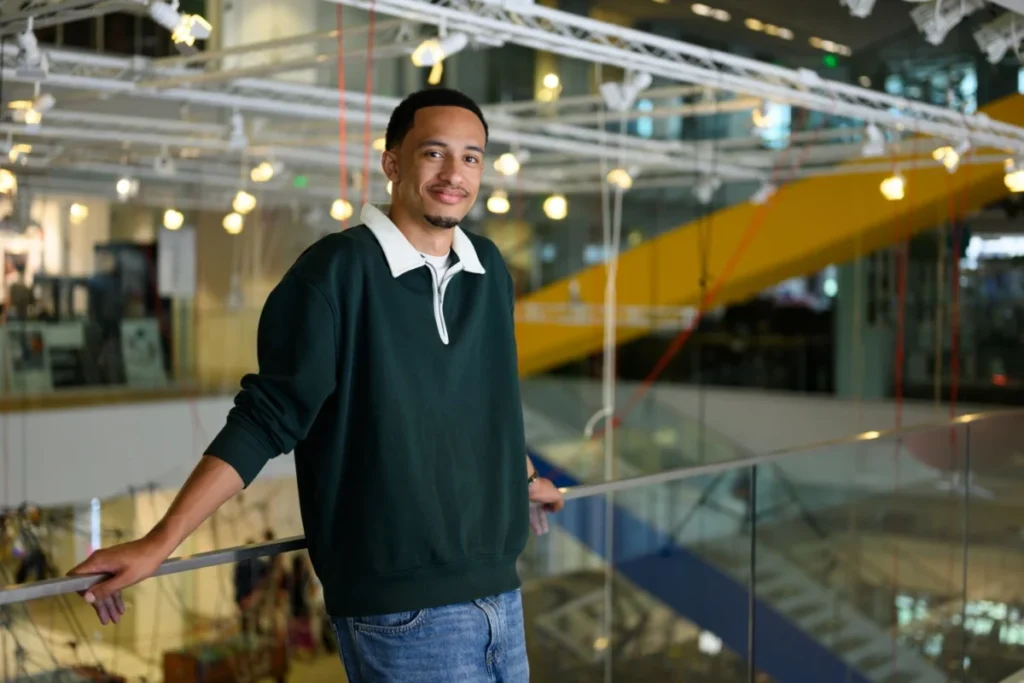
Kayode Dada, a rising senior at the Massachusetts Institute of Technology (MIT) majoring in mechanical engineering, embodies the institution’s spirit of innovation, applying a rigorous analytical approach to an unexpected domain: game design. His philosophy, "I think that a game can be made about anything, but to make a good game, it takes a lot of time and effort and thinking about it," has culminated in his most ambitious project yet: a custom-designed trading-card game for the 1,100 incoming first-year students attending MIT Orientation in late August. This initiative aims to transform the conventional orientation experience, fostering deeper connections and a stronger sense of community from the moment new students set foot on campus.
The Genesis of a Game Designer: A Lifelong Fascination
Dada’s journey into the intricate world of game design began far before his MIT years, rooted in a childhood fascination with interactive entertainment. Growing up in Louisville, Kentucky, he and his brother spent countless hours immersed in a diverse array of games, from strategic board games like "Catan" and "Risk" to imaginative role-playing epics like "Dungeons and Dragons" and the tactical card duels of "Yu-Gi-Oh!" His face lights up with nostalgia as he recounts these formative experiences, particularly a unique family ritual during the Covid-19 pandemic. "For weeks and weeks, every single night we’d play a full game of ‘Monopoly.’ It was crazy!" he recalls, highlighting the sustained engagement and strategic thinking that even classic games can inspire.
This early exposure wasn’t merely recreational; it sparked a deeper curiosity. Even as a child, Dada found himself dissecting the underlying mechanics, the decision-making frameworks, and the player psychology that made these games compelling. This analytical inclination, a hallmark of an engineer in the making, propelled him towards his first hands-on foray into game creation during high school. Utilizing simple arts and crafts materials, he meticulously constructed custom dice with unique sides, marking his initial venture into tangible game design. From this humble beginning, ideas flowed ceaselessly. He estimates he designed approximately 25 games during his high school years, bringing nine of them to fruition and gifting them to friends, sharing his creative output and perhaps unknowingly conducting early-stage playtesting.
Navigating the Path to MIT: Cardboard Games and Unconventional Aspirations
Dada’s passion for board game design became a central theme in his application to MIT, a choice that initially seemed audacious to him. He harbored doubts, believing his portfolio of "cardboard games" wouldn’t align with MIT’s reputation for cutting-edge technology and scientific prowess. "I didn’t do any real tech stuff," he thought. However, his perspective shifted dramatically after delving into the MIT Admissions blogs. A particular post by a computer science major, who candidly shared her lack of prior coding experience before arriving at MIT, served as a profound source of inspiration and reassurance.
"That gave me motivation and hope that I could apply with a bunch of cardboard games, and I got in," he states, a testament to the Institute’s holistic admissions process that values diverse talents and unconventional passions. This experience underscored a vital realization for Dada: the students at MIT, often perceived as "super-duper geniuses," are in fact "real" individuals with varied backgrounds and journeys, making the institution feel more accessible and human. This understanding would later inform his own efforts to demystify the MIT experience for prospective students.
A Multifaceted MIT Experience: Beyond the Mechanical Engineering Core
Upon entering MIT, Dada embraced the vibrant campus life with characteristic enthusiasm, balancing his academic pursuits in mechanical engineering with a rich tapestry of extracurricular activities. He has become a prominent voice on campus, serving as an MIT Admissions blogger himself, an orientation captain, and a leader in MIT Cru, a campus Christian group. His creative outlets include drumming in the MIT Live student music group and hosting "Midwest Pizzeria," a show dedicated to Midwest emo math rock on WMBR 88.1 FM, the university’s non-commercial radio station. These diverse engagements showcase his broad interests and commitment to community.
For Dada, roles like admissions blogger and orientation captain are more than just résumé builders; they are deeply meaningful avenues for community building and increasing awareness about the myriad opportunities available at MIT. He recounts the significant impact of a blog post he authored about being a Christian at MIT, which resonated widely. "I got a lot of emails from either students interested in the club or parents and high school counselors saying, ‘Thank you for posting this – I had no idea,’" he shares, highlighting the hunger for authentic student perspectives. He also frequently engages with prospective students who express doubts about their qualifications for MIT, offering encouragement and a pragmatic viewpoint: "I tell them, ‘I think you should still apply… and regardless if you get into MIT or not, you’re going to do amazing things.’"
This summer marks Dada’s third involvement with MIT Orientation, an experience he clearly relishes. "It’s a lot of fun to talk to students, hear what they are interested in, and then be like, ‘Oh, you should definitely go check out this thing. I’ll connect you to this person that you should talk to,’" he explains. The interconnectedness of the MIT community is further underscored by the "fun twist of fate" that some of the orientation leaders he now works alongside once read his very own blogs as prospective students. His commitment to "giving it back to MIT and contributing towards building up the next class" is a sentiment he shares with his closest friends, many of whom he met through orientation.
Re-orienting Orientation: The Evolution of "Campus Trade"
Dada’s lifelong passion for game design found a unique intersection with his dedication to student community building during last year’s MIT Orientation. The orientation staff sought innovative ways to keep new students engaged during downtime between scheduled events, and Dada seized the opportunity to propose a trading-card game. His vision was to create not just a diversion, but an effective ice-breaker that would naturally facilitate interaction among the diverse cohort of incoming students.
The inaugural iteration of his game, "Campus Trade," was designed to leverage the existing structure of orientation, where students are divided into 12 distinct groups, each identified by a specific color. Each incoming student received 12 trading cards, all bearing the color of their assigned group. The objective was straightforward: by the end of the week, each student had to collect one card from every other group, resulting in a complete set of 12 different colors. The game was an undeniable success. "They got so invested immediately, and we couldn’t get them to stop playing and go back inside to the next meeting," Dada recalls, affirming the game’s immediate appeal and engagement factor.
However, Dada, ever the keen observer and critical designer, noticed an area for improvement. While students were actively trading cards, many interactions were transactional and brief, often lacking deeper conversational engagement. This observation sparked a new design challenge: how to evolve "Campus Trade" from a simple trading mechanism into a catalyst for genuine social connection.
Designing for Connection: Collaboration and Iteration
Driven by this insight, Dada embarked on a redesign of "Campus Trade," seeking to embed more meaningful social interaction into its core mechanics. This endeavor led him to Cassandra Lee, a research designer in the MIT Media Lab’s Center for Constructive Communication, whose work specifically explores the powerful link between games and social interaction. Under Lee’s expert supervision, Dada dedicated his junior year to an Undergraduate Research Opportunities Program (UROP) project, facilitated by the realtalk@MIT program. This program is instrumental in supporting students who design and organize creative community infrastructure, aligning perfectly with Dada’s goals.
The redesign process was meticulous and iterative, spanning several months. It involved extensive prototyping, where different card designs and game rules were tested. Dada conducted numerous interviews with students, gathering invaluable feedback on their experiences with the first version of the game and their preferences for social interaction. This iterative cycle of testing and refining ensured that the redesigned "Campus Trade" was not just theoretically sound, but empirically validated by its target audience.
The result is a significantly enhanced version of "Campus Trade" for the upcoming orientation. The new cards are notably larger, adopting a tarot-like size, making them more visually striking and easier to handle. A key innovation lies in their dual-sided design: one side features unique artwork contributed by current MIT students, depicting various people, places, or iconic elements from the campus, creating a visual connection to their new environment. The reverse side of each card presents an icebreaker question, specifically engineered to prompt conversation and shared experiences rather than just a quick exchange. Furthermore, the game is now designed with multiple pathways to "win," fostering collaboration and encouraging students to work together towards common goals, thereby deepening their interactions beyond mere trading.
Cassandra Lee praised the collaboration, describing it as "sincerely rewarding." She highlighted Dada’s unique qualities that made the project successful: "Community development work really requires a student who understands and is willing to fight for the value of people, stories, and being in community. Consistently throughout this project, it was clear that Kayode is more than capable of balancing his own spirit with the grueling organizing work that makes a project like ‘Campus Trade’ possible." This endorsement underscores the blend of creative vision, empathy, and practical execution that Dada brought to the initiative.
Broader Implications: Fostering Community and Redefining Orientation
The redesigned "Campus Trade" is more than just a game; it represents a thoughtful intervention in the critical process of new student integration. MIT Orientation, like similar programs at universities worldwide, faces the perennial challenge of easing the transition for thousands of students into a new academic and social environment. Traditional orientation activities often focus on logistics, academic advising, and administrative tasks. While essential, these can sometimes overshadow the equally vital need for genuine social connection, which is crucial for student well-being, retention, and a sense of belonging.
By integrating a game like "Campus Trade," MIT is leveraging a highly engaging, student-centric approach to community building. Instead of relying solely on facilitated group discussions or structured icebreakers, Dada’s game provides an organic, self-directed platform for interaction. The inclusion of student artwork and campus-specific elements helps new students familiarize themselves with their surroundings and sparks conversations rooted in shared experiences, even before they fully understand the campus layout. The icebreaker questions on the cards are carefully crafted to encourage personal sharing and discovery, moving beyond superficial pleasantries to more substantive dialogue.
The success of this project also highlights the invaluable role of programs like UROP and realtalk@MIT. These initiatives empower students to apply their interdisciplinary skills—in Dada’s case, mechanical engineering merged with game design and social psychology—to address real-world challenges within their own community. It demonstrates MIT’s commitment to fostering not just academic excellence, but also a vibrant, supportive, and innovative student life. The scalability of "Campus Trade," designed for 1,100 students, is itself a significant logistical and creative achievement, showcasing Dada’s ability to manage complex projects from concept to large-scale implementation.
Looking Ahead: A Future in Game Design
With "Campus Trade" poised for its debut, Kayode Dada’s aspirations in game design have solidified. He envisions a future where his creativity and analytical skills are fully dedicated to this field. The experience of designing and implementing a large-scale game has provided him with invaluable practical knowledge and reinforced his belief in his capabilities. "Before, I didn’t really believe I could do it," he admits, "but now that I have this project under my belt, some real experience working on a game on a large scale, I definitely have a lot of ideas."
His future plans are now sharply focused. Dada contemplates applying for positions at established game design companies, perhaps drawing inspiration from giants like Wizards of the Coast, known for their influential trading card games. Alternatively, he entertains the entrepreneurial path, considering the possibility of launching his own game design studio to "just see how it goes." This willingness to take a leap, to explore uncharted territory, mirrors his decision to apply to MIT in the first place—a decision that, by all accounts, has proven to be profoundly transformative and exactly the right move for this burgeoning game design innovator. His journey serves as an inspiring example of how passion, coupled with MIT’s unique environment, can lead to impactful contributions and a clear vision for the future.