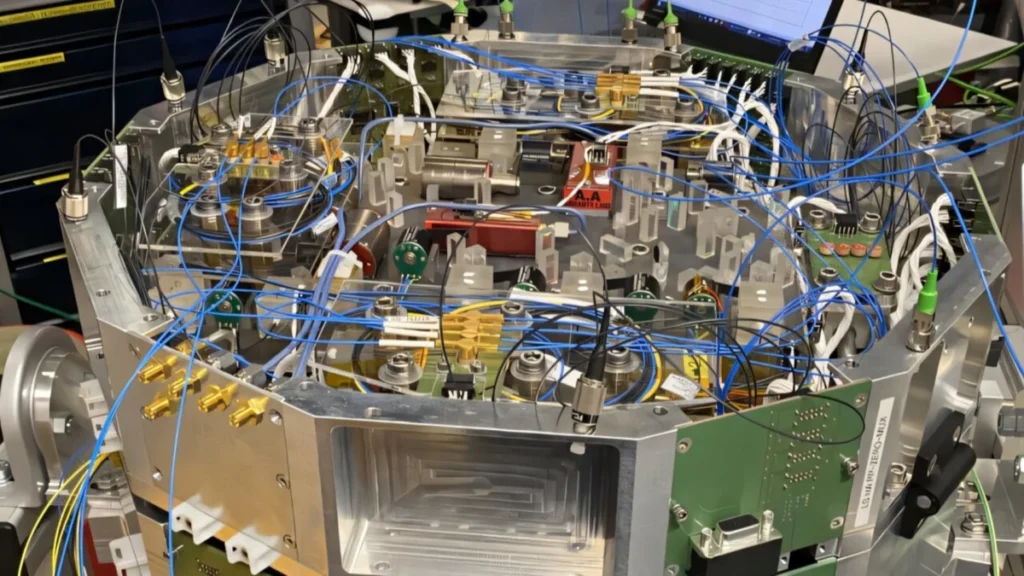
The landscape of scientific discovery and engineering innovation is constantly evolving, with recent breakthroughs signaling significant progress across diverse fields, from the microscopic realm of quantum mechanics to large-scale environmental solutions. These advancements, often the culmination of decades of meticulous research and collaborative effort, underscore humanity’s relentless pursuit of understanding and improvement. The developments highlighted here represent a snapshot of the dynamic frontier where fundamental science meets practical application, promising to reshape industries, enhance security, and deepen our comprehension of the natural world.
Addressing Pressing Global Challenges: Energy and Environment
The imperative to develop sustainable energy solutions and mitigate environmental degradation drives much of contemporary scientific inquiry. Recent strides illustrate a multifaceted approach to these grand challenges.
A landmark achievement in nuclear energy management has been the securing of major approval for the world’s first nuclear waste repository with a 100,000-year lifespan. This monumental undertaking, likely located deep underground in stable geological formations, addresses one of the most persistent and complex issues associated with nuclear power: the safe, long-term disposal of highly radioactive waste. For decades, the interim storage of spent nuclear fuel has presented a global challenge, prompting concerns over security, environmental safety, and the burden on future generations. This repository aims to provide a permanent solution, isolating waste from the biosphere for timescales far exceeding human civilization. The approval marks a critical turning point, transitioning from theoretical concepts to tangible implementation, and is expected to set a precedent for other nations grappling with similar waste management dilemmas. The meticulous planning, geological surveys, and international regulatory oversight involved in such a project are immense, reflecting a global commitment to responsible nuclear stewardship.
Complementing this, scientists have reported antineutrinos spotted from spent nuclear fuel for the first time after a reactor shutdown. This groundbreaking observation offers a novel method for monitoring nuclear waste and non-proliferation efforts. Antineutrinos, elusive subatomic particles, are emitted during radioactive decay. Their detection from spent fuel, even after a reactor ceases operation, provides a unique signature that could allow for remote verification of nuclear material, enhancing safeguards against illicit activities. This capability could significantly bolster international atomic energy agencies’ ability to track and account for nuclear materials, thereby strengthening global security and disarmament initiatives. The development of advanced detector technologies capable of discerning these faint signals is a testament to progress in particle physics and its practical applications.
In the realm of environmental remediation, a new wastewater system has demonstrated the ability to remove 85% salt and 92% heavy metals in just 4 hours. This rapid and efficient purification process holds immense potential for addressing water scarcity and industrial pollution. Heavy metals like lead, mercury, and cadmium are persistent toxins, while high salinity renders water unusable for agriculture and consumption. Traditional wastewater treatment methods are often energy-intensive, slow, or less effective against a broad spectrum of contaminants. This new system, possibly employing advanced membrane technologies, electrocoagulation, or novel filtration materials, represents a significant leap forward, offering a scalable and economically viable solution for communities and industries facing severe water quality challenges. Its rapid processing time could revolutionize industrial effluent treatment, enabling quicker discharge or reuse of water.
Further innovations include the development of waste-derived carbon quantum dots that display ‘world-first’ pest repellent properties. These tiny nanomaterials, synthesized from organic waste, offer an eco-friendly alternative to conventional pesticides. Whiteflies, a common agricultural pest, cause substantial crop damage globally. The ability of these quantum dots to repel them could reduce reliance on chemical insecticides, minimizing environmental harm and promoting sustainable farming practices. This interdisciplinary research, blending materials science with agricultural biology, points towards a future where waste products are valorized into high-value solutions for ecological problems. The non-toxic nature of carbon quantum dots makes them particularly appealing for agricultural applications where human and environmental safety are paramount.
Addressing marine pollution, a new membrane has been developed capable of removing over 99.99% of oil from seawater with a higher evaporation rate. Oil spills wreak havoc on marine ecosystems and coastal economies, with current cleanup methods often inefficient or damaging. This advanced membrane, potentially utilizing superhydrophobic and oleophilic properties combined with efficient evaporative separation, offers a highly effective and potentially scalable solution for separating oil from water. The high evaporation rate suggests that the process could also be energy-efficient, making it suitable for large-scale deployment during environmental disasters. This innovation could dramatically improve post-spill recovery efforts and protect delicate marine life from the devastating impacts of oil contamination.
Finally, in a move towards resource efficiency and sustainability, Chinese quantum chemistry tech is transforming ordinary coal into high-value carbon materials like carbon fibers and graphene. Coal, traditionally a fossil fuel, is being re-imagined as a feedstock for advanced materials. Using quantum chemistry principles, researchers are devising methods to break down coal and reassemble its carbon atoms into structures with superior properties. Carbon fibers are lightweight and strong, used in aerospace and automotive industries, while graphene, a single layer of carbon atoms, boasts extraordinary electrical and mechanical properties, with applications spanning electronics, energy storage, and biomedical fields. This transformation not only adds significant economic value to an abundant resource but also offers a cleaner pathway for coal utilization, moving away from simple combustion towards advanced manufacturing. It represents a strategic shift in industrial chemistry, leveraging quantum mechanics to unlock new material functionalities.
The Quantum Revolution: Reshaping Technology and Fundamental Understanding
Quantum science continues to be a crucible of innovation, driving advancements in computing, communications, and our understanding of matter at its most fundamental level.
Researchers at Berkeley have discovered a tunable Bose-Einstein condensate in 2D semiconductor research. Bose-Einstein condensates (BECs) are exotic states of matter where particles behave as a single quantum wave. Their discovery in two-dimensional semiconductors opens new avenues for quantum computing and ultra-fast electronics. The tunability aspect means that the properties of the BEC can be precisely controlled, which is crucial for developing robust quantum devices. This fundamental research provides a platform for exploring novel quantum phenomena and engineering materials with unprecedented electronic and optical characteristics, potentially leading to advancements in areas like quantum sensors and low-power computing.
In quantum communications, US firms have teamed up to launch the first next-gen quantum communications research lab. This collaborative effort underscores a national push to secure future communication networks against increasingly sophisticated cyber threats. Quantum communication, particularly quantum key distribution (QKD), leverages the principles of quantum mechanics to create inherently secure communication channels, making eavesdropping theoretically impossible without detection. The establishment of such a lab signifies a concerted investment in developing the infrastructure and expertise required to transition quantum communication from laboratory experiments to real-world applications, promising ultra-secure data transmission for government, finance, and critical infrastructure.
China is also making significant strides, expanding quantum technology to protect its power grid with smarter fault detection. Quantum sensors offer unparalleled precision and speed, making them ideal for monitoring complex systems like national power grids. By detecting anomalies and potential faults with quantum-enhanced accuracy, power grid operators can preempt blackouts, improve efficiency, and enhance the resilience of energy infrastructure. This application of quantum technology moves beyond theoretical research, demonstrating its immediate, practical value in safeguarding critical national assets and ensuring stable energy supply, a vital component of modern industrial economies.
In quantum computing itself, IBM has announced a 10x reduction in quantum error rates, with a computer completing a hard task in 15 minutes. Quantum computers are notoriously prone to errors due to the delicate nature of qubits. This significant reduction in error rates is a monumental step towards achieving fault-tolerant quantum computation. Completing a complex task in mere minutes highlights the accelerating pace of quantum computing development, bringing the promise of solving problems intractable for even the most powerful classical supercomputers closer to reality. Such advancements could revolutionize drug discovery, materials science, financial modeling, and artificial intelligence, ushering in an era of computational power previously unimaginable.
Furthermore, a US quantum simulator developed by Rice University mimics real-world temperatures with two independent controls. Quantum simulators are specialized quantum devices designed to model complex quantum systems that are too difficult to analyze theoretically or with classical computers. The ability to simulate real-world temperatures with independent controls is crucial for understanding phenomena in materials science, condensed matter physics, and chemistry. This allows researchers to precisely study how quantum systems behave under various conditions, providing insights into superconductivity, magnetism, and other exotic states of matter, which can inform the design of new technologies.

Pioneering Fundamental Physics and Materials Science
Beyond applied technologies, scientists continue to push the boundaries of fundamental understanding, probing the very fabric of reality and discovering novel properties of materials.
The construction of the world’s first electron-ion collider could show what makes up 99% of the universe. This ambitious particle accelerator project is designed to precisely image the internal structure of protons and neutrons, which constitute nearly all the visible matter in the universe. By colliding electrons with ions (atomic nuclei), scientists aim to map the distribution of quarks and gluons, the fundamental particles that bind together to form protons and neutrons. This research promises to unlock long-standing mysteries about the strong nuclear force, the origin of mass, and the properties of nuclear matter, providing unprecedented insights into the fundamental constituents of our universe. The data from such a collider will offer a new window into the quantum chromodynamics (QCD) theory, deepening our understanding of the cosmos.
Meanwhile, a US team has put the world’s largest neutrino detector through an extreme stress test of 300,000 volts at CERN. Neutrinos are famously elusive particles, and detecting them requires massive, sensitive instruments. This stress test is a critical step in preparing the detector for its mission to study neutrino oscillations, which could reveal fundamental properties of these particles and potentially explain the matter-antimatter asymmetry in the universe. Operating at such high voltages under controlled conditions ensures the detector’s stability and reliability for future experiments, pushing the limits of experimental physics and engineering at a global scale.
In materials science, a two-nanometer crystal stretch has uncovered magnetism long hidden in ruthenium dioxide. This discovery of an "altermagnet" state, induced by subtle mechanical strain, challenges existing classifications of magnetic materials. Ruthenium dioxide was previously considered a non-magnetic material. The revelation that tiny structural manipulations can unlock novel magnetic properties opens up new avenues for designing spintronic devices, data storage, and other advanced technologies. This exemplifies how precision engineering at the nanoscale can lead to profound fundamental discoveries with significant technological implications.
Scientists have also managed to build a four-lane highway for light inside a single photonic chip. This innovation dramatically increases the capacity and efficiency of optical data transmission. Photonic chips use light, rather than electrons, to carry information, offering much faster speeds and lower power consumption. Creating multiple, independent pathways for light within a single chip is a critical step towards developing ultra-high-bandwidth communication networks and more powerful optical computing systems. This miniaturization and multiplexing of optical components are vital for the future of information technology.
Chemists have made strides with ‘dumbbell’ atomic pairs tackling a decades-old ethanol chemistry problem for everyday products. Ethanol is a widely used chemical, but its conversion into other valuable compounds often faces challenges. The development of catalysts featuring "dumbbell" atomic pairs – specific arrangements of metal atoms – provides a highly efficient and selective pathway for these conversions. This breakthrough in catalysis could lead to greener, more efficient industrial processes for producing a vast array of everyday products, from plastics and pharmaceuticals to fuels, by overcoming long-standing hurdles in organic chemistry.
Finally, a powerful nuclear detector has taken its first beam, supporting critical US security missions. This detector, potentially an advanced gamma-ray or neutron spectrometer, is designed to analyze nuclear reactions with extreme precision. Its primary mission would involve verifying nuclear treaties, monitoring nuclear materials, and enhancing national defense capabilities. The "first beam" milestone signifies operational readiness, allowing scientists to gather crucial data that informs national security policy and safeguards against nuclear threats, representing a significant technological asset for global stability.
Advancements in Biological Understanding and Data Processing
Beyond the physical sciences, biology and information technology continue to yield fascinating insights and practical tools.
A captivating study has found that humpback whale songs are choreographed to match deep dives. This discovery sheds new light on the complex communication and behavior of these magnificent marine mammals. Researchers, likely using advanced acoustic monitoring and bio-logging tags, have observed a sophisticated relationship between their vocalizations and diving patterns. This suggests that whale songs are not merely random calls but serve specific functions related to foraging, navigation, or social interaction during their deep-sea excursions. Understanding these intricate behaviors can inform conservation efforts and deepen our appreciation for marine biodiversity.
In the realm of information processing, a US-made ‘microwave brain’ chip learns language to slash satellite data by 8x. This revolutionary chip, incorporating neuromorphic computing principles, can process and compress satellite data far more efficiently than traditional systems. By "learning language" – essentially recognizing patterns and redundancies in data streams – it can transmit essential information while discarding noise, drastically reducing bandwidth requirements. This innovation is critical for the burgeoning satellite industry, enabling faster, more cost-effective communication and data transfer from space, impacting everything from weather forecasting and earth observation to global internet connectivity.
In a perhaps unexpected but crucial development for emergency preparedness, the US nuclear fallout response is set to include a 3D-printed device, a vacuum cleaner attachment. This seemingly simple yet ingenious innovation highlights practical, rapidly deployable solutions for disaster scenarios. In the event of a nuclear detonation, radioactive fallout would pose an immediate threat. A 3D-printed attachment for common household vacuum cleaners would enable individuals to safely and effectively remove radioactive particles from surfaces in their homes, reducing exposure and contamination. This emphasizes a shift towards empowering individual preparedness with accessible, adaptable technology, moving beyond purely governmental response strategies.
The Enduring Process of Scientific Inquiry
These diverse breakthroughs are not isolated incidents but rather threads in the continuous tapestry of scientific inquiry. As highlighted by Interesting Engineering, science is less about sudden, dramatic discoveries and more about persistent, often painstaking work. It advances through a rigorous process of experimentation, replication, and critical evaluation. Many promising findings never scale, fail to replicate outside controlled settings, or prove too complex or costly for widespread application. Understanding these limitations is as crucial as celebrating the successes.
The emphasis on methods, evidence, and the process that transforms observations into reliable knowledge is paramount. Peer review, reproducibility, advanced instrumentation, data quality, and statistical rigor are the cornerstones upon which scientific consensus is built. This intricate ecosystem, influenced by funding structures, institutional incentives, publishing pressures, and geopolitical priorities, constantly shapes the direction and pace of research.
The articles cited reflect this ongoing process, showcasing fundamental research in physics and chemistry, applied engineering solutions, and interdisciplinary efforts to tackle complex challenges. From probing the mysteries of the universe with an electron-ion collider to developing quantum pest repellents, each advancement deepens our understanding and extends our capabilities. The constant evolution of scientific knowledge, including conflicting results and necessary course corrections, is not a sign of failure but an inherent part of progress. Ultimately, the focus remains on work that withstands scrutiny, contributes meaningfully to human knowledge, and provides lasting utility long after the initial excitement of discovery subsides. The future promises an even more integrated approach, where breakthroughs in one field rapidly catalyze innovation in another, continuously pushing the boundaries of what is possible.