American supercar manufacturer Hennessey has officially pulled the wraps off its third all-new model, the highly anticipated Blackbird. This striking new hypercar is poised to replace the Venom F5 in the company’s lineup, but with a distinctly different philosophy and a clear mandate: to achieve "maximum man-machine connection." While the Venom F5 was engineered for ultimate top speed, the Blackbird shifts its focus to a more analogue and engaging driving experience, without compromising on blistering performance metrics that place it squarely at the pinnacle of the supercar segment.
Hennessey is targeting a formidable output of 800 to 850 brake horsepower for the Blackbird, a figure that promises exhilarating acceleration. The automaker projects a 0-60 mph sprint time of less than 3.0 seconds, a benchmark that places it among the elite in its class. Complementing this rapid acceleration is a projected top speed of 220 mph, a figure that, while not aiming to shatter land speed records like its predecessor, still represents extreme velocity for a road-legal vehicle.
A significant contributor to the Blackbird’s performance and its emphasis on driver involvement is its exceptionally low target dry weight. Hennessey has engineered the hypercar to weigh under 1360 kg (3000 lb). This aggressive weight-saving strategy is underpinned by the extensive use of bespoke carbonfibre, featuring a meticulously crafted carbonfibre tub that forms the car’s structural backbone, complemented by a complete carbonfibre bodywork. This approach not only slashes weight but also contributes to a higher power-to-weight ratio, further enhancing its dynamic capabilities and agility.
At the heart of the Blackbird beats a high-revving, naturally aspirated V8 engine. This powerplant is not a standard off-the-shelf unit; it has been developed in close collaboration with Ilmor Engineering, a name synonymous with success in motorsport, particularly in NASCAR. The partnership with Ilmor signifies a commitment to precision engineering and race-bred technology. The engine is engineered for a targeted red line of an impressive 9000 rpm, a characteristic that hints at a thrilling, visceral auditory and tactile experience for the driver, demanding active engagement with the gearbox to extract peak performance.
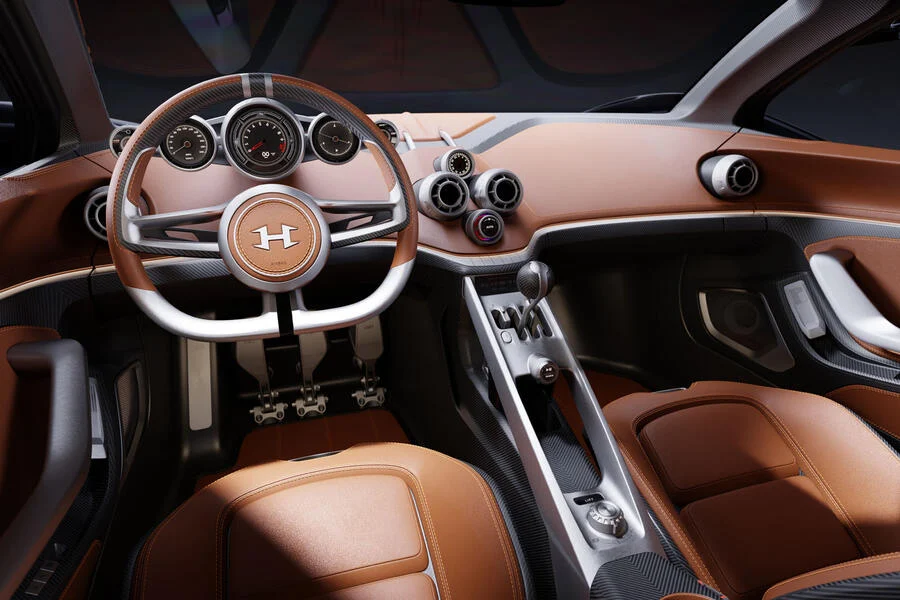
This potent V8 engine channels its formidable reserves of power to the rear axle through a truly analogue transmission. Hennessey has opted for a six-speed manual gearbox, distinguished by its open-gate design and exposed linkage. This choice is a deliberate move to enhance driver engagement, offering a more tactile and connected feel to gear changes, a feature increasingly rare in the modern supercar landscape dominated by rapid-fire dual-clutch transmissions. The exposed linkage further accentuates the mechanical purity and visual drama of the drivetrain.
While the Blackbird is designed to prioritize a raw driving experience, Hennessey acknowledges the necessity of modern electronic aids for safety and performance optimization. The vehicle will incorporate systems such as active suspension, which can dynamically adjust damping characteristics to suit driving conditions, and anti-lock braking and traction control systems. However, Hennessey’s commitment to "maximum man-machine connection" suggests these electronic interventions will be finely tuned to be supportive rather than intrusive, allowing the driver to feel intimately connected to the car’s behavior and the road surface. The company has pledged that the driver will remain firmly "in the thick of the action," with technology serving as a benevolent co-pilot rather than an omnipresent guardian.
The Hennessey Blackbird enters a rarefied segment of the automotive market, positioned as a compelling alternative to other ultra-high-performance, similarly priced machines. It is conceived to offer a more analogue and purist driving experience compared to technologically advanced hypercars like the McLaren W1. This positioning suggests a deliberate strategy to cater to a niche audience that values visceral feedback and driver involvement over the ultimate in digital integration and automation.
Beyond its performance credentials and driving philosophy, the Blackbird is also a bold tribute to the iconic 1960s Lockheed SR-71 Blackbird spy plane. This inspiration is evident not only in the car’s name, for which Hennessey has secured the rights, but also in its design cues and, perhaps most significantly, its intended range. The aerodynamic profile and design elements are clearly influenced by its airborne namesake, aiming to capture the spirit of cutting-edge aviation technology and exploration.
Crucially, the Blackbird has been conceived first and foremost as a road car, a departure from some extreme performance machines that can feel compromised outside of a track environment. Hennessey’s development program has placed a strong emphasis on refinement, visibility, and luggage space. The goal is to enable drivers to "comfortably cover more than 800 miles in a single day," a testament to its touring capabilities and a significant consideration for potential owners who wish to embark on long-distance journeys.
This focus on practicality is reflected in the cabin, which offers more space than its predecessor, the Venom F5. Hennessey has stated that the Blackbird will accommodate "two full-size carry-on bags," a practical consideration that enhances its usability as a grand tourer rather than solely a weekend track weapon. This blend of extreme performance with touring comfort is a defining characteristic of the Blackbird’s unique proposition.
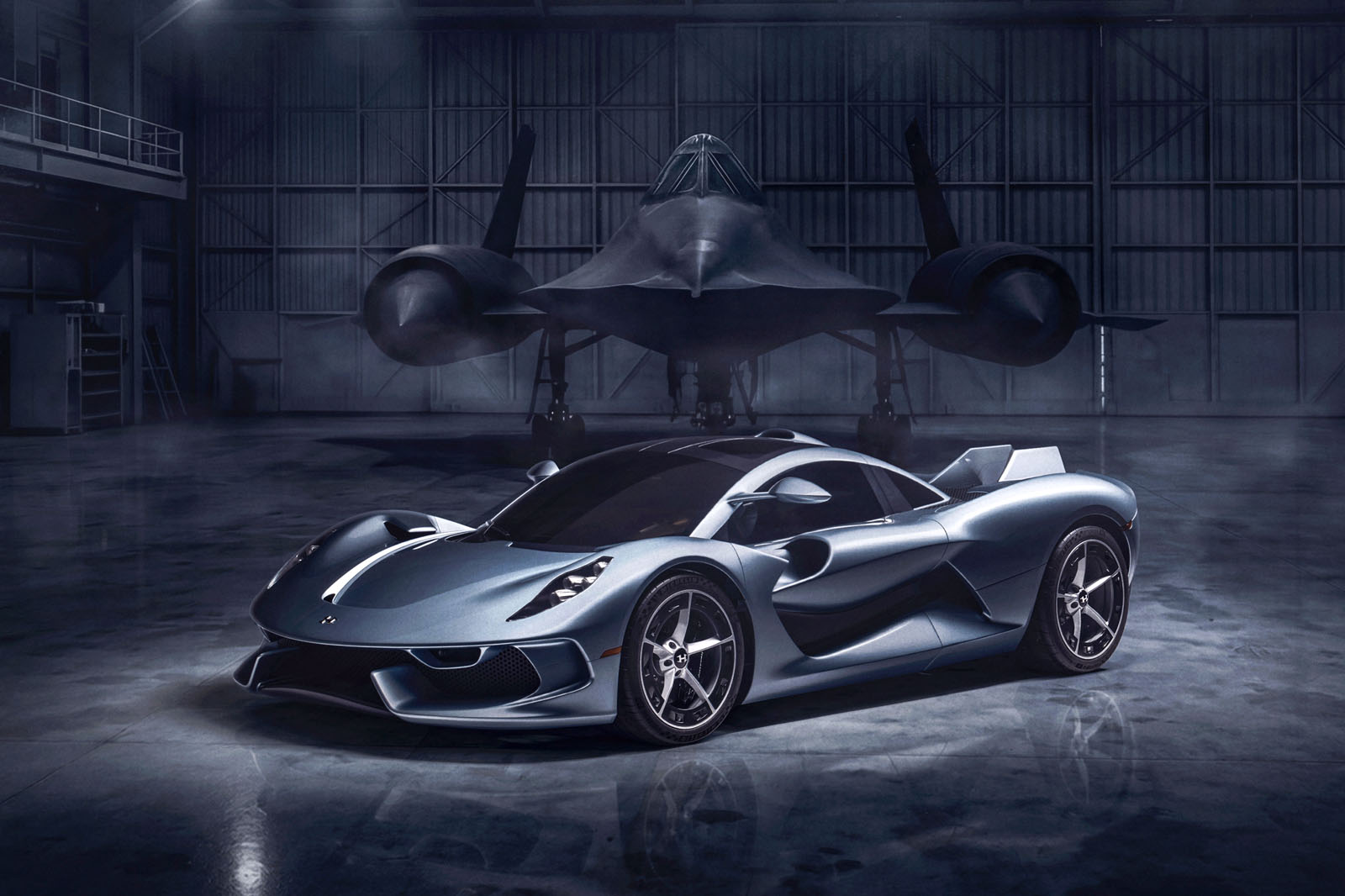
Aerodynamics remain a critical element in the Blackbird’s design, even with its emphasis on analogue feel. The car features active rear stabilizers, directly inspired by the tail fins of the SR-71. These stabilizers are designed to tilt up to 71 degrees at speeds exceeding 71 mph. This dynamic adjustment is crucial for maintaining optimal downforce, ensuring stability and grip at high velocities. The distinctive creases that run alongside the sidepods are another overt nod to its aviation inspiration, subtly reinforcing the link between the car and the aircraft.
Adding another layer to its aeronautical homage, the quad exhaust layout is a deliberate reference to the Bell X-1, the rocket-engined aircraft that famously broke the sound barrier for the first time in 1947. This detail, while subtle, underscores Hennessey’s commitment to weaving the aviation theme into every aspect of the Blackbird’s design and narrative.
The aviation influence extends prominently into the functional and driver-focused cabin. The interior is characterized by an abundance of exposed carbonfibre, reinforcing its lightweight construction and performance pedigree. Visible pedal linkages serve as a tactile reminder of the mechanical systems at play. Instead of a modern digital driver display, the Blackbird features a suite of clearly presented analogue dials and clocks, harking back to a simpler era of automotive and aviation instrumentation. This deliberate choice eschews digital screens in favor of a more classic and direct presentation of information.
This dedication to simplicity and analogue engagement also extends to the infotainment system. The Blackbird eschews a large central touchscreen, opting instead for a smartphone mount. This approach allows drivers to utilize their familiar mobile devices for navigation and media, integrating modern technology in a less intrusive manner. Furthermore, in a move that reinforces the focus on the driving experience, all buttons and switches have been removed from the steering wheel. This design decision encourages the driver to maintain focus on the road and the car’s controls, minimizing distractions and enhancing the tactile connection to the vehicle’s primary functions.
The development of the Hennessey Blackbird represents a strategic evolution for the American hypercar manufacturer. While the Venom F5 aimed for outright top-speed supremacy, the Blackbird carves out a distinct niche by prioritizing driver engagement and a more visceral, analogue driving experience. This shift acknowledges a growing segment of the market that appreciates the raw feel and mechanical purity of a well-engineered machine.
The collaboration with Ilmor Engineering for the naturally aspirated V8 engine is a significant indicator of Hennessey’s commitment to creating a truly unique and high-performance powertrain. Naturally aspirated engines, especially those revving to 9000 rpm, offer a distinct auditory and sensory experience that many enthusiasts find more engaging than their turbocharged counterparts. The combination of a high-revving V8 with a manual gearbox is a recipe for an exhilarating driving experience, demanding skill and precision from the driver.
The extensive use of carbonfibre, both in the chassis and bodywork, is not merely for weight reduction but also contributes to the car’s structural rigidity and responsiveness. A stiffer chassis translates to more precise handling and better feedback through the steering and suspension. The target weight of under 1360 kg is exceptionally low for a car of this size and performance, promising agile and dynamic handling characteristics.
The tribute to the SR-71 Blackbird spy plane is more than just a stylistic exercise. The aircraft was a marvel of engineering, designed for extreme speed, altitude, and range. Hennessey’s ambition to replicate the "long range" aspect in a road car, coupled with its focus on refinement and luggage space, suggests a hypercar that is not only blisteringly fast but also remarkably usable for extended journeys. This dual nature is a key differentiator in the hypercar market.
The Blackbird’s design, with its active aerodynamic elements and nods to historic aircraft, positions it as a visually striking and conceptually rich vehicle. The active rear stabilizers, for instance, are not just aesthetically pleasing but functionally critical for maintaining stability at high speeds. This integration of form and function, inspired by aviation, is a hallmark of high-performance automotive design.
The decision to eschew a traditional digital infotainment screen in favor of a smartphone mount, and to strip the steering wheel of buttons, speaks volumes about Hennessey’s design philosophy for this model. It is a conscious effort to create an environment that immerses the driver in the act of driving, minimizing distractions and maximizing the connection to the mechanicals. This approach is likely to resonate with purists and enthusiasts who value the tactile and sensory aspects of driving.
The Hennessey Blackbird is not merely a successor to the Venom F5; it represents a deliberate pivot in the company’s product strategy, targeting a specific segment of the automotive enthusiast market that craves a more analogue, engaging, and viscerally connected driving experience. Its blend of extreme performance, lightweight construction, a unique naturally aspirated V8 engine paired with a manual transmission, and a design steeped in aviation history, positions it as a truly distinctive and compelling offering in the world of hypercars. The implications of this release suggest that Hennessey is not just building fast cars, but crafting automotive experiences that celebrate the art of driving.