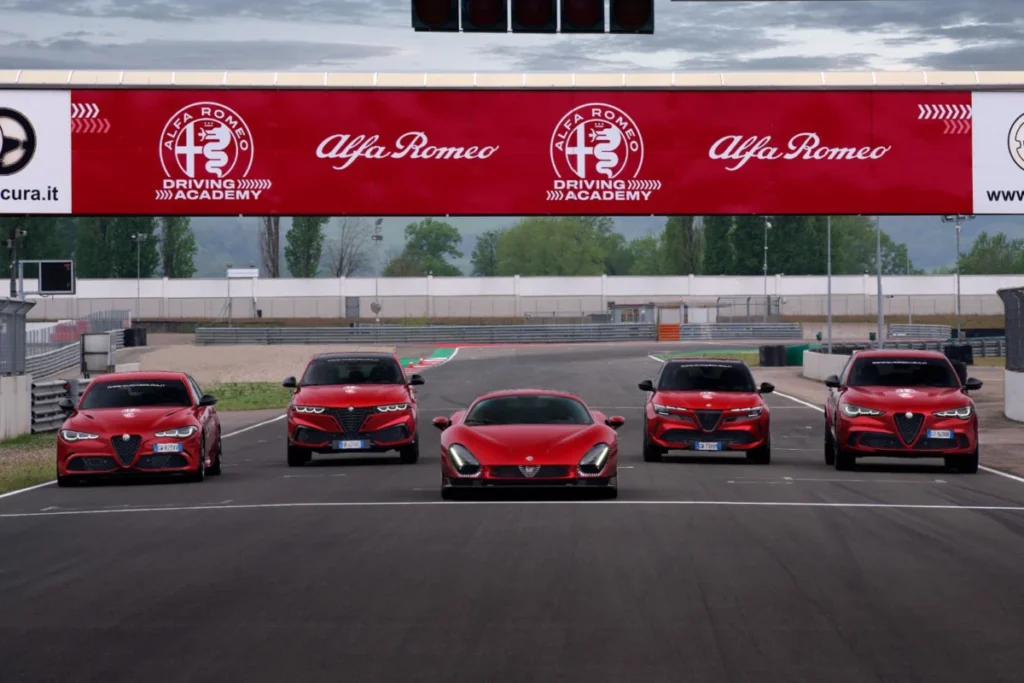
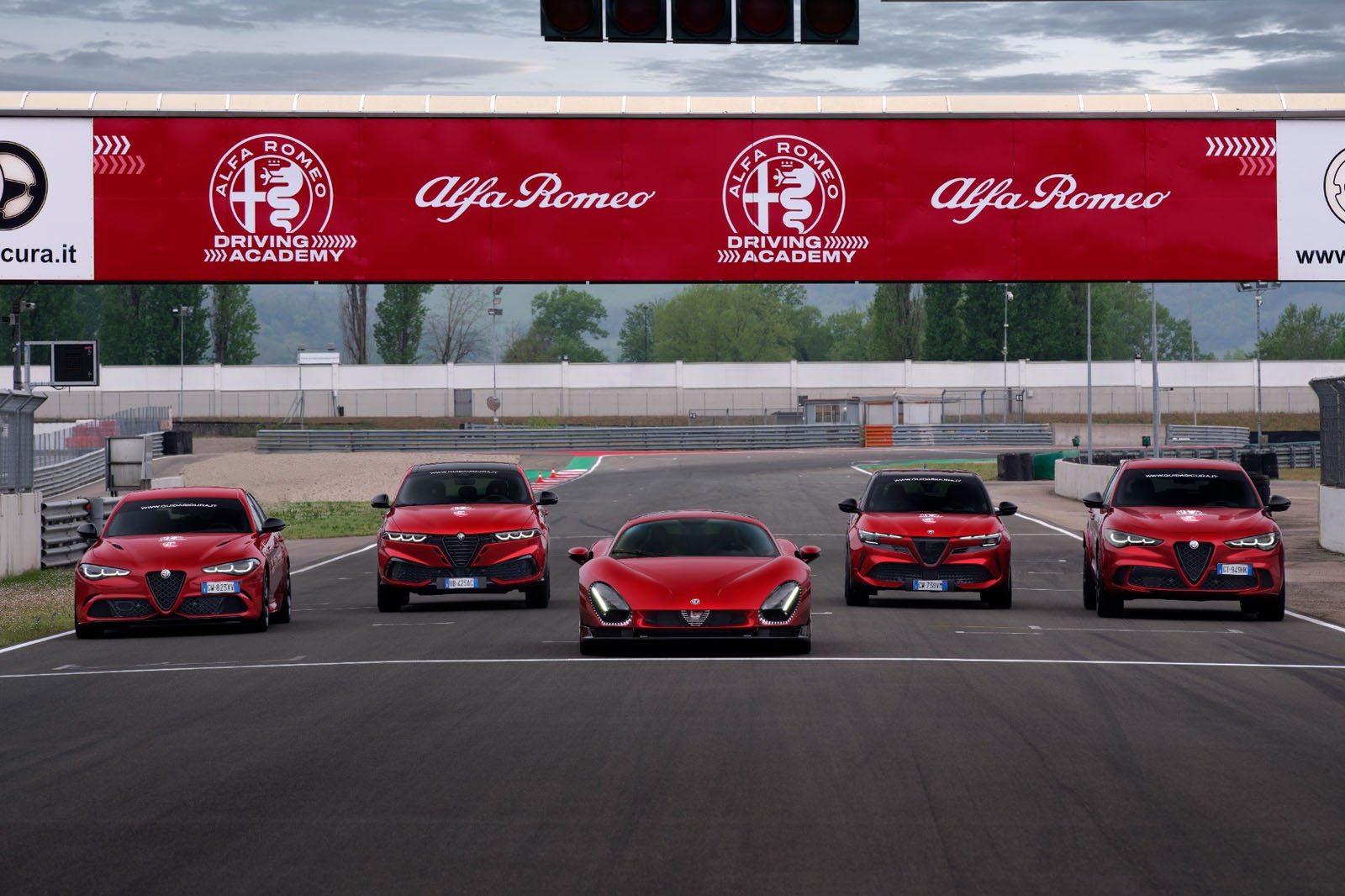
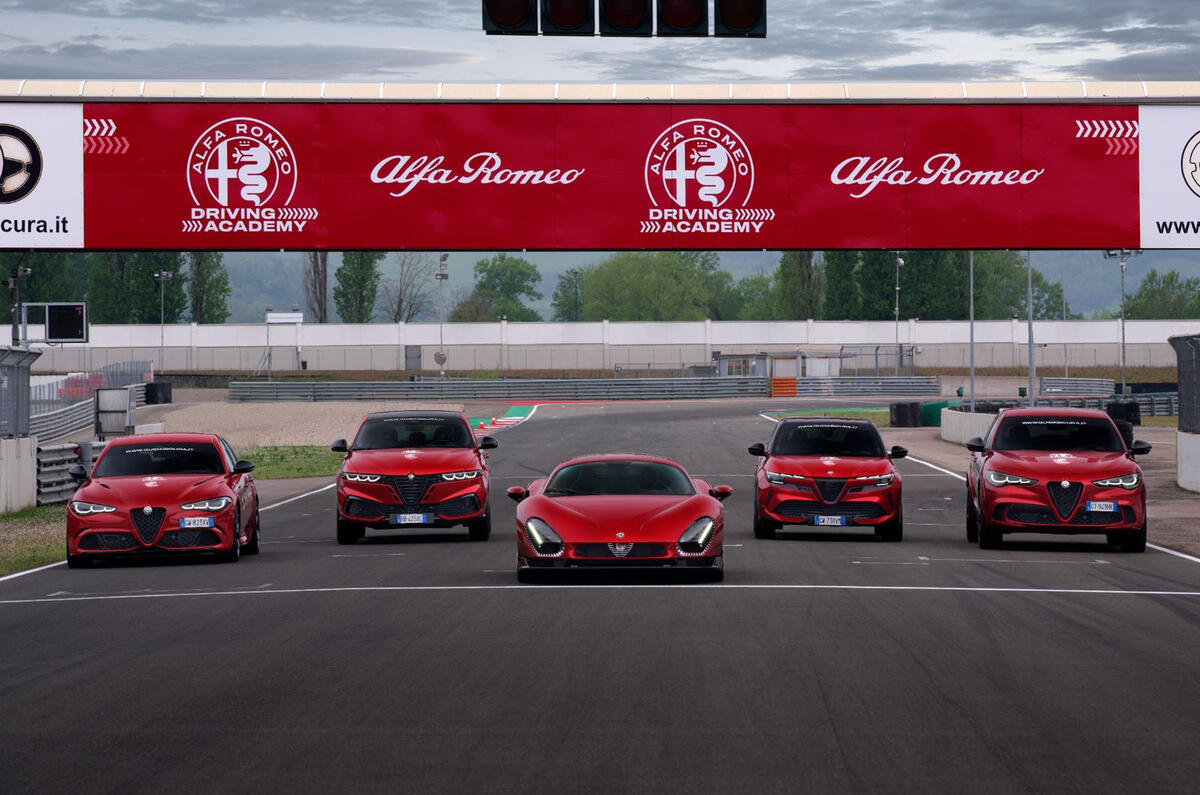
Alfa Romeo’s audacious move to offer vehicles spanning from an accessible sub-£30,000 model to a hypercar potentially costing upwards of £1.4 million has ignited a fascinating debate within the automotive industry: which other manufacturers possess the brand cachet and product diversity to replicate such a feat? The Italian marque, renowned for its blend of performance, design, and emotional appeal, has once again demonstrated its unique position by unveiling the limited-edition 33 Stradale. This ultra-exclusive hypercar, a spiritual successor to the iconic 1967 racer, is set to join Alfa Romeo’s lineup alongside more attainable offerings, such as the forthcoming Junior crossover, previously known as the Milano, which is expected to start in the region of £30,000.
The stark contrast in price points for these two vehicles underscores a remarkable spectrum of automotive ambition. The 33 Stradale, a testament to Alfa Romeo’s engineering prowess and design heritage, is being produced in a strictly limited run of just 33 units. While Alfa Romeo has remained tight-lipped regarding the exact price, industry estimates, based on comparable hypercars from other manufacturers, place its value in the vicinity of £1.4 million. This figure positions it firmly in the realm of ultra-luxury and collectability, a segment typically reserved for marques with an established pedigree in high-performance, low-volume production.
Conversely, the Junior represents Alfa Romeo’s commitment to expanding its market share in the burgeoning compact SUV segment. Designed to appeal to a younger demographic and those seeking a more practical, yet still stylish, daily driver, its projected starting price of around £30,000 makes it an accessible entry point into the Alfa Romeo brand. This strategic duality allows Alfa Romeo to cater to a broad spectrum of automotive enthusiasts, from those aspiring to own a piece of automotive history and performance art to those requiring a stylish and engaging everyday vehicle.
A Legacy of Performance and Design
Alfa Romeo’s ability to bridge such a vast price gap is not a recent development but rather a consequence of its rich and storied history. Founded in 1910, the Milanese manufacturer has consistently produced vehicles that embody a passion for driving, characterized by their distinctive styling, potent engines, and engaging handling. This legacy has cultivated a devoted following and a brand perception that transcends mere transportation, imbuing its products with an aspirational quality.
The original 33 Stradale, produced between 1967 and 1969, is considered one of the most beautiful cars ever made and a benchmark for sports car design. Its revival as a modern hypercar is a deliberate nod to this glorious past, aiming to capture the same spirit of innovation and exclusivity. This historical resonance is a powerful asset for Alfa Romeo, allowing it to command premium prices for its halo models while simultaneously maintaining relevance in more mainstream segments.
The Competitive Landscape: Who Else Can Play This Game?
The question posed by the colleague – "Which brands can retail a car at under thirty grand but also, like Alfa Romeo, launch a limited-edition, several-million-pound supercar?" – is a pertinent one. The automotive market is increasingly stratified, with manufacturers often specializing in specific niches. To successfully operate at both ends of the price spectrum requires a unique combination of brand equity, engineering capability, and manufacturing flexibility.
Several luxury and performance brands come to mind, but few possess the precise blend of accessible volume and extreme exclusivity that Alfa Romeo is demonstrating.
-
Porsche: The Stuttgart-based manufacturer is arguably one of the closest competitors. Porsche successfully offers models like the Macan and Cayenne, which start in the £50,000-£70,000 range, and can be significantly more expensive with higher trims and options. Simultaneously, Porsche has a formidable reputation for its limited-run hypercars and track-focused specials, such as the 911 GT series and occasional one-off projects or ultra-exclusive models like the Porsche 911 Speedster or the upcoming Le Mans-inspired hypercar. However, their most exclusive models typically fall into the high hundreds of thousands rather than the multi-million-pound bracket of the 33 Stradale, though the value of some classic or highly sought-after modern Porsches can certainly reach astronomical figures in the collector market.
-
Ferrari: As a marque synonymous with performance and exclusivity, Ferrari is a natural contender. Their F8 Tributo and Roma models, for example, start in the low £200,000s, and more accessible models like the Portofino M can be found starting in the £170,000s. However, Ferrari’s true hypercars, such as the LaFerrari or the recently unveiled Daytona SP3 (part of the Icona series), command prices well into the seven figures, often exceeding £1.5 million. The key differentiator here is that Ferrari’s "entry-level" models are still considerably more expensive than Alfa Romeo’s projected £30,000 Junior. Ferrari does not compete in the sub-£30,000 segment.
-
McLaren: Similar to Ferrari, McLaren operates primarily in the supercar and hypercar arena. Their Artura, for instance, starts in the region of £180,000, and their more exclusive models, like the Senna or Speedtail, are in the multi-million-pound bracket. McLaren does not offer vehicles in the sub-£30,000 category, focusing its efforts on the high-performance end of the market.
-
Aston Martin: Aston Martin occupies a space that often blends luxury grand touring with sporting prowess. Models like the Vantage can start in the £130,000s, while their more exclusive offerings, like the Valkyrie hypercar, are priced well into the millions. However, like Ferrari and McLaren, Aston Martin does not have a presence in the sub-£30,000 market.
The Alfa Romeo Advantage: Bridging the Gap
Alfa Romeo’s unique proposition lies in its ability to maintain a strong brand identity rooted in Italian passion and performance, while also leveraging the broader capabilities of its parent company, Stellantis. The Junior, built on a shared platform with other Stellantis compact SUVs like the Fiat 600 and Jeep Avenger, allows Alfa Romeo to achieve economies of scale and offer a competitively priced vehicle. This strategic use of shared architectures is crucial for profitability in the more volume-oriented segments.
The 33 Stradale, on the other hand, is a product of Alfa Romeo’s advanced engineering and design studios, and its limited production run allows for a premium pricing strategy that capitalizes on its rarity and desirability. The fact that it is not even listed on the regular model configurator emphasizes its bespoke nature and the exclusive ordering process for its select clientele. This suggests a direct sales model or a dedicated concierge service for prospective buyers.
Implications for the Automotive Market
Alfa Romeo’s dual-pronged approach has several implications for the broader automotive market:
-
Brand Revitalization: By successfully launching both an accessible model and an ultra-exclusive hypercar, Alfa Romeo is projecting an image of dynamism and broad appeal. This can help to attract new customers and re-energize interest in the brand, potentially leading to increased sales across its entire range.
-
Challenging Market Perceptions: The ability to command both mass-market appeal (through accessible pricing) and extreme desirability (through hypercars) challenges traditional market segmentation. It suggests that brands with a strong emotional connection and a compelling heritage can successfully straddle these seemingly disparate segments.
-
Future of Hypercar Production: The success of limited-edition hypercars like the 33 Stradale, even without a confirmed price, indicates a continued strong demand for ultra-exclusive vehicles among wealthy collectors and enthusiasts. This segment remains a lucrative niche for manufacturers willing to invest in bespoke engineering and design.
-
Platform Strategy: The Junior’s reliance on a shared Stellantis platform highlights the ongoing trend of platform sharing within automotive conglomerates. This strategy enables brands to reduce development costs and offer a wider range of vehicles more efficiently, a necessity for competing in today’s global market.
The Road Ahead
As the automotive industry continues to evolve, driven by technological advancements and changing consumer preferences, brands that can offer a compelling narrative, a diverse product portfolio, and a strong emotional connection are likely to thrive. Alfa Romeo’s recent moves suggest a strategic vision to leverage its storied past and engineering prowess to capture both the aspirations of everyday drivers and the ultimate desires of the world’s most discerning collectors. Whether other brands can emulate this precise balance remains to be seen, but Alfa Romeo’s bold strategy is undoubtedly a fascinating case study in modern automotive brand management. The company’s ability to project an image of aspirational performance, from the attainable to the almost unobtainable, is a testament to the enduring power of the Alfa Romeo legend.