In an era increasingly dominated by digital effects, a refreshing wave of practical innovation is capturing the imagination of audiences worldwide, proving that the tactile magic of animatronics holds an enduring appeal. At the forefront of this movement is Jesse Velez, an accomplished animatronics designer, whose recent work on a fully wireless, portable animatronic robot for the Netflix hit series "Wednesday" has set a new benchmark for interactive entertainment and experiential marketing. This marvel of engineering and artistry brought the show’s beloved character, "Thing," to life in a tangible form, allowing it to interact spontaneously with cast members and fans across global red carpet events, from the bustling streets of Los Angeles and New York to the vibrant capitals of Seoul, Istanbul, and London.
The Phenomenon of "Wednesday" and an Iconic Character
Netflix’s "Wednesday," a spin-off of the iconic Addams Family franchise, premiered in November 2022 to critical acclaim and unprecedented viewership, quickly becoming one of the streaming giant’s most-watched English-language series. The show revitalized the macabre charm of the Addams universe through the eyes of Wednesday Addams, portrayed by Jenna Ortega, as she navigates life at Nevermore Academy, a school for monstrous outcasts. Central to the series’ narrative and its unique aesthetic is "Thing," the disembodied, sentient hand that serves as Wednesday’s loyal companion, confidante, and occasional accomplice.
"Thing" has been a staple of the Addams Family lore since its inception by cartoonist Charles Addams in 1938. Initially portrayed as a whole character in some early iterations, it evolved into a disembodied hand in the iconic 1960s television series, often emerging from boxes, desks, or even a pet house. Its presence is both humorous and endearing, providing comic relief and emotional support to the otherwise stoic Wednesday. For the Netflix series, director Tim Burton, known for his distinctive visual style and affinity for practical effects, aimed to bring "Thing" to life in a way that felt authentic and grounded within the show’s gothic yet whimsical world. While CGI was utilized for some sequences, a significant portion of "Thing’s" on-screen performance involved human actor Victor Dorobantu, often contorting himself or performing in a blue screen suit, which was then digitally erased. This commitment to a practical foundation for the character within the show itself underscored the creative team’s understanding of its tangible appeal.
The challenge for the marketing and promotional tour was to replicate this authenticity for live, interactive appearances. A static prop would not suffice; "Thing" needed to be as dynamic and responsive as its on-screen counterpart, capable of improvisation and direct engagement with an audience. This is where Jesse Velez and his team at Raptor House FX stepped in.
Crafting the Unseen Performer: Jesse Velez and Raptor House FX
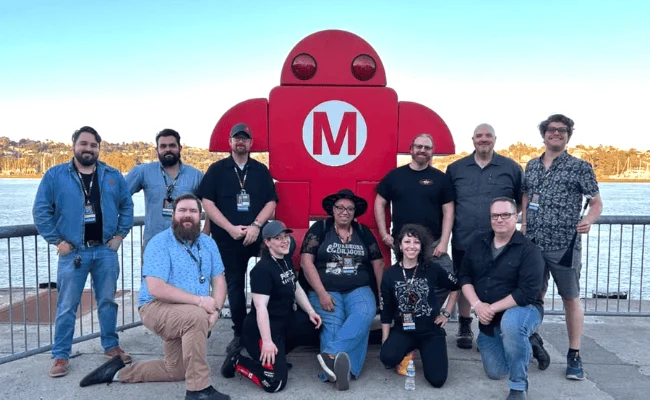
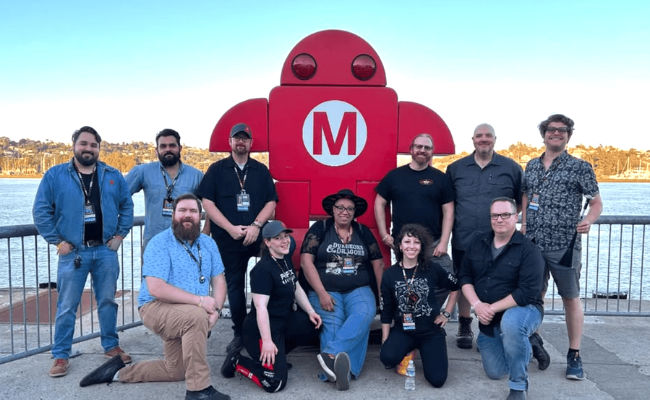
Jesse Velez is an animatronics designer and practical effects specialist known for his innovative approach to bringing fantastical creatures and characters into the physical realm. His studio, Raptor House FX, embodies a philosophy that prioritizes creative problem-solving, often blending readily available, off-the-shelf components with custom-fabricated parts to achieve sophisticated results. This "maker" ethos, deeply rooted in the DIY spirit but elevated to a professional, industry-leading standard, allows for rapid prototyping, cost-effective solutions, and a flexibility often difficult to achieve with purely bespoke, large-scale industrial manufacturing.
Velez’s expertise lies not just in mechanical design but also in understanding the nuances of performance. Animatronics, at their core, are about simulating life, and that requires more than just movement; it demands character, timing, and responsiveness. For the "Wednesday" project, the mandate was clear: create an animatronic "Thing" that could truly perform live, mirroring human movements in real-time, wirelessly, and be robust enough for international travel. This was a significant undertaking, pushing the boundaries of what portable animatronics could achieve for promotional events.
From Concept to Global Stage: The Evolution of a Portable Animatronic
Like many groundbreaking innovations, the journey of the animatronic "Thing" began with a deceptively simple premise: a hand that walked. This initial prototype served as a crucial proof of concept, demonstrating the feasibility of creating a self-contained, mobile hand. However, transforming a walking prototype into a sophisticated, performing animatronic capable of spontaneous interaction required overcoming numerous engineering and design hurdles.
The core challenge was to imbue the animatronic with the fluidity and expressiveness of a human hand while maintaining its distinct, unsettling charm. This meant designing a system that allowed a hidden performer to remotely control the animatronic’s every digit, wrist movement, and overall locomotion with precision and minimal latency.
Engineering the Impossible: Wireless Control and Real-Time Interaction
To achieve real-time human movement mirroring, Velez and his team likely employed a sophisticated motion capture or remote control system. A common approach in advanced animatronics involves a "master-slave" setup, where a human performer wears a specialized glove or exoskeletal rig equipped with sensors (e.g., flex sensors for finger bends, accelerometers/gyroscopes for wrist orientation). These sensors capture the performer’s hand movements, which are then transmitted wirelessly to the animatronic "Thing."
The animatronic itself would house a complex array of miniaturized components:
- Servos: High-torque micro-servos or linear actuators would be embedded within each finger and the palm to control individual digit movements, wrist rotation, and articulation. The number and quality of these servos directly dictate the animatronic’s dexterity and range of motion.
- Microcontroller: A powerful, compact microcontroller (e.g., an Arduino Mega, Raspberry Pi, or a custom PCB with an ESP32 chip) would serve as the brain, receiving wireless commands, interpreting them, and translating them into precise movements for each servo.
- Wireless Communication: A robust, low-latency wireless communication protocol was essential. This could involve custom RF modules, secure Wi-Fi, or advanced Bluetooth solutions, designed to minimize interference and ensure instantaneous response, critical for live performance.
- Power Management: Given its portability and wireless nature, the animatronic required an efficient, lightweight power source. High-density lithium-polymer (LiPo) batteries, carefully integrated and balanced within the hand’s structure, would provide the necessary power for sustained operation during events. Intelligent power management systems would be crucial to monitor battery life and prevent unexpected shutdowns.
- Sensors (on animatronic): While primarily a slave unit, the animatronic might incorporate rudimentary sensors (e.g., proximity sensors) to assist with navigation or prevent collisions during movement, adding an extra layer of operational safety.
Durability and Portability for a World Tour

The requirement for global travel presented its own set of engineering challenges. The animatronic had to be not only functional but also incredibly durable and compact.
- Materials: Lightweight yet robust materials would have been selected for the hand’s chassis and outer shell. High-strength plastics (like ABS or nylon, potentially 3D printed), carbon fiber composites, or even specialized aluminum alloys could have been used to create a resilient structure that could withstand the rigors of transportation and repeated handling.
- Modular Design: A modular design approach would likely have been employed, allowing for easy access to internal components for maintenance, repairs, or battery swaps. This also facilitates efficient packing and unpacking.
- Protection: Custom-designed flight cases with precision-cut foam inserts would be indispensable for protecting the delicate internal mechanisms and external aesthetics during transit across continents, ensuring "Thing" arrived ready to perform in Los Angeles, New York, Seoul, Istanbul, and London.
- Aesthetics: Beyond the mechanics, the visual fidelity to the "Thing" seen in the series was paramount. The animatronic’s skin texture, coloration, and the subtle details of its "severed" appearance had to be meticulously crafted to match the show’s aesthetic, blurring the line between prop and character.
Velez’s approach of "creatively hacking together off-the-shelf and purpose-built components" is key here. It suggests a pragmatic engineering mindset, where readily available technologies are adapted and integrated with custom solutions to create a unique, high-performance system without the need for prohibitively expensive, ground-up development for every single part. This agility is a hallmark of successful practical effects studios operating within tight deadlines and budgets.
The Global Premiere Tour: An Interactive Marketing Triumph
The deployment of the animatronic "Thing" on the global premiere circuit for "Wednesday" was nothing short of a marketing masterstroke. In an era where digital content is ubiquitous, the opportunity for fans to interact with a beloved character in the flesh (or, in this case, the highly realistic simulated flesh) created an unforgettable experience.
Red carpet events are designed to generate buzz, provide photo opportunities, and connect stars with their fans. The animatronic "Thing" elevated these events by injecting an element of live, unscripted performance. Imagine the surprise and delight of attendees as "Thing" scuttled across the carpet, waved to cameras, offered a high-five to a celebrity, or even playfully "stole" a microphone from an interviewer. These moments, captured on camera and shared across social media, generated organic viral content far more engaging than traditional promotional materials.
The animatronic’s portability and wireless control were crucial to its success on this tour. The ability of the hidden performer to control "Thing" in real-time meant it could react spontaneously to its environment, improvise with the cast (who were often genuinely surprised and entertained by its antics), and engage directly with the diverse fan bases in each city. This level of interaction fostered a deeper connection between the audience and the "Wednesday" universe, reinforcing the show’s unique charm and its commitment to imaginative storytelling.
The tour’s stops in major cultural hubs like Los Angeles, the heart of Hollywood; New York, a global media capital; Seoul, a powerhouse of pop culture and digital innovation; Istanbul, a crossroads of continents; and London, a global city with a rich history of entertainment, demonstrated the universal appeal of "Thing" and the effectiveness of this interactive marketing strategy. Each location offered a unique backdrop for "Thing’s" appearances, generating local excitement and amplifying the show’s global reach.
The Resurgence of Practical Effects in a Digital Age

Jesse Velez’s work on "Thing" is more than just a successful project; it’s a potent symbol of a broader trend: the resurgence and renewed appreciation for practical effects in the entertainment industry. For decades, particularly from the late 1990s through the early 2010s, computer-generated imagery (CGI) ascended to dominance, promising limitless possibilities and often replacing traditional practical effects. While CGI offers unparalleled flexibility for creating vast worlds and impossible creatures, it sometimes struggles to convey the same tangible weight, texture, and physical presence as something real.
A growing segment of both creators and audiences has begun to express a preference for practical effects, recognizing their unique ability to ground fantastical elements in reality. This isn’t to say CGI is obsolete; rather, the most effective modern productions often employ a harmonious blend of both. Practical effects provide a physical reference for actors, allowing them to react to something real on set, which can translate into more authentic performances. They also offer a "visceral thrill" for audiences, a sense of awe derived from witnessing something physically present, complex, and alive, even if its animation is remote-controlled.
Shows like "The Mandalorian" (with its use of puppetry for Grogu) and "Stranger Things" (with its blend of animatronics, prosthetics, and digital enhancements for its creatures) exemplify this contemporary approach. The success of the "Wednesday" animatronic "Thing" on its global tour further solidifies the argument for practical effects, especially in interactive, live settings. The palpable excitement generated by "Thing’s" presence demonstrates that in an age of digital overload, the unique, tangible spectacle of real-world animatronics remains a powerful draw.
From an artistic standpoint, practical effects force a different kind of creativity, demanding ingenious mechanical solutions, masterful sculpting, and meticulous craftsmanship. From a logistical standpoint, while CGI can be expensive and time-consuming in post-production, practical effects, particularly those built with a "maker" philosophy like Velez’s, can sometimes offer more immediate, cost-effective solutions for specific applications, especially for live events where digital rendering isn’t an option.
Beyond the Red Carpet: Implications for Entertainment and Innovation
The success of the "Wednesday" animatronic "Thing" carries significant implications for the future of entertainment, marketing, and the maker community.
- Experiential Marketing Elevated: This project sets a new standard for experiential marketing, demonstrating how advanced animatronics can transform passive promotional events into dynamic, memorable, and highly shareable interactive experiences. Brands and studios are likely to take note, investing more in similar physical activations to create deeper connections with their audiences.
- The Power of the Maker Ethos: Jesse Velez’s approach, combining off-the-shelf components with custom solutions, highlights the power of the "maker" philosophy in professional contexts. It underscores that innovation doesn’t always require massive budgets or proprietary technologies but often stems from creative resourcefulness, problem-solving acumen, and a deep understanding of engineering principles. This empowers a new generation of designers and engineers to tackle complex challenges with accessible tools and techniques.
- Future of Live Entertainment and Robotics: The development of portable, wireless, real-time controlled animatronics opens up exciting possibilities for live entertainment beyond film premieres. Imagine interactive characters in theme parks, theatrical productions, educational exhibits, or even sports events, all controlled with the same fluidity and responsiveness demonstrated by "Thing." The advancements in robotics and AI will only further enhance these capabilities, leading to increasingly sophisticated and autonomous animatronic performers.
- Blending Art and Engineering: Velez’s work is a testament to the synergistic relationship between artistic vision and engineering prowess. The artistry of bringing a character like "Thing" to life requires not just mechanical skill but also an aesthetic understanding of movement, character, and audience perception. This blend of art and engineering will continue to drive innovation in practical effects and animatronics.
Jesse Velez and Raptor House FX have not only delivered an impressive technical achievement but have also reaffirmed the profound impact that tangible, interactive spectacle can have in an increasingly digital world. Their work on "Thing" for "Wednesday" stands as a shining example of how relentless creativity, combined with ingenious engineering, can bring our wildest sci-fi and fantasy dreams to life, one servo and line of code at a time, creating unforgettable moments for audiences globally and inspiring the next generation of makers and practical effects artists. The future, it seems, is indeed tactile.