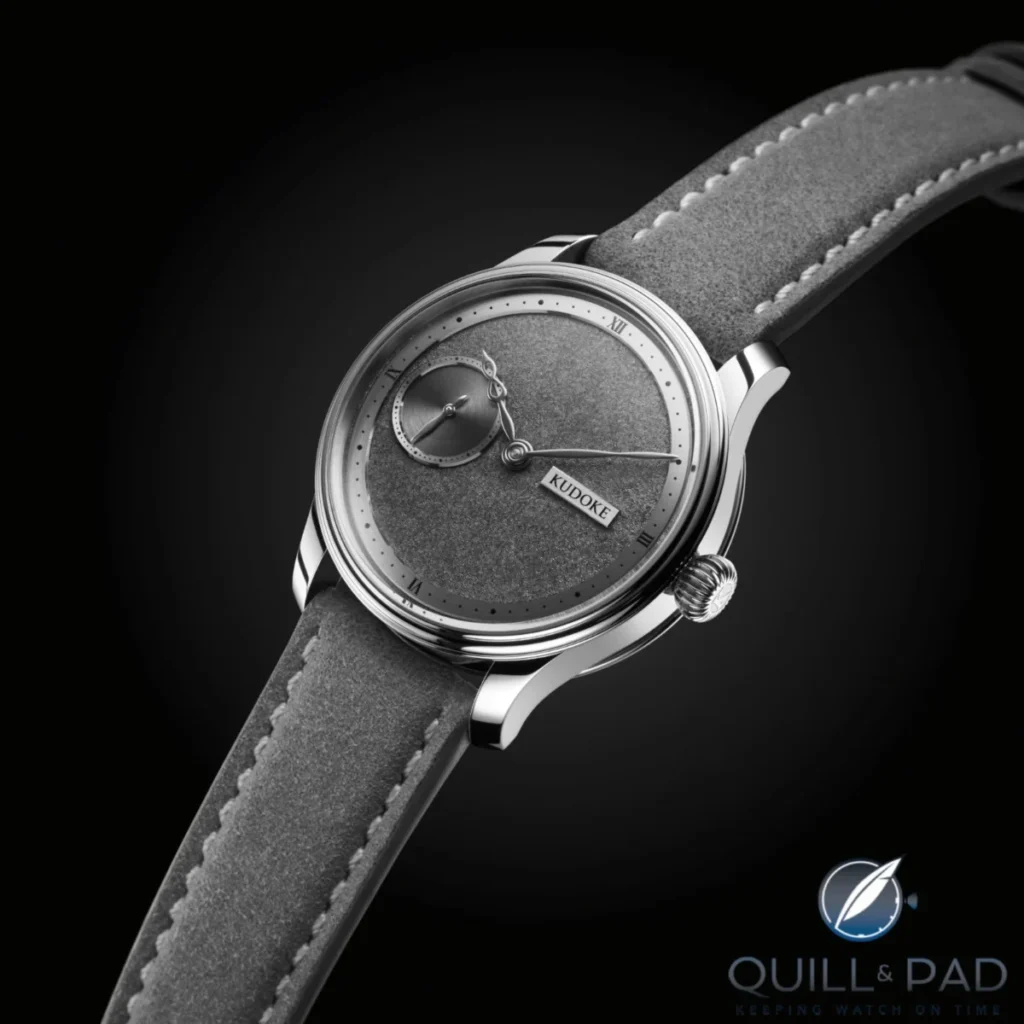
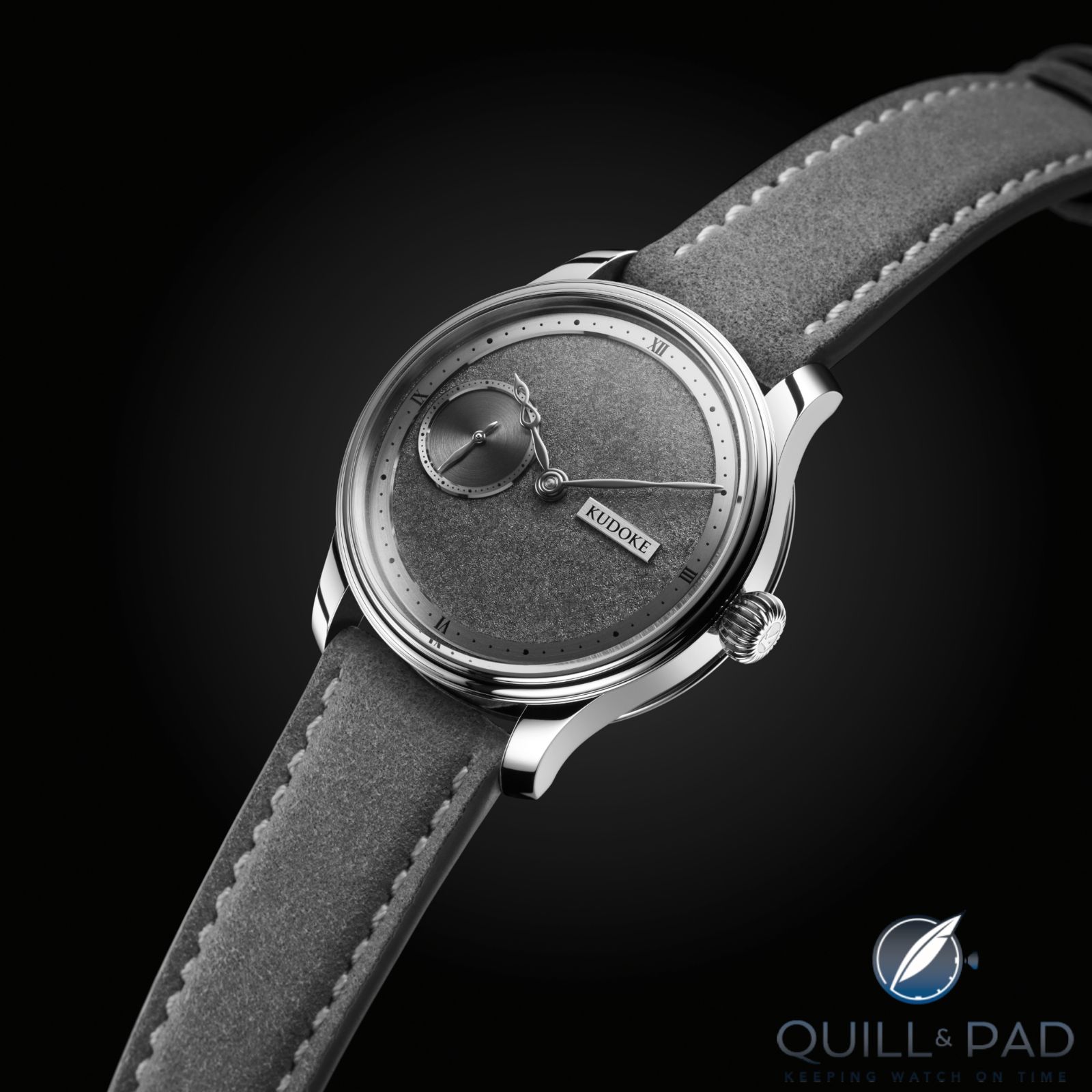
In early April 2026, Kudoke unveiled the Tremblage versions of the Kudoke 1 and 2 models from the Handwerk collection, marking a significant evolution in the brand’s approach to haute horlogerie decoration. These timepieces showcase dials meticulously adorned with traditional, centuries-old hand-engraving techniques, bringing a distinct textural depth to Kudoke’s flagship models. This artisanal approach, known as tremblage, is a demanding art form that imbues each watch with a unique character and a remarkable tactile quality.
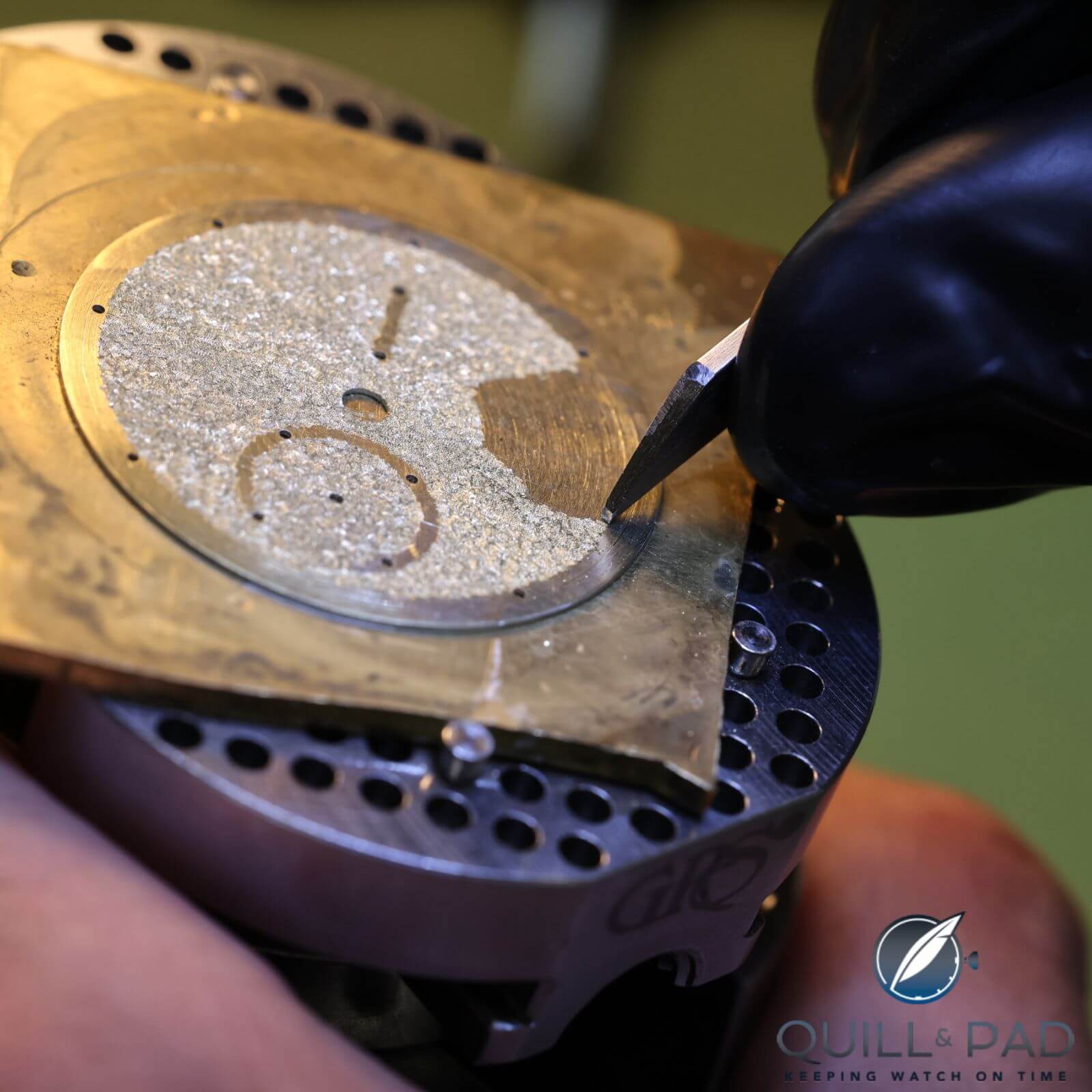
The defining characteristic of tremblage, setting it apart from other engraving methods, lies in the use of a burin to create a uniform yet seemingly chaotic texture across the surface. Unlike figurative motifs or precise geometric patterns found in classical or guilloché techniques, tremblage achieves a dense, granular finish. This is accomplished by repeatedly traversing the surface with an oscillating burin from various directions. The resultant uniform, chaotic texture is both the technique’s advantage and its challenge, demanding exceptional skill from the engraver and considerable time investment.
The Rise of Tremblage in Modern Watchmaking
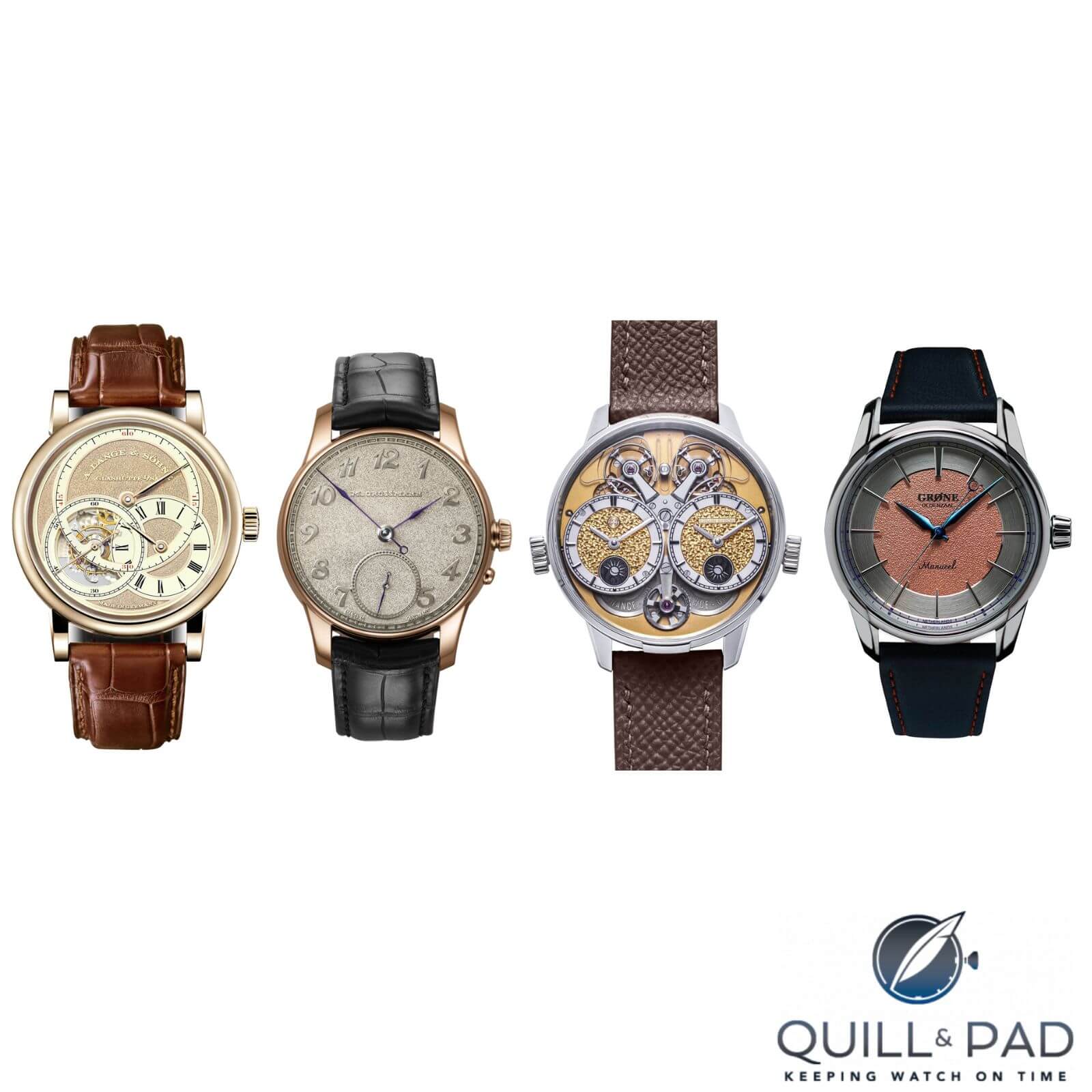
The inherent difficulty and time commitment of tremblage engraving mean that only a select few watch brands venture into its application. A. Lange & Söhne is widely credited with reintroducing this intricate technique to contemporary watchmaking, most notably gracing the dials of select models within their exclusive Handwerkskunst line, characterized by extremely limited production runs. The pioneering timepiece to feature this decoration was the Richard Lange Tourbillon "Pour le Mérite" Handwerkskunst Ref. 761.050, introduced in 2011, with a total of just 15 pieces manufactured. This early adoption by a prestigious maison set a precedent for the technique’s potential in high-end watchmaking.
Following in the footsteps of A. Lange & Söhne, Moritz Grossmann, a fellow inhabitant of Glashütte, introduced its Tremblage series in 2021. These watches featured dials crafted from nickel silver, a material that develops a unique patina over time, leading to unpredictable color shifts that enhance the tremblage engraving’s visual appeal. Since its initial launch, Moritz Grossmann’s Tremblage line has expanded significantly, now encompassing at least four distinct core designs: the Backpage Tremblage, the Tourbillon Tremblage, the Tremblage Gold (which surprisingly includes a platinum model), and the Tremblage Green. This sustained focus has proven effective, with Moritz Grossmann’s Tremblage models appearing more frequently in online marketplaces and collector circles than those of the technique’s pioneer, A. Lange & Söhne.
The "tremblage club" has continued to grow, with Grönefeld’s sub-brand, Gröne Oldenzaal (Manueel One watches), joining in 2024. Subsequently, in 2025, Armin Strom introduced the Armin Strom 1 – Revolution Dual Time GMT Resonance "Tremblage" watch, reportedly produced in a mere five units. The latest addition, as of 2026, is Stefan Kudoke, with his distinct tremblage versions of the Kudoke 1 and Kudoke 2 models.
Stefan Kudoke’s Innovative Approach to Tremblage
Stefan Kudoke’s contribution to the tremblage art form is characterized by his ingenuity in making this highly specialized technique accessible at a more attainable price point, a feat that speaks volumes about his craft and business acumen. He has ingeniously implemented three key strategies to achieve this:
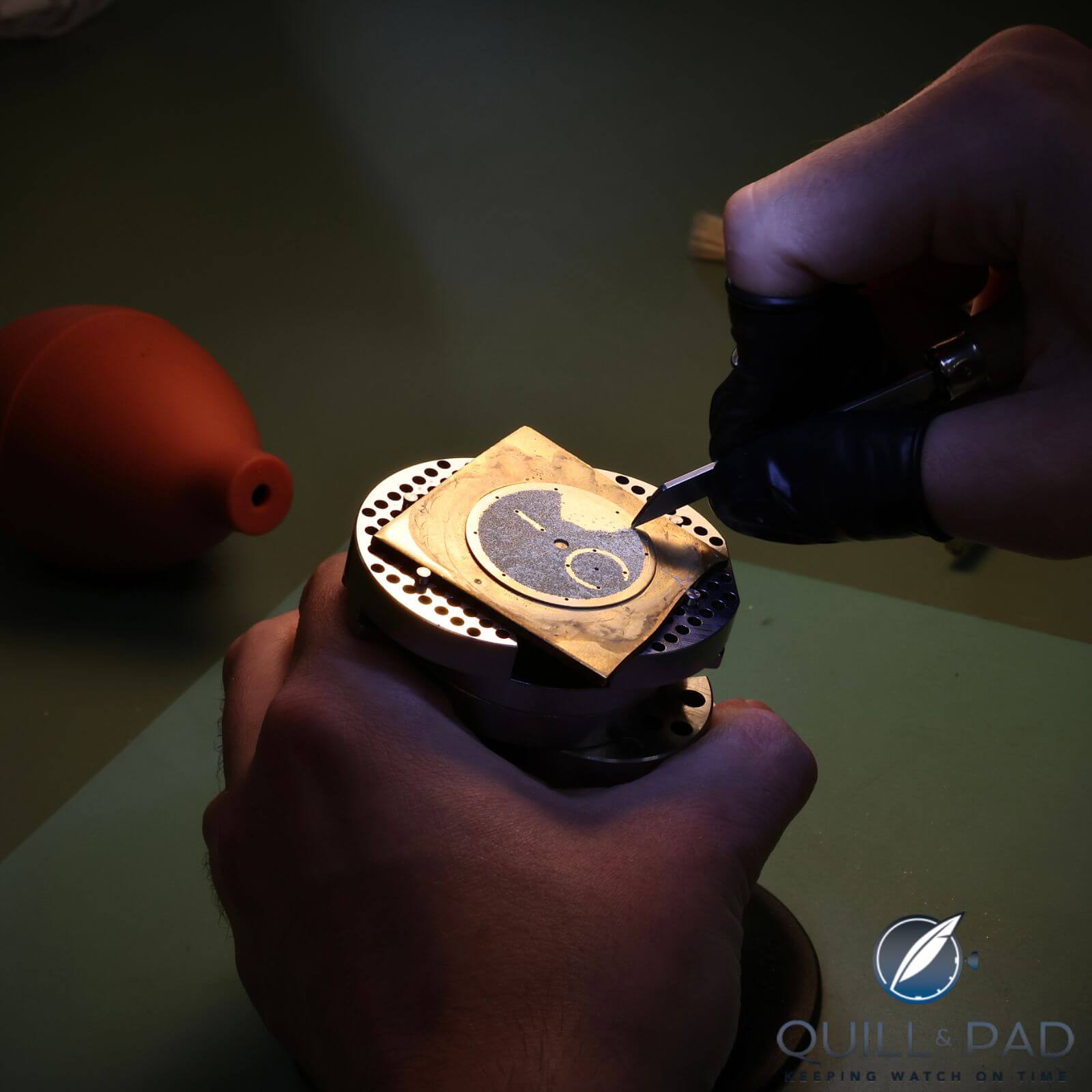
Firstly, Kudoke utilizes a brass plate as the base for his dials, eschewing solid gold or German silver. This choice significantly reduces material costs without compromising the aesthetic impact of the engraving.
Secondly, the dial design is based on a flat plate, which is subsequently electroplated and fitted with applied indices and numerals. This construction method offers a crucial advantage during the engraving process: areas adjacent to these applied elements do not require absolute precision right up to the edge. The margins of the engraved sections are conveniently concealed beneath the appliqués, simplifying the finishing process and saving valuable time.
Thirdly, Kudoke employs a serrated burin for the engraving. This specific tool allows him to achieve a consistent tremblage texture much more rapidly than with traditional methods, further contributing to the efficiency of production.
In crafting his tremblage dials, Stefan Kudoke prioritizes maximizing the visual impact of the texture, delivering the "maximum amount of tremblage" as he describes it. This focus ensures that the signature quality of the technique remains the star of the show. In the Kudoke 1 model, the main tremblage dial is elegantly paired with a small seconds subdial positioned at 9 o’clock. The Kudoke 2 model incorporates the tremblage dial alongside a sophisticated day/night indicator.
A Distinctive Aesthetic: Austere and Military-Inspired
The uniform, chaotic texture achieved through tremblage lends Kudoke’s watches a visual appeal that transcends typical decorative timepieces. The matte finish produced by this technique imparts an aesthetic that borders on the military, offering a departure from overly ornate or "sugary" decorative styles. Instead, Kudoke’s interpretation presents a dual character: partly austere and partly reminiscent of utilitarian military design.
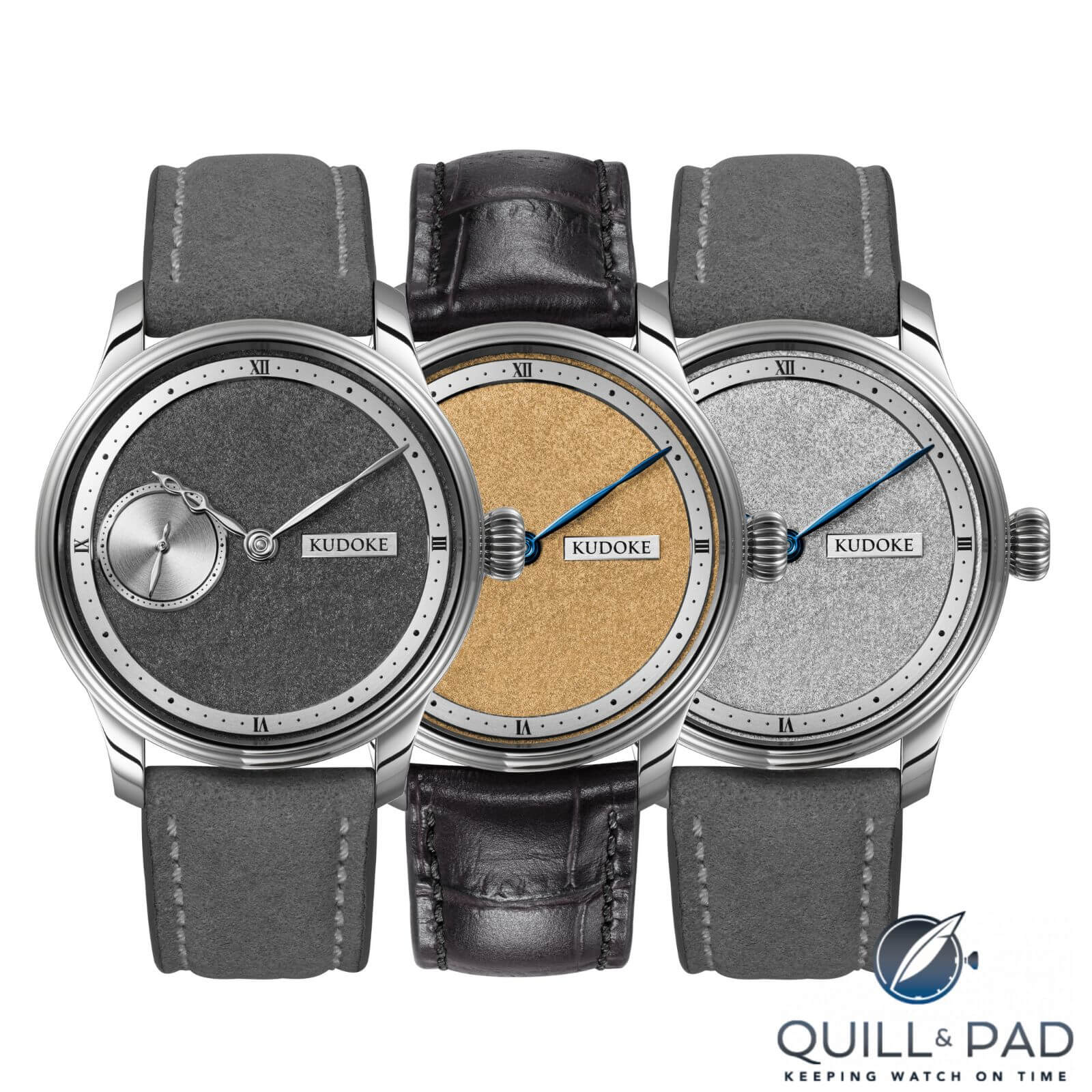
Kudoke offers the tremblage finishing across three versions of the Kudoke 1 Tremblage: gold-plated, rhodium-plated, and black rhodium-plated dials. All three variants are highly compelling. For those with a preference for classic horological elements, the versions featuring blued hands are particularly noteworthy. These hands, often in spade-and-whip shapes, add an archaic touch, echoing historical designs. These hand styles, coincidentally, first appeared in the late 18th century, with prominent watchmakers like John Arnold regularly employing them in the 1770s.
The double-ended hour hand on the Kudoke 1, designed by Stefan Kudoke to resemble a horizontal figure eight—the infinity symbol—also evokes a connection to traditional watchmaking. Its form can be seen as a nod to the double-spade hour hand, a hallmark of traditional half-hunter pocket watches. This stylistic choice might even inspire a reimagining of the wristwatch with a half-hunter case cover, a concept that adds a layer of historical intrigue.
The Heart of the Matter: Kudoke’s Kaliber 1 Movement
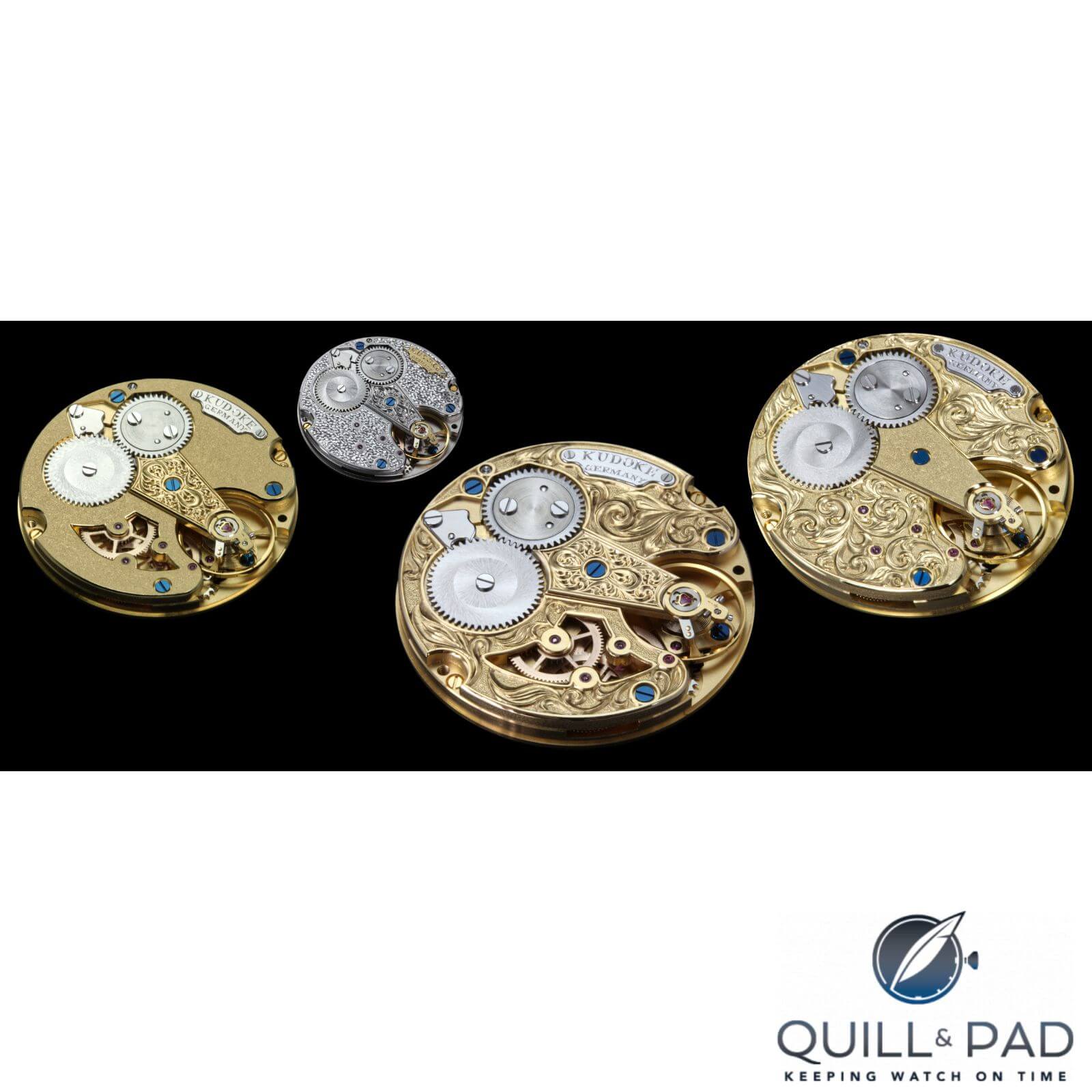
When encountering a timepiece from an independent, creative brand like Kudoke, enthusiasts often anticipate discovering a unique movement beneath the sapphire caseback. This expectation is met with the Handwerk collection, which is built around Kudoke’s proprietary Kaliber 1. This movement stands apart from the ubiquitous ETA, Sellita SW200/300, or Unitas calibers, offering a refreshing alternative that avoids the significant cost and effort associated with developing entirely new, mass-produced movements.
The Kaliber 1’s design is immediately striking and clearly unique. Stefan Kudoke himself acknowledges that its genesis lies in an antique English pocket watch caliber from the 19th century that he acquired. The foundational design of this movement type can be traced back to the final quarter of the 18th century. During this period, English watchmakers like John Arnold and Thomas Earnshaw, driven by the innovative spirit characteristic of their era, began to move away from the ornate Baroque balance cocks. They adopted a simpler, more symmetrical aesthetic, influenced by the burgeoning Industrial Revolution, and began incorporating stepped, trapezoidal balance cocks.
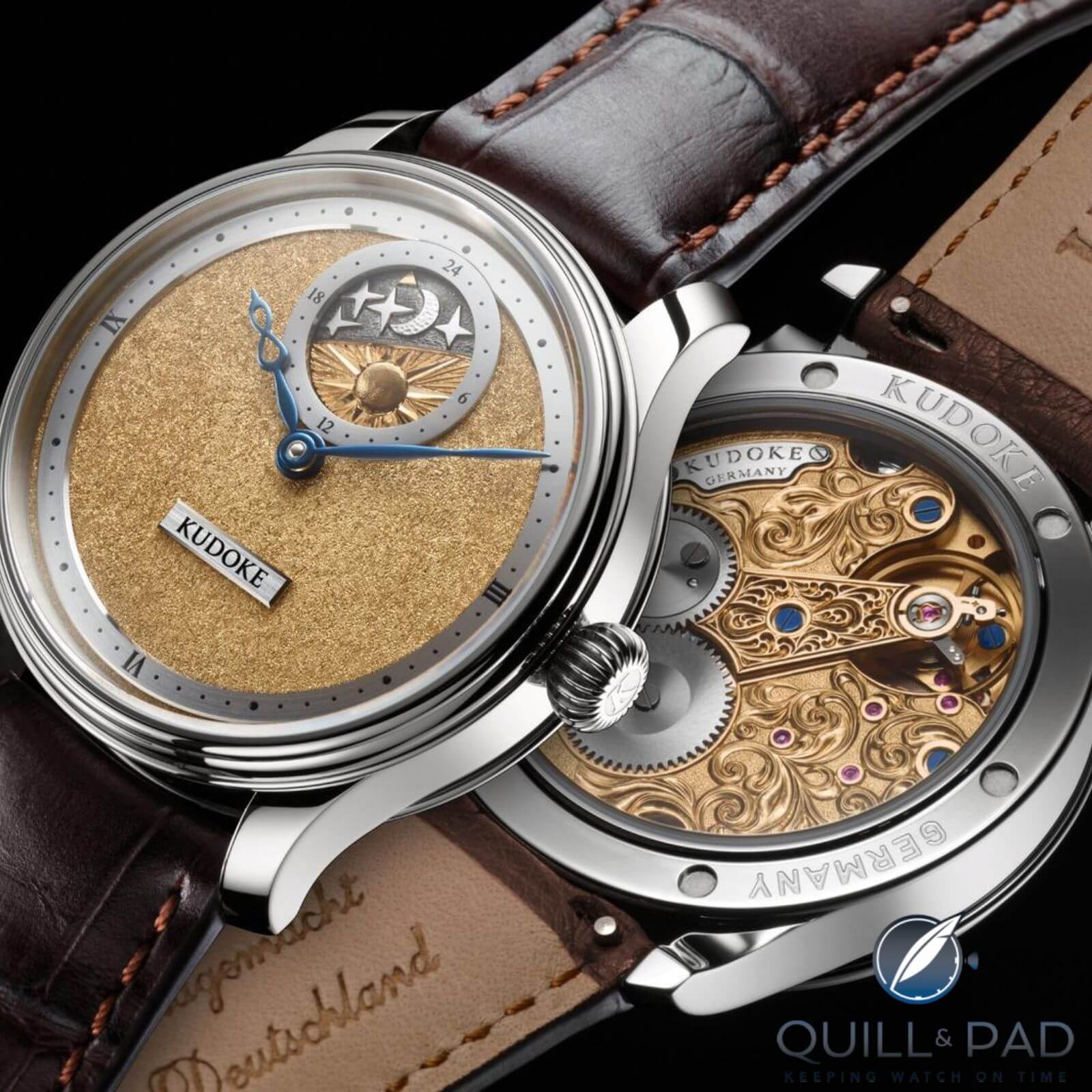
The central balance cock of Kudoke’s Kaliber 1, elevated slightly above the symmetrical mainplate and flanked by the crown wheel and ratchet wheel, is a distinctive feature. Its origins are not immediately apparent and require some research to uncover the caliber’s unusual historical lineage.
Preserving the Legacy of the Valjoux 7750
The story behind the Kaliber 1’s development is intrinsically linked to a challenge faced by many independent watchmakers and brands in the 2000s. The catalyst was Nicolas Hayek Sr.’s 2002 Swatch Group strategy, which involved ceasing the supply of ébauches (unfinished movements) to external companies. This move prompted Austrian independent watchmaker Richard Habring, known for his expertise in adapting the Valjoux 7750 chronograph caliber for various complications, to develop his own base movement. He opted to utilize the Valjoux 7750 as a foundation, capitalizing on the fact that its intellectual property rights had long expired, having been originally developed in 1972.
Technically, this approach involves leveraging the core kinematics of the base movement—the essential components remaining after stripping away the chronograph and self-winding mechanisms for which the 7750 was originally designed. In 2011, Richard Habring successfully developed the A11 caliber, his own interpretation of the fundamental architecture of the 7750, reimagined as if it had been produced in its basic form since the 1970s.
Richard Habring was not alone in this endeavor. Naoya Hida, a Japanese entrepreneur who founded his eponymous brand in 2018, also relies on a stripped-down 7750 caliber as the basis for the movements in his collection. Around the same time, in 2018, Stefan Kudoke began a collaboration with Richard Habring, adapting the A11 caliber to his own design principles, featuring a symmetrical layout and a central balance cock.
The approach taken by Habring, Hida, and Kudoke is a pragmatic and intelligent response to the current horological landscape. By leveraging the "gold remnant" of the 7750, they create exclusive, high-quality timepieces without the prohibitive costs associated with developing entirely new, bespoke calibers from scratch. In the early 1970s, Swiss watchmakers had mastered the art of producing simple manual-winding calibers with minimal complications, typically two or three hands, with a small seconds subdial being the extent of additional functionality. At that time, automatic winding systems were considered advanced features, and their combination with a chronograph represented cutting-edge technical development. The evolution of self-winding chronographs highlights this progression; the first automatic Rolex Daytona, for instance, was introduced in 1988, a full 16 years after the Valjoux 7750’s debut.
Panerai also adopted a similar strategy in the late 1990s, reportedly using a stripped-down 7750 movement from Soprod to create its three-hand OP III self-winding caliber. Panerai’s rationale was to replicate the rugged military aesthetic established by its 1956 Egiziano models, which featured the 8-day Angelus cal. SF240 movement. This movement possessed a small seconds subdial at the 9 o’clock position, a layout mirrored by the OP III caliber. This feature was crucial for Panerai to maintain its brand narrative of robust, military-inspired timepieces. It is worth noting, however, that the OP III caliber was also extensively used in Panerai’s Sealand line (originally Black Seal), which, launched in 2002 and continuing until around 2011, presented a far more decorative and less austere aesthetic than its military-inspired counterparts.
Kudoke’s Distinctive Style in the Decorative Genre
Within the relatively niche category of watches featuring tremblage finishing, Kudoke timepieces distinguish themselves with a uniquely characteristic style, arguably one of their most significant attributes. Stefan Kudoke offers a personal interpretation of decorative watches that avoids the overwhelming ornamentation seen in many contemporary pieces within this genre.
The tremblage versions of the Kudoke 1 and Kudoke 2 models represent a sophisticated integration of traditional craftsmanship with modern design sensibilities. The meticulous hand-engraving, combined with Kudoke’s thoughtful approach to movement development and case design, results in timepieces that are both technically impressive and aesthetically captivating. These watches appeal to collectors who appreciate the artistry of hand-decoration but also seek a restrained and distinguished aesthetic, proving that luxury and refined style can indeed be achieved through a considered and innovative application of heritage techniques.