Maker Faire Bay Area, the flagship event of the global maker movement, is set to celebrate its 20th anniversary with a comprehensive showcase of innovation, creativity, and community-driven technology from September 25 to 27, 2026. Ahead of the main event, organizers have announced an exclusive digital preview scheduled for Wednesday, September 16, 2026, at 4 PM Pacific Time. Led by Make: founder Dale Dougherty, this "Make: Live" session will provide a behind-the-scenes look at several high-profile exhibits, ranging from artificial intelligence-driven kinetic art to decentralized communication networks and professional puppetry. The 2026 edition marks two decades since the inaugural Faire in 2006, highlighting the evolution of the maker movement from a niche hobbyist gathering into a significant driver of STEAM (Science, Technology, Engineering, Art, and Mathematics) education and industrial prototyping.
The 20th Anniversary Preview Event
The upcoming preview event serves as a curated introduction to the diverse array of projects that define the modern maker landscape. By featuring a mix of seasoned professionals and independent tinkerers, the session aims to illustrate the democratization of technology that has occurred over the last twenty years. The live stream will offer technical insights into the construction and operation of several key installations, allowing the public to engage with the creators before the physical event opens at the end of the month.
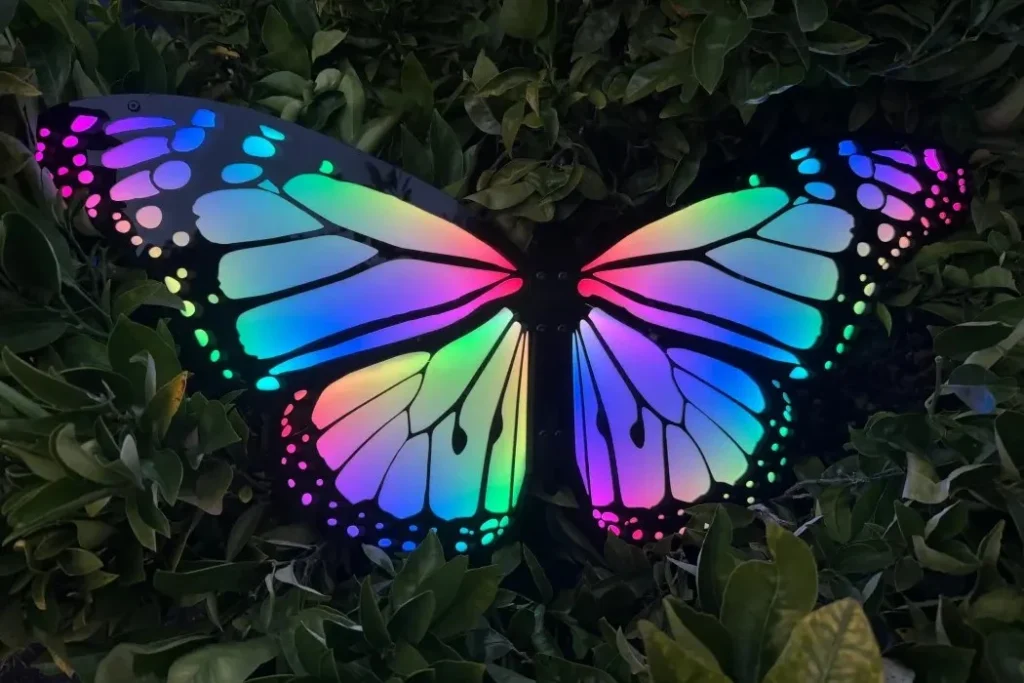
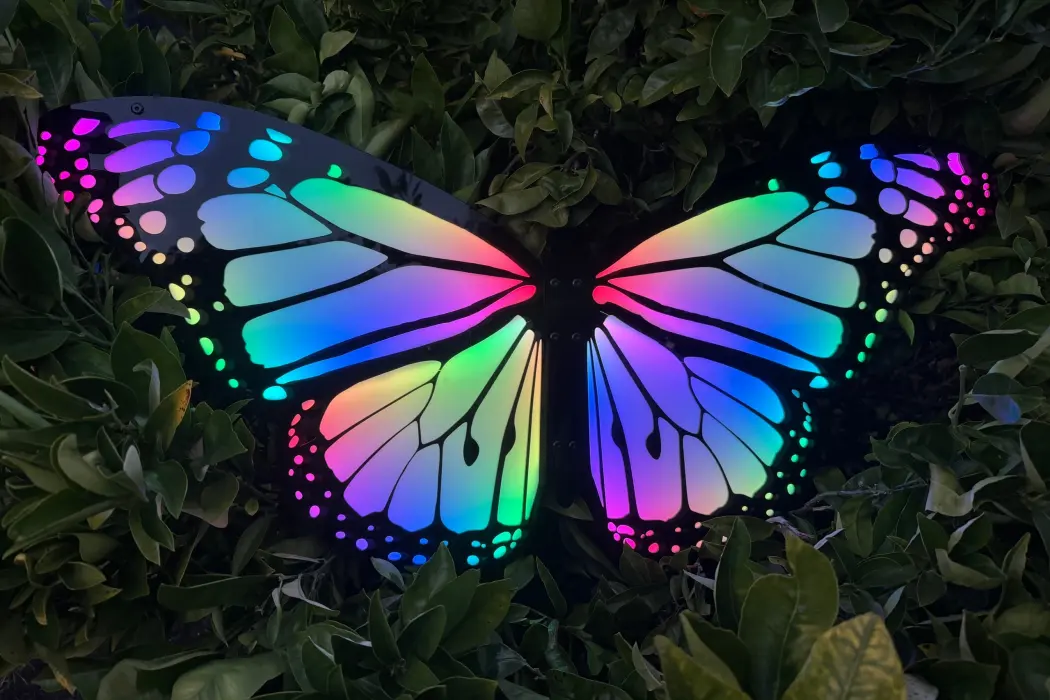
Among the featured exhibitors is Grant Patterson, the creator of "Lepidoptera Imaginaria." This project exemplifies the intersection of traditional sculpture and modern computation. The installation features a large-scale butterfly integrated with 570 individually addressable LEDs. What distinguishes this build is its use of machine learning to facilitate human-computer interaction. The system is designed to process ambient voice input and translate auditory data into complex, glowing light patterns. This synthesis of AI and hardware reflects a broader trend in the maker community toward "smart" art—installations that do not merely exist statically but react and evolve based on environmental stimuli.
Advancements in Off-Grid Communication: The Meshtastic Project
A significant portion of the preview will be dedicated to "Meshtastic," a project focused on resilient, decentralized communication. In an era where digital connectivity is often dependent on centralized infrastructure such as cellular towers and internet service providers, the Meshtastic crew utilizes open-source, off-grid radio networks.
Based on LoRa (Long Range) radio technology, Meshtastic allows for long-distance data transmission with very low power consumption. This technology is particularly relevant for disaster relief, search and rescue operations, and community networking in remote areas. The exhibit at Maker Faire Bay Area 2026 will demonstrate how small, inexpensive radio modules can be used to create a "mesh" network, where each device acts as a repeater, extending the range and reliability of the entire system. The project underscores the maker movement’s commitment to utility and public safety, proving that community-built tools can provide viable alternatives to commercial telecommunications during emergencies.
The Intersection of Art and Industry: Michael Theodore Schupbach
Representing the artistic and craftsmanship pillar of the Faire is Michael Theodore Schupbach. As a professional Muppet maker and four-time Emmy Award winner, Schupbach brings a level of industrial expertise to the event that highlights the professional applications of maker skills. His work involves complex animatronics, textile engineering, and character design—disciplines that have been revolutionized by the same rapid prototyping tools (such as 3D printing and laser cutting) used by hobbyists.
Schupbach’s participation serves as a bridge between the entertainment industry and the grassroots maker community. It emphasizes that the techniques honed in a backyard workshop are often identical to those used on major television and film sets. His presence at the 20th-anniversary event provides an educational opportunity for attendees to learn about the history of puppetry and the modern technical requirements of high-level creature effects.
A Two-Decade Chronology of Innovation
The 20th anniversary of Maker Faire Bay Area offers an opportunity to reflect on the event’s chronological development and its impact on global culture.
- 2006: The first Maker Faire is held at the San Mateo Event Center. It was originally conceived as a physical extension of Make: magazine, launched a year prior. The event attracted approximately 20,000 attendees and focused heavily on DIY electronics and traditional crafts.
- 2010–2015: The "Golden Age" of desktop manufacturing. During this period, Maker Faire became the primary launching pad for the 3D printing revolution. Companies like MakerBot and Formlabs utilized the Faire to introduce consumer-grade additive manufacturing to the public. The event expanded globally, with "World Maker Faires" established in New York, Tokyo, and Rome.
- 2016–2021: A shift toward "Smart" technology and sustainability. The focus of exhibits moved toward the Internet of Things (IoT), renewable energy projects, and circular economy manufacturing. Even during the global pandemic, the movement persisted through virtual "Maker-to-Market" initiatives.
- 2022–2026: The integration of AI and decentralization. The current era of the Faire is characterized by the use of large language models (LLMs) in robotics, the rise of decentralized web technologies, and a renewed focus on hardware that promotes digital sovereignty.
Supporting Data and Socio-Economic Impact
The maker movement is not merely a social phenomenon; it has measurable economic and educational implications. According to industry reports on the "Maker Economy," the democratization of tools has led to a significant increase in hardware startups. Many products now found in major retail outlets began as prototypes debuted at Maker Faires.
Data from educational institutions suggests that "Maker-centered learning" improves student engagement in STEM subjects. By moving away from theoretical instruction toward project-based learning, students develop critical thinking and problem-solving skills. The Bay Area, as the epicenter of this movement, has seen a proliferation of "Makerspaces" in libraries, schools, and community centers, which serve as incubators for local talent.
Furthermore, the economic impact of the event itself is substantial. Maker Faire Bay Area typically draws tens of thousands of visitors from across the globe, contributing millions of dollars to the regional economy through hospitality, transportation, and local commerce. The 20th-anniversary event is expected to see record attendance, bolstered by the milestone celebration and the return of several "legacy" makers who helped build the community in its early years.

Official Perspectives and Community Reaction
Dale Dougherty, often cited as the "Father of the Maker Movement," has frequently noted that the Faire is less about the objects created and more about the "maker mindset." In various addresses leading up to the 2026 season, Dougherty has emphasized that the 20th anniversary is a testament to the resilience of human curiosity.
"The goal has always been to provide a space where people can show what they have made and share what they have learned," Dougherty has stated in previous community forums. "The technology changes—we’ve gone from soldering irons to AI prompts—but the fundamental desire to understand and manipulate our world remains constant."
The maker community has reacted with significant anticipation to the 2026 lineup. On platforms such as Discord and various open-source hardware forums, participants have noted that the 2026 Faire feels like a "full-circle moment," returning to its roots in the Bay Area while pushing the boundaries of what is possible with 21st-century technology.
Broader Implications and the Future of Making
As Maker Faire Bay Area enters its third decade, the implications of the "maker" philosophy are becoming increasingly relevant to global challenges. The themes present in the 2026 preview—AI interaction, off-grid communication, and professional craftsmanship—point toward a future where individuals are less dependent on mass-produced solutions and more capable of creating bespoke, localized technology.
The focus on Meshtastic and decentralized networks, for instance, reflects a growing societal concern regarding the fragility of centralized systems. By empowering citizens to build their own communication infrastructure, the maker movement contributes to societal resilience. Similarly, the use of AI in projects like Lepidoptera Imaginaria suggests a future where AI is a collaborative tool for human expression rather than a replacement for it.
The 20th-anniversary celebration is more than a retrospective; it is a roadmap for the next generation of innovators. As the event approaches, the focus remains on the "wild builds" and "can’t-miss moments" that have defined the Faire for twenty years. For those unable to attend the preview on September 16, the full breadth of these innovations will be on display at the San Mateo Event Center from September 25 to 27, 2026, marking a historic milestone in the history of DIY technology and creative exploration.