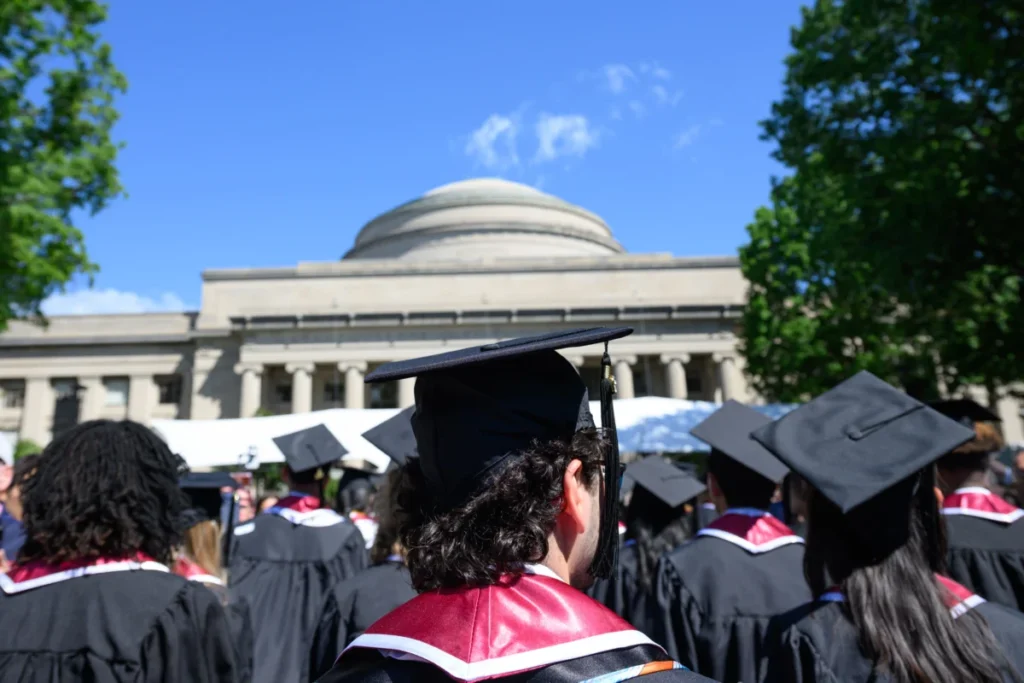
The Massachusetts Institute of Technology (MIT) has once again been crowned the world’s leading university by the QS World University Rankings, marking an extraordinary and unparalleled achievement of 15 consecutive years at the pinnacle of global higher education. The announcement of the 2027 edition of the rankings, published today by Quacquarelli Symonds, a renowned organization specializing in education and study abroad, solidifies MIT’s enduring legacy of academic and research excellence. This persistent dominance underscores a sustained commitment to innovation, groundbreaking research, and a world-class educational experience that continues to set benchmarks for institutions worldwide. The comprehensive 2027 rankings are accessible to prospective students, academics, and the general public at TopUniversities.com, providing detailed insights into the performance of thousands of institutions across the globe.
An Unprecedented Streak of Global Leadership
MIT’s unbroken 15-year run at the top of the QS World University Rankings is a testament to its consistent excellence and adaptability in an ever-evolving global academic landscape. This streak began with the 2013 edition of the rankings, announced in 2012, and has continued without interruption through to the newly released 2027 edition. Such sustained performance is virtually unmatched among elite institutions and speaks volumes about the foundational strengths embedded within MIT’s operational and academic framework. Over these fifteen years, the global higher education sector has experienced significant shifts, including technological advancements, changing geopolitical dynamics, and evolving student expectations. Despite these transformations, MIT has consistently demonstrated its capacity to lead, innovate, and inspire, reinforcing its position not just as a top university but as a pivotal institution shaping the future of science, technology, and beyond. This consistent recognition is not merely a symbolic victory; it reflects continuous investment in faculty, cutting-edge research infrastructure, and a learning environment that attracts and nurtures the brightest minds from across the planet.
Deconstructing the QS Methodology: Factors Behind MIT’s Success
The QS World University Rankings employ a robust and comprehensive methodology designed to evaluate institutions across several critical dimensions of performance. For the 2027 edition, as in previous years, these factors collectively paint a holistic picture of a university’s standing. The key indicators include academic reputation, employer reputation, citations per faculty, student-to-faculty ratio, proportion of international faculty, and proportion of international students. MIT’s consistent top ranking indicates exceptional performance across virtually all these metrics.
- Academic Reputation (40% weight): This is the most heavily weighted indicator, derived from an extensive global survey of academics who are asked to identify institutions they believe are excellent for research and teaching in their field. MIT’s long-standing reputation for pioneering research, groundbreaking discoveries, and influential scholarship ensures its high standing in this category. Its faculty comprises Nobel laureates, Turing Award winners, and MacArthur Fellows, whose contributions reverberate across disciplines and inspire generations of scholars.
- Employer Reputation (10% weight): Based on a survey of employers worldwide who identify universities producing the best graduates, this metric highlights the employability and quality of an institution’s alumni. Graduates from MIT are highly sought after in industries ranging from technology and finance to aerospace and biotechnology, reflecting the rigorous training and problem-solving skills instilled during their education. The entrepreneurial spirit fostered at MIT also contributes significantly, with alumni founding countless successful startups that drive economic growth and innovation.
- Citations Per Faculty (20% weight): This metric measures the research impact of universities by dividing the total number of citations received by all papers produced by an institution’s faculty over a five-year period by the number of faculty members. MIT’s prolific research output and its focus on impactful, high-quality scholarship ensure a consistently high citation count, demonstrating its significant contribution to the global body of knowledge. Breakthroughs in artificial intelligence, sustainable energy, quantum computing, and biomedical engineering originating from MIT labs frequently become foundational for subsequent research.
- Student-to-Faculty Ratio (20% weight): This indicator assesses the level of individual attention and support students receive by comparing the number of full-time equivalent students to the number of academic staff. A lower ratio often correlates with better teaching quality and a more personalized learning experience. MIT maintains a favorable ratio, allowing for closer mentorship, smaller class sizes in many advanced courses, and greater opportunities for students to engage directly with leading researchers and educators.
- Proportion of International Faculty (5% weight) and Proportion of International Students (5% weight): These metrics reflect an institution’s commitment to diversity, internationalization, and global collaboration. MIT’s campus is a vibrant global hub, attracting faculty and students from virtually every corner of the world. This international mix enriches the academic environment, fosters cross-cultural understanding, and facilitates a global perspective on research and problem-solving, which is crucial for addressing complex global challenges.
A Legacy of Excellence: MIT’s Dominance in Subject Areas
Beyond its overall top ranking, MIT’s academic prowess is further illuminated by its exceptional performance in specific disciplinary assessments. The Institute was ranked the world’s top university in an impressive 12 subject areas by QS, as announced in March of this year, demonstrating a breadth of excellence that extends across its core strengths.
The fields where MIT secured the coveted No. 1 ranking include:
- Engineering and Technology: Chemical Engineering; Civil and Structural Engineering; Computer Science and Information Systems; Data Science and Artificial Intelligence; Electrical and Electronic Engineering; Engineering and Technology (broad subject category); Mechanical, Aeronautical, and Manufacturing Engineering. This sweeping dominance in engineering disciplines underscores MIT’s foundational identity and its continuous leadership in driving technological advancements that shape modern society.
- Physical Sciences and Mathematics: Materials Science; Mathematics; Physics and Astronomy; Statistics and Operational Research. These rankings highlight the Institute’s profound contributions to fundamental sciences, which often serve as the bedrock for technological innovation.
- Humanities and Social Sciences: Linguistics. While often perceived primarily as an engineering and science powerhouse, MIT’s strong showing in a humanities discipline like Linguistics demonstrates its commitment to interdisciplinary excellence and the recognition of humanistic inquiry as vital to a comprehensive education.
Furthermore, MIT also placed second globally in seven other highly competitive subject areas: Architecture/Built Environment; History of Art; Biological Sciences; Economics and Econometrics; Marketing; Natural Sciences; and Statistics and Operational Research (also ranked #1 in some classifications, indicating high performance across different sub-categories or years). This robust performance across such a diverse array of fields, including those traditionally associated with the humanities and social sciences, showcases MIT’s comprehensive academic strength and its dedication to fostering interdisciplinary research and teaching. The Institute’s ability to excel in fields as varied as History of Art and Biological Sciences speaks to a culture that values intellectual exploration across the entire spectrum of human knowledge, providing a rich, multifaceted learning environment.
Reactions from Leadership and Experts
The announcement has been met with significant pride and reaffirmation from MIT’s leadership and acknowledgment from the ranking body itself.
MIT President Sally Kornbluth, reflecting on the unprecedented achievement, stated, "This remarkable 15-year streak is a profound testament to the unwavering dedication, ingenuity, and collaborative spirit of our entire community – our brilliant faculty, tireless staff, and incredibly talented students. It reflects our sustained commitment to pushing the boundaries of knowledge, solving pressing global challenges, and educating leaders who will make a meaningful impact on the world. This consistent recognition by QS reaffirms that MIT continues to be a global beacon for innovation and discovery."
MIT Provost Cynthia Barnhart added, "Our excellence across such a diverse range of subject areas, from foundational engineering disciplines to the humanities and life sciences, underscores the breadth and depth of our academic enterprise. It highlights the power of our interdisciplinary approach and the vibrant intellectual environment we cultivate, which encourages both fundamental research and its practical application. We are immensely proud of the contributions our researchers and educators make every single day."
Ben Sowter, Senior Vice President at QS, commenting on MIT’s consistent performance, remarked, "MIT’s sustained dominance in the QS World University Rankings is truly exceptional and speaks volumes about the institution’s unique blend of cutting-edge research, outstanding teaching, and unparalleled global impact. Their consistent excellence across a wide array of disciplines, particularly in areas critical to future technological and scientific advancement, is a benchmark for universities worldwide. The rigor of their academic programs and the employability of their graduates are consistently recognized by both the global academic community and employers."
An independent education analyst, Dr. Eleanor Vance, commented on the broader implications: "A 15-year consecutive top ranking from a respected body like QS provides invaluable validation for an institution like MIT. It reinforces its brand globally, making it a magnet for top-tier talent – both students and faculty – and facilitating international research collaborations. In an increasingly competitive global higher education market, such consistent recognition is a powerful strategic asset, signaling enduring quality and relevance."
The Broader Context of Global University Rankings
Global university rankings, such as those published by QS, Times Higher Education, and ShanghaiRanking Consultancy (ARWU), have become influential tools for prospective students, academics, policymakers, and funding bodies. They offer a comparative framework to assess the performance and reputation of thousands of higher education institutions worldwide. While often subject to scrutiny regarding their methodologies and potential biases, these rankings undeniably play a significant role in shaping perceptions, guiding choices, and driving institutional strategies.
The evolution of these rankings over the past two decades reflects a growing emphasis on internationalization, research impact, and graduate employability, alongside traditional measures of academic reputation. For institutions, a high ranking can translate into increased applications from high-calibre students, enhanced research funding opportunities, stronger partnerships with industry and government, and improved faculty recruitment. For governments, national performance in global rankings can be a source of national pride and an indicator of the strength of their higher education system, influencing policy decisions and investment priorities.
However, the continuous debate surrounding rankings also prompts institutions to critically evaluate their missions and avoid solely optimizing for ranking metrics at the expense of other crucial academic values. MIT’s long-term success suggests a deep-seated commitment to excellence that aligns naturally with high performance in these metrics, rather than a singular focus on achieving them.
Implications for MIT and Global Academia
MIT’s remarkable achievement carries significant implications, both for the Institute itself and for the wider landscape of global higher education.
For MIT, the sustained No. 1 ranking solidifies its position as a global leader in scientific and technological advancement. This prestige will continue to attract the brightest students from across the globe, ensuring a vibrant and diverse intellectual community. It also strengthens its ability to recruit and retain world-class faculty, who are drawn to an environment of unparalleled resources, collaborative spirit, and intellectual freedom. Furthermore, the ranking reinforces MIT’s appeal to research funding agencies and industry partners, fostering collaborations that translate foundational discoveries into real-world applications and economic impact. The Institute’s reputation will also continue to underpin its significant role in advising governments and international organizations on critical policy matters related to science, technology, and innovation.
For global academia, MIT’s consistent leadership sets a high bar and provides a benchmark for excellence. It underscores the importance of a holistic approach to education and research, emphasizing both academic rigor and practical impact. The Institute’s success highlights the value of fostering an environment that encourages interdisciplinary collaboration, embraces diversity, and invests heavily in cutting-edge infrastructure. It also signals to other institutions the critical role of internationalization in building a truly world-class university, fostering a global outlook in both research and teaching. MIT’s continued prominence can inspire other institutions to strive for similar levels of excellence, thereby elevating the standards of higher education globally.
Looking Ahead
As MIT celebrates its 15th consecutive year at the zenith of global university rankings, the institution remains focused on its core mission: to advance knowledge and educate students in science, technology, and other areas of scholarship that will best serve the nation and the world in the 21st century. This unprecedented streak is not merely a reflection of past achievements but a powerful indicator of the institution’s ongoing vitality and future potential. In a world facing complex challenges from climate change and pandemics to economic disparities and technological ethics, the continuous pursuit of knowledge and innovation exemplified by MIT remains more critical than ever. The 2027 QS World University Rankings confirm that MIT continues to be at the forefront of this crucial endeavor, shaping the future through its enduring commitment to excellence.