The additive manufacturing landscape is witnessing a significant shift with the emergence of Mastrex, a company that has recently launched a line of six metal Laser Powder Bed Fusion (LPBF) printers, with introductory pricing starting as low as $39,000. This aggressive entry into the market, particularly targeting the lower price segment previously dominated by Asian manufacturers, has immediately ignited discussions about the company’s origins, its manufacturing processes, and the very definition of "Made in USA" within the advanced technology sector. Mastrex’s recent collaboration with Continuum Powders to validate its metal powders on Mastrex machines underscores its ambition to establish credibility in the metal additive manufacturing space. However, the striking visual and technical similarities between Mastrex’s machines and those produced by Chinese manufacturers, such as Tianhong Laser, raise critical questions that warrant a closer examination of the company’s "Made in USA" claims.
The Democratization of Metal LPBF
The trend toward more affordable metal LPBF systems, pioneered by companies like Xact Metal, is poised to significantly expand the accessibility of this transformative technology. As more affordable machines become available from players like OneClick, Metal Base, and Scraplabs, the barrier to entry for businesses and researchers seeking to leverage metal 3D printing is rapidly diminishing. This democratization promises to foster innovation and accelerate adoption across a wider range of industries, from aerospace and automotive to medical devices and consumer goods. Mastrex’s entry into this burgeoning market, with its focus on competitive pricing, aligns perfectly with this broader industry trend. The strategic importance of such partnerships, like the one Mastrex has forged with Continuum Powders, cannot be overstated. These collaborations not only validate technological capabilities but also signal a commitment to providing a comprehensive solution for end-users, potentially capturing a significant market share as the demand for accessible metal 3D printing solutions continues to grow.
Unpacking the "Made in USA" Narrative
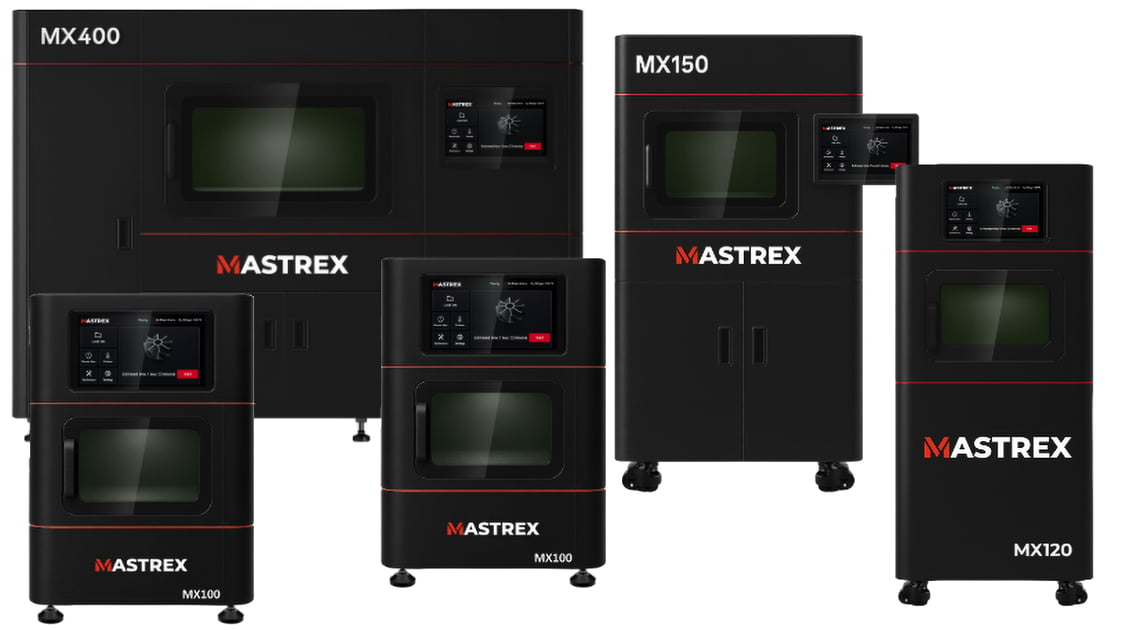
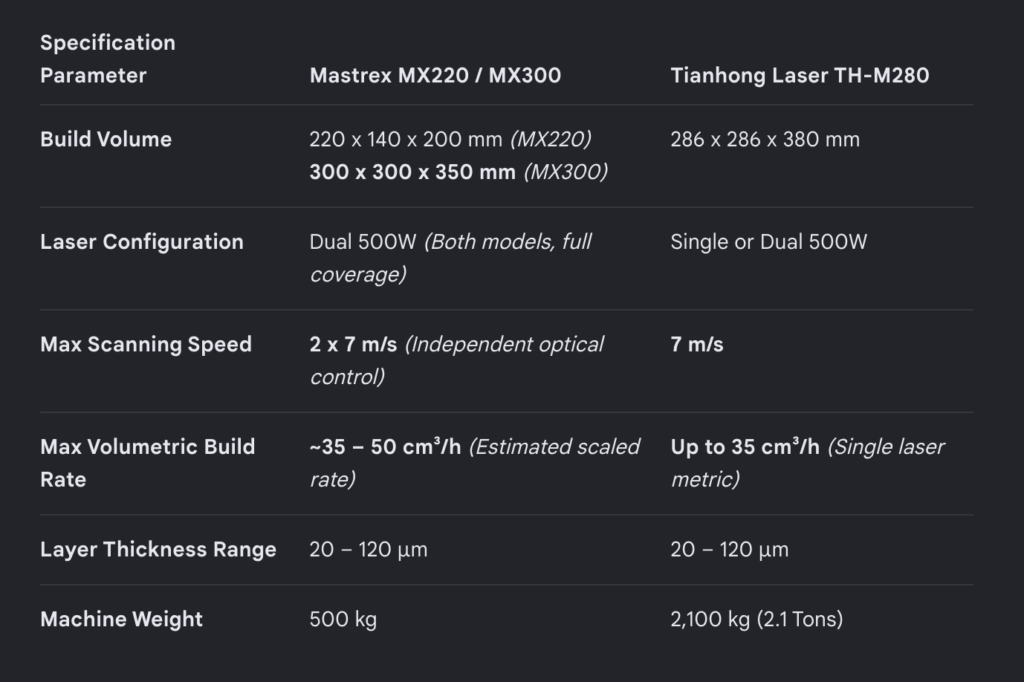
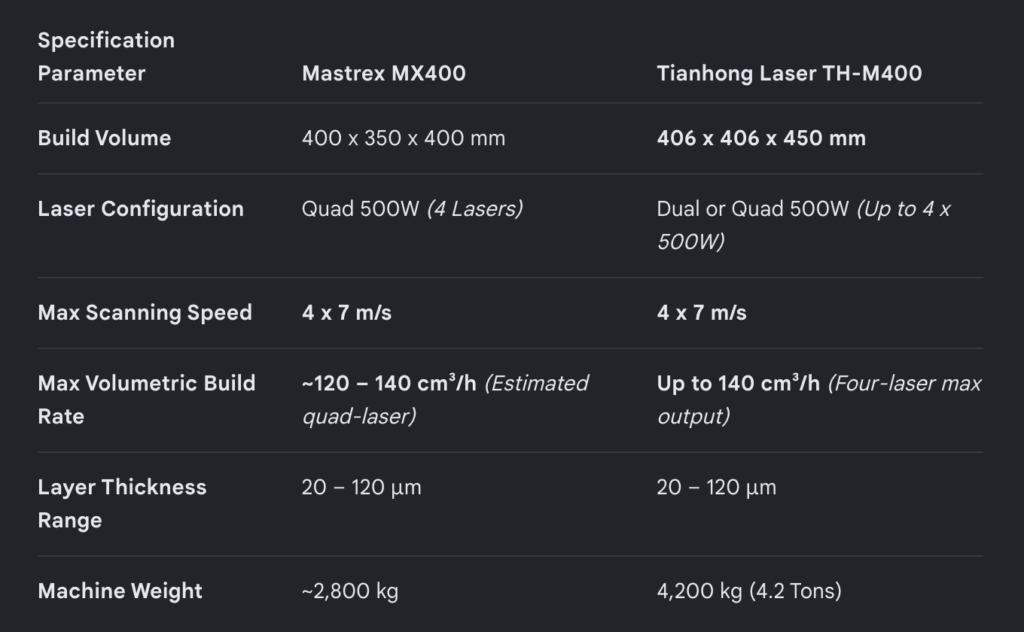
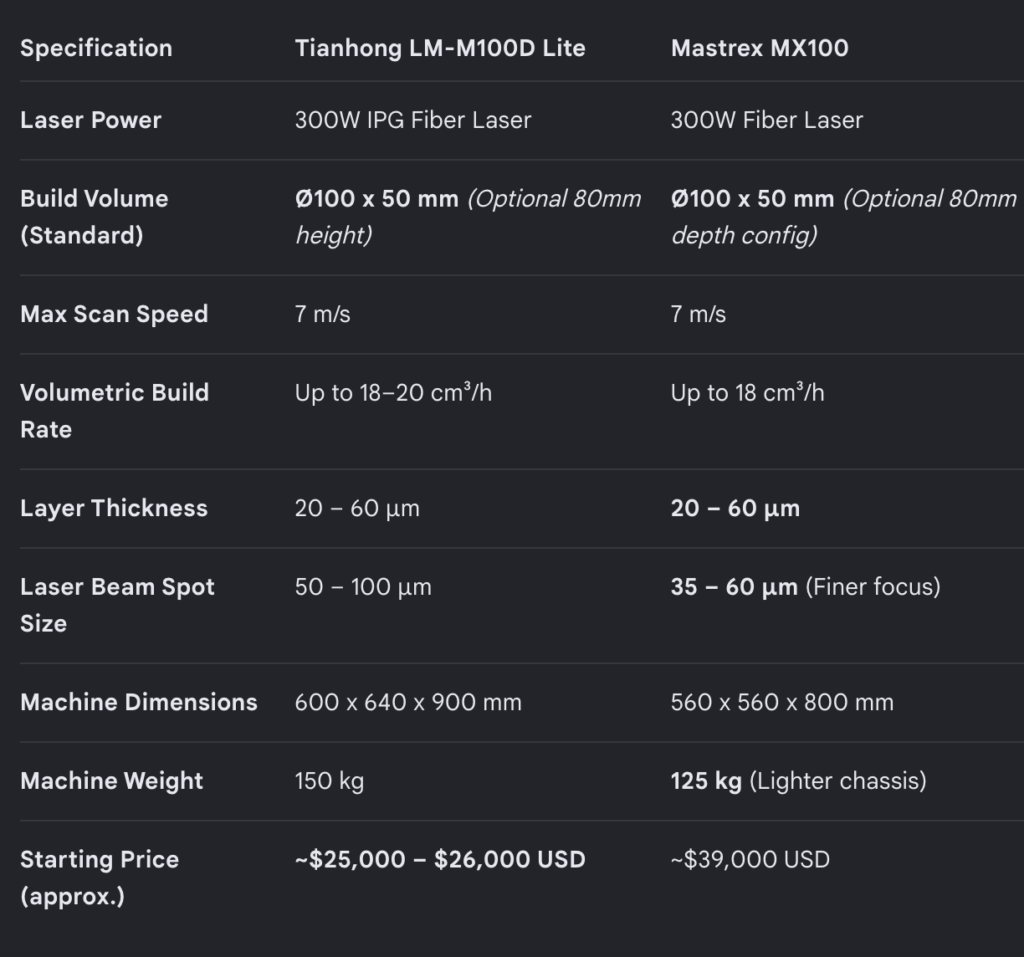
Despite its stated presence in New Jersey, operating out of shared office spaces at Axe offices, and a potential secondary site in San Diego, the origins of Mastrex’s machinery have become a focal point of scrutiny. Observers have noted a remarkable resemblance between several Mastrex models and existing Chinese-made LPBF systems. Specifically, the Mastrex MX280 shares striking similarities in appearance and specifications with the Tianhong LM M280. Similarly, the Mastrex MX100 appears to be a close counterpart to the Tianhong LM110DLite, and the Mastrex MX400 exhibits comparable build speeds and specifications to the Tianhong LM L400.
This pattern extends beyond direct comparisons with Tianhong Laser. The article points out that many Chinese brands often share system architectures, designs, and specifications due to common supply chains and manufacturing practices. While some degree of similarity is expected in a globalized manufacturing environment, the extent of the parallels observed between Mastrex and Chinese systems, particularly across multiple models, is significant enough to prompt deeper investigation. The logical expectation for a company launching six distinct LPBF systems, ranging from desktop to large-format industrial machines, would be a comprehensive public relations push detailing the design, development, and manufacturing journey of each. Mastrex, a company that, by its own admission, has been developing and releasing LPBF systems for approximately one year (though it originated from the merger of defunct machine tool firms Burgmaster and Vulcan), has introduced this extensive product line within a compressed timeframe. This rapid product development cycle, coupled with the visual similarities, raises the question of whether Mastrex is adapting or sourcing existing designs from Chinese manufacturers, a business model that, if transparently communicated, could be a valid and efficient strategy. However, the company’s current narrative appears to diverge from this interpretation.
Technical Specifications and Component Sourcing
A closer look at the technical specifications reveals that Mastrex systems are notably lighter than their Tianhong counterparts. Both companies appear to rely on standard components such as IPG lasers and Scanlab galvanometer scanners, which are common in the LPBF industry. While companies like Avimetal, Fluidform, and Riton also produce machines with comparable designs, the confluence of similarities across six Mastrex models, mirroring specific Chinese offerings, is particularly noteworthy.
The company’s official statement regarding its manufacturing practices provides further insight. Mastrex founder Ilay Fridland stated, "We manufacture and source parts from the US and other countries, and assemble the machines in the US." He further elaborated that industrial systems utilize IPG lasers and Scanlab laser heads, both German-made components. However, he acknowledged that "entry-level models, MX150 and smaller, use lasers from China as standard, with IPG and Scanlab optional." This distinction between industrial and entry-level models is crucial in understanding the sourcing strategy.
Fridland also highlighted Mastrex’s development of its own firmware and control software, supporting third-party build preparation solutions like Netfabb, Magics, Fusion 360, and 3Dxpert. This approach aims to provide users with flexibility in software and material choices, avoiding vendor lock-in. The company’s ability to offer competitive pricing is attributed to the maturity of LPBF technology, which reduces research and development costs, and the declining price of components.
Addressing Claims and Certifications
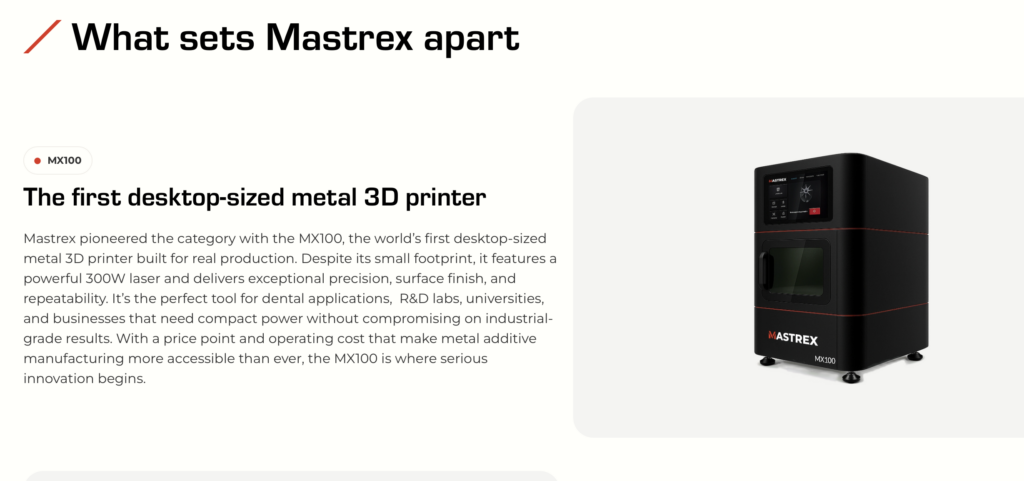
Mastres has also made claims about its machines, such as having "the first desktop-sized metal 3D printer." This assertion is factually inaccurate, as numerous companies, including Riton, Avimetal, FastForm, Matrix, and Tianhong, have been offering and selling tens of thousands of similar compact metal 3D printers for years. Even when considering the qualifier "built for production," the claim requires further substantiation, as it’s unclear how these machines differentiate themselves from the multitude of existing Chinese printers in the market that are also designed for production environments.
Furthermore, the company’s website displays logos and references to ISO 9001:2015, CE, and FDA certifications. However, the clarity regarding what these references pertain to remains ambiguous. It is unclear whether these certifications apply to Mastrex as a company, specific products, or the manufacturing processes themselves. Greater transparency on this front would be beneficial for potential customers seeking assurance of quality and regulatory compliance.
The Evolving Definition of "Made in USA"
The debate surrounding Mastrex’s manufacturing origins directly intersects with a broader, more complex question: what constitutes a "Made in USA" product in the context of advanced manufacturing, particularly for 3D printers? Mastrex’s carefully worded statement – "designed, assembled and tested in the US" – deliberately avoids the definitive claim of "made in the USA." This distinction is critical, as it suggests a significant portion of components may be sourced internationally.
The implications of this distinction are far-reaching. As the global 3D printing market increasingly bifurcates into US-centric and China-centric ecosystems, companies like Mastrex face strategic decisions about their supply chains and market positioning. The viability of the burgeoning low-cost LPBF market hinges on the ability of companies like Mastrex, Scraplabs, Xact Metal, and OneClick to deliver affordable yet reliable systems. However, the lack of clear governmental definitions and industry standards for "Made in USA" labeling in this sector creates a complex environment for both manufacturers and consumers.
The core question remains: what percentage of a machine’s components must be manufactured domestically for it to be considered a US printer? Can a machine assembled in the US from entirely Chinese parts, or one that incorporates US software with predominantly foreign hardware, legitimately bear a "Made in USA" label? These are not merely semantic issues; they have significant implications for trade policy, national security, and consumer trust.
Broader Industry Implications and Future Outlook
The US government, policymakers, and industry stakeholders are increasingly compelled to address the ambiguity surrounding "Made in USA" claims in advanced manufacturing. A clear framework is needed to define what constitutes domestic manufacturing for 3D printers, ensuring transparency and enabling companies to comply with evolving regulations and consumer expectations.
Mastres’ rapid ascent highlights the dynamic nature of the entry-level LPBF market. However, its emergence also prompts a critical look at more established US-based competitors. The article rightly questions the extent of domestic sourcing for their machines. It is plausible that many established players also incorporate components from China and allied nations. Understanding the origin and criticality of these foreign-sourced parts is essential for a comprehensive assessment of supply chain resilience and potential geopolitical risks.
The question of whether a German optic or a Chinese frame is acceptable, and whether 100% domestic sourcing is a realistic or even necessary benchmark, are central to this ongoing discussion. As the additive manufacturing industry matures, the provenance of its technology will become an increasingly significant factor in its growth and global adoption. For Mastrex, navigating this complex landscape while articulating its value proposition clearly will be crucial for its long-term success and its contribution to the evolving narrative of American manufacturing in the 21st century. The company’s stated commitment to future innovations that will differentiate it beyond price suggests an ambition to carve out a unique identity, but the foundational questions about its manufacturing origins will likely continue to shape market perceptions.