MIT engineers are developing a new spacecraft propulsion system that combines the strengths of traditional chemical rockets with the efficiency and precision of electric thrusters, promising to redefine the operational paradigm for small satellites in space. This groundbreaking technology introduces a singular propellant capable of powering both high-thrust, rapid maneuvers and subtle, long-duration adjustments, effectively merging two historically distinct propulsion methodologies into a compact, unified system. The innovation stands to grant small satellites unprecedented flexibility, enabling them to undertake more ambitious scientific investigations, observation missions, and deep-space explorations from a significantly smaller and more cost-effective platform.
The Genesis of a Dual-Mode Dream: Bridging Propulsion Divides
For decades, spacecraft propulsion has largely been categorized into two primary types: chemical and electric. Chemical rockets, renowned for their power and ability to generate substantial thrust in short bursts, are essential for rapid orbital changes, launches, and decelerations. They operate by igniting propellants, creating hot gases that are expelled at high velocity. However, their high fuel consumption limits mission duration and delta-V capabilities, particularly for smaller craft with constrained fuel capacities. Conversely, electric thrusters, such such as ion or Hall effect thrusters, offer unparalleled fuel efficiency and precision, generating continuous, albeit low, thrust over extended periods. These systems are ideal for station-keeping, fine orbital adjustments, or long interplanetary journeys where gradual acceleration is sufficient. The inherent challenge has always been the fundamental difference in their operational principles and, critically, their propellant requirements. Chemical rockets often rely on highly energetic liquids like hydrazine, while electric thrusters typically use inert gases (like xenon) or specialized ionic liquids. The need for separate fuel tanks, plumbing, and hardware for each system added significant weight, complexity, and cost, making the integration of both on compact platforms like CubeSats practically unfeasible.
This dichotomy has long presented a bottleneck for small satellite missions, which are increasingly pivotal in Earth observation, communication networks, and scientific research. CubeSats, typically weighing between 1 to 10 kilograms, have democratized access to space due to their low launch costs and standardized design. Yet, their utility beyond low Earth orbit (LEO) has been severely restricted by the lack of versatile and efficient propulsion. Without the ability to perform both rapid evasive maneuvers and precise long-duration burns, their operational scope remains limited, hindering their potential for deep-space exploration or complex orbital dynamics within Earth’s vicinity.
A Green Revolution: The Rise of ASCENT Propellant
At the heart of MIT’s breakthrough lies a specialized "green monopropellant" known as ASCENT (Advanced SpaceCraft Energetic Non-Toxic propellant). Originally developed by the U.S. Air Force Research Laboratory (AFRL) as a safer, high-performance alternative to hydrazine for chemical propulsion systems, ASCENT represents a significant leap forward in propellant technology. Hydrazine, while effective, is notoriously toxic, carcinogenic, and volatile, requiring stringent safety protocols and costly handling procedures on Earth. Its replacement has been a long-standing goal for space agencies and commercial operators alike.
ASCENT, a hydroxylammonium nitrate (HAN)-based ionic liquid mixture, was designed to be less toxic, have a lower freezing point, and boast a higher specific impulse (a measure of propellant efficiency) than hydrazine in chemical thrusters. Its development timeline spans over a decade, with initial research beginning in the early 2000s, leading to extensive ground testing and eventually qualifying for spaceflight. The serendipitous discovery by MIT researchers was that this very same ionic liquid, optimized for chemical reactions, could also serve as an effective propellant for miniature electric thrusters, specifically electrospray thrusters. Amelia Bruno, a former postdoc in MIT’s Department of Aeronautics and Astronautics (AeroAstro) and lead author of the study published in the Journal of Propulsion and Power, articulated this synergy: "If you can have chemical and electrical propulsion in one small package, it’s the best of both worlds." She further noted, "This opens the door for small satellites to do even more science, more observations, and more interesting missions, all on a smaller and cheaper platform."
The Mechanics of Hybrid Propulsion: How ASCENT Bridges the Gap
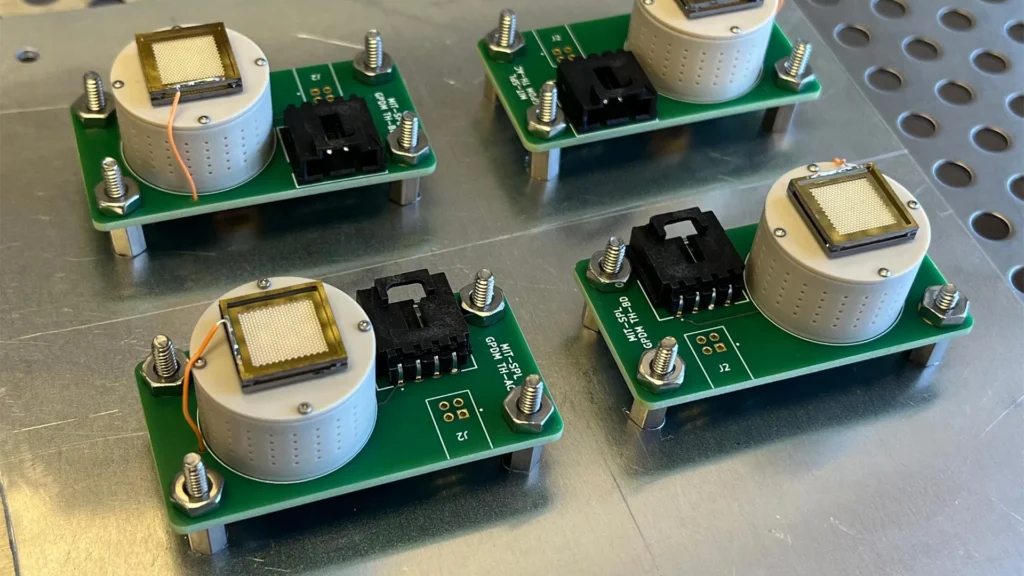
The MIT team, led by Professor Paulo Lozano, the Miguel Alemán Velasco Professor of Aeronautics and Astronautics, capitalized on the inherent properties of ASCENT. Lozano’s laboratory has been at the forefront of developing, manufacturing, and testing electrospray propulsion systems, particularly those that utilize ionic liquid propellants. Electrospray thrusters, roughly the size of a dime or even a thumbnail in Lozano’s designs, operate by using strong electric fields to charge and then eject particles from a liquid propellant. Because ionic liquids are essentially a "sea of ions," as Bruno describes them, they are perfectly suited for this electrohydrodynamic process. The charged particles, upon ejection, create a minute but continuous thrust.
The critical insight was realizing that ASCENT, being an ionic liquid mixture, possessed the necessary characteristics to be electrically atomized and accelerated in an electrospray thruster, despite its primary design intent for chemical combustion. This dual compatibility is revolutionary. For rapid maneuvers, ASCENT can be fed into a chemical thruster, ignited, and expelled as hot gas, providing powerful bursts of thrust for acceleration, deceleration, or major orbital adjustments. For long-duration, precise maneuvers, the same ASCENT propellant can be routed to an electrospray thruster, where electric fields ionize and eject its constituent particles, generating highly fuel-efficient, low-thrust propulsion suitable for station-keeping, precision pointing, or extended interplanetary cruises.
This eliminates the need for two separate propellant tanks, reducing the overall mass and volume dedicated to propulsion systems. For a typical 6U CubeSat (approximately 10x20x30 cm), every gram saved translates to more room for scientific instruments, communication systems, or power infrastructure, significantly enhancing its mission capability. The miniaturization achieved by Lozano’s lab, with individual electrospray thrusters being about the size of a thumbnail, further compounds these benefits, allowing for multiple thrusters to be integrated into very small platforms.
Rigorous Testing on Earth: Simulating Space Conditions
To validate their hypothesis, Bruno, Lozano, and former MIT graduate student Matthew Corrado undertook a series of rigorous experiments. They outfitted electrospray thrusters with ASCENT propellant. Each thruster was connected to a small, cube-shaped reservoir, roughly the size of a LEGO brick, containing one gram of ASCENT, which has a viscosity similar to baby oil.
The experimental setup was conducted within a large vacuum chamber designed to replicate the extreme conditions of space, including the vacuum environment essential for electric propulsion systems to function efficiently. The thrusters were strategically mounted on opposite sides of a CubeSat mockup, which was then placed on a custom magnetic levitation (MagLev) test platform. This innovative platform allowed the CubeSat to float freely, minimizing friction and enabling precise measurements of even minute thrust forces.
During testing, researchers remotely varied the voltage supplied to the electrospray thrusters. The resulting electrospray plumes generated enough force to gently spin the levitating CubeSat, akin to a top. By meticulously measuring the generated thrust and operating the thrusters continuously for periods of up to 100 hours, the team was able to assess the fuel’s performance, stability, and efficiency. The results were highly encouraging: ASCENT not only successfully powered the electrospray thrusters but also performed on par with conventional ionic liquid propellants specifically developed for electric propulsion systems. "Compared to our normal electrospray propellants, ASCENT can provide similar performance in terms of thrust," Bruno confirmed, adding, "Now that we know our thrusters work with ASCENT, we can start thinking of all the ways we can make them even better." This validation marks a critical milestone, proving the theoretical dual-mode capability in a controlled laboratory environment.
Pioneering the Cosmos: The NASA Green Propulsion Dual Mode Mission
The theoretical and laboratory success is now set to face its ultimate test in the unforgiving environment of space. NASA, recognizing the profound potential of this dual-mode propulsion concept, is collaborating with the MIT team on the Green Propulsion Dual Mode mission. This mission, scheduled for launch in November, will deploy a briefcase-sized CubeSat equipped with a single chemical thruster and four electrospray thrusters. Crucially, all five thrusters will draw their propellant from a single, shared tank containing ASCENT.
This mission represents a monumental step forward, marking the first attempt to test such a unified dual-mode propulsion system on a small spacecraft in orbit. Paulo Lozano emphasized the significance: "This will be the first time that a satellite will have a shared propellant tank." The success of this mission would not only validate the technology but also pave the way for a new generation of small satellites with unprecedented maneuverability and mission longevity. NASA’s involvement underscores the strategic importance of this technology for future space exploration and operational efficiency. The agency has been a strong proponent of green propellants and small satellite capabilities, seeing them as essential tools for cost-effective scientific discovery and technological demonstration.
Beyond Earth: Unlocking Deep Space and Agile Constellations
The implications of a successful dual-mode propulsion system, particularly one powered by a green propellant, are vast and transformative.
Deep Space Exploration: For the first time, CubeSats could realistically venture far beyond Earth orbit. Lozano painted a vivid picture of future possibilities: "We could send CubeSats to Mars, or the asteroid belt, where they could make the journey slowly, using electrospray thrusters." Upon reaching their destination, "You could then use your chemical thrusters to quickly move to look at interesting features. You could have a lot more flexibility to do a lot more things." This opens doors for distributed scientific networks around other planets, low-cost asteroid reconnaissance, or even lunar exploration missions, where a constellation of small, agile probes could provide unprecedented data coverage. Such missions were previously prohibitively expensive or complex for small satellites due to propulsion limitations.
Earth Orbit Applications: Closer to home, the technology promises to revolutionize satellite constellations for Earth observation, communication, and climate monitoring. Lozano offered a compelling scenario: "Say there’s a storm coming, and you’d want to deploy your constellation of small satellites to observe over one location. You could choose to send them quickly or slowly depending on the nature of the observation. And the only way to do that is if you have two propulsion systems, which is now possible." This enhanced agility would allow satellite operators to respond dynamically to unfolding events, optimize data collection, extend mission lifespans through efficient station-keeping, and perform complex orbital adjustments with greater precision and less fuel. This could lead to more robust and resilient satellite networks for critical services like weather forecasting, disaster response, and global internet connectivity.
Commercial Space and Sustainability: The commercial space sector stands to benefit immensely. Reduced system complexity and weight translate directly into lower manufacturing and launch costs, making space access more affordable for a broader range of companies and research institutions. The use of a non-toxic propellant like ASCENT also improves safety and reduces environmental impact during ground operations, further streamlining launch preparations. As the number of satellites in orbit continues to grow, the ability to perform precise maneuvers and controlled de-orbiting with a single, efficient propulsion system becomes crucial for managing space traffic and mitigating the risk of space debris.
The Future of Small Satellite Mobility
The work by MIT engineers, supported in part by NASA, represents a significant leap towards truly agile and versatile small satellites. It addresses a fundamental challenge in space propulsion by elegantly combining two disparate technologies through a shared, green propellant. While the upcoming NASA Green Propulsion Dual Mode mission will be a critical validation, the potential for this technology extends far beyond. Future research will likely focus on optimizing the thruster designs for ASCENT, scaling the system for different satellite sizes, and exploring the long-term reliability and performance in various space environments. The vision of CubeSats exploring the outer solar system or providing instant, dynamic observations of Earth’s ever-changing environment is rapidly moving from science fiction to an imminent reality, thanks to innovations like MIT’s dual-mode propulsion system. This breakthrough not only promises to enhance our capabilities in space but also sets a new standard for sustainable and efficient space exploration.