
Cambridge, MA – A significant breakthrough in biomaterials science has been achieved by engineers at the Massachusetts Institute of Technology (MIT), who have developed a novel hydrogel that is not only soft, stretchy, and robust but also remarkably permeable to air. This innovation addresses a long-standing limitation of conventional hydrogels, which, despite their widespread utility in medical and consumer applications, suffer from a critical lack of breathability. Published today in the prestigious journal Nature, this research introduces a hydrated yet aerated material poised to transform the landscape of medical patches, wound dressings, wearable health monitors, and even cosmetic products and contact lenses, promising enhanced patient comfort and device efficacy.
The Ubiquitous Role and Underserved Need for Advanced Hydrogels
Hydrogels, aptly described as Jell-O-like substances, are bio-friendly materials composed predominantly of water and a small fraction of polymer. Their unique properties – squishiness, biocompatibility, and adhesive qualities – have made them indispensable across various sectors. In medicine, they are routinely employed as wound dressings, surgical glues, drug delivery systems that encapsulate and release medication over time, and even as scaffolds for tissue engineering. Beyond clinical settings, hydrogels are found in everyday items such as cosmetic face masks and contact lenses, leveraging their ability to conform to biological surfaces and maintain hydration. The global market for hydrogels, particularly in medical applications, is substantial and growing, driven by an aging population, rising chronic disease prevalence, and advancements in medical technology. Analysts project the medical hydrogel market alone to reach several billion dollars in the coming years, underscoring the demand for improved materials.
However, despite their numerous advantages, conventional hydrogels possess a fundamental flaw: their inherent lack of breathability. When applied to the skin or implanted within the body for extended periods, these materials can trap moisture and sweat against the tissue. This occlusion creates a damp, unventilated microenvironment that can lead to a cascade of undesirable effects, including skin irritation, maceration, infection risk, and a significant reduction in the performance and adhesion of the device itself. For patients requiring long-term wound care or continuous physiological monitoring, this issue translates directly into discomfort, potential complications, and compromised treatment outcomes. For instance, the skin beneath a non-breathable patch can experience oxygen deprivation, hindering natural healing processes and increasing susceptibility to bacterial growth. This challenge has spurred years of research into developing hydrogels that can maintain their essential properties while allowing critical air exchange.
MIT’s Pioneering Solution: A Recipe for Aerated Hydration
The team at MIT, led by Xuanhe Zhao, the Uncas (1923) and Helen Whitaker Professor of Mechanical Engineering and a professor of civil and environmental engineering, and medical engineering and science, has successfully tackled this formidable challenge. They have engineered a new type of hydrogel that is both highly hydrated and intrinsically permeable to air. This breakthrough material retains the desirable characteristics of conventional hydrogels – its characteristic softness, elasticity, and robustness – but incorporates a meticulously designed network of tiny, interconnected tunnels. These microscopic conduits act as "air highways," allowing oxygen and other gases to pass freely through the gel, even when fully hydrated.
Professor Zhao emphasizes the fundamental importance of this innovation, stating, "Water and oxygen are both essential for life. Now that we’ve added air to hydrogels, people can find broad applications." This statement encapsulates the profound potential of the new material, which transcends merely improving existing products to enabling entirely new paradigms in biomedical engineering. The research, a culmination of several years of dedicated investigation, signifies a critical leap forward in biomaterial design, offering a solution to a problem previously considered "impossible" by many in the field.
The Science Behind the Innovation: Harnessing Viscoelastic Phase Separation
The core challenge in creating a breathable hydrogel lies in its very composition. Traditional hydrogels are 80 to 90 percent water. As co-lead author Xiao-Yun Yan aptly puts it, "In general, water is not breathable… And you cannot breathe through Jell-O." Previous attempts to introduce breathability typically involved two main strategies, both with significant drawbacks. One approach involved puncturing microscopic holes in the gel, which proved effective in air but quickly clogged when exposed to liquids, rendering them useless in most biological applications. Another method incorporated air-permeable polymers like silicone, but this often required adding such large quantities that the resulting material lost its high water content, becoming less hydrated and consequently less hydrogel-like.
Zhao’s team sought to maintain the high water content crucial for hydrogel function while simultaneously facilitating air passage. Their innovative recipe hinges on a principle known as "viscoelastic phase separation." This phenomenon is commonly observed in everyday occurrences, such as oil and water separating due to their differing chemical phases. In essence, dissimilar substances tend to cluster with their own kind, avoiding others. The MIT engineers cleverly leveraged this principle by introducing a very small amount of silica aerogel particles into their conventional hydrogel mixture. Silica aerogels are remarkable materials, often referred to as "solid-form" air bubbles due to their extremely porous structure and low density. They are also hydrophobic, meaning they repel water.
Co-lead author Shucong Li further elaborated on the mechanics: "For their new design, they mixed their conventional hydrogel recipe with a very small amount of silica aerogel particles, which are essentially ‘solid-form’ air bubbles… They are like boba beads. The particles are made of silica, which is hydrophobic, meaning that water does not want to leak through them, so they are very stable in water." When these hydrophobic silica particles were mixed with the water-heavy hydrogel solution, the viscoelastic phase separation mechanism kicked in. The water molecules, being far more abundant, quickly coalesced, effectively squeezing the less numerous silica particles into narrow, interconnected channels. Over several hours, this self-organizing process formed a robust network of thin, silica-skinned tunnels, creating distinct "highways for air" within the otherwise hydrated gel. This elegant solution allowed for significant air permeability without compromising the hydrogel’s high water content or its mechanical integrity. Once this intricate network was established, the mixture was chemically cross-linked, effectively freezing the breathable architecture in place.
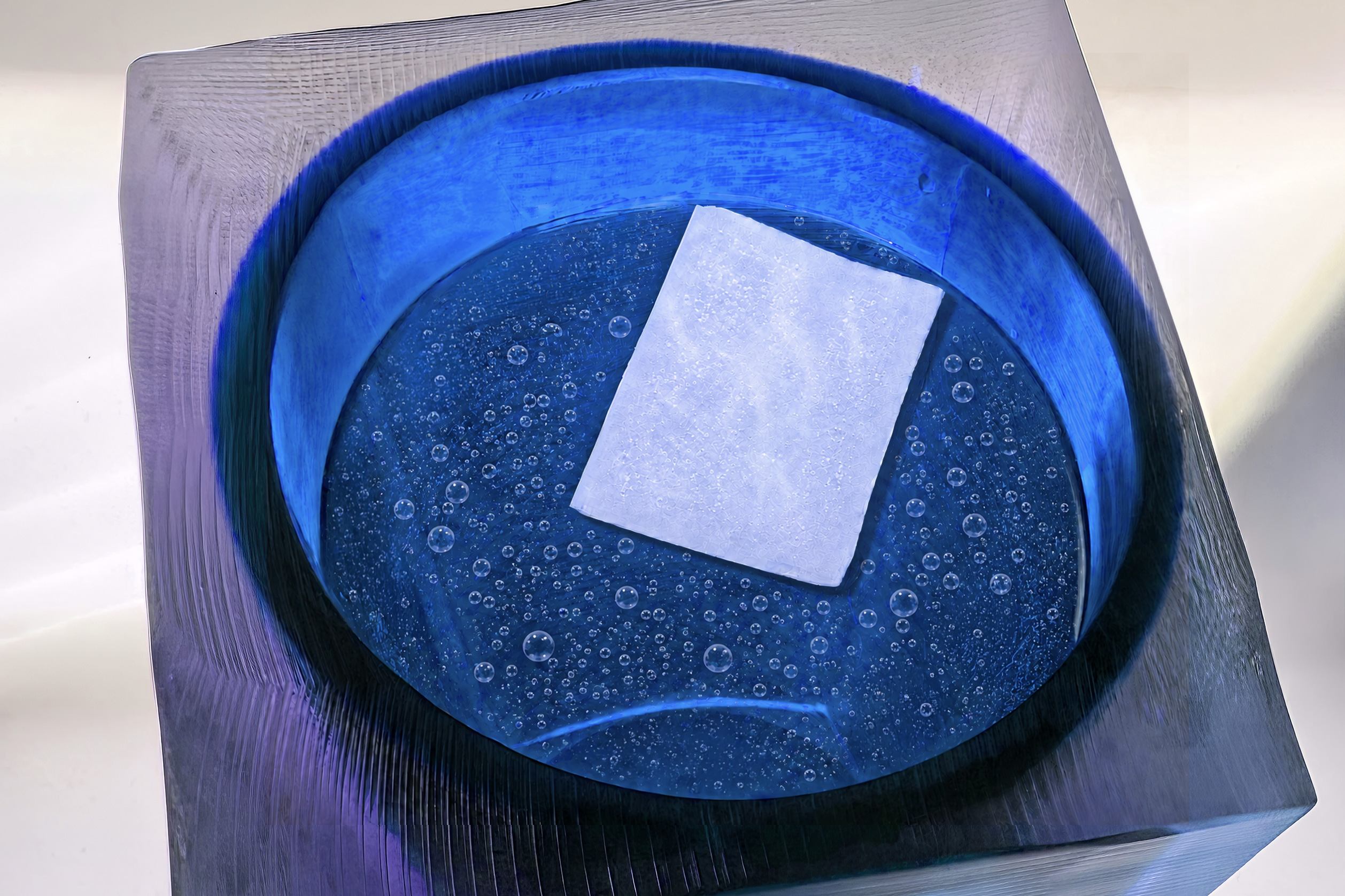
A compelling visual demonstration of this trapped air network is seen in a simple test: while conventional hydrogels (being denser than water) sink, the new breathable hydrogel floats. This visible buoyancy is a direct result of the air-filled tunnels permeating the material, a testament to the effectiveness of the phase separation technique.
Rigorous Testing and Promising Results
The efficacy and durability of the aerated hydrogel were subjected to rigorous testing. One of the most critical evaluations involved human volunteers, who wore wireless electrocardiogram (ECG) monitors attached to their chests using the new breathable hydrogel adhesive. These volunteers engaged in regular exercise over a period of 10 days. The results were remarkably positive: throughout the strenuous workouts, the breathable hydrogel maintained a consistently strong ECG signal, a stark contrast to conventional commercial hydrogel adhesives, which exhibited significant signal fluctuations due to sweat buildup and compromised adhesion. Furthermore, after 10 days of continuous wear, the volunteers showed no signs of skin irritation, redness, or blistering, indicating healthy skin conditions and superior comfort compared to existing solutions.
Beyond human trials, the mechanical resilience of the new hydrogel was also put to the test. The material underwent 10,000 cycles of stretching and compression, simulating the constant micro-strains experienced by materials on the body (e.g., with heartbeats or movement). Impressively, even after such extensive mechanical stress, the gel retained its intricate network of air channels, demonstrating less than a 5 percent drop in oxygen permeability. This exceptional durability is crucial for real-world applications where continuous performance under dynamic conditions is paramount. "That matters, because even with your heartbeat, your chest continuously undergoes small strains. So we have to make sure this gel is durable for such daily activity," Li explained.
Broadening Horizons: Applications and Implications
The implications of this breathable hydrogel are far-reaching and potentially transformative across multiple industries:
- Advanced Wound Care: Current hydrogel dressings are excellent for moist wound healing but often need frequent changes due to moisture buildup and skin maceration. A breathable hydrogel could allow for longer wear times, reducing the frequency of painful dressing changes, lowering infection risks, and promoting faster, healthier healing by maintaining optimal oxygen levels at the wound site. This could significantly improve outcomes for patients with chronic wounds like diabetic ulcers or pressure sores, where skin integrity is already compromised.
- Next-Generation Wearable Health Monitors: The success in maintaining clear ECG signals during prolonged exercise without skin irritation paves the way for more reliable and comfortable long-term physiological monitoring. Imagine continuous glucose monitors, smart patches for vital signs, or advanced athletic performance trackers that can be worn for days or weeks without discomfort or signal degradation. This will enhance patient adherence to monitoring protocols and provide more accurate, uninterrupted data for healthcare providers.
- Enhanced Drug Delivery Systems: Hydrogels are ideal for localized drug delivery. Breathable versions could be particularly beneficial for transdermal patches that deliver medication over extended periods, preventing skin irritation and ensuring consistent drug absorption. This could be critical for hormone therapies, pain management, or even vaccine delivery.
- Improved Implants and Prosthetics: For internal applications, breathable hydrogels could be used to coat implants, potentially reducing foreign body reactions and improving integration with surrounding tissues by allowing for better nutrient and oxygen exchange. This might include components of pacemakers, nerve interfaces, or even internal drug reservoirs.
- Cosmetics and Skincare: Breathable hydrogel face masks or patches could deliver active ingredients more effectively without occluding pores, leading to healthier skin and improved product performance. The comfort aspect would also be a significant market differentiator.
- Contact Lenses: While not explicitly tested, the principle of breathability is paramount in contact lens design to ensure ocular health. A highly hydrated and oxygen-permeable hydrogel could lead to more comfortable and safer contact lenses, reducing dry eye syndrome and other complications associated with insufficient oxygen supply to the cornea.
Economically, this innovation could drive significant growth in the biomedical materials market. By addressing a critical unmet need, MIT’s breathable hydrogel could command a premium, fostering new product lines and potentially reducing healthcare costs associated with treating skin complications from non-breathable devices.
Expert Perspectives and Future Outlook
Professor Zhao views this research not merely as a product development but as a foundational "technology platform." He believes the concept of viscoelastic phase separation as a guide for fabricating breathable and multifunctional hydrogels opens up a vast new avenue for other researchers and industries to explore. The ability to create air-permeable hydrogels while preserving their inherent hydration marks a paradigm shift in biomaterial engineering.
The development process itself, spanning several years, highlights the iterative and often challenging nature of materials science research. The interdisciplinary nature of the team, involving mechanical engineering, civil and environmental engineering, and medical engineering and science, underscores the complexity and breadth of expertise required to achieve such a breakthrough. Co-authors Xiao-Yun Yan, Shucong Li, Won Jun Song, Runze Li, Bastien Aymon, Jingjing Wu, Gengxi Lu, Jiayi Liu, Shu Wang, Eric Lu, Hyunhee Lee, James Zhang, Casey O’Brien, and Zachary Smith, alongside collaborators from multiple other institutions, contributed significantly to this monumental effort.
While the immediate focus is on perfecting and commercializing applications based on this initial discovery, future research directions are already emerging. Scientists may explore different types of aerogel particles, variations in polymer chemistry, or novel phase separation techniques to fine-tune breathability, mechanical strength, or specific functionalities like antimicrobial properties or enhanced drug loading. The long-term vision is to integrate this breathable platform into a wide array of smart medical devices that can interact with the human body for extended periods with unprecedented comfort and effectiveness.
This groundbreaking work was supported by several prestigious grants and fellowships, including the MIT Hatsopoulos Faculty Fellowship, the Uncas and Helen Whitaker Professorship, a HEALS seed grant, the National Institutes of Health, the National Science Foundation, and the Department of Defense Congressionally Directed Medical Research Programs. The research also leveraged the advanced facilities of MIT.nano, a testament to the critical infrastructure required for cutting-edge materials science. As this technology matures, it promises to usher in an era where medical devices and wearable technologies are not only highly functional but also seamlessly integrated with the human body, enhancing health and well-being without compromise.






