In the competitive landscape of international physics research, the journey from a conceptual proposal to a hands-on experiment at the world’s most prestigious particle physics laboratory is often reserved for doctoral candidates and seasoned academics. However, a group of six high school students from India, collectively known as Team attoPION, defied these expectations by securing a coveted spot at CERN, the European Organization for Nuclear Research. Their success was catalyzed by a "cold email" sent to Manu Srivastava, a PhD student at the Massachusetts Institute of Technology (MIT) Center for Theoretical Physics, which initiated a mentorship that bridged the gap between secondary education and cutting-edge particle research.
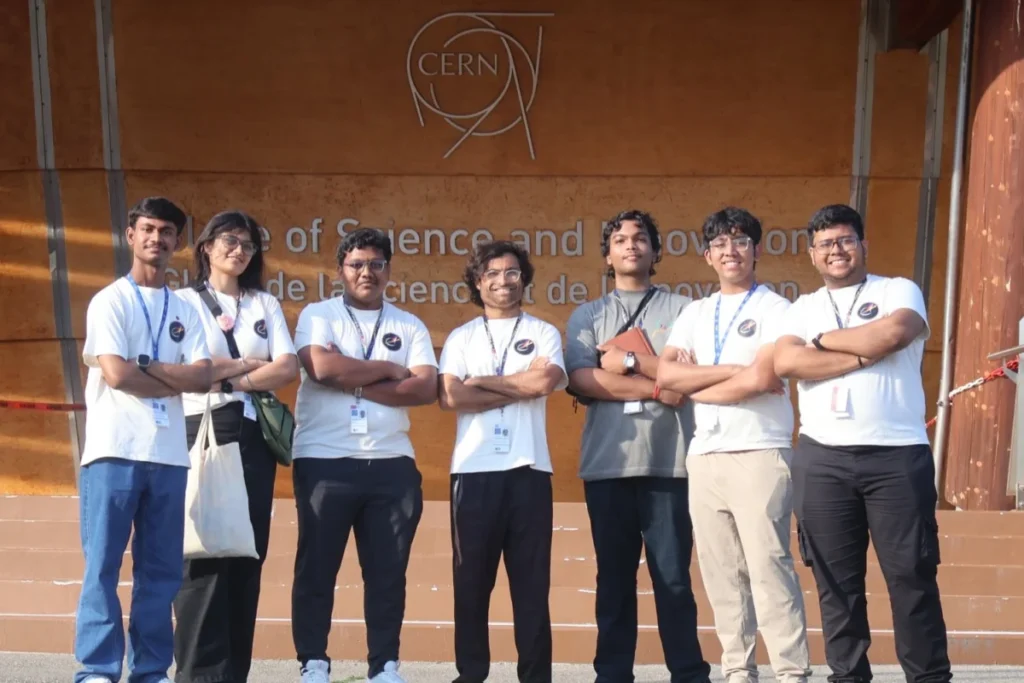
The Beamline for Schools (BL4S) competition, organized by CERN, is an annual global initiative that invites high school students to design and execute scientific experiments using a particle accelerator beam. In its 13th edition, the competition saw a record-breaking 712 teams from 89 countries, representing more than 4,500 students. Out of this vast field, Team attoPION was one of only five teams selected to travel to Geneva, Switzerland, to conduct their proposed research. The team, composed of students from four different schools across four Indian cities, demonstrated a level of scientific maturity that caught the attention of both MIT researchers and CERN scientists.
The Genesis of a Mentorship
The collaboration began in the spring when Manu Srivastava, a graduate student specializing in quantum gravity under Professor Hong Liu at MIT’s Leinweber Institute, received an unsolicited email from the Indian students. In an academic environment where high-profile researchers are frequently approached by commercial agencies offering paid mentorship opportunities to wealthy families, Srivastava noted that this particular message stood out for its sincerity. The students were not seeking a credential for a resume; they were seeking technical guidance for a complex physics problem.
Srivastava, who himself grew up in India and understands the challenges of accessing high-level scientific resources from abroad, felt a personal connection to the request. Despite his primary focus on theoretical physics—a field often detached from the immediate logistics of hardware-based experimentation—Srivastava recognized the potential in the students’ initial ideas. His role evolved from a casual advisor to a primary mentor, helping the team filter their various experimental concepts into a single, scientifically viable proposal that could withstand the scrutiny of the CERN selection committee.
Technical Framework: Measuring Pion Charge Exchange
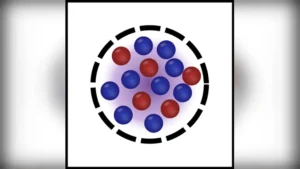
The core of Team attoPION’s experiment focuses on a phenomenon known as pion charge exchange. Pions, or pi mesons, are subatomic particles composed of a quark and an antiquark. They are the lightest mesons and play a fundamental role in mediating the strong force that binds protons and neutrons together in atomic nuclei. Pions can exist in three states: positively charged, negatively charged, or neutral.
The experiment designed by the students involves a positively charged pion interacting with a neutron within a target material. This interaction results in the production of a neutral pion and a positively charged proton. Specifically, the team aimed to characterize the cross-section of this reaction—essentially measuring the probability or frequency with which this specific exchange occurs.
Understanding this process is not merely an academic exercise. The data gathered by the students has direct implications for the Deep Underground Neutrino Experiment (DUNE), a multi-billion dollar international flagship project currently under construction. DUNE aims to study neutrino oscillations and CP violation, which could explain why the universe is dominated by matter rather than antimatter.
Synergy with the Deep Underground Neutrino Experiment (DUNE)
The relevance of high school-level research to a project as massive as DUNE was validated by Dave Newbold, a co-spokesperson for the DUNE collaboration. According to Newbold, the interaction of pions with matter is a critical variable in neutrino research. When neutrinos interact within DUNE’s massive liquid argon detectors, they often produce pions. If researchers do not accurately understand how these pions subsequently interact with other nuclei—such as through charge exchange—it introduces uncertainty into the measurement of the neutrino’s flavor and energy.
"The proposal is real experimental particle physics," Newbold remarked, noting that the students were not merely replicating known results but were contributing to a body of knowledge that helps quantify uncertainties in global experiments. He emphasized that the level of motivation and feasibility demonstrated in the attoPION proposal was significantly advanced for students at the secondary education level.
Similar "test beam" experiments are vital for the development of detector technology. The ProtoDUNE experiments at CERN, which served as large-scale prototypes for the final DUNE detectors in South Dakota, relied on similar principles of characterizing particle interactions to ensure the precision of future data.
Chronology of the attoPION Journey
The timeline of the project reflects a rigorous multi-month preparation phase:
- Spring: Initial contact between Team attoPION and Manu Srivastava. The students began refining their experimental goals through a series of emails and video calls.
- Proposal Submission: The team submitted their final proposal to the Beamline for Schools competition, competing against over 700 other international teams.
- Selection Announcement: Team attoPION was named one of the five winners, alongside teams from Bangladesh, Turkiye, the United Kingdom, and the United States.
- Pre-Experiment Preparation: The students began working with Berare Göktürk, a CERN support scientist, to address the technical limitations of their design.
- Geneva Visit: The team spent two weeks at CERN in Geneva. During this period, they were granted 12 days of "beam time" to run their experiment, utilizing CERN’s sophisticated detectors and data-acquisition systems.
- Analysis Phase: Following the collection of data, the students moved into the analysis stage, working to determine if their results reached the threshold for a publishable scientific paper.
Navigating the Realities of Experimental Science
Transitioning from a theoretical proposal to a physical experiment at CERN presented significant hurdles. Berare Göktürk, who assisted the team in Geneva, pointed out that the charge-exchange process the students sought to observe is inherently rare. In the world of particle physics, "rarity" translates to the need for high-precision equipment and the ability to filter out "noise" from millions of other subatomic events.
With only 12 days of active beam time, the students had to manage technical malfunctions, system calibrations, and the inherent uncertainty of data collection. Göktürk noted that the primary educational value of the program is to expose students to the "journey of a scientist," which includes the frustration of failed runs and the collaborative effort required to solve hardware bottlenecks in real-time.
For Srivastava, the experience served as a reminder of the importance of cross-disciplinary exposure. While his PhD research at MIT involves the abstract mathematics of quantum gravity, mentoring the Indian team forced him to engage with the practicalities of detector physics and beamline logistics. He attributed his ability to navigate this shift to the academic culture at MIT, which encourages theoretical physicists to engage with experimental seminars and colloquia.
Broader Impact and Statistical Context
The success of Team attoPION highlights a growing trend of high-level STEM engagement in emerging economies. The Beamline for Schools competition has seen a steady increase in participation from South Asia, reflecting a push for fundamental science education in the region.
Statistical data from CERN indicates that the 2024 competition was the most diverse in its history. The record 712 teams marked a significant increase from previous years, suggesting that digital outreach and the availability of online mentorship are lowering the barriers to entry for students in non-Western countries.
The implications of this project extend beyond the immediate data on pion charge exchange. By successfully navigating the CERN environment, these students have demonstrated that the gap between high school education and professional research can be bridged through dedicated mentorship and institutional support. Srivastava’s decision to answer a cold email has resulted in a contribution to the DUNE collaboration’s understanding of pion interactions and has provided six young scientists with a foundational experience that will likely define their future careers in physics.
As the data from the attoPION experiment continues to be analyzed, the potential for a publishable result remains a distinct possibility. Regardless of the final statistical significance of their findings, the project stands as a testament to the power of international scientific collaboration and the impact of providing young, talented minds with access to the world’s most advanced laboratory infrastructure. Srivastava concludes that the credit belongs entirely to the students, whose persistence transformed a simple email into a sophisticated experiment at the frontier of particle physics.