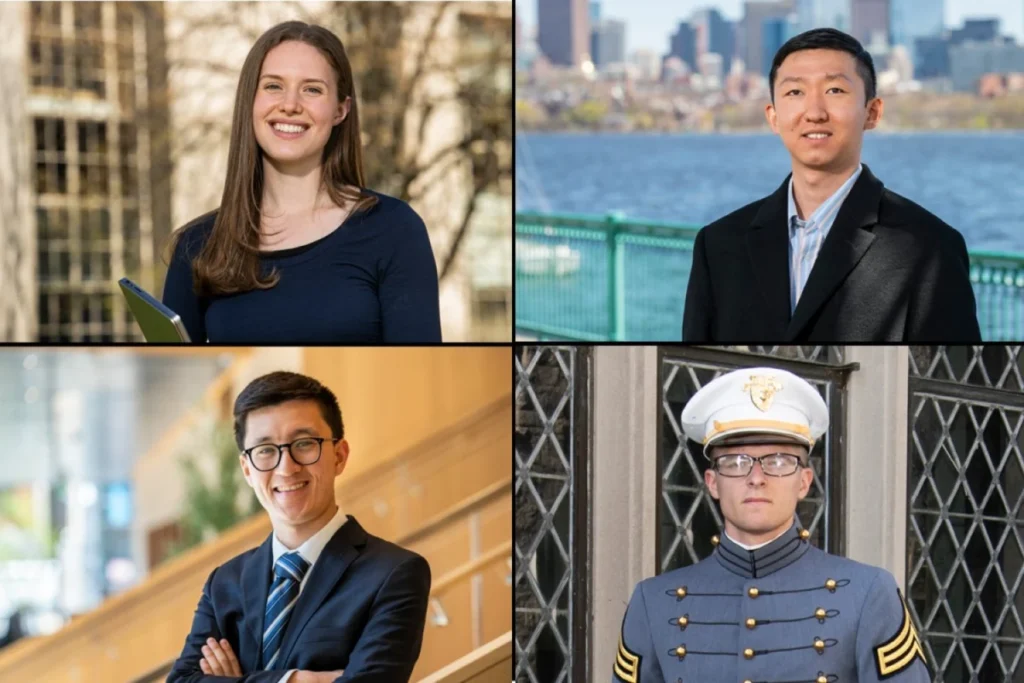
The Hertz Foundation has announced the selection of four distinguished individuals affiliated with the Massachusetts Institute of Technology (MIT) as recipients of its highly coveted fellowships. Annika Marschner, Alvin Q. Meng, Zachary S. Siegel, and Matthew Wanta are among the latest cohort of scholars recognized for their exceptional potential to advance scientific and technological frontiers, receiving a unique award that grants them substantial autonomy in their graduate research. These four MIT-affiliated fellows are part of a select group of 19 Hertz Foundation Fellows chosen nationwide for the current academic cycle, underscoring MIT’s consistent role as a hub for top-tier scientific talent.
The Genesis and Enduring Impact of the Hertz Fellowship
Established in 1963 by entrepreneur John D. Hertz and his wife Fannie K. Hertz, the Fannie and John Hertz Foundation for Applied Physical Sciences Education stands as a testament to their vision of fostering scientific leadership and national security. The founders, through their significant philanthropic endeavors, sought to create a program that would identify and empower America’s most promising graduate students in the applied physical, biological, and engineering sciences. Their goal was to provide these exceptional minds with the freedom and resources necessary to pursue high-risk, high-reward research without the usual constraints of traditional funding mechanisms. This philosophy is enshrined in the fellowship’s core offering: five years of comprehensive financial support, including a substantial stipend and full tuition equivalent. This unparalleled level of support is designed to liberate fellows from financial pressures, allowing them to dedicate their full intellectual capacity to groundbreaking, often interdisciplinary, investigations that have the potential to reshape scientific understanding and technological capabilities.
Beyond the immediate financial benefits, the Hertz Fellowship is distinguished by its lifelong commitment to its recipients. Fellows gain exclusive access to a vibrant and influential network of over 1,300 past and present scholars, a community that has grown significantly since the program’s inception. This network facilitates invaluable mentorship, collaboration, and networking opportunities through curated events, symposia, and informal connections. The foundation’s philosophy recognizes that true innovation often flourishes in an environment of intellectual exchange and mutual support. Indeed, this robust ecosystem has historically led to the formation of collaborative startups, pioneering research initiatives, and successful commercialization ventures across a vast spectrum of technology, science, and engineering fields.
The impact of Hertz Fellows on global progress is profound and well-documented. Their contributions span critical areas, from the development of advanced medical therapies that save lives and improve health outcomes to the establishment of robust global defense networks that enhance national security. Perhaps one of the most recognizable examples of their collective genius is their involvement in the design and deployment of the James Webb Space Telescope, a marvel of engineering that continues to unveil unprecedented insights into the universe’s origins and evolution. This illustrious legacy underscores the foundation’s success in cultivating a cadre of scientists and engineers who are not only intellectually brilliant but also deeply committed to solving some of humanity’s most pressing challenges.
Philip Welkhoff, a distinguished Hertz Fellow himself and director of the malaria program at the Gates Foundation, co-led the rigorous selection process for the latest cohort. His remarks capture the essence of what the foundation seeks in its scholars: "What particularly impresses me about this cohort is their fearlessness in taking on new challenges and advancing the frontiers of science," Welkhoff stated. He further lauded their "tremendous creativity, grit, and vision," expressing eagerness to witness the transformative accomplishments enabled by the "freedom to innovate provided by the Hertz Fellowship." This sentiment encapsulates the foundation’s belief in empowering individuals to push boundaries, trusting their intellectual curiosity and tenacity to yield unforeseen breakthroughs.
MIT’s Enduring Legacy in Fostering Scientific Excellence
MIT has historically been a fertile ground for Hertz Foundation Fellows, consistently producing a significant number of recipients each year. This trend reflects MIT’s unwavering commitment to fostering an environment of cutting-edge research, interdisciplinary collaboration, and intellectual rigor. The institution’s robust graduate programs, world-renowned faculty, and state-of-the-art facilities provide an ideal ecosystem for the kind of ambitious, high-impact research that the Hertz Foundation seeks to support. The selection of four MIT-affiliated scholars in this year’s highly competitive national cohort of 19 underscores the institute’s preeminence in attracting and cultivating the nation’s most promising scientific minds. This achievement is a source of immense pride for the MIT community, affirming its role at the vanguard of global scientific and technological advancement.
Spotlight on MIT’s 2023 Hertz Fellows: Profiles in Innovation
The four MIT-affiliated recipients of the 2023 Hertz Fellowship embody the diverse and interdisciplinary nature of modern scientific inquiry, each poised to make significant contributions in their respective fields.
Annika Marschner: Pioneering Bio-Inspired Robotics for Medical Advancement
Annika Marschner, an incoming doctoral student, will commence her PhD in mechanical engineering at MIT this fall, building upon an impressive undergraduate career marked by innovation. Her research trajectory has consistently focused on the development of novel technologies at the intersection of biointerfacing and bio-inspired systems. During her undergraduate studies, Marschner contributed to the design and implementation of sophisticated laboratory equipment, including a custom benchtop stereoscope-compatible incubator and an extrusion-based desktop bioprinter for MIT’s Raman Lab. Her expertise also extended to light-based filamented bioprinting systems for ETH Zürich’s Tissue Engineering and Biofabrication Lab, showcasing her versatility in advanced manufacturing techniques for biological applications.
Marschner’s work further encompasses large-scale hardware designs for robotic systems, particularly within MIT’s Biomimetic Robotics Lab, where she explored the intricate mechanics of biological movement. Her undergraduate thesis delved into the critical area of improving the speed and dexterity of dynamic motions in bio-inspired robotic limbs. This research is highly relevant to the burgeoning fields of prosthetics and exoskeletons, which aim to restore or augment human physical capabilities. As a graduate student, Marschner plans to deepen her engagement with both hardware and control system design in biologically relevant settings. Her particular interests lie in assistive medical technology and surgical robotics – areas with immense potential to revolutionize patient care, enhance surgical precision, and improve the quality of life for individuals with disabilities. Her work could lead to more agile and intuitive robotic surgical tools, more effective prosthetic devices, and novel diagnostic platforms, all driven by principles observed in natural biological systems.
Alvin Q. Meng: Unraveling the Fundamental Interactions of Inorganic Chemistry
Alvin Q. Meng, a current doctoral student in inorganic chemistry at MIT, is dedicated to understanding the fundamental interactions that govern chemical structure and reactivity. His current research, conducted under the guidance of Professor Daniel L.M. Suess, centers on iron-sulfur clusters. These complex molecular structures are ubiquitous and vital in both biological systems, where they play critical roles in electron transfer and enzymatic catalysis (such as nitrogen fixation and respiration), and in various industrial processes. Meng’s work seeks to elucidate the intricate mechanisms by which these clusters function, knowledge that could unlock new avenues for designing catalysts, developing sustainable energy solutions, and understanding disease pathways.
Meng’s academic journey began in Tianjin, China, before he immigrated to the United States at the age of 10. He earned undergraduate degrees in chemistry and mathematics from the University of Virginia, where he honed his research skills in the group of Professor W. Dean Harman. His earlier work involved the meticulous synthesis and characterization of dihapto-coordinated tungsten complexes of cyclopentadiene. This research specifically focused on a class of unusual binuclear species characterized by a carbon-carbon bond linking two metal-bound five-membered rings. Such fundamental research into organometallic chemistry contributes significantly to the understanding of chemical bonding, reaction pathways, and the potential for developing new materials and synthetic methodologies. Meng’s pursuit of foundational chemical knowledge exemplifies the Hertz Foundation’s commitment to supporting scholars who delve into the core principles that underpin scientific advancement.
Zachary S. Siegel: Building Machines that Reason Like Humans
Zachary S. Siegel, an electrical engineering and computer science graduate student, is pursuing his PhD within MIT’s renowned Computer Science and Artificial Intelligence Laboratory (CSAIL). His research occupies a critical intersection of robotics, cognitive science, and artificial intelligence, seeking to bridge the gap between human-like intelligence and machine capabilities. Siegel graduated summa cum laude from Princeton University with a BSE in computer science and a minor in philosophy, earning numerous accolades including Tau Beta Pi, Sigma Xi, and the Outstanding Computer Science Independent Work Prize.
His senior thesis, advised by prominent researchers Tom Griffiths and Jacob Andreas, explored how humans infer the goals of others in complex, open-ended real-world environments. Siegel’s work demonstrated that Bayesian inference serves as an accurate model for human goal predictions, achieved by comparing partial observations against a learned library of possible plans, weighted by their prior likelihood. This foundational understanding of human cognition informs his doctoral research, which aims to construct machines that learn and reason more like people. Specifically, Siegel is focused on developing systems that can learn effectively from limited data and generalize robustly to novel situations by intelligently combining robot planning with Bayesian inference. A key area of his interest is "combinatorial generalization"—the remarkable human capacity to compose known skills in entirely new ways to solve previously unseen problems without requiring additional demonstrations. This capability is a holy grail for AI development, promising more adaptable, efficient, and truly intelligent autonomous systems. At MIT, Siegel benefits from the guidance of a stellar advisory team comprising Leslie P. Kaelbling, Tomáš Lozano-Pérez, and Joshua B. Tenenbaum, all leading figures in robotics and AI. His work holds significant implications for advancing artificial general intelligence, enabling robots to operate more effectively in unpredictable human environments, and deepening our understanding of human learning itself.
Matthew Wanta: Innovating for National Security and Autonomous Systems
Matthew Wanta, an incoming doctoral student, will begin his studies in operations research at MIT this fall, bringing a unique blend of military discipline and technological prowess to the institute. A distinguished 2026 graduate of the United States Military Academy at West Point, Wanta earned bachelor’s degrees in computer science and mathematical sciences, both with honors. His undergraduate research centered on the critical area of machine learning for autonomous systems, with a particular focus on integrating probabilistic modeling and computer vision into cooperative drone search and swarm control frameworks.
Wanta’s work has direct and significant applications for national security and defense. In collaboration with the DEVCOM Armaments Center, he developed sophisticated computer vision models designed to detect energetic defects in artillery munitions. This innovation enables rapid, nonintrusive quality control in defense manufacturing, a crucial step for ensuring the reliability and safety of military ordnance. Furthermore, his contributions to U.S. Special Operations Command (USSOCOM) and Army C5ISR organizations focused on enhancing autonomous aerial search and sensing capabilities. He built advanced simulation architectures for probabilistic target localization and multi-agent coordination, laying the groundwork for more effective and intelligent autonomous reconnaissance and surveillance systems. Wanta’s leadership abilities are as notable as his technical skills, having served as company commander for Bravo Company, 2nd Regiment, and holding executive positions in academic honor societies like Upsilon Pi Epsilon and Phi Kappa Phi. He is also an Astronaut Scholar and a Sapper School graduate, commissioning as an Army officer in the Cyber Corps. His research at MIT promises to deliver breakthroughs in autonomous decision-making, logistics, and defense technologies, addressing pressing challenges in national security through advanced analytical and computational methods.
Broader Implications: Shaping the Future of Science and Society
The selection of these four exceptional MIT-affiliated scholars by the Hertz Foundation is more than just an acknowledgment of individual brilliance; it represents a strategic investment in the future of science, technology, and ultimately, society. The foundation’s emphasis on providing "unusual measure of autonomy" empowers these young researchers to pursue bold, unconventional ideas that might not fit neatly into traditional funding models. This freedom is crucial for fostering truly disruptive innovation, which often arises from unexpected avenues of inquiry.
The interdisciplinary nature of the fellows’ research—spanning mechanical engineering, inorganic chemistry, computer science, artificial intelligence, cognitive science, and operations research—highlights a growing trend in scientific discovery. Complex global challenges, from climate change and disease to national security and sustainable energy, demand solutions that transcend traditional disciplinary boundaries. By supporting scholars who naturally navigate these interfaces, the Hertz Foundation is catalyzing a new generation of problem-solvers equipped to tackle multifaceted issues.
Furthermore, the lifelong network provided by the Hertz Foundation creates a powerful multiplier effect. As these fellows mature into leaders in academia, industry, and government, their interconnectedness fosters collaborative ventures that accelerate progress across diverse sectors. The historical impact of Hertz Fellows—from medical breakthroughs to space exploration—demonstrates the profound long-term dividends of investing in exceptional human capital. These new MIT-affiliated fellows are poised to join this illustrious lineage, contributing to a legacy of scientific advancement that benefits not only the United States but the entire global community. Their work will undoubtedly shape the technological landscape, enhance human capabilities, and provide solutions to challenges yet unforeseen, solidifying their place among the architects of tomorrow’s world.