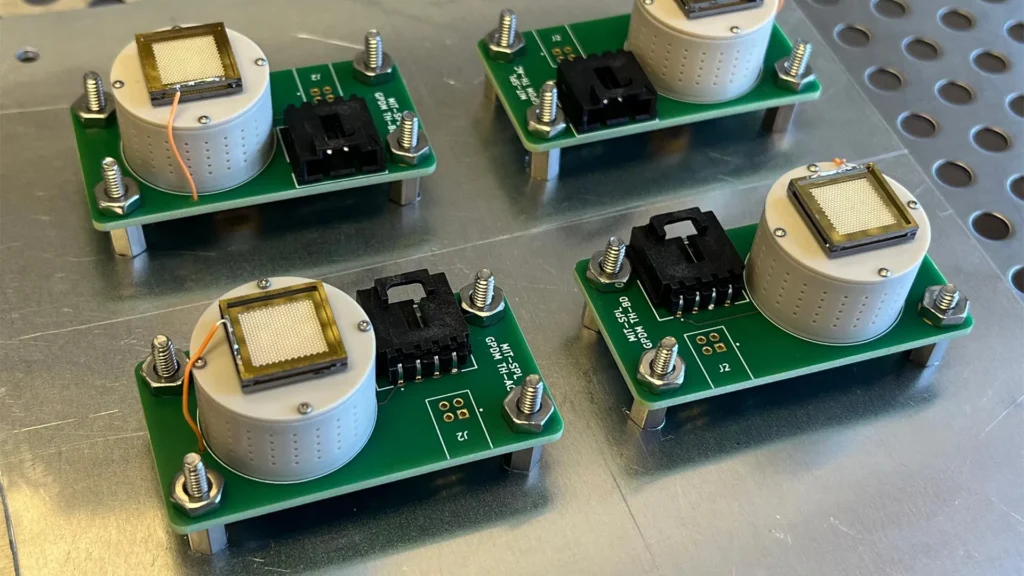
This groundbreaking innovation from the Massachusetts Institute of Technology promises to revolutionize the operational capabilities of small satellites, enabling them to undertake missions previously deemed impossible due to the inherent limitations of conventional propulsion systems. The technology, which hinges on a specialized, versatile fuel, aims to eliminate the need for separate propellant tanks and hardware for different types of maneuvers, thereby significantly reducing weight, complexity, and cost for future space missions.
The Dual-Mode Propulsion Breakthrough: A Paradigm Shift for Small Satellites
For decades, spacecraft propulsion has largely relied on two distinct methodologies: chemical rockets for high-thrust, rapid maneuvers, and electric thrusters for efficient, gradual adjustments over long durations. Each system typically demands its own specific propellant and intricate hardware, a requirement that becomes a critical constraint for smaller satellite platforms where every gram and cubic centimeter is precious. The MIT team’s breakthrough directly addresses this challenge by demonstrating a single propellant capable of powering both systems.
The core of this advancement lies in the identification and validation of a "green monopropellant" that can seamlessly operate within both chemical and electric propulsion architectures. This unification marks a significant leap forward, offering small satellites unprecedented flexibility in space. Instead of being confined to either swift, fuel-intensive changes or slow, methodical adjustments, future spacecraft could leverage the best of both worlds from a single, integrated fuel system. This capability is particularly transformative for CubeSats and other small satellite platforms, which are increasingly central to space exploration, Earth observation, and telecommunications but have traditionally been limited by their propulsion options.
Amelia Bruno, a former postdoc in MIT’s Department of Aeronautics and Astronautics (AeroAstro) and the lead author of the pivotal study published in the Journal of Propulsion and Power, underscored the profound implications of this development. "If you can have chemical and electrical propulsion in one small package, it’s the best of both worlds," Bruno stated. "This opens the door for small satellites to do even more science, more observations, and more interesting missions, all on a smaller and cheaper platform." Her words encapsulate the excitement and strategic importance of integrating these two fundamental propulsion modes.
Pioneering Propulsion: Chemical vs. Electric in Detail
To fully appreciate the significance of this dual-mode system, it is crucial to understand the distinct roles and characteristics of chemical and electric propulsion.
-
Chemical Thrusters: These systems operate by igniting propellants, often a monopropellant or bipropellant mixture, to create hot gases that are then expelled at high velocity through a nozzle. This process generates substantial thrust over short periods, making chemical thrusters ideal for rapid changes in velocity (delta-v), orbital insertions, de-orbiting maneuvers, station-keeping, or evasive actions. Their high thrust-to-weight ratio allows for quick acceleration, deceleration, and repositioning. However, they typically consume a large amount of propellant, leading to lower specific impulse (ISP) – a measure of fuel efficiency. Historically, fuels like hydrazine have been a staple for chemical propulsion due to their high energy density, despite their extreme toxicity.
-
Electric Thrusters: In contrast, electric thrusters, such as the electrospray thrusters utilized in this research, generate thrust by accelerating charged particles (ions) of a propellant using electric fields. These systems are characterized by very high specific impulse, meaning they can achieve significant velocity changes with a minimal amount of fuel. While they produce very low levels of thrust – often measured in micronewtons or millinewtons – they can operate continuously for extended periods, enabling highly efficient, gradual maneuvers over months or even years. This makes them perfectly suited for long-duration missions, precise orbital adjustments, or deep-space journeys where fuel conservation is paramount. Common applications include station-keeping for geostationary satellites and interplanetary transfers.
The inherent trade-off between high thrust (chemical) and high efficiency (electric) has long dictated spacecraft design. Mission planners often had to choose one over the other or, for more complex missions, integrate both, incurring the penalties of increased mass, volume, and system complexity due to separate fuel tanks, plumbing, and control systems. The MIT innovation aims to erase this dichotomy, offering a unified solution that grants unparalleled mission flexibility.
The Role of Green Monopropellants: Introducing ASCENT
At the heart of MIT’s dual-mode system is the Advanced SpaceCraft Energetic Non-Toxic (ASCENT) propellant. This "green monopropellant" was originally developed by the U.S. Air Force as a safer, high-performance alternative to hydrazine, the highly toxic and carcinogenic fuel that has been the industry standard for chemical propulsion for decades. Hydrazine exposure requires extensive safety protocols, specialized handling equipment, and significant ground crew training, all of which add to the cost and complexity of pre-launch operations.
ASCENT, which is an ionic liquid mixture, presents a revolutionary shift in space propulsion safety. Ionic liquids are salts in a liquid state, typically composed entirely of ions, and possess unique properties that make them attractive for propulsion. They are non-volatile, have low vapor pressure, and are thermally stable, making them much safer to handle and store than hydrazine. Their "green" designation not only refers to their reduced environmental impact but also to the vastly improved safety for personnel involved in satellite fueling and integration.
The realization that ASCENT, a propellant designed for chemical propulsion, could also power miniature electric thrusters was a pivotal moment for the MIT researchers. As Amelia Bruno noted, "ASCENT happens to be an ionic liquid mixture. And we said, hey, that’s the stuff we typically use. Theoretically, this should work. Let’s go figure out how." This intuitive leap, bridging the gap between two seemingly disparate propulsion domains through a common, advanced propellant, forms the bedrock of their innovation. The development of ASCENT by the U.S. Air Force was a strategic move to enhance operational safety and reduce logistical burdens for military and commercial space assets, and its newfound versatility as a dual-mode propellant only amplifies its importance.
MIT’s Rigorous Testing and Validation
The experimental phase of this research, conducted by Bruno, Lozano, and former MIT graduate student Matthew Corrado, focused on rigorously testing ASCENT’s performance within electrospray thrusters. Paulo Lozano, the Miguel Alemán Velasco Professor of Aeronautics and Astronautics at MIT and a co-author of the study, leads a laboratory renowned for developing, manufacturing, and testing electrospray propulsion systems. His group specializes in compact propulsion solutions for satellites ranging in size from a lunchbox to a small carry-on suitcase, making them ideal candidates for the application of this dual-mode technology.
The electrospray thrusters themselves are remarkably small, roughly the size of a dime, with the devices created in Lozano’s lab being about the size of a thumbnail. Each thruster sits atop a cube-shaped reservoir, approximately the size of a LEGO brick, filled with just one gram of ASCENT, a liquid with a viscosity comparable to baby oil. These tiny engines harness electric fields to charge particles within the ionic liquid propellant and then expel these ions through microscopic apertures, generating thrust.
To simulate the harsh conditions of space, the thrusters were mounted on a briefcase-sized CubeSat model, which was then placed on a custom magnetic levitation test platform known as the MagLev. This sophisticated setup is housed inside a large vacuum chamber, capable of recreating the near-vacuum environment of space, eliminating external forces that could interfere with precise thrust measurements. During the experiments, researchers remotely varied the voltage supplied to the thrusters. The electrospray generated enough force to gently spin the CubeSat model like a floating top, demonstrating quantifiable thrust.
The team’s meticulous testing involved operating the thrusters continuously for periods of up to 100 hours. This extended operational time was critical for assessing the fuel’s long-term performance, efficiency, and stability, ensuring that it could reliably function for the durations required by real-world space missions. The results unequivocally showed that ASCENT successfully powered the electrospray thrusters, performing on par with conventional ionic liquid propellants specifically designed for electric propulsion systems. "Compared to our normal electrospray propellants, ASCENT can provide similar performance in terms of thrust," Bruno confirmed, validating the theoretical premise with empirical data. This successful validation opens the door for further optimization and integration.
The NASA Green Propulsion Dual Mode Mission: A Space-Bound Test
The culmination of this laboratory success is the upcoming NASA Green Propulsion Dual Mode mission, a critical step towards validating this technology in the unforgiving environment of space. Scheduled for launch in November, this mission will deploy a briefcase-sized CubeSat equipped with a single chemical thruster and four electrospray thrusters, all drawing propellant from a shared, single fuel tank containing ASCENT.
This mission represents a monumental milestone, as it will be the first attempt to test such a dual-mode propulsion system on a small spacecraft in orbit. The collaboration with NASA underscores the agency’s keen interest in advancing propulsion technologies that can enhance the capabilities of CubeSats for a wider range of scientific and exploratory missions, including deep-space exploration. The Green Propulsion Dual Mode mission will provide invaluable real-world data on the performance, reliability, and integration of this unified propulsion system, paving the way for its broader adoption.
Paulo Lozano highlighted the pioneering nature of this endeavor: "This will be the first time that a satellite will have a shared propellant tank." The success of this mission could significantly de-risk the technology for future applications, demonstrating that the theoretical advantages translate into practical, operational benefits in space.
Transforming Small Satellite Capabilities: Broader Implications
The implications of a successful dual-mode propulsion system extend far beyond just combining two thruster types. It promises to fundamentally reshape the operational paradigms for small satellites, expanding their utility and reach.
-
Enhanced Mission Flexibility: With the ability to execute both rapid maneuvers and precise, fuel-efficient adjustments, small satellites can undertake far more complex mission profiles. For Earth observation, a constellation of satellites could quickly reposition to focus on emerging weather phenomena or disaster zones using chemical bursts, then switch to electric propulsion for long-term, stable observation or orbital maintenance. For deep-space exploration, CubeSats could leverage electric thrusters for years-long interplanetary cruises to Mars or the asteroid belt, and then use chemical thrusters for rapid orbital insertion, rendezvous maneuvers, or agile repositioning to examine specific features. As Lozano envisioned, "You could then use your chemical thrusters to quickly move to look at interesting features. You could have a lot more flexibility to do a lot more things."
-
Deep-Space Exploration for SmallSats: Traditionally, deep-space missions have been the exclusive domain of large, expensive spacecraft. The dual-mode propulsion system could enable CubeSats, which are orders of magnitude cheaper to build and launch, to venture far beyond Earth orbit. This democratization of deep-space access could dramatically increase the frequency and diversity of scientific missions to other planets, moons, and asteroids, fostering new discoveries and scientific breakthroughs at a fraction of the cost.
-
Reduced Mass and Volume: By eliminating redundant fuel tanks, plumbing, and control systems, the dual-mode approach significantly reduces the overall mass and volume of a satellite’s propulsion subsystem. This mass savings can be reallocated to scientific payloads, communication equipment, or additional power systems, enhancing the satellite’s primary mission capabilities. Alternatively, it can contribute to a lighter satellite, leading to lower launch costs, as launch services are often priced by weight.
-
Simplified Design and Integration: A unified propulsion system streamlines the design, manufacturing, and integration processes for small satellites. Fewer components mean less complexity, fewer potential points of failure, and faster development cycles, ultimately bringing down the overall cost of satellite production.
Economic and Environmental Benefits: A Greener, More Accessible Space
The adoption of ASCENT as a common propellant also brings substantial economic and environmental advantages to the space industry.
-
Cost Reduction: The combined effects of reduced mass, simplified design, and safer handling contribute to significant cost savings across the entire lifecycle of a satellite mission – from manufacturing and integration to launch and operations. Lower launch costs per kilogram, coupled with reduced ground support expenses for toxic propellants, make space more accessible to a broader range of academic institutions, small businesses, and developing nations.
-
Enhanced Safety: The move away from highly toxic propellants like hydrazine is a major win for personnel safety and environmental protection. ASCENT’s non-toxic nature drastically reduces the risks associated with fueling operations, simplifies safety protocols, and minimizes the potential for hazardous spills or environmental contamination on Earth. This aligns with a broader industry trend towards "green" propellants, reflecting a growing consciousness about the environmental footprint of space activities.
-
Increased Launch Opportunities: As more launch providers and spaceports come online, the demand for safer, more efficient satellite fueling procedures will only increase. Green propellants like ASCENT can facilitate faster turnaround times at launch sites and reduce the regulatory burden associated with hazardous materials, potentially enabling more frequent launch opportunities.
Future Horizons and Remaining Challenges
While the MIT research marks a monumental step, the journey to widespread adoption involves ongoing work and addressing remaining challenges. Future research will likely focus on:
- Long-Term Reliability: Further testing is needed to assess the long-term reliability and performance of both the chemical and electric thrusters when using ASCENT under various operational conditions and mission durations in space.
- Propellant Management: Developing robust propellant management systems for a single tank feeding two distinct propulsion types will be crucial, especially for missions with highly dynamic thrust requirements.
- Power Optimization: Electric thrusters require electrical power, and optimizing the balance between power generation, storage, and propulsion system requirements will be an ongoing area of research, particularly for smaller platforms with limited power budgets.
- Scalability: While demonstrated on small CubeSats, exploring the scalability of this dual-mode system to larger small satellite platforms or even medium-sized spacecraft could unlock even broader applications.
The success of the upcoming NASA Green Propulsion Dual Mode mission will be a critical determinant for the future trajectory of this technology. If it performs as expected, this MIT-developed dual-mode propulsion system, powered by a single green propellant, is poised to usher in a new era of versatile, cost-effective, and environmentally safer space exploration, fundamentally altering how we design, launch, and operate satellites in the decades to come. This research, supported in part by NASA, stands as a testament to human ingenuity in pushing the boundaries of what is possible in space.






