The adage "garbage in, garbage out" has found a new and critical application in the burgeoning fields of artificial intelligence and emerging technologies. This fundamental principle, asserting that the quality of an outcome is directly proportional to the quality of the input data, is particularly pertinent to nascent industries where progress hinges on the reliability of often limited existing information. The "new space" industry and metal additive manufacturing (AM) stand as prime examples where stakeholders must rigorously adhere to this principle. In this context, Phase3D, a Chicago-based provider of in-situ monitoring (ISM) hardware and software solutions for metal AM, has been awarded a significant contract by NASA, underscoring the imperative for high-quality data in both new space applications and powder bed fusion (PBF) processes.
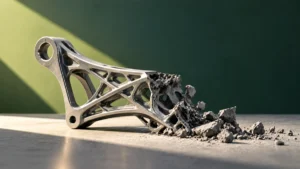
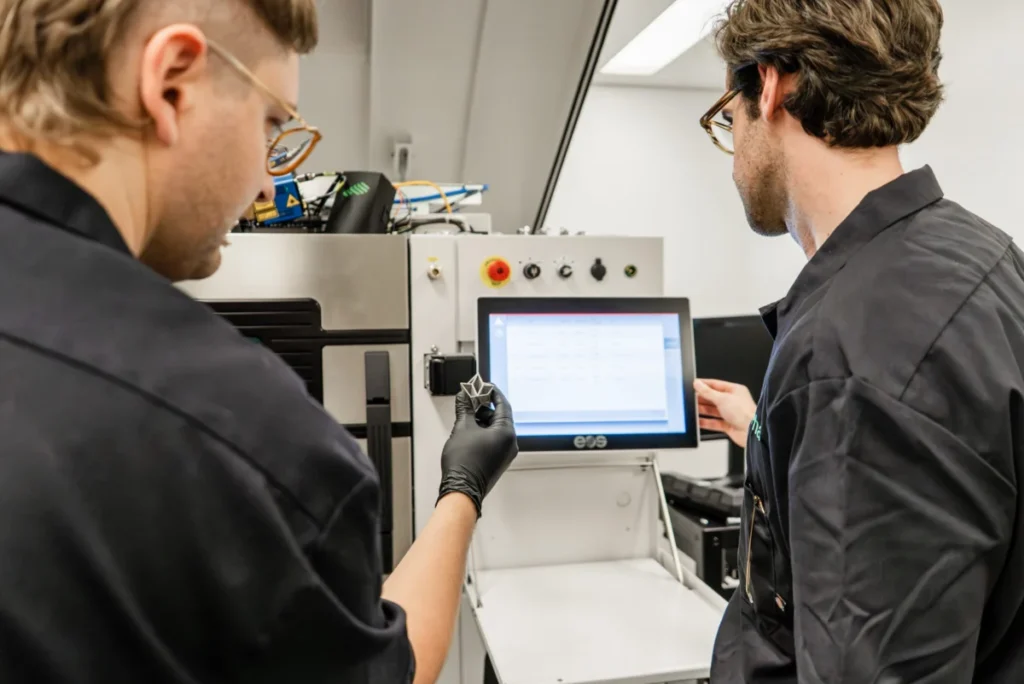
This strategic collaboration, facilitated by a NASA grant, will see Phase3D partner with an unnamed major aerospace and propulsion prime contractor. The project’s core objective is to deploy Phase3D’s innovative Fringe Inspection hardware and Fringe Qualification software on an EOS M300-4, a sophisticated quad-laser metal 3D printing system. The focus will be on qualifying structural brackets fabricated from Invar 36, an iron-nickel alloy renowned for its low thermal expansion properties, making it a critical material for aerospace components. The ambitious goal is to accelerate the qualification timeline for these space-bound parts by a factor of two to three, a stark contrast to the current standard, which can extend beyond eighteen months.
The challenges facing metal AM in the space sector are multifaceted and significant. Beyond the protracted qualification process, Phase3D highlights a rejection rate that can soar as high as 30 percent for traditionally qualified parts. Successfully addressing these critical metrics could unlock substantial cost savings and pave the way for wider adoption of metal AM by new entrants to the space industry.
Real-Time Inspection: The Key to Scalable AM for Space
Dr. Niall O’Dowd, founder and CEO of Phase3D, articulated the transformative potential of their technology in a recent press release detailing the NASA contract award. "For decades, qualifying a 3D-printed part for spaceflight has meant months of destructive testing and CT scanning, an approach that does not scale," Dr. O’Dowd stated. "With Fringe Inspection, the part is qualified as it is built. Every powder layer, every weld, every anomaly is captured in calibrated, defensible data. That is the foundation the industry needs to unlock [AM] at scale, not only for NASA, but for every aerospace, defense, and energy program building flight-critical hardware."
He further emphasized the critical role of real-time data in bridging the gap in the AM ecosystem. "Real-time inspection is the missing piece in the [AM] ecosystem," he explained. "Powders, lasers, machines, and process parameters have all matured. What has been missing is a way to prove, in real time, that the part you built is the part you designed, on every layer, every time. That is what Fringe Inspection delivers, and that is what makes large-scale, mission-critical [AM] possible."
This sentiment underscores a fundamental shift in the approach to AM part qualification. Traditionally, the process has been heavily reliant on post-production inspection methods, which are time-consuming, costly, and can only identify defects after they have occurred. Phase3D’s Fringe Inspection technology aims to revolutionize this paradigm by integrating inspection directly into the manufacturing process, providing continuous, layer-by-layer validation.
A Strategic Investment Driven by Urgent Demand
Phase3D’s recent contract award from NASA is not an isolated event but rather a validation of the company’s strategic direction and technological prowess. It directly correlates with the significant interest and oversubscription of its latest funding round, which secured $2.9 million. This funding round, detailed by industry analysts, signaled strong investor confidence in Phase3D’s ability to address critical pain points in the metal AM market.
The partnership with a leading propulsion prime for a NASA research project focused on qualifying parts on an EOS machine represents a powerful confluence of market demands. It addresses three key catalysts driving the increased adoption of metal AM by contract manufacturers: the urgent need for advanced aerospace components, stringent national security imperatives, and the increasing reliance on cutting-edge manufacturing technologies. By aligning with a major defense contractor and leveraging one of the most relevant metal 3D printing platforms globally, Phase3D is strategically positioned to capitalize on these driving forces.
The Geopolitical Landscape and the Rise of Domestic AM
The implications of Phase3D’s technology extend beyond the immediate project with NASA. As noted by industry observers, the company’s integrated ISM ecosystem could prove instrumental in scaling metal AM not only within the United States but also in nations seeking to reduce their reliance on Chinese-manufactured 3D printing equipment. This geopolitical dimension adds another layer of strategic importance to Phase3D’s innovation, as countries prioritize the development of secure and sovereign industrial capabilities. The relative scarcity of companies developing such comprehensive solutions positions Phase3D favorably, making it difficult for latecomers to establish a comparable foothold.
The coming years are poised to be a critical juncture in determining the long-term victors and vanquished in the metal AM sector. The demand for qualified parts, coupled with the limited number of Original Equipment Manufacturers (OEMs) and manufacturers capable of delivering them, creates a highly competitive landscape. It is widely anticipated that the U.S. government and its key contractors will catalyze an unprecedented surge in new metal AM business. For companies not already integrated into the government’s qualification ecosystem, the window of opportunity may be rapidly closing.
The "Qualified Parts" Imperative and Long-Term Viability
While the government and defense sectors are expected to be significant drivers of metal AM adoption, their influence is likely to create a ripple effect across the broader market. Companies that have successfully navigated the rigorous qualification processes for highly regulated industries will find it easier to onboard other metal AM customers. The historical precedent of major technological booms being spurred by wartime or crisis situations is a recurring theme. In this context, qualified parts and processes are not merely technical achievements but the essential mechanisms by which short-term demand transforms into sustainable, long-term industrial viability.
The ability to consistently produce parts that meet exacting standards, validated by robust data and verified processes, is paramount. This is where Phase3D’s commitment to in-situ monitoring and real-time qualification becomes a critical differentiator. By providing the foundational data necessary to prove the integrity of every printed layer, the company is enabling a new era of confidence and reliability in metal AM. This, in turn, is crucial for unlocking the full potential of this transformative manufacturing technology across a wide array of critical applications, from aerospace and defense to energy and beyond. The successful qualification of Invar 36 structural brackets for spaceflight represents a significant milestone, demonstrating a tangible pathway towards reducing lead times, lowering rejection rates, and ultimately making advanced additive manufacturing more accessible and cost-effective for the most demanding industries.
The partnership between Phase3D and NASA, alongside its aerospace prime, is more than just a research grant; it is a strategic investment in the future of manufacturing. It highlights the growing recognition that data integrity and real-time validation are not just desirable but essential for the widespread adoption and success of advanced technologies like metal AM. As the industry continues to evolve, the lessons learned from this collaboration will undoubtedly shape the standards and practices for years to come, solidifying the principle that in the world of high-stakes manufacturing, quality in data unequivocally leads to quality in outcome.