NASA’s Johnson Space Center (JSC) in Houston is a crucible of innovation, where the future of human space exploration is meticulously crafted. Amidst the bustling corridors and state-of-the-art facilities, a new generation of talent is actively contributing to some of the nation’s most ambitious endeavors. Interns, armed with diverse skill sets and an unyielding passion for discovery, are immersing themselves in real-world projects alongside seasoned engineers, scientists, communicators, and innovators. This program offers these students invaluable hands-on experience, allowing them to contribute directly to ongoing missions and preparing them to join the nation’s highly competitive aerospace workforce. Their involvement underscores NASA’s commitment to fostering the next wave of aerospace professionals, bridging the gap between academic learning and practical application.
The program at JSC is designed to be more than just an educational stepping stone; it’s an active participation in the grand narrative of human spaceflight. Interns are not merely observing; they are integral team members, tasked with tangible projects that advance the agency’s goals. From developing sophisticated AI systems to crafting compelling visual narratives and capturing pivotal moments through photography, these students are leaving an indelible mark on NASA’s current and future missions. Their presence injects fresh perspectives and a forward-thinking approach, vital for tackling the complex challenges inherent in pushing the boundaries of what’s possible beyond Earth.
Illuminating Lunar Ambitions: Macie Landon’s Strategic Communications Role
Macie Landon, a Moon Base Program Strategic Communications Intern, is at the forefront of articulating humanity’s nascent presence on the lunar surface. Her role transcends traditional communication; she is a visual storyteller, leveraging graphic design, 3D modeling, video production, and a suite of other multimedia tools to craft compelling narratives. These visual assets serve a dual purpose: engaging the public in NASA’s ambitious Moon Base Program and facilitating internal alignment among the diverse teams working towards this monumental goal.
Landon’s journey to NASA is a testament to the evolving landscape of STEM careers, demonstrating how seemingly disparate interests can converge to serve a profound purpose. Her lifelong fascination with space, science fiction, art, and video games initially steered her towards a career in gaming or feature animation while pursuing her visualization degree at Texas A&M University. It was the realization that these same creative proficiencies could be applied to the cutting edge of human space exploration that redirected her aspirations.
Her initial foray into the world of aerospace visualization began with an internship at NASA’s Glenn Research Center in Cleveland, Ohio. There, she honed her skills by creating intricate 3D models for virtual reality simulations, a critical tool for mission planning and astronaut training. This experience proved pivotal, shattering her preconceived notions about the scope of creative roles within NASA. "I had no idea I could pursue multimedia design at NASA," Landon shared. "I loved it and was so inspired by the creative force across all NASA centers." This early exposure ignited a desire to contribute more directly to human spaceflight initiatives.
Following her impactful internship at Glenn, Landon proactively sought opportunities at the Johnson Space Center. Building upon the connections and expertise she had cultivated, she applied for a summer internship, continuing her vital work in design and communications. Her current role focuses on translating NASA’s ambitious human space exploration objectives into accessible and inspiring content for a global audience.
The collaborative spirit at NASA has deeply impressed Landon. She remarked, "Everyone at NASA is so smart, helpful, and willing to share their stories. Almost every day I have at least one memorable and surprising moment." This environment of shared knowledge and mutual support fosters a unique sense of camaraderie, propelling missions forward. Her internships have provided her with a profound appreciation for the intricate teamwork required for successful space exploration. "Through my two internships, I’ve learned how thousands of people from different backgrounds work together toward the same goal of benefiting humanity," she stated.
Landon’s perspective on STEM careers has been fundamentally reshaped by her experience in strategic communications. She recognizes the indispensable role of communicators in making complex scientific and engineering achievements accessible and inspiring. "Without someone sharing the stories of NASA’s work, much of it would go unseen," she emphasized. "The creatives at NASA are key to inspiring the next generation." Beyond her multimedia contributions, Landon actively engages with the public at outreach events, fostering dialogue and answering questions from individuals of all ages and backgrounds. This direct interaction has sharpened her ability to communicate complex ideas effectively. "I’ve learned a lot about how to have meaningful and impactful conversations with people," she noted.
Looking towards the future, Landon is committed to leveraging her design and storytelling prowess to deepen public understanding of NASA’s missions and to ignite the imaginations of future explorers. Her ultimate aspiration is to inspire a diverse cohort of future scientists, creatives, and explorers to contribute to NASA’s overarching mission of advancing humanity. For students contemplating STEM careers, Landon offers a potent piece of advice: "Explore what you truly love. You may discover there’s a place for your skills at NASA, too." This sentiment highlights the agency’s growing recognition of the diverse talents required for space exploration.
Pioneering the Future of Mission Support: John Graham Reynolds and AI Innovation
John Graham Reynolds is spearheading advancements in artificial intelligence and machine learning within NASA’s Advanced Operations Concepts Lab. His work focuses on developing generative AI systems designed to enhance mission support and streamline engineering operations, particularly for the Orion Program, a cornerstone of NASA’s Artemis missions, and other critical aspects of human spaceflight.
Before embarking on his NASA journey, Reynolds brought four years of professional engineering experience to the table. Seeking a more profound impact and driven by a desire to engage in meaningful innovation, he returned to graduate school. This academic pursuit was specifically geared towards aligning his career with his passion for impactful technological development.
Reynolds articulated his deep-seated admiration for NASA, stating, "NASA is the greatest symbol of American ingenuity and a beacon for public progress. Applying here was a no-brainer." This sentiment underscores the enduring allure of the space agency as a driving force for national advancement and scientific achievement.
As a graduate intern, Reynolds has made significant contributions to technologies directly supporting NASA’s human spaceflight endeavors. A particularly proud achievement involved the Artemis II mission, where his team’s flagship AI system provided crucial engineering support for the Orion spacecraft. This sophisticated system offered operators of the Orion Flight Software console, situated in the Orion Mission Evaluation Room, an AI-powered interface. This interface enabled rapid access and summarization of extensive internal engineering documentation. Consequently, engineers could more efficiently analyze potential faults, troubleshoot complex issues, and contribute to the seamless operation of the Orion spacecraft during the Artemis II mission. This initiative directly contributed to the success of a mission that pushed the boundaries of human reach, sending astronauts farther from Earth than ever before.
Reynolds’s experience working alongside NASA’s dedicated engineers has profoundly influenced his perspective on STEM careers. He observed, "NASA is filled with smart people, but above all else, it is filled with people who are passionate about what they do. That overwhelming sense of passion and purpose regularly reminds me of the value STEM careers provide." This emphasis on passion and purpose highlights the intrinsic motivation that fuels innovation at the agency.
A key lesson Reynolds has internalized is the fundamental role of collaboration in driving innovation. He shared, "Always be open to the ideas of others, and they will be open to you. No one can solve every problem. Teamwork, collaboration, and consideration are the greatest agents of improvement." This philosophy underscores the interconnected nature of scientific and engineering progress. Furthermore, mentorship and networking have been instrumental to his internship experience. Reynolds highlighted, "Connecting with full-time staff and other interns has opened many doors for me. I know those connections will support me for the rest of my life, inside and outside of NASA." This emphasizes the long-term value of the relationships forged within the agency.
Looking ahead, Reynolds aims to continue developing advanced technologies that bolster NASA’s missions and propel the future of space exploration. For students considering a career at NASA, Reynolds advocates for sustained curiosity and the pursuit of genuine interests. His advice to aspiring professionals is broad and inclusive: "Find what you love, even if it isn’t STEM. Explore anything and everything that interests you. Never stop." This message encourages a holistic approach to learning and career development, recognizing that diverse passions can ultimately contribute to the grand objectives of space exploration.
Capturing the Cosmos: Morgan Gridley’s Photographic Storytelling
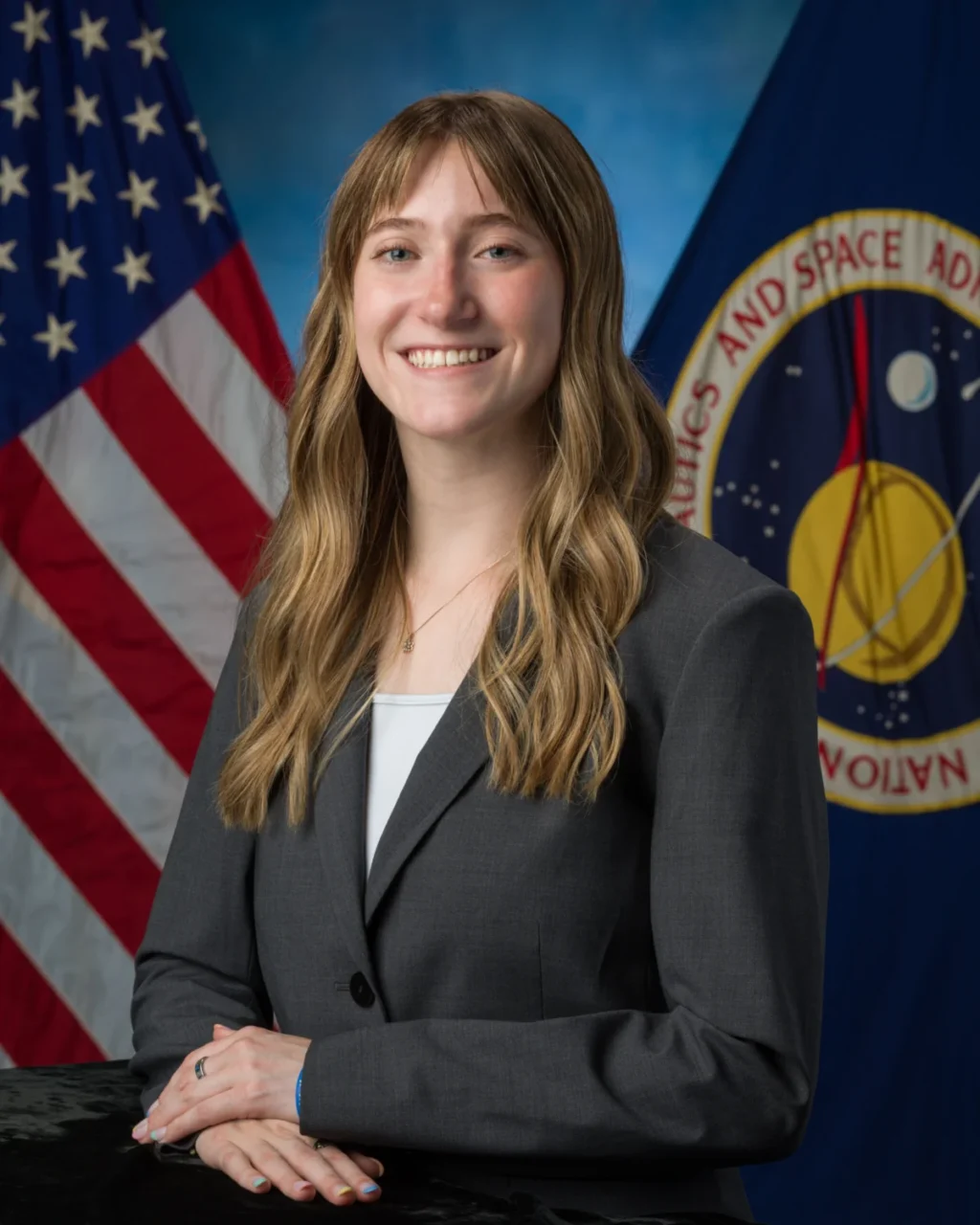
Morgan Gridley, a Photography Intern at Johnson Space Center, is playing a vital role in documenting the unfolding narrative of human spaceflight. Her photographic lens captures everything from intimate astronaut portraits and rigorous crew training sessions to significant mission announcements. These images are instrumental in conveying the story of NASA’s endeavors to a global audience. Now in her second summer internship, Gridley is building upon the foundational experiences that first ignited her passion for documenting the spirit of exploration.
Gridley’s pathway to this unique opportunity began when NASA photographer Bill Stafford, an alumnus of East Texas A&M University, shared information about the internship with faculty members. The opportunity was then passed on to Gridley’s class, prompting her immediate application. She stated, "Working alongside so many talented photographers, engineers, scientists, astronauts, and creatives has shown me how many different ways people contribute to NASA’s mission." This exposure to the multidisciplinary nature of NASA’s work has been a significant learning experience.
Gridley’s initial interest in the internship was fueled by her lifelong fascination with space and exploration. "I’ve always loved space and exploration, so it seemed like an incredible experience," she said. Her photographic assignments have already placed her at the heart of significant events. One of her notable projects involved photographing one of NASA’s WB-57 aircraft during takeoff. These striking images were subsequently utilized in news coverage highlighting the aircraft’s critical role in aerial imaging during severe weather events, such as the Texas floods.
She also served as one of the key photographers documenting the Artemis III crew announcement, a milestone event. Several of her images from this announcement were featured in news reports, contributing to the public’s understanding and excitement surrounding this historic mission. Gridley attributes much of her professional growth to the guidance she has received from her mentors throughout both of her internship experiences. "I consider every member of my team to be one of my mentors," she explained. "Even after my first internship ended, I stayed in touch by sharing my work and receiving feedback on my photos." This ongoing mentorship highlights the supportive environment at JSC.
Photographing astronauts in the studio has emerged as one of Gridley’s most cherished assignments. Her initial focus in photography was primarily on landscapes, and she found portraiture less appealing. However, her NASA experience has transformed her perspective. "When I first started photography, I mostly focused on landscapes and didn’t enjoy taking portraits," she admitted. "Now, portrait photography is my favorite part of what I do." This evolution underscores her adaptability and willingness to embrace new artistic challenges.
Looking forward, Gridley aspires to continue her contribution to NASA’s visual storytelling efforts as a member of the photography team. "Being able to capture moments that are part of NASA’s history has been an amazing experience, and I’d love the opportunity to continue telling those stories through photography," she expressed. Her dedication to documenting these pivotal moments emphasizes the enduring importance of visual media in preserving and sharing the legacy of human space exploration.
For students considering careers that intersect STEM fields and the creative arts, Gridley offers encouraging advice: "Don’t be afraid to step outside your comfort zone. Staying open to new experiences can lead you to opportunities and interests you never expected." This sentiment resonates with the broader theme of discovery and personal growth that permeates the NASA internship program, highlighting that unexpected paths can lead to profoundly rewarding careers.
The Broader Impact: Cultivating the Next Generation of Space Explorers
The internship program at NASA’s Johnson Space Center is more than just a summer job for students; it’s a critical component of the agency’s long-term strategy to cultivate a robust and innovative future workforce. By embedding interns within active mission teams, NASA provides unparalleled opportunities for practical learning, skill development, and professional networking. The tangible contributions of students like Landon, Reynolds, and Gridley demonstrate the immediate value they bring to the agency, while their experiences shape them into the future leaders of aerospace.
The data from NASA’s internship programs consistently shows high rates of participants pursuing careers in STEM fields, with a significant portion continuing to work for NASA or in related industries. For instance, the Pathways Programs, which include internships, aim to recruit and develop top talent for federal careers. These programs are crucial for ensuring a continuous pipeline of skilled professionals capable of tackling the increasingly complex challenges of space exploration, from lunar bases and Mars missions to the development of advanced propulsion systems and sustainable life support.
The implications of this intern engagement extend beyond individual career development. It fosters a culture of innovation and knowledge transfer within NASA. Younger perspectives can challenge established norms and introduce novel approaches to problem-solving, while experienced mentors can impart invaluable institutional knowledge and technical expertise. This dynamic exchange is essential for maintaining NASA’s position at the forefront of scientific and technological advancement.
The collaborative environment fostered by these internships is also crucial for the success of major initiatives like the Artemis program. As NASA aims to establish a sustainable human presence on the Moon and eventually venture to Mars, the need for a diverse and highly skilled workforce is paramount. The experiences gained by interns in areas like strategic communications, AI development, and photography are directly applicable to the multifaceted demands of these ambitious long-term goals.
Furthermore, the public outreach facilitated by interns like Macie Landon plays a vital role in maintaining public support and inspiring future generations. By making the complexities and triumphs of space exploration accessible and engaging, these interns help to cultivate a populace that understands and champions the value of scientific endeavor. The visual narratives and impactful stories they help create are essential for bridging the gap between the scientific community and the broader public.
The success of these interns serves as a powerful testament to NASA’s enduring mission and its commitment to nurturing talent. As these students transition from interns to professionals, they carry with them the unique experiences and foundational knowledge gained at JSC, poised to contribute significantly to the ongoing quest to explore the cosmos for the benefit of all humankind. The lessons learned – about collaboration, innovation, and the profound impact of dedicated work – will undoubtedly shape the future of space exploration for decades to come.
Learn more about NASA internship programs.