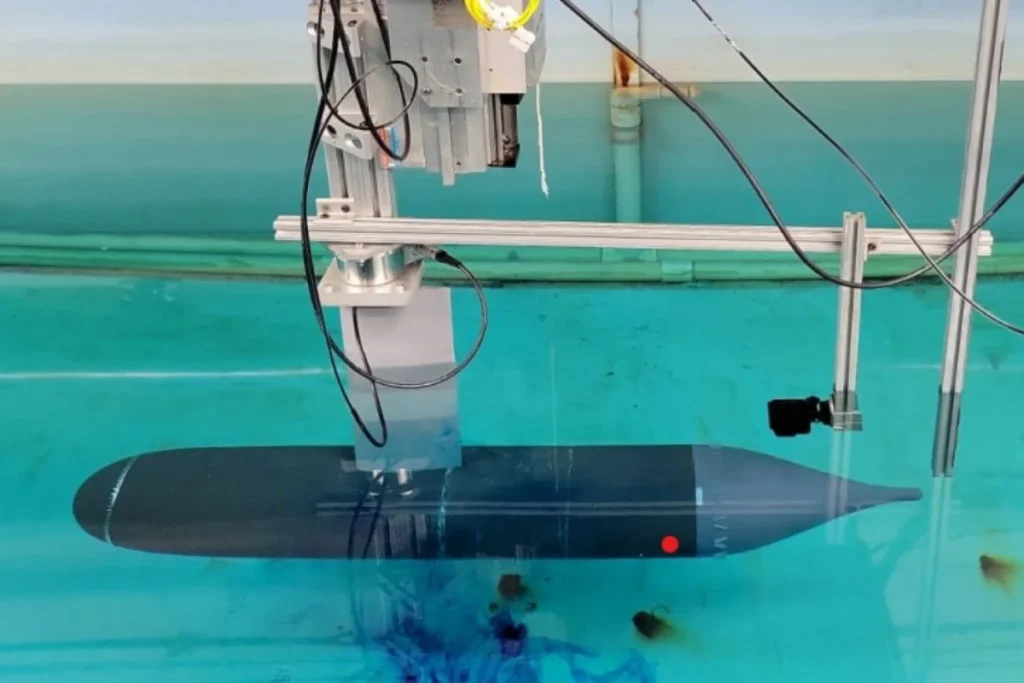
Researchers at the Massachusetts Institute of Technology (MIT) have achieved a significant breakthrough in maritime efficiency, demonstrating that the strategic placement of wedge-shaped vortex generators on a ship’s hull can slash drag by up to 7.5 percent. This substantial reduction translates directly into lower fuel consumption and, consequently, a significant decrease in harmful emissions, offering a crucial advancement in the global effort to decarbonize the shipping industry. The findings were formally presented in a paper titled "Net Drag Reduction in High Block Coefficient Ships and Vehicles Using Vortex Generators," unveiled at the prestigious Society of Naval Architects and Marine Engineers (SNAME) 2025 Maritime Convention held in Norfolk, Virginia. This development arrives at a pivotal moment, as the international maritime sector grapples with ambitious environmental targets.
A Critical Step Towards Decarbonization Goals
The International Maritime Organization (IMO) has set a formidable goal: to reduce the carbon intensity of international shipping by at least 40 percent by 2030, measured against 2008 levels. This target necessitates a multifaceted and coordinated approach, encompassing innovations in ship design, propulsion systems, fuel alternatives, and operational strategies. The MIT research offers a tangible and potentially widespread solution that can contribute significantly to achieving these environmental imperatives. By reducing the energy required to propel vessels through water, these vortex generators directly address the core of the problem – the immense fuel consumption of the global fleet.
The Science Behind the Breakthrough: Computational Power Meets Experimental Validation
The innovative design of these wedge-shaped vortex generators is the product of a sophisticated research methodology that skillfully blends computational fluid dynamics (CFD) with experimental testing, all guided by advanced artificial intelligence (AI) optimization techniques. The research team, comprising José del Águila Ferrandis, Jack Kimmeth, and Michael Triantafyllou from MIT Sea Grant and the Department of Mechanical Engineering, alongside Alfonso Parra Rubio and Neil Gershenfeld from the Center for Bits and Atoms, meticulously explored the parametric landscape of vortex generator design.
Their process began with extensive CFD analysis, a powerful simulation tool that allowed them to establish broad trends and identify promising design parameters. This phase involved simulating the complex flow of water around various hull shapes and vortex generator configurations. Following the computational phase, the team transitioned to rapid prototyping and experimental validation. This allowed for the testing of multiple hull designs and vortex generator shapes on scale models, providing crucial real-world data to confirm and refine the CFD predictions.
The experimental setup involved testing scale models of an axisymmetric hull. Different configurations were evaluated: a bare tail, a tail augmented with delta wing vortex generators, and a tail fitted with the newly developed wedge vortex generators. The results unequivocally pointed to the wedge-shaped vortex generators as the optimal design for achieving the observed level of drag reduction. This rigorous, iterative process, combining the predictive power of CFD with the empirical certainty of experimentation, underscores the scientific robustness of the findings.
Unveiling the Mechanism: Smoother Flow, Reduced Wake
The efficacy of the wedge vortex generators lies in their ability to manipulate the airflow around the hull. Through detailed flow visualization techniques, researchers observed that these devices effectively delay the separation of turbulent flow from the hull’s surface. This delay allows water to flow more smoothly and efficiently along the ship’s contours, significantly shrinking the turbulent wake that trails behind the vessel. A smaller wake means less energy is wasted in creating turbulence, and the propeller and rudder can operate in a more uniform and less disturbed flow field, thereby enhancing their overall efficiency.
Professor Michael Triantafyllou, a leading figure in this research, a professor of mechanical engineering, and director of MIT Sea Grant, highlighted the novelty of the findings: "We document for the first time experimentally a reduction in fuel required by ships using vortex generators, relatively small structures in the shape of a wedge attached at a specific point of the ship’s hull." This statement emphasizes the practical and quantifiable benefits of the technology, moving beyond theoretical models to demonstrable fuel savings.
A Proven Concept, Reimagined for Maritime Applications
The principle behind vortex generators is not entirely new. These devices have a long and successful history in aerospace engineering, where they are commonly employed on aircraft wings to maintain lift and prevent stalling. By energizing the boundary layer of air, they keep the flow attached to the wing surface, enabling aircraft to fly at higher angles of attack and perform maneuvers more effectively. The groundbreaking aspect of the MIT research is its successful adaptation and application of this concept to the domain of commercial shipping, demonstrating its potential for drag reduction rather than lift enhancement.
Versatility and Synergistic Potential
A key advantage of the wedge vortex generators is their inherent modularity and adaptability. Their design allows for integration into a wide array of hull forms, including those of bulk carriers and tankers, which are characterized by high block coefficients (meaning they have a large proportion of their internal volume filled with cargo, leading to fuller, less streamlined hulls). Furthermore, these devices possess the potential to work in synergy with existing maritime technologies or even replace them. For instance, they can complement pre-swirl stators, which are fixed fins mounted ahead of propellers to impart a rotational motion to the water, thereby improving propeller efficiency. By reducing drag and improving flow uniformity, vortex generators can enhance the performance of these and other established systems, leading to a compounding effect on overall efficiency.
Quantifiable Economic and Environmental Impact
The economic implications of this research are substantial. The researchers have estimated that retrofitting a 300-meter Newcastlemax bulk carrier, a common type of large bulk carrier, with these vortex generators, operating at a speed of 14.5 knots on a typical cross-Pacific route, could result in significant annual fuel savings. Their projections indicate savings of approximately $750,000 per year. This figure, when extrapolated across a global fleet of thousands of vessels, represents a colossal potential for cost reduction and emissions mitigation.
The environmental benefits are equally compelling. A 7.5 percent reduction in drag directly translates to a proportional reduction in fuel consumption. Given that the shipping industry is a major contributor to global greenhouse gas emissions, even incremental improvements in fuel efficiency across a large fleet can have a profound impact on meeting climate targets. For example, if this technology were widely adopted, it could contribute significantly to the IMO’s goal of reducing carbon intensity by 40% by 2030.
Collaboration and Future Directions
This pioneering research was made possible through the support of the CBA Consortium. Notably, the project involved collaboration with Oldendorff Carriers, a prominent shipping company that manages a fleet of approximately 700 bulk carriers worldwide. This partnership provided invaluable industry insights and a real-world context for the research.
Building upon these promising results, an extension of this research is currently being supported by the MIT Maritime Consortium. This consortium, established in 2025, is dedicated to addressing critical challenges in the modernization of the commercial fleet. Led by MIT professors Themis Sapsis and Fotini Christia, the Maritime Consortium fosters interdisciplinary research and collaborative efforts between academia, industry, and regulatory bodies to drive innovation and implement sustainable solutions in maritime transport. The continued investigation aims to further refine the technology, explore its application across an even broader range of vessel types, and accelerate its adoption within the global shipping industry. The convergence of academic excellence, industry collaboration, and governmental environmental mandates positions this MIT research as a beacon of progress in the quest for a more sustainable maritime future.