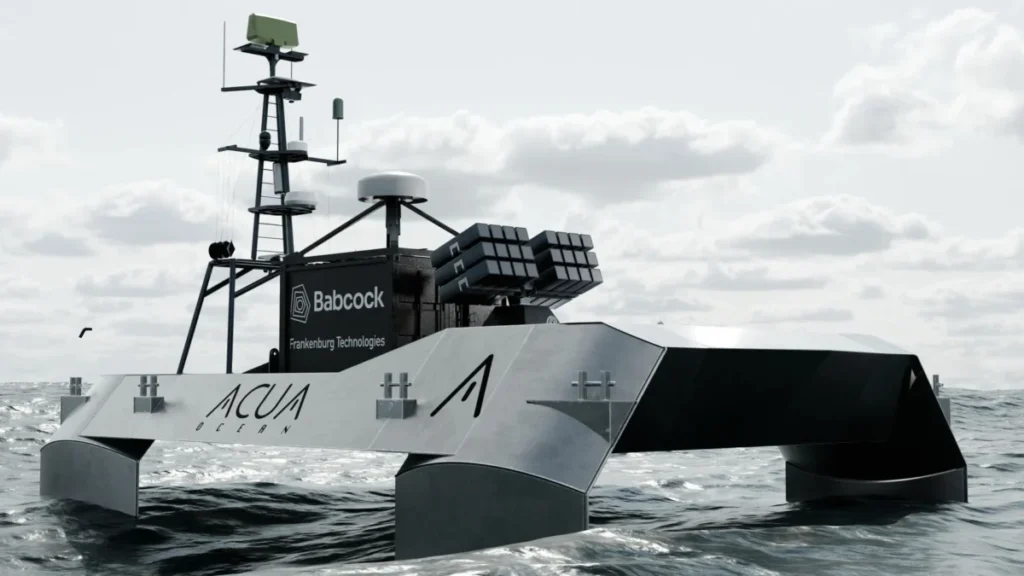
A significant Memorandum of Understanding (MoU) has been officially signed between Estonian defense technology company Frankenburg Technologies, the multinational aerospace and defense company Babcock International, and ACUA Ocean Technologies, a pioneer in autonomous maritime solutions. This tripartite agreement heralds a collaborative effort aimed at jointly developing integrated maritime counter-drone air defense systems, marking a crucial step in the global response to the escalating threat posed by uncrewed aerial systems (UAS) in naval and offshore environments.
The proliferation of sophisticated, yet increasingly affordable, uncrewed aerial systems has dramatically reshaped the landscape of modern warfare and maritime security. From naval combat zones to critical commercial shipping lanes and offshore infrastructure, these drones represent an asymmetric threat, capable of delivering substantial damage at a fraction of the cost of traditional military assets. This partnership directly addresses this evolving challenge, seeking to establish a new paradigm for maritime defense that is both scalable and economically viable.
The Escalating Threat of Uncrewed Aerial Systems in Maritime Domains
The past decade has witnessed a dramatic increase in the operational deployment and effectiveness of UAS in various conflicts. More recently, their application in maritime contexts has underscored a critical vulnerability for naval fleets, commercial vessels, and vital offshore installations. Events in the Black Sea, where Ukrainian forces have extensively utilized naval drones and various UAS against the Russian Black Sea Fleet, and the Red Sea, where Houthi rebels have launched numerous drone and missile attacks against commercial shipping and naval vessels, serve as stark reminders of this evolving threat.
These incidents highlight several key challenges:
- Asymmetry of Cost: Conventional air defense systems, such as advanced surface-to-air missiles like the RIM-162 Evolved Sea Sparrow Missile (ESSM) or the Aster missile family, can cost millions of dollars per interceptor. In contrast, many of the attack drones employed, such as variants of the Iranian Shahed-136 or other one-way attack drones, often cost tens of thousands of dollars, if not less. This creates an unsustainable economic equation where defenders risk depleting high-value ordnance to counter low-cost threats.
- Swarm Attacks: The ability to deploy multiple drones simultaneously, often referred to as swarm attacks, can overwhelm conventional air defense systems designed to engage a limited number of high-value targets.
- Detection and Tracking Challenges: The small radar cross-section, low altitude flight profiles, and slow speeds of many drones make them difficult to detect and track using traditional naval radar systems, especially in cluttered maritime environments or against complex coastlines.
- Persistent Threat: Drones can offer persistent surveillance and attack capabilities, forcing naval assets to maintain high alert levels for extended periods, contributing to crew fatigue and operational costs.
The strategic imperative to counter these threats effectively and economically has never been greater. Protecting global trade routes, securing energy infrastructure, and ensuring the operational freedom of naval forces depend on developing innovative and adaptable counter-UAS (C-UAS) solutions.
A Convergence of Complementary Capabilities
The newly formed alliance brings together three distinct yet highly complementary capabilities, forming a robust foundation for an integrated maritime C-UAS solution:
-
Frankenburg Technologies: Low-Cost Interceptor Missiles
Based in Estonia, Frankenburg Technologies is at the forefront of developing low-cost, mass-manufacturable interceptor missile technology. Their systems, such as the Mark 1 and the CobraJet, are designed specifically for counter-drone missions, prioritizing affordability and high-volume production without compromising on precision guidance. The strategic advantage of Frankenburg’s technology lies in its ability to effectively engage numerous inexpensive drone threats without incurring prohibitive costs, thus restoring a more favorable economic equation for the defender. -
Babcock International: Defense Engineering and Systems Integration
As a leading international aerospace, defense, and security company, Babcock International contributes unparalleled expertise in defense engineering, mission integration, and maritime platform development. Their role is critical in integrating the disparate technologies into a cohesive and functional system, ensuring seamless operation across various naval and offshore platforms. Babcock’s deep understanding of naval architecture and systems allows for the development of robust launcher technology and the complex integration required for reliable deployment in harsh maritime conditions. -
ACUA Ocean Technologies: Autonomous Uncrewed Surface Vessels (USVs)
ACUA Ocean Technologies specializes in advanced autonomous uncrewed surface vessels. Their Pioneer-class USVs are particularly notable for their unique stability characteristics, enabling them to remain fully operational and effective even in high seas and challenging weather conditions where traditional manned or less stable platforms might struggle. By providing a persistent, mobile, and resilient maritime platform, ACUA Ocean’s USVs offer flexible deployment options for air defense systems, extending defensive perimeters farther out to sea and reducing the risk to human personnel.
Together, these companies aim to create an integrated system capable of detecting, tracking, and neutralizing hostile drones across vast maritime environments. This collaborative approach is envisioned to protect a broad spectrum of assets, including naval vessels, commercial ports, critical offshore energy installations, and vital maritime infrastructure.
Addressing the Economic Imperative: Affordable Missile Defense
The core of this partnership’s innovation lies in its direct attack on the economic asymmetry presented by drone warfare. As Daniel Hallett, UK Managing Director at Frankenburg Technologies, succinctly put it, “Affordable missile defense is heading farther out to sea. By equipping ACUA’s uncrewed vessels with Frankenburg’s mass-manufacturable missiles and Babcock’s launcher technology, we aim to create a persistent and low-cost way to protect the UK’s ships, ports and critical maritime infrastructure against mass drone attacks.”
This statement underscores a strategic shift. Rather than relying on multi-million dollar interceptors for every incoming drone, the alliance seeks to develop a solution where the cost of defense is proportionate, or even less than, the cost of the threat. This is achieved through:
- Low-Cost Interceptors: Frankenburg’s missiles are designed for mass production, significantly reducing per-unit cost.
- Autonomous Platforms: USVs reduce the operational costs associated with manned vessels (fuel, crew, maintenance) and can be deployed persistently over long durations.
- Modular Systems: The ability to integrate these systems onto various platforms allows for flexible deployment and optimizes resource allocation.
This approach offers a sustainable model for counter-UAS operations, allowing navies and maritime security agencies to maintain robust defenses without facing unsustainable budgetary pressures from attritional warfare scenarios.
Technological Synergies and Operational Advantages
The combination of autonomous vessels, modular launch systems, and affordable interceptors is expected to deliver a more scalable and adaptable approach to maritime air defense than traditional, often rigid, solutions.
- Persistent, Multi-Domain Defense: Neil Tinmouth, CEO of ACUA Ocean Technologies, highlighted the advantage of their USVs: “Partnering with Babcock and Frankenburg enables true persistent, multi-domain defence capabilities. To counter mass drone attacks, maritime air defence must be uninterrupted, yet rough weather often forces traditional systems out of limits. The unique stability of ACUA’s Pioneer-class, which we’ll be using for this collaboration, ensures these counter UAS and interchangeable payloads remain online and fully operational in high seas where other platforms fail.” This ensures continuous protection, even in adverse conditions, filling critical gaps in existing defense architectures.
- Distributed Defense Network: Deploying C-UAS capabilities on autonomous USVs allows for a distributed defense network. Instead of concentrating expensive air defense assets on a few large warships, smaller, more numerous USVs can patrol wider areas, creating a layered defense that is harder to overwhelm and less vulnerable to a single point of failure.
- Reduced Risk to Personnel: By placing the interceptor systems on uncrewed platforms, the risk to human life in high-threat environments is significantly reduced, aligning with modern military trends towards autonomous operations.
- Rapid Deployment and Integration: The modular nature of the system, particularly Babcock’s containerized launch solutions, facilitates rapid deployment and integration into existing naval and coastal defense networks. This adaptability is crucial in responding to rapidly evolving threats.
Sir Nick Hine, Chief Growth Officer for Babcock, emphasized the broader impact: “We’re excited to partner with innovative companies to develop an integrated approach that directly addresses some of the biggest challenges our customers face in today’s defence landscape. As a trusted systems integrator, collaborations like this will help protect critical national assets and infrastructure from attritable one-way attack drones.”
Chronology and Evolution of the Partnership
This latest MoU builds upon an existing strategic partnership between Babcock International and Frankenburg Technologies. Earlier this year, the two companies announced a collaboration focused on exploring the development of a containerized maritime launch platform. This platform was specifically designed to deploy Frankenburg’s low-cost Mark 1 interceptor missile against the burgeoning threat of one-way attack drones.
The inclusion of ACUA Ocean Technologies represents a significant expansion of this initial arrangement. The collaboration now extends beyond the development of just a launcher system to encompass the integration of autonomous maritime platforms. This evolution is critical, as it provides the necessary mobility, persistence, and distributed capability for supporting integrated counter-drone operations across vast oceanic expanses. The move signifies a growing recognition within the defense industry that a truly effective maritime C-UAS solution requires not just advanced interceptors, but also intelligent, resilient, and autonomous deployment platforms.
Broader Implications for Maritime Security and Defense Doctrine
The implications of this partnership extend far beyond the immediate development of new hardware. It signals a potential paradigm shift in maritime security and naval doctrine:
- Enhanced Naval Resilience: Navies will gain a more resilient and cost-effective means of protecting high-value assets, freeing up traditional multi-purpose warships to focus on their primary missions.
- Protection of Commercial Interests: The ability to secure commercial shipping lanes and critical offshore infrastructure (like oil and gas platforms, wind farms, and subsea cables) against drone threats will have significant economic benefits, reducing insurance costs and ensuring the free flow of global trade.
- Strategic Deterrence: A robust, affordable, and persistent C-UAS capability could act as a significant deterrent against state and non-state actors contemplating drone attacks in maritime zones.
- Export Potential: The integrated system, once proven, could become a highly sought-after export product for navies and coast guards worldwide grappling with similar drone threats. This could position the partner companies as leaders in the rapidly expanding C-UAS market.
- Innovation in Autonomous Systems: The collaboration will likely accelerate innovation in autonomous maritime platforms, pushing the boundaries of what USVs can achieve in complex defense roles. This could pave the way for further integration of AI and machine learning in maritime operations.
- Interoperability: A key objective is to develop solutions that are easy to integrate into existing naval and coastal defense networks. This focus on interoperability is crucial for seamless adoption by various defense organizations.
While challenges remain, including regulatory frameworks for autonomous weapons systems, sophisticated countermeasures from adversaries, and the continuous need for technological upgrades, this partnership represents a forward-thinking and pragmatic approach. It acknowledges the undeniable shift in modern warfare and seeks to provide an adaptable, cost-effective, and robust defense against one of the most pressing threats to global maritime security. By combining Estonian innovation, British engineering prowess, and cutting-edge autonomous technology, the alliance aims to redefine maritime air defense for the 21st century.






