The first U.S. spacecraft capable of robotically servicing satellites in geosynchronous orbit is slated to launch July 21 from Cape Canaveral Space Force Station in Florida, Northrop Grumman announced this week. This groundbreaking mission, a culmination of nearly a decade of development and a significant public-private partnership, promises to revolutionize space logistics and extend the operational lifespan of vital in-orbit assets.
A New Era of Space Servicing Dawns
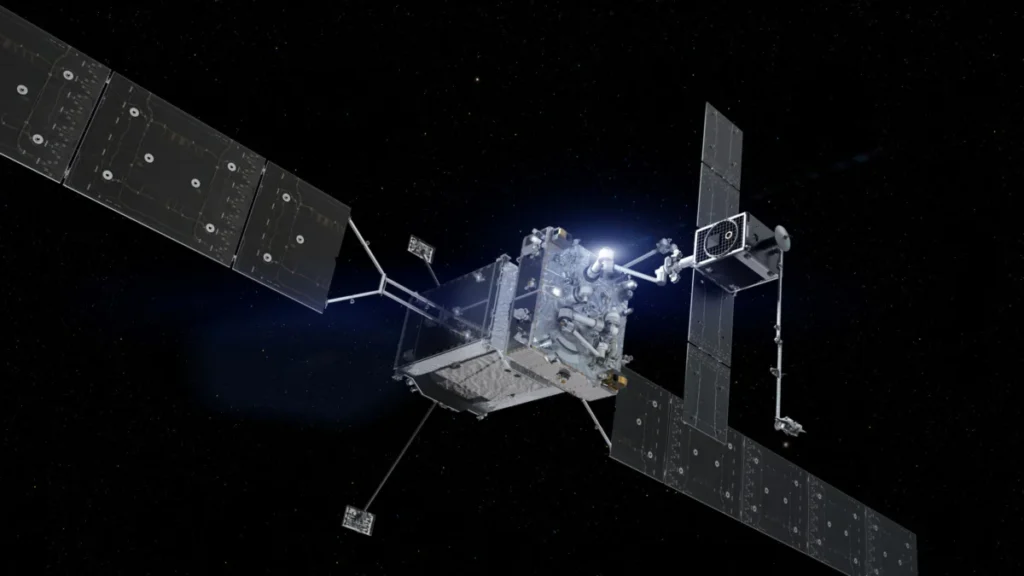
The 4,400-kilogram spacecraft, known as the Mission Robotic Vehicle (MRV) when equipped with its specialized payload, represents a pivotal step in establishing on-orbit servicing as a standard capability in space operations. Developed under the Defense Advanced Research Projects Agency’s (DARPA) Robotic Servicing of Geosynchronous Satellites (RSGS) program, and in collaboration with Northrop Grumman subsidiary SpaceLogistics, the mission aims to address the growing challenge of maintaining and extending the life of expensive, complex, and often irreplaceable satellites operating in the challenging geosynchronous orbit (GEO).
"This is really a unique and first-of-its-kind spacecraft," stated Cassie Wong, Northrop Grumman’s director of logistics and servicing, in a mid-June interview. Her sentiment underscores the unprecedented nature of this endeavor, which moves beyond theoretical concepts to tangible operational capability.
The RSGS program, a testament to sustained investment in advanced space technologies, has seen DARPA allocate approximately $420 million. While Northrop Grumman did not disclose its specific financial contribution, the company indicated it has invested "hundreds of millions into servicing technology" over the past two decades, highlighting a significant commitment to pioneering this new frontier in space.
The Robotic Toolkit: Dexterity and Precision
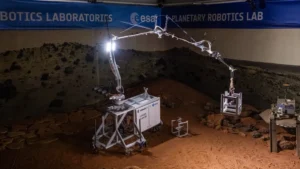
At the heart of the RSGS mission lies the SpaceLogistics MRV, a sophisticated robotic platform equipped with two exceptionally dexterous robotic arms. James Shoemaker, DARPA’s RSGS program manager, described these arms as possessing a high degree of capability, essential for interacting with a variety of satellite designs, including those not originally built for servicing. This design philosophy is crucial, as it allows for intervention with the current generation of geosynchronous satellites, many of which lack standardized docking ports or servicing interfaces.
The development of these advanced robotics was identified as the most significant technical hurdle in the pre-launch phase of the RSGS program. The complexity required to enable the MRV to perform intricate tasks on satellites not designed for interaction presented a formidable engineering challenge. DARPA, in close collaboration with the U.S. Naval Research Laboratory, focused on imbuing the robotics with the necessary complexity and capability to overcome these limitations.
A Joint Venture: From Launch to Orbit
The MRV, carrying its critical RSGS payload, will embark on its journey aboard a SpaceX Falcon 9 rocket. The launch vehicle will also carry three specialized fuel "jet packs" provided by Northrop Grumman, essential for the mission’s initial objective. The transit to geosynchronous orbit, a journey spanning approximately 14 months, will allow ample time for pre-operational checks and calibration of the complex robotic systems.
Once the MRV reaches its operational altitude in GEO, the cargo van-sized vehicle will employ its 3-meter-long robotic arms to meticulously collect and install the mini fridge-sized fuel packs. These fuel packs are designed to replenish the propellant reserves of existing satellites, significantly extending their operational lives. The initial servicing targets include two commercial satellites: one owned by SES, a prominent satellite operator based in Luxembourg, and another by Optus, an Australian satellite company. The specific plans for the third fuel pack and any subsequent MRV activities remain undisclosed by Northrop Grumman.
Expanding the Frontier of In-Orbit Capabilities
The capabilities of the MRV extend far beyond simple refueling. Wong elaborated on the versatile nature of the robotic arms, stating they will be capable of performing a wide array of tasks, including detailed satellite inspections, performing repairs, and even adding auxiliary payloads or power systems. "It’s just up to our imagination," she remarked, emphasizing the transformative potential of this technology.
Shoemaker further elaborated on the system’s flexibility, noting the possibility of launching new tools into orbit after the MRV is deployed, enabling it to undertake highly specialized missions. This modular approach to in-orbit servicing opens up a vast array of future possibilities for satellite maintenance and enhancement.
Mastering the Art of Zero-G Operations
While the engineering of the robotic arms presented the primary pre-launch challenge, Shoemaker anticipates that the most demanding phase of the mission will be the actual operation in the zero-gravity environment of space. To mitigate this, ground operators are planning a meticulous, "baby steps" approach. The initial contact between the MRV’s arms and a target satellite will involve a series of small, controlled motions to calibrate the system and ensure its responses are precisely as predicted. Fine-tuning of control gains will be a critical part of this calibration process.
To ensure readiness, the ground team will continue to extensively rehearse and test robotic operations and installation procedures during the MRV’s transit to GEO. These rehearsals will leverage sophisticated simulations informed by data from previous Northrop Grumman servicing missions and extensive ground testing of the MRV-RSGS system.
A Public-Private Partnership with Long-Term Vision
While Northrop Grumman will own and operate the combined MRV-RSGS spacecraft, DARPA will maintain a supervisory role during the initial servicing operations. Shoemaker explained that DARPA will "kind of look over the shoulder while they do their first servicing." Following the successful completion of DARPA’s objectives for the demonstration mission, all operational control will be transferred to Northrop Grumman. The company will then be responsible for providing DARPA with data from all subsequent servicing missions.
The MRV-RSGS spacecraft is designed for an operational lifespan of 10 years. Crucially, this program is viewed as more than just a technology demonstration; it is described as "closer to being an operational system than just a tech demo." This signifies a shift towards integrating advanced servicing capabilities into routine space operations.
"This is kind of the first step for expanding the scope of what you can do in orbit," Shoemaker concluded, underscoring the profound implications of this mission for the future of space exploration and utilization.
Broader Context and Implications
The launch of the MRV-RSGS spacecraft comes at a critical juncture for the global satellite industry. The increasing complexity and cost of satellite development and deployment have made the prospect of extending their functional lives highly attractive. Satellites in geosynchronous orbit, which are essential for telecommunications, weather monitoring, navigation, and national security, represent significant investments, often in the hundreds of millions of dollars. The failure or obsolescence of such assets can have substantial economic and operational consequences.
Historically, the end-of-life scenario for most satellites has been de-orbiting or, in some cases, being left in a decaying orbit. The RSGS program offers a paradigm shift by providing a means to proactively manage and enhance the value of these expensive assets. The ability to refuel, repair, or upgrade satellites in situ could dramatically alter the economics of space operations, making missions more sustainable and cost-effective.
A Collaborative Ecosystem
The successful development of the RSGS program highlights the efficacy of public-private partnerships in driving innovation in the space sector. DARPA’s role in funding and guiding the foundational research and development, coupled with Northrop Grumman’s extensive experience in spacecraft manufacturing and operations, has created a potent synergy. The involvement of SpaceX as the launch provider further underscores the collaborative nature of the modern space industry, where specialized expertise from multiple entities is leveraged to achieve ambitious goals.
The concept of in-orbit servicing is not entirely new, with various missions and technologies explored in low Earth orbit. However, the specific challenges of operating in geosynchronous orbit – its distance from Earth, the harsh radiation environment, and the orbital mechanics involved – present unique hurdles. The RSGS program’s success in developing a system capable of overcoming these challenges for a broad range of satellites is a significant technological achievement.
The Future of Space Sustainability
The implications of this mission extend beyond immediate operational benefits. As the space environment becomes increasingly crowded, the ability to service and extend the life of existing satellites can contribute to reducing space debris. By prolonging the utility of a satellite, the need for launching new replacements is diminished, thereby reducing the overall number of launches and the potential for generating additional debris.
Furthermore, the capabilities demonstrated by the MRV-RSGS could pave the way for more ambitious future space endeavors. The technologies developed for this mission could be adapted for robotic assembly of larger structures in orbit, in-space manufacturing, and even supporting human missions beyond Earth’s orbit.
The July 21 launch from Cape Canaveral Space Force Station marks not just the beginning of a single mission, but the inauguration of a new era in space infrastructure management. The successful deployment and operation of the MRV-RSGS spacecraft are poised to redefine what is possible in orbit, ensuring the longevity and enhanced utility of humanity’s vital space assets.