Researchers at the U.S. Department of Energy’s Oak Ridge National Laboratory (ORNL) have unveiled a groundbreaking automated system designed to detect and rectify errors in real-time during the large-scale additive manufacturing of composite materials. This innovation promises to significantly enhance the production of custom, large-format parts, mitigating defects, driving down manufacturing costs, and bolstering the competitiveness of American industries in the rapidly evolving additive manufacturing (AM) landscape.
The advancement addresses a critical challenge in Large-Format Additive Manufacturing (LFAM), a process that involves extruding heated thermoplastic materials, often reinforced with continuous or discontinuous fibers, through a robotic nozzle. These materials are meticulously layered to construct substantial components, ranging from building structures and aerospace components like aircraft wings to automotive parts such as car bumpers. The success of LFAM hinges on a delicate balance of numerous printing variables, including ensuring each deposited layer is sufficiently fused to the one below while maintaining structural integrity before the next layer is applied. This intricate process traditionally demands constant human oversight to maintain optimal conditions.
A New Era of Intelligent Manufacturing
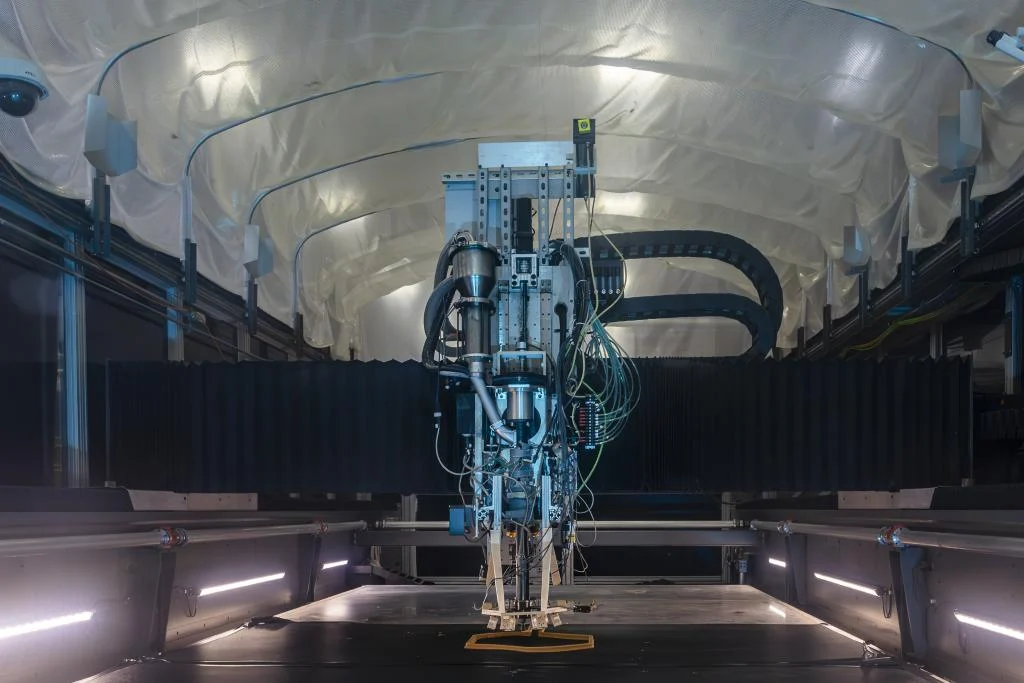
ORNL’s novel controller system acts as an autonomous supervisor, liberating human operators to concentrate on more complex aspects of the manufacturing process. The system is equipped with a sophisticated array of sensors that meticulously track key parameters, including the precise position of the robotic nozzle, the rate of printing, and the temperature of the molten plastic as it is dispensed. To further enhance its monitoring capabilities, the researchers integrated an array of low-cost thermal cameras strategically positioned around the printing nozzle. These cameras provide continuous thermal imaging, allowing the system to observe the cooling behavior of the deposited plastic material in real-time.
Leveraging computer vision, an artificial intelligence (AI) discipline that empowers machines to interpret visual data, the ORNL-developed controller can accurately identify the location and temperature of hot material within the live thermal video feed. Should the controller detect any deviation from the predetermined target temperature – a critical factor for proper layer adhesion and part integrity – it automatically intervenes. The system responds by adjusting the speed of the 3D printing process, ensuring that each layer cools to the optimal temperature before the subsequent layer is deposited. This dynamic adjustment mechanism is crucial for maintaining the intended shape of the part and ensuring robust bonding between layers, thereby significantly reducing the likelihood of print failures and minimizing material waste.

From Concept to Creation: The Development Timeline
The genesis of this project can be traced back to earlier ORNL research that explored the potential of integrating thermal imaging with statistical modeling to improve defect detection in large-scale 3D printing. A notable collaboration with Purdue University and the University of Maine, published previously, demonstrated the efficacy of this approach. Building upon this foundation, a more recent study involving the University of Tennessee-Knoxville and ORNL further validated the capability of such systems to reliably identify variations in print speeds as minor as 15% from programmed settings.
While these prior efforts focused on automating the recognition of faults, the latest ORNL system represents a significant leap forward by incorporating the ability to actively and instantaneously correct these detected errors. This iterative development process underscores a commitment to advancing AM capabilities incrementally, with each stage building upon prior successes and addressing emerging challenges. The current research, spearheaded by Kris Villez, the project’s lead researcher, involved a close partnership with University of Tennessee graduate student Chris O’Brien.
Engineering the Autonomous Controller
The development of the system involved a meticulous calibration phase. The researchers first established the baseline parameters for the control system and then precisely aligned the cluster of six compact thermal cameras around the robotic nozzle. This assembly, described as resembling a column of metal tubes adorned with colorful wiring, was suspended within a printer of considerable size, likened to that of a boxcar. The team then devised experimental protocols to observe the impact of manipulating print speed on layer temperatures. As each layer of composite material was extruded, the print bed, functioning as the foundational surface, would subtly descend to accommodate the deposition of the next successive layer.
Real-World Validation: Printing a Giant Hexagon
To rigorously test the controller’s capabilities on a full-scale application, the researchers undertook the task of printing a hexagonal structure exceeding the dimensions of a truck tire. The printing process was intentionally initiated at a slower speed to present a more demanding scenario for the newly developed controller. Under these conditions, the initial layers were found to be approximately 30% cooler than the optimal temperature required for effective fusion when the subsequent layer was applied. In response to this critical deviation, the controller automatically modulated the print speed, increasing it to maintain the ideal temperature range necessary for robust layer bonding. This demonstration vividly illustrated the system’s real-time error correction in action, showcasing its capacity to adapt and optimize the manufacturing process dynamically.
Chris O’Brien highlighted a key advantage of the ORNL controller: its precision and adaptability. The system can accurately detect and rectify temperature discrepancies of merely a few degrees Celsius, a level of sensitivity that is paramount given that temperature variations are a primary culprit behind manufacturing defects. Furthermore, a significant differentiator from some existing monitoring systems is that the ORNL controller does not require recalibration for each new design. This eliminates the need for time-consuming and computationally intensive retraining, thereby enhancing operational flexibility and efficiency. The system is engineered for universal compatibility, designed to function seamlessly with any large-area composite printer, a wide spectrum of plastic materials, and virtually any geometric shape.

The Role of Digital Twins and Machine Learning
The project also incorporated advanced machine learning techniques, specifically the creation of a "digital twin." This virtual replica of the physical printing process allowed researchers to conduct experiments with new designs and materials in a risk-free environment, thoroughly evaluating potential outcomes before committing to physical production. This approach not only accelerates innovation but also significantly reduces the potential for costly errors during the experimental phase.
Broader Implications and Future Vision
The implications of this technological advancement extend far beyond the laboratory. For U.S. manufacturers, the ability to produce large, custom-designed parts with a significantly reduced defect rate translates directly into substantial cost savings, less material waste, and faster turnaround times. This enhanced efficiency and reliability can be a crucial factor in regaining and strengthening domestic competitiveness in the global additive manufacturing market. Industries that rely on large-scale components, such as aerospace, automotive, defense, and construction, stand to benefit immensely from this innovation.
The vision for this technology is ambitious. Kris Villez articulates a desire for the system to operate with an almost effortless autonomy, akin to baking. “There is a vast opportunity space to make these machines more intelligent and more responsive,” Villez stated. “In the end, we’d love this to work like baking bread: You set the oven temperature, put in your dough, and return when the timer goes off to see if it’s done. You don’t have to monitor the oven temperature in real-time throughout the baking.” This analogy captures the ultimate goal of creating highly automated, reliable manufacturing processes that require minimal human intervention once initiated.
The project’s success was a collaborative effort, with significant contributions from other ORNL researchers, including Katie Copenhaver and Alex Roschli. The initiative received crucial funding from the U.S. Department of Energy’s Advanced Materials and Manufacturing Technologies Office, underscoring the federal government’s commitment to fostering innovation in critical manufacturing sectors.
The development of this intelligent, error-correcting additive manufacturing system marks a significant milestone in the pursuit of more efficient, cost-effective, and robust industrial production. As the technology matures and finds broader application, it is poised to redefine the capabilities and accessibility of large-scale 3D printing, paving the way for a new era of American manufacturing prowess.