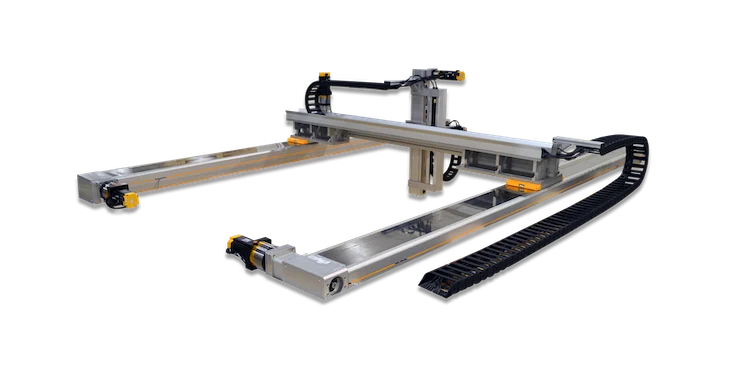
Historically, system performance in high-precision motion control applications has often been evaluated superficially, based solely on the published specifications of mechanical components like actuators. Metrics such as repeatability, accuracy, and load capability serve as initial filters, and for many less demanding applications, this level of scrutiny suffices. However, as technological advancements drive the need for micron and sub-micron level precision, the conventional interpretation of these specifications becomes inadequate. Achieving genuinely high precision requires an intricate understanding that spans the entire motion control ecosystem, from the fundamental mechanics to the motors, drives, and sophisticated control algorithms, culminating in the critical phase of system integration.
This article, the fourth and final installment in a comprehensive series, delves into the culminating aspect of system integration, exploring how this often-underestimated layer of technology contributes decisively to overall system performance. Previous articles established the groundwork: Part One examined mechanical factors such as bearing deflection, body stiffness, and structural smoothness, revealing critical elements frequently overlooked in data sheets. Part Two shifted focus to motors, detailing their designs, construction, and quality. Part Three then elucidated the pivotal role of drives and controls, discussing their designs and features. This final part ties these threads together, emphasizing that even the most advanced components can fail to deliver their stated potential without expert integration.
A persistent theme throughout this series is the existence of subtle, yet impactful, details that are absent from product data sheets but are instrumental in determining whether a system meets its high-performance objectives. As motion systems transcend micron-level accuracy, traditional specifications alone no longer provide a complete picture, making nuanced engineering decisions absolutely essential. This series aims to equip engineers, designers, and system integrators with the insights necessary to appreciate the profound importance of every decision made during the assembly of a high-precision motion system. The discussion has consistently revolved around three general tiers of performance: basic functionality, achieving specification-level performance, and the challenging endeavor of pushing beyond those specifications. This tiered approach is equally applicable to the integration process itself.
The Imperative of Intentional Integration: Precision by Design
The notion that complex systems can simply "come together and work" is a common misconception, especially prevalent in early-stage prototyping or less critical applications. While initial assemblies might appear functional, problems frequently emerge over time, or the demand for enhanced performance in subsequent generations reveals inherent weaknesses. This concept can be likened to crafting a paper airplane: a simple fold might yield a flying object, but repeated flights and the desire for greater distance and accuracy necessitate precise, crisp, and clean folds, even with the same fundamental design.
In the realm of motion control systems, this principle holds true with even greater stakes. An exquisitely designed motion control sub-system, boasting superior mechanics, motors, and controls, will invariably fall short if the overarching system is not meticulously engineered and properly integrated. Optimal performance is not an inherent quality of individual sub-systems but emerges from the synergistic whole. Industry data consistently shows that a significant percentage of performance issues and operational downtimes in advanced manufacturing can be traced back to integration shortcomings rather than individual component failures. A 2022 report by XYZ Automation Consultants, for instance, indicated that up to 40% of post-deployment performance deviations in high-precision robotic systems were attributable to integration-related factors, including environmental influences, electrical noise, and mechanical misalignment.
Unpacking Real-World Integration Failures
System integration is the sophisticated art and science of enabling all mechanical components, motors, drives, and control elements to achieve their maximum potential in concert with the surrounding system infrastructure. Every published specification for these individual components is predicated on hidden assumptions about the environment and conditions in which they operate. For instance, mechanical actuators presuppose a certain degree of flatness and stability from their mounting surfaces. Motors rely on adequate airflow and heat sinking for thermal management. Drives and controllers, in turn, assume the availability of a clean, stable power supply. A failure to meet these unspoken prerequisites can severely compromise, if not entirely negate, the stated performance capabilities of even the most premium components.
Consider a precision linear motor, which is inherently sensitive to its mounting surface and its precise alignment with the linear bearings responsible for supporting the load. The creation of a three-component system—linear motor, and linear guides on both sides—demands exact alignment. Any deviation can induce mechanical binding, leading to uneven friction and accelerated wear, or, in severe cases, complete immobilization of the motor. This issue is particularly pronounced in applications such as wafer processing in semiconductor fabrication, where misalignments on the order of micrometers can lead to costly defects and significant yield losses. The capital expenditure for a semiconductor fabrication plant can exceed billions of dollars, making every aspect of precision critical.
Similarly, two parallel long linear belt and pulley actuators within a system present a parallel challenge to linear motor and guide alignment, with an added layer of complexity: their travel lengths must be precisely tuned to match. Discrepancies in belt tension, for example, can lead to variations in the distance per pulley revolution. While seemingly minor over short distances, such a variance can accumulate significantly over longer travels—a 5-mm difference over two meters, for instance, can be catastrophic in systems demanding precise synchronized movements, such as large-format 3D printers or automated material handling gantries. The implications extend beyond mere performance; uneven wear can necessitate premature component replacement, leading to increased maintenance costs and operational downtime.
The integration of controllers and drives frequently occurs in controlled laboratory or workshop environments, where electrical power is typically clean and robust. Under these ideal conditions, shortcuts in grounding techniques, shielding, and electromagnetic compatibility (EMC) filtering might go unnoticed. However, once such a system is deployed into industrial field environments—which are often characterized by noisy electrical grids, inductive loads, and varying power quality—these oversights become critical vulnerabilities. Dirty power sources can introduce noise into control signals, leading to erratic behavior, reduced accuracy, and even system instability. Compliance with international EMC standards (e.g., CE marking in Europe) is not just a regulatory hurdle but a critical engineering practice to ensure reliable operation in real-world settings.
Thermal management represents another significant, yet often underestimated, integration challenge. A system assembled and tested in a climate-controlled workshop might be destined for deployment in a hot industrial environment. Thermal expansion and contraction of materials can directly impact mechanical alignments and the performance of motors, causing components to drift out of tolerance. In a precision machine tool, for example, even a few degrees Celsius change can alter critical dimensions by several microns, rendering the system incapable of meeting its specified precision requirements. This necessitates not only robust cooling solutions but also careful material selection with low coefficients of thermal expansion and, in some cases, active thermal compensation strategies.
Essential Integration Practices for High-Performance Systems
For systems reliant on precision motion control sub-systems, several best practices are not merely advisable but absolutely essential for reliable, high-performance operation.

1. Precision Mounting and Foundation Stability:
The surfaces upon which actuators are mounted must rigorously adhere to the assumed standards of both the actuators themselves and the specific application. This often involves precision-machined baseplates, optical flats, or granite tables. The use of dowel pins between actuators and their mounting surfaces (which may include other actuators) is a fundamental practice. These pins ensure highly repeatable assembly and re-assembly, maintaining precise positional relationships even after maintenance or component replacement. Furthermore, the stability of the entire system’s foundation is paramount. High-precision systems are frequently isolated from building vibrations through specialized damping systems or even dedicated, separately poured concrete foundations, as seen in advanced microscopy labs or semiconductor metrology equipment.
2. Meticulous Encoder Alignment:
For all axes incorporating encoders—be they linear, rotary, or ring-type—proper alignment is critically important. Encoders provide the feedback loop essential for precise positioning, and any misalignment can introduce significant measurement errors. This often necessitates the use of specialized fixtures, laser alignment tools, and sophisticated measurement equipment (e.g., interferometers) during installation to ensure accuracy. The choice of encoder type (e.g., absolute vs. incremental, optical vs. magnetic) also influences alignment procedures and environmental robustness.
3. Strategic Cable Management:
Cable routing, often dismissed as a minor detail, is a discipline with profound implications for signal integrity and system reliability. Best practices dictate that lower-power control and signal cables should be run separately from, and ideally perpendicularly to, high-power cables (e.g., motor power cables). Running them in parallel over long distances in the same cable tray can induce electromagnetic interference (EMI), leading to signal degradation and erratic behavior. Coiling excess high-power cable should also be strictly avoided, as it creates an inductive loop that can exacerbate EMI. Proper shielding, grounding, and the use of appropriate cable types (e.g., shielded twisted pair) are non-negotiable for maintaining signal integrity in noisy industrial environments.
4. Comprehensive Environmental Control:
Ultra-high precision systems are exquisitely sensitive to their surrounding environment. Isolating them from environmental disturbances is often critical. This extends beyond temperature control to encompass vibration, humidity, dust, and even acoustic noise. Vibration dampers are crucial for attenuating external disturbances, preventing them from impacting delicate motion. Temperature-controlled rooms, maintaining stable conditions within fractions of a degree, are standard in applications like nanotechnology and biomedical imaging. The most demanding precision systems are often housed in dedicated, climate-controlled cleanrooms (e.g., ISO Class 1 to 5), situated on foundations entirely separate from the main facility to eliminate ambient vibrations. Humidity control prevents condensation and corrosion and can influence the performance of optical components.
Guiding Questions for System Engineers
To navigate the complexities of system integration and preempt potential pitfalls, engineers must adopt a holistic, systems-thinking approach. The following vital questions serve as a framework during the integration process:
- Foundation & Mounting: What are the flatness, rigidity, and vibration isolation requirements for all mounting surfaces? How will these be verified?
- Thermal Management: What are the expected operating temperature ranges and gradients? How will thermal expansion/contraction of components and their mounting structures be managed or compensated for?
- Electrical Environment: Is the power supply clean and stable? What grounding, shielding, and EMC filtering strategies are necessary to mitigate electrical noise and ensure signal integrity?
- Mechanical Alignment: What are the critical alignment tolerances between interacting mechanical components (e.g., linear motors and guides, multi-axis gantries)? What metrology tools and procedures will be used for verification?
- Cable Routing & EMI: How will power, signal, and feedback cables be segregated and routed to minimize electromagnetic interference? Are all cables properly shielded and grounded?
- Environmental Factors: What are the requirements for ambient temperature, humidity, dust, and acoustic noise? What isolation or control measures are necessary (e.g., cleanrooms, vibration tables)?
- Software & Control Loop Tuning: How will the control loops for each axis be tuned to achieve optimal dynamic performance and stability? How will multi-axis synchronization be achieved and maintained?
- Maintenance & Serviceability: How will the system be accessed for routine maintenance, calibration, or component replacement while preserving critical alignments?
- Material Compatibility: Are all materials compatible with the operating environment and each other (e.g., galvanic corrosion, outgassing in vacuum applications)?
- Long-Term Stability: What factors could degrade performance over time (e.g., wear, creep, contamination), and how will these be monitored and addressed?
Broader Impact and Implications
The meticulous approach to system integration in motion control yields significant competitive advantages and economic benefits. Industries such as semiconductor manufacturing, medical device production, aerospace, and advanced robotics rely heavily on the ability to achieve unprecedented levels of precision and reliability. Integration failures, by contrast, can lead to costly rework, increased scrap rates, extended downtime, and ultimately, a loss of market competitiveness. For example, a single defective silicon wafer can represent thousands of dollars in material and processing costs, exponentially increasing if an entire batch is compromised due to a subtle integration flaw.
Beyond direct costs, the ability to consistently produce components with ultra-high precision enables innovation in product design and functionality. Smaller, more powerful microchips, more accurate surgical robots, and lighter, stronger aerospace components are all direct beneficiaries of advancements in motion control system integration. The global market for precision motion control, estimated at over $15 billion in 2023 and projected to grow at a Compound Annual Growth Rate (CAGR) exceeding 6% through 2030 (according to reports by MarketsandMarkets), underscores the increasing demand for expertly integrated solutions. This growth is driven by the relentless pursuit of automation, miniaturization, and quality across industrial sectors.
In conclusion, the journey to true precision in motion control is a multi-layered undertaking, with system integration serving as its critical culmination. It is a testament to the fact that excellence is not an accident; it is the deliberate outcome of meticulous design, rigorous engineering, and a comprehensive understanding of how individual components interact within a complex ecosystem. By asking the right questions, implementing best practices, and embracing a holistic systems engineering mindset, designers and integrators can unlock the full potential of advanced motion control technology, driving innovation and efficiency across a myriad of industries. The questions unasked, as experience repeatedly shows, are the ones most likely to haunt the system, manifesting as performance bottlenecks or operational failures. Therefore, for any application demanding high performance, the shift from merely selecting products to truly engineering a system is not just beneficial—it is absolutely imperative.
Read the other installments in this series:
Part 1: Layers of performance and specifications in motion control
Part 2: Layers of performance and specifications in motion control
Part 3: Layers of performance and specifications in motion control






