The United States Department of Defense, in a strategic pivot, is actively coordinating the comprehensive development of a robust domestic drone supply chain, enlisting significant investment and expertise from private sector collaborators. This ambitious undertaking comes as the Pentagon acknowledges a considerable lag in American industrial capacity compared to wartime production levels seen in Ukraine. While the urgency is palpable, officials within the department responsible for accelerating defense innovation have cautioned that bridging this gap will require substantial time and sustained effort.
The Urgency of a Domestic Drone Ecosystem
The imperative for a self-sufficient American drone manufacturing capability has been underscored by recent geopolitical events and the rapidly evolving nature of modern warfare. Ukraine’s demonstrated ability to produce drones at a scale that rivals established military powers has highlighted potential vulnerabilities in nations heavily reliant on external supply chains. The Pentagon’s initiative aims to mitigate these risks by fostering an end-to-end ecosystem, encompassing raw material sourcing, component manufacturing, assembly, and research and development, all within U.S. borders.
This strategic focus is not merely about meeting immediate demand but about ensuring long-term national security and technological superiority. The proliferation of drone technology across various sectors, from military reconnaissance and strike capabilities to civilian logistics and infrastructure monitoring, necessitates a responsive and adaptable domestic industrial base. The current reliance on foreign suppliers, particularly for advanced components and specialized manufacturing, presents significant strategic challenges, including potential supply disruptions, intellectual property risks, and competitive disadvantages.
Impossible Objects: A Key Player in the New Procurement Landscape
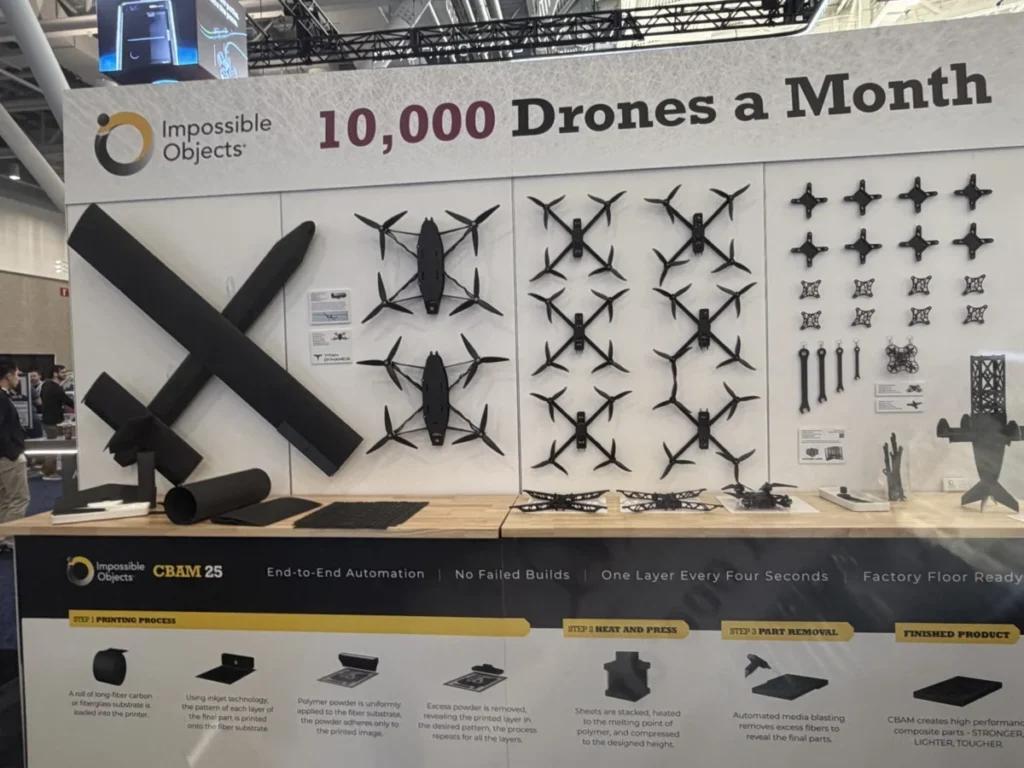
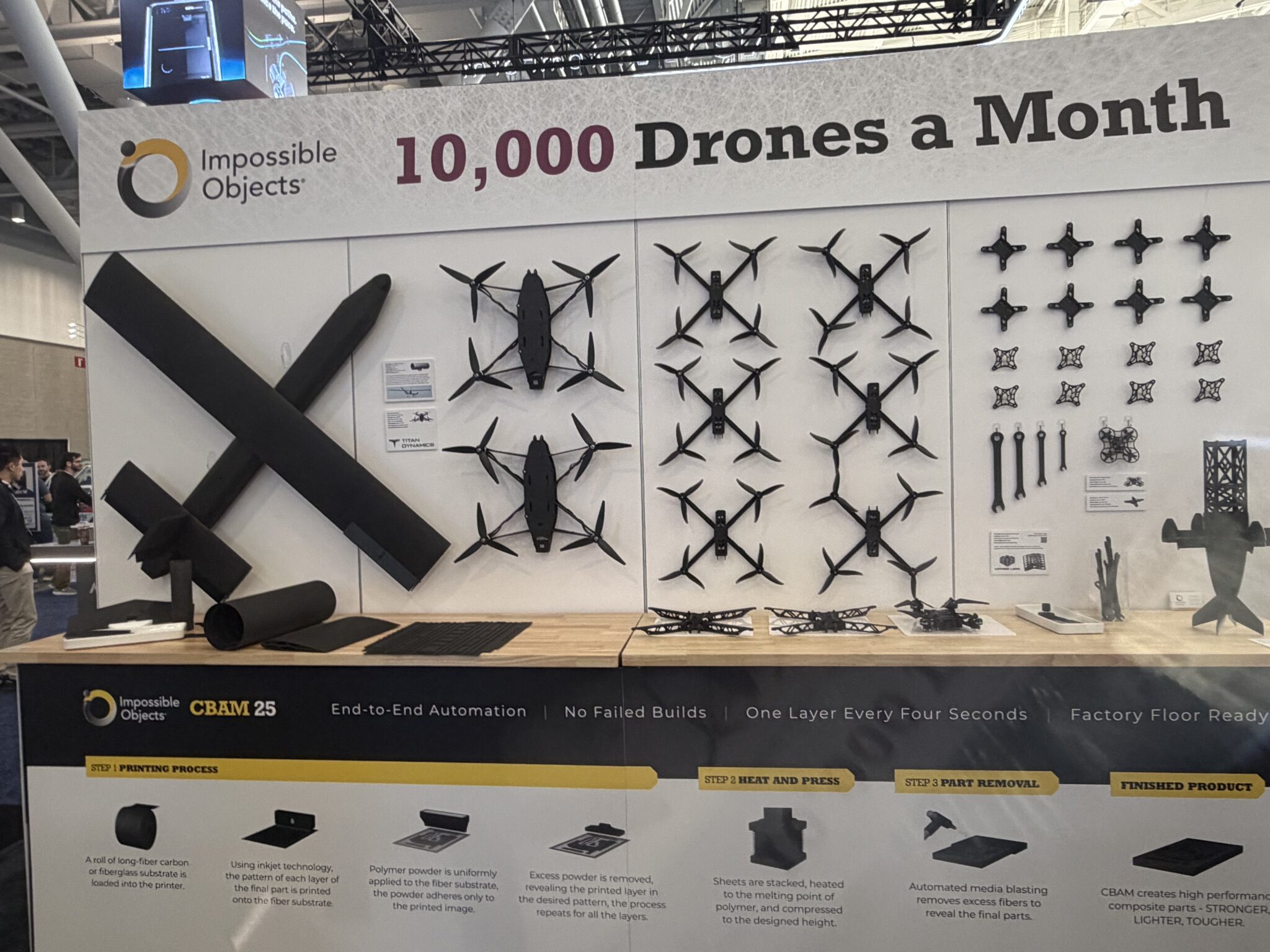
From a business perspective, the burgeoning demand for enhanced U.S. drone manufacturing capacity presents a compelling opportunity for companies positioned to contribute to this growth. Chicago-based Impossible Objects has emerged as a significant contender, offering advanced additive manufacturing solutions that promise to accelerate production timelines and reduce costs. The company specializes in 3D printers that utilize its proprietary Composite Based Additive Manufacturing (CBAM) technology, a process that reportedly enables the creation of strong, lightweight parts with superior performance characteristics.
Impossible Objects has put forth a notable claim: its technology and services can support the U.S. Army’s Rock Island Arsenal in Illinois to produce up to 10,000 drone bodies per month. Such a volume, if realized, would represent a substantial contribution towards the Pentagon’s ambitious output objectives and a significant step in bolstering domestic drone production capabilities. This capacity could dramatically reduce lead times for drone airframes, a critical component in the overall manufacturing process.
A Funding Trajectory Driven by Long-Term Vision
The ambitious production target from Impossible Objects is directly linked to a recent $40 million Series B funding round, a significant investment that underscores investor confidence in the company’s value proposition for the U.S. drone market. While $40 million is a substantial sum, it is not uncommon in the current venture capital landscape for companies with a clear path to market disruption.
What is particularly noteworthy about Impossible Objects’ financial journey is the extended period between its funding rounds. The company’s Series A round, valued at $6.4 million, closed in 2017, with an additional $4 million added in 2019. This brought the total venture capital funding, prior to the recent Series B, to approximately $13 million, including seed funding. This seven-year gap between major funding rounds, even within the generally slower-paced hardware development sector, speaks volumes about the patience and strategic foresight of its investors. In an era where the time between investment rounds has generally lengthened, this sustained commitment is a testament to the company’s long-term potential and its early backers’ unwavering belief.
Inflection Equity Partners, a Chicago-based firm, stands out as a lead Series B investor and was also among the original Series A backers of Impossible Objects. This continuity in investment signals a deep understanding and trust in the company’s technology and its ability to navigate the complex landscape of industrial manufacturing.
Government Contracts and Strategic Growth
Beyond private investment, Impossible Objects has also benefited from significant U.S. government support. Over its operational history, the company has been awarded approximately $20 million in government contracts and grants. While not an astronomical sum in the context of large-scale defense programs, this funding has been crucial for a company with a relatively lean workforce, currently around 30 employees, a number that has steadily grown from roughly half that in 2017.
This government backing suggests a strategic alignment between Impossible Objects’ technological capabilities and national defense priorities. The company’s ability to secure these contracts indicates a recognized value proposition in its additive manufacturing solutions for defense-related applications. Furthermore, Impossible Objects has indicated to Axios that it aims to secure an additional $30 to $50 million in funding over the next 12 to 18 months, signaling an intent to further scale its operations and R&D efforts.
Technological Edge: Speed and Material Versatility
Impossible Objects’ core offering revolves around its single 3D printer model, the CBAM 25. This industrial-grade system is designed to work with a range of advanced materials, including carbon fiber and fiberglass. The company’s primary differentiator lies in the speed at which it can produce parts, a claim that directly addresses a critical bottleneck in traditional manufacturing and even some additive manufacturing processes.
By focusing on a specific set of applications where its technology offers a clear advantage, Impossible Objects has carved out a niche. These applications extend beyond drones to include lightweighting solutions for the automotive and aerospace industries, as well as electronics tooling. This targeted approach suggests a deliberate strategy to master a particular technological capability and apply it to high-value markets. While other companies in the 3D printing space may have garnered more attention with broader product portfolios or more frequent public announcements, Impossible Objects’ consistent delivery of tangible results over time speaks to a disciplined and effective growth strategy.
A Shifting Landscape for U.S. Manufacturing
The developments surrounding companies like Impossible Objects, coupled with the Pentagon’s strategic push for domestic drone production, signal a potential inflection point for U.S. manufacturing. The year 2026 appears to mark a subtle but significant shift in the investment landscape, one that is likely to influence manufacturing strategies in the years to come. The demand for drones is a major catalyst, but it is not the sole driver. A broader reconsideration of investing in and reshoring U.S. manufacturing capacity appears to be underway, influenced by a confluence of factors including geopolitical stability, supply chain resilience, and technological advancements.
This trend echoes broader corporate strategies, such as Apple’s reported exploration of 3D printing for components like its Duo hinge covers. American corporations are increasingly recognizing the strategic imperative to diversify their supply chains and reduce reliance on single geographic regions. This hedging strategy is evolving into a more proactive embrace of reshoring, driven by a recognition that a robust domestic industrial base is not just an economic advantage but a national security necessity.
The Long Game: Patience as a Strategic Asset
The process of genuinely reshoring manufacturing and establishing truly resilient domestic supply chains is inherently a long-term endeavor. This protracted timeline, however, plays directly into the hands of companies like Impossible Objects, which have demonstrated a commitment to a "slow and steady wins the race" mentality. Their sustained focus on technological development, strategic partnerships, and patient capital accumulation positions them well to capitalize on the evolving demands of the U.S. defense industrial base and broader manufacturing sector.
The Pentagon’s commitment to building a domestic drone supply chain, supported by private sector innovation and patient investment, signifies a strategic long-term vision. While the immediate challenge of matching Ukraine’s wartime output remains, the foundational steps being taken now are critical for ensuring American technological leadership and national security in an increasingly complex global environment. The success of companies like Impossible Objects will be a key indicator of the effectiveness of this multifaceted approach to revitalizing U.S. manufacturing capabilities.