The realm of generative artificial intelligence (genAI) has ushered in an era of unprecedented creative potential, enabling the rapid generation of intricate and visually striking 3D designs. However, a persistent challenge has been the translation of these digital blueprints into tangible objects that are not only aesthetically pleasing but also functionally robust and capable of withstanding the rigors of everyday use. Often, designs conceived by genAI models, while innovative, lack a fundamental understanding of physics, leading to unstable structures, disconnected components, and ultimately, impracticality. This disconnect has historically limited the application of genAI in personal accessories and decor, where durability and usability are paramount.
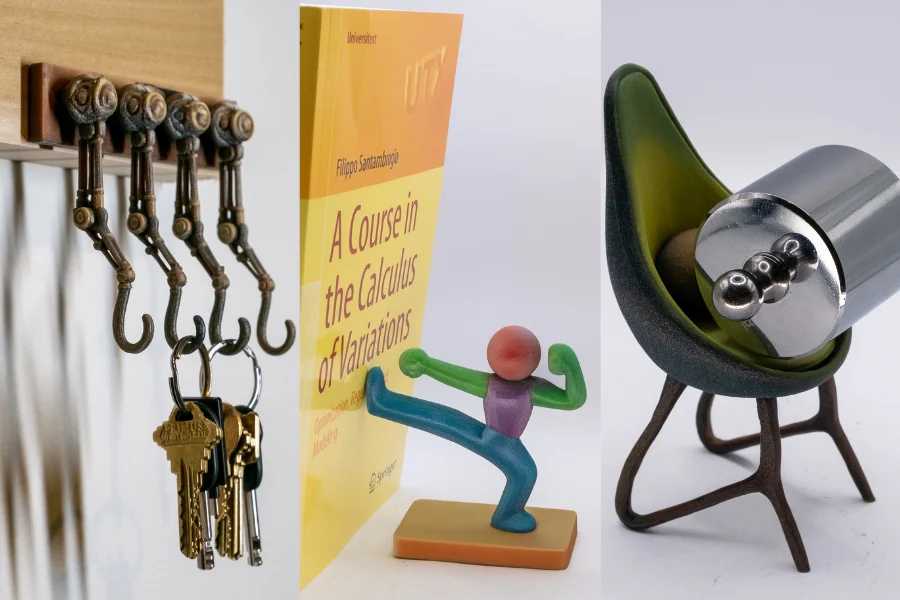
Addressing this critical gap, researchers at the Massachusetts Institute of Tchnology’s (MIT) Computer Science and Artificial Intelligence Laboratory (CSAIL) have developed a novel system named PhysiOpt. This innovative platform integrates physics simulations directly into the genAI design process, effectively providing AI models with a much-needed "reality check." By augmenting existing generative tools with sophisticated physics-based simulations, PhysiOpt ensures that designs for everyday objects, ranging from cups and keyholders to bookends, are not only visually appealing but also structurally sound and ready for fabrication through methods like 3D printing. The system meticulously tests the viability of 3D model structures, making subtle modifications to smaller shapes while diligently preserving the overall aesthetic and intended function of the design.
The Genesis of PhysiOpt: A Response to Design Limitations
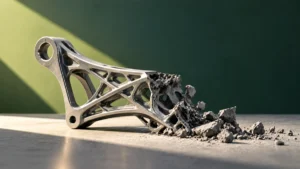
The development of PhysiOpt stems from the growing recognition within the AI research community that current genAI models, while adept at visual creativity, often falter when confronted with the physical constraints of the real world. Tools such as Microsoft’s TRELLIS system, capable of generating 3D models from text prompts or images, can produce highly imaginative designs. However, a chair designed by such a system might appear visually appealing but could be fundamentally unstable, with parts that might not connect securely or withstand pressure. This limitation arises from the AI’s lack of comprehension regarding the object’s intended purpose and the physical forces it will encounter. Consequently, a 3D-printed chair, despite its visual fidelity to the AI’s output, might collapse under the weight of a person.
The CSAIL team’s initiative with PhysiOpt represents a significant step towards rectifying this deficiency. Their work focuses on empowering genAI with a grounded understanding of physics, thereby unlocking the true potential of AI-generated designs for practical applications. This research was formally presented at the prestigious SIGGRAPH Conference and Exhibition on Computer Graphics and Interactive Techniques in Asia in December, underscoring its importance in the field of computer graphics and AI.
How PhysiOpt Works: A Seamless Blend of AI and Physics
PhysiOpt operates on a user-friendly interface, allowing individuals to simply articulate their desired creation and its intended use through text prompts or by uploading an image. The system then processes this input, and within approximately half a minute, delivers a realistic 3D object ready for fabrication. A compelling demonstration of its capabilities involved a prompt for a "flamingo-shaped glass for drinking." PhysiOpt not only generated a visually striking design but also incorporated subtle structural refinements, such as a stable base and a comfortable handle, all while maintaining the distinctive flamingo aesthetic. These refinements ensured that the resulting 3D-printed glass would be functional and durable.
Xiao Sean Zhan, an MIT electrical engineering and computer science (EECS) PhD student and CSAIL researcher, and a co-lead author of the paper detailing PhysiOpt, explained the system’s core functionality: "PhysiOpt combines GenAI and physically-based shape optimization, helping virtually anyone generate the designs they want for unique accessories and decorations. It’s an automatic system that allows you to make the shape physically manufacturable, given some constraints. PhysiOpt can iterate on its creations as often as you’d like, without any extra training." This highlights the system’s efficiency and adaptability, allowing for rapid prototyping and design refinement without the need for extensive retraining of the AI models.
Engineering for Real-World Constraints
The core innovation of PhysiOpt lies in its ability to create "smart designs." This means that the AI not only generates an item based on user specifications but also meticulously considers its functionality within the real world. Users can integrate their preferred 3D generative AI models and, after defining their desired object, specify crucial parameters such as the expected force or weight the object needs to withstand. This simulation of real-world use cases allows for predictions, such as whether a hook will be strong enough to support a heavy coat. Furthermore, users can define the materials intended for fabrication—be it plastics, wood, or other materials—and specify how the object will be supported in its environment. For instance, a cup is typically supported by resting on a flat surface, while a bookend relies on leaning against a collection of books for stability.
Once these parameters are established, PhysiOpt initiates an iterative optimization process. At its core, the system employs a sophisticated physics simulation technique known as "finite element analysis" (FEA). This comprehensive analysis subjects the design to virtual stress tests, generating a "heat map" overlay on the 3D model. This heat map visually indicates areas of structural weakness, with brighter colors like red signifying zones that are inadequately supported and prone to failure. For example, if the system were designing a birdhouse, a red hue on the support beams would immediately signal the need for reinforcement to prevent collapse.
Beyond Practicality: Embracing Aesthetic Complexity
The versatility of PhysiOpt extends to the creation of more elaborate and stylistically challenging designs. The CSAIL researchers demonstrated this by fabricating a steampunk-inspired keyholder, characterized by intricate, robotic-like hooks, and a unique "giraffe table" with a flat back designed for placing items. The remarkable aspect of these complex creations is that PhysiOpt achieves them without requiring extensive, bespoke training for each aesthetic style.
Clément Jambon, another MIT EECS PhD student and CSAIL researcher who co-led the work, elaborated on this point: "Existing systems often need lots of additional training to have a semantic understanding of what you want to see. But we use a model with that feel for what you want to create already baked in, so PhysiOpt is training-free." This "training-free" approach is a significant advantage, as it drastically reduces the time and computational resources required to develop new design capabilities.
Leveraging "Shape Priors" for Enhanced Generation
PhysiOpt’s ability to understand and generate complex shapes efficiently is attributed to its use of "shape priors." These are essentially pre-existing knowledge structures derived from the model’s initial training on vast datasets of shapes and objects. This is akin to an artist who has studied numerous artistic styles and masters; their extensive exposure allows them to replicate or evoke specific aesthetics. Similarly, a pre-trained model’s familiarity with diverse geometric forms enables it to generate coherent and contextually appropriate 3D models.
The researchers observed that this visual knowledge significantly enhanced PhysiOpt’s efficiency compared to comparable methods like DiffIPC, which also involves simulating and optimizing shapes. In experiments involving the generation of 3D chair designs, PhysiOpt proved to be nearly 10 times faster per iteration while producing more realistic outcomes. This speed advantage is crucial for iterative design processes, allowing creators to explore a wider range of possibilities in less time.
Implications and Future Directions
PhysiOpt represents a pivotal advancement in bridging the conceptual gap between imaginative ideas and tangible, functional personal items. What might begin as a fleeting thought for a unique coffee mug can now realistically transition from a digital concept to a physical object on a desk. The system’s current capabilities in stress-testing are already a significant boon for designers. Looking ahead, the researchers envision PhysiOpt becoming even more autonomous. Future iterations could potentially predict constraints such as loads and boundaries without explicit user input, a capability that could be realized through the integration of vision language models. These models combine an understanding of human language with computer vision, offering a more intuitive and intelligent design experience.
The CSAIL team is actively pursuing further enhancements to PhysiOpt. Zhan and Jambon are focused on refining the system to eliminate artifacts—random fragments that can sometimes appear in AI-generated 3D models—by making the system even more sensitive to physical principles. They are also exploring how to model more complex constraints that are relevant to various fabrication techniques. For instance, minimizing overhanging components is a critical consideration for 3D printing, and PhysiOpt aims to incorporate such advanced fabrication-aware optimizations.
The research was a collaborative effort involving several key individuals from MIT. Zhan and Jambon were joined by Kenney Ng, a Principal Research Scientist at the MIT-IBM Watson AI Lab and an alumnus of MIT with multiple degrees, as well as CSAIL colleagues Evan Thompson, an undergraduate researcher, and Assistant Professor Mina Konaković Luković, a principal investigator at the lab. Funding for this groundbreaking work was provided in part by the MIT-IBM Watson AI Laboratory and Wistron Corp., underscoring the significant institutional support behind this innovative research. The continued development of systems like PhysiOpt promises to democratize design, empowering individuals to bring their creative visions to life with unprecedented ease and reliability.