For years, the global landscape of drone design and manufacturing was predominantly shaped outside the United States, with American companies largely specializing in software, autonomy, and application development, while the critical hardware components and assembly often originated overseas. This dynamic, however, is undergoing a profound and rapid transformation. Driven by stringent federal restrictions and escalating concerns regarding supply chain security, a concerted effort is now underway to cultivate a robust domestic drone manufacturing industry. This burgeoning sector aims to cater to the critical demands of public safety agencies, essential infrastructure operators, and diverse enterprise customers across the nation.
At the forefront of this industrial pivot is Birdstop CEO Keith Miao, whose strategic vision led the company directly to Detroit, Michigan. Miao’s decision, far from arbitrary, stems from a fundamental insight: the intrinsic similarities between modern drones and automobiles are far more extensive than commonly perceived. This recognition has positioned Birdstop to leverage an existing, highly sophisticated industrial ecosystem, rather than attempting to build one from scratch.
The Shifting Tides of Drone Production: A National Imperative
The impetus for this dramatic shift in drone production is multi-faceted, rooted deeply in national security and economic resilience. For nearly two decades, the global drone market, particularly in the commercial and consumer segments, witnessed the overwhelming dominance of foreign manufacturers, most notably from China. Companies like DJI captured an estimated 70-80% of the commercial drone market share globally, including a significant portion within the United States. This dependency raised alarm bells within government circles, especially concerning data security, potential espionage, and the reliability of critical technology supply chains.
The turning point arrived with a series of legislative actions and policy advisories. A key legislative measure, Section 848 of the National Defense Authorization Act (NDAA), enacted in stages, explicitly prohibited the Department of Defense from procuring or operating drones and associated components manufactured in China or other adversarial nations. While initially targeting military applications, the sentiment and security concerns quickly permeated other federal agencies, including the Department of Homeland Security (DHS), which issued advisories warning against the use of Chinese-made drones due to potential data security risks.
These federal directives created an immediate and urgent demand for "trusted" American-made drones. The market, once heavily reliant on foreign sources, was now forced to reorient, creating a vacuum and an unprecedented opportunity for domestic manufacturers. This policy-driven impetus has catalyzed a race among American companies to establish indigenous capabilities across the entire drone value chain, from raw materials and components to final assembly and sophisticated software integration. The goal is not merely to replace foreign products but to build a secure, resilient, and innovative domestic drone ecosystem capable of meeting evolving national needs.
Detroit: The Unsung Hero of Next-Gen Manufacturing
Birdstop’s move to Detroit underscores a profound re-evaluation of America’s industrial capabilities. Keith Miao articulated this succinctly, stating, "We needed to tap into an industrial base that already existed. Suppliers, talent, machinery, the entire ecosystem of building a complex physical product, a complex machine at scale." This perspective challenges the narrative of American manufacturing decline, instead highlighting the enduring strength and adaptability of regions like Michigan.
Detroit, often synonymous with the automotive industry, boasts an unparalleled legacy in complex machinery manufacturing. The region’s infrastructure, honed over a century of automotive production, includes a vast network of highly specialized suppliers, an experienced engineering workforce, advanced robotics and automation capabilities, and established logistical frameworks. This pre-existing ecosystem offers a significant competitive advantage to companies like Birdstop, enabling them to bypass the immense capital investment and time typically required to build such an industrial base from the ground up.
Michigan’s automotive industry, valued at hundreds of billions of dollars annually, provides a robust foundation. It encompasses everything from precision machining and composite material fabrication to advanced electronics integration and sophisticated assembly lines. The talent pool in Michigan is also uniquely suited, comprising engineers, skilled tradespeople, and technicians with deep expertise in designing, testing, and manufacturing durable, reliable products that operate in demanding environments. This concentration of expertise and resources makes Detroit an ideal crucible for the next generation of advanced manufacturing, including drone production.
The Automotive-Drone Nexus: Birdstop’s Fealty Drone as a Blueprint
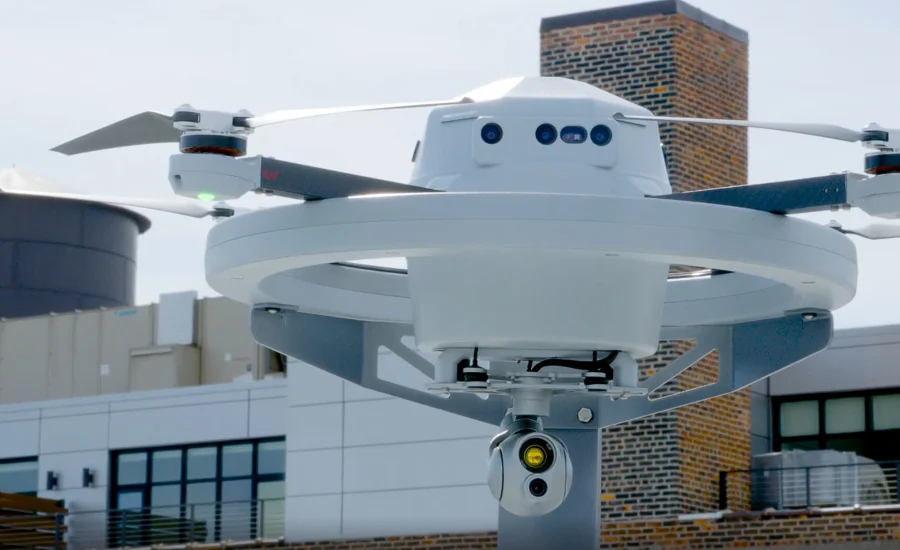
Miao’s core argument hinges on the surprising degree of commonality between drones and automobiles. He points out that approximately 79% of the components found in Birdstop’s flagship "Fealty" drone map directly to existing automotive parts or technologies. This includes everything from motors, sensors, and wiring harnesses to advanced battery systems, onboard computing units, and structural materials. This high degree of overlap significantly de-risks the supply chain and accelerates development by allowing Birdstop to leverage established, high-volume, and rigorously tested automotive components.
The parallels extend beyond mere components to manufacturing processes and operational philosophies. While drones are often conceptually grouped with aerospace products, Miao argues that many drone applications, particularly those operating below 400 feet for public safety, infrastructure inspection, or logistics, face environmental conditions far more akin to ground vehicles than high-altitude aircraft. These drones are exposed to extreme temperatures, varying humidity, dust, vibrations, and other stressors that require robust design and manufacturing.

"The sorts of safety testing, the sorts of environmental testing that we put our drones through have a lot more in common with how we do testing in the automotive industry," Miao explained. Automotive manufacturers adhere to stringent durability standards, rigorous quality control protocols, and extensive environmental testing to ensure vehicle reliability over years of use in diverse conditions. Applying these well-honed methodologies to drone production can significantly enhance the reliability, longevity, and safety of domestically manufactured drones, a critical factor for public safety and industrial applications where failure is not an option.
Forging a New Supply Chain from Existing Strengths
Since its relocation to Michigan, Birdstop has actively engaged with over 100 automotive suppliers, exploring partnerships for components, specialized machinery, and advanced manufacturing processes. This proactive outreach is already yielding results, with the company commencing procurement from several of these suppliers. The long-term vision involves establishing more extensive agreements as production of the Fealty drone scales, creating a new, integrated supply chain deeply embedded within the existing Michigan industrial ecosystem.
This strategy is not just about cost efficiency; it’s fundamentally about speed and resilience. "We as an industry have to build this technology domestically, have to build the supply chain for this technology domestically as well, really quickly," Miao emphasized. The urgency is dictated by national security requirements and the need to quickly fill the void left by restrictions on foreign drones. By tapping into an established and robust supply chain, Birdstop and other domestic drone manufacturers can accelerate their time to market, scale production more efficiently, and ensure a higher degree of supply chain security and reliability.
The integration with automotive suppliers also brings invaluable benefits in terms of manufacturing philosophy. The automotive industry is a master of lean manufacturing, just-in-time inventory, and high-volume, high-quality production. These principles, when applied to drone manufacturing, can lead to more efficient production cycles, reduced waste, and consistently high product quality, all while fostering innovation.
Economic Revival and National Security Enhancements
Birdstop’s initiative, emblematic of a broader trend, carries significant implications for both regional economic development and national security. For Michigan, it represents a diversification of its manufacturing base, creating new jobs in advanced technology sectors and leveraging its historical strengths in innovative ways. This can help attract further investment, foster technological innovation, and strengthen the state’s position as a leader in next-generation manufacturing. Economic development agencies in Michigan are likely to view such ventures as critical for maintaining the state’s industrial vitality.
From a national security perspective, the establishment of a robust domestic drone manufacturing capability is paramount. It ensures that critical technologies used by military, law enforcement, and infrastructure operators are free from foreign interference, backdoor vulnerabilities, and supply chain disruptions. Secure, trusted drones are essential for intelligence gathering, border patrol, emergency response, critical infrastructure inspection (e.g., power grids, pipelines), and a multitude of other sensitive applications. Reducing reliance on foreign adversaries for these tools enhances national sovereignty and operational autonomy.
Moreover, a domestic industry fosters innovation and customization tailored to American needs and standards. It creates opportunities for tighter integration with existing national security frameworks and allows for rapid iteration and adaptation of drone technology in response to emerging threats or evolving operational requirements.
Challenges and the Promising Horizon
While the path forward is promising, challenges remain. Competing with the established economies of scale of foreign manufacturers, particularly on cost, will require continuous innovation and efficiency gains. Attracting and retaining specialized talent, even in a manufacturing hub like Michigan, will also be crucial as the industry expands. However, Miao’s observation that "manufacturing is alive and well in the United States and in Michigan" provides a strong counter-narrative to these potential hurdles. The availability of advanced manufacturing technologies, automation, and a skilled workforce within the state offers a formidable advantage.
Birdstop’s broader vision extends beyond merely replacing foreign-made drones. It is actively contributing to the foundation of an entirely new American manufacturing base centered around a technology that is increasingly vital for national security, critical infrastructure, and public safety operations. The company’s strategic move to Detroit is not just a business decision; it is a declaration of confidence in American ingenuity and manufacturing prowess.
As the drone industry enters this new phase of domestic production, Birdstop’s bet on Detroit’s deep-rooted manufacturing ecosystem appears poised to accelerate this critical transition. The convergence of federal policy, national security imperatives, and the enduring strength of America’s industrial heartland is setting the stage for a new era of secure, reliable, and domestically produced drone technology, solidifying the nation’s technological sovereignty and economic resilience for decades to come.