The Massachusetts Institute of Technology (MIT) is globally recognized for its pioneering contributions to science, engineering, and mathematics. However, a significant portion of its intellectual framework is rooted in a tradition that began three-quarters of a century ago. This month, MIT marks the 75th anniversary of the School of Humanities, Arts, and Social Sciences (SHASS), an entity that has grown from a post-World War II necessity into a cornerstone of the university’s educational mission. As the Institute prepares for a landmark two-day conference on September 24 and 25, faculty members are reflecting on how the school’s integration of the "human element" into a technical environment has redefined what it means to be an MIT graduate.
The establishment of SHASS was not a sudden development but the result of deep institutional soul-searching following the disasters of World War II. In 1946, the MIT faculty convened the Committee on Educational Survey, which produced what is now famously known as the "Lewis Report" in 1949. This report argued that the rapid advancements in science and technology—exemplified by the Manhattan Project and the development of nuclear weapons—required a new kind of leadership. The committee posited that scientists and engineers could no longer afford to be specialists in isolation; they needed to be informed citizens capable of understanding the social, political, and ethical consequences of their work.
Historical Foundations and the Lewis Report
The Lewis Report served as the blueprint for the modern MIT experience. When it was finalized in 1949, its most radical recommendation was the creation of a school that would be "co-equal" to the existing Schools of Science and Engineering. This was a deliberate effort to move away from the "service department" model, where humanities were viewed as secondary subjects designed merely to polish the edges of a technical education. Instead, the Lewis Committee envisioned a central intellectual hub where history, economics, and culture were studied with the same rigor as physics or chemistry.
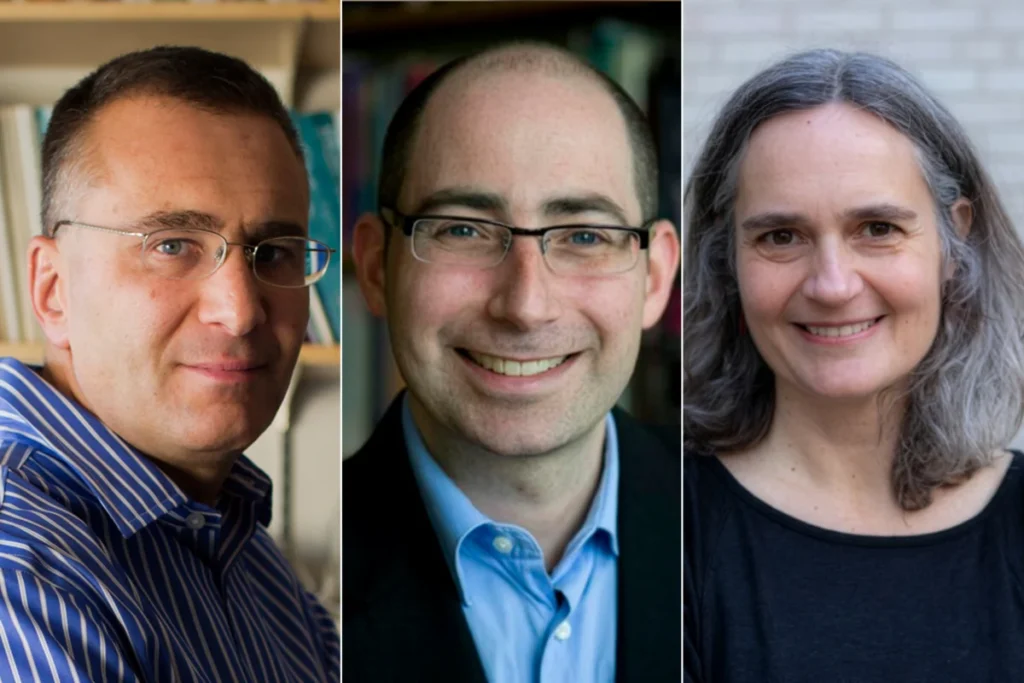
David Kaiser, the Germeshausen Professor of the History of Science and a Professor of Physics, notes that the report was comprehensive, touching on everything from undergraduate curricula to faculty commutes and dormitory life. "The committee was concerned that changes that could be that rapid and that far-reaching simply require an informed leadership," Kaiser explained during a recent roundtable discussion. "They argued that SHASS should be a co-equal school… it was too much at stake to not have the toolkit to think about history, governance, economics, and culture."
Originally founded as the School of Humanities and Social Sciences, the institution evolved over the decades. Approximately 25 years ago, the school officially added "Arts" to its title, reflecting the growing importance of music, theater, and visual arts in the campus culture. Today, SHASS encompasses a wide array of disciplines, including linguistics, philosophy, literature, political science, and anthropology, providing a multidisciplinary environment that is rare among elite technical institutions.
The Undergraduate Experience: A Quarter of the Curriculum
A defining feature of an MIT education is the "HASS Requirement." Every one of the more than 1,000 undergraduates who enroll annually at MIT must spend at least a quarter of their time—eight full subjects—studying the humanities, arts, and social sciences. This requirement ensures that every engineer and scientist graduating from the Institute has engaged with the complexities of human society.
Jonathan Gruber, the Ford Professor of Economics and an MIT alumnus, has witnessed the evolution of this requirement from both sides of the lectern. Gruber recalls a time when being a SHASS major was often viewed as a "second-class" status, usually requiring a double major in a technical field to gain social capital on campus. "That’s really changed," Gruber said. "The MIT student body has changed… we’re now a school that competes with all universities, not just engineering schools. Folks aren’t going to come here if they can’t have a well-rounded education."
For many students, these requirements serve as a gateway to unexpected career paths. Gruber himself entered MIT with a talent for mathematics but a lack of passion for pure theory. It was an introductory economics course (14.01) that showed him how mathematical models could be applied to real-world problems like healthcare access and public policy. This "aha" moment is a common theme among MIT students who find that SHASS courses provide the context and "why" behind the "how" of their technical studies.
Research at the Intersection of Technology and Society
The modern relevance of SHASS is perhaps most visible in its response to the rise of Artificial Intelligence (AI). As AI models begin to influence everything from election cycles to medical diagnoses, the need for ethical oversight and social analysis has become paramount. Heather Paxson, the William R. Kenan, Jr. Professor of Anthropology and Associate Dean for Faculty in SHASS, highlights how the school’s research is currently tackling these issues.
"Our colleagues in political science are using AI to study AI," Paxson noted. Researchers are currently investigating how AI chatbots provide information to citizens about elections, looking for biases that could influence voter behavior. This type of research exemplifies the "mens et manus" (mind and hand) motto of MIT, applying social science methodologies to the most pressing technical disruptions of the era.
Furthermore, the school fosters unique collaborations that would be difficult to replicate elsewhere. David Kaiser’s work is a prime example; as both a physicist and a historian, he has written about the history of quantum mechanics while simultaneously conducting research on inflationary cosmology. His book, How the Hippies Saved Physics, explored how countercultural movements in the 1970s kept obscure questions about quantum entanglement alive—ideas that eventually led to Nobel Prize-winning breakthroughs. This cross-pollination of ideas is a hallmark of the SHASS environment, where a historical study can directly inform a physics project.
Chronology of SHASS Milestones
To understand the trajectory of the school, one must look at the key milestones that have shaped its 75-year journey:
- 1946: The Committee on Educational Survey is established to reassess MIT’s mission in the post-war era.
- 1949: The Lewis Report is published, recommending the creation of a dedicated school for humanities and social sciences.
- 1950: The School of Humanities and Social Sciences is officially established.
- 1950s–1960s: The Department of Economics gains international prominence, becoming a leader in neoclassical synthesis and public policy.
- 1985: The Committee on the Undergraduate Program is revitalized to further integrate SHASS into the core student experience.
- 1990s: "Arts" is added to the school’s name, recognizing the academic and creative rigor of Music and Theater Arts.
- 2011: Publication of Becoming MIT, a historical volume edited by David Kaiser, documenting the school’s evolving identity.
- 2024: SHASS celebrates its 75th anniversary with a focus on AI, ethics, and the "public good."
The Public Good and the Future of the Institution
As SHASS enters its 76th year, the faculty is increasingly focused on the concept of the "public good." In an academic world often driven by private interests and intense professional pressure, SHASS remains the primary space at MIT where students are encouraged to think about their responsibilities to the broader world.
Jonathan Gruber emphasizes that the school is the "participation leader" of the university. The faculty members of SHASS often lead the committees that make the university function, fostering a culture of volunteerism and civic engagement. "Universities need that. That’s the lifeblood of this university," Gruber remarked. By exposing students to these values, SHASS aims to produce graduates who are not just skilled technicians, but ethical leaders.
The upcoming 75th Anniversary Conference will showcase this breadth. With over 40 speakers, the event will feature everything from discussions on health policy and election integrity to original musical compositions and dance performances by the MIT Jazz Ensemble. The goal is to demonstrate that the challenges of the 21st century—climate change, AI ethics, and global inequality—cannot be solved by technical fixes alone. They require a collaborative approach that values human expression and social history as much as it values a mathematical proof.
Implications for Global Education
The success of SHASS at MIT has broader implications for the future of higher education. It serves as a successful case study for the "integrationist" model, where liberal arts are not siloed but are woven into the fabric of a research-heavy, technical institution. This model suggests that the most productive place to study the humanities in the modern age may be alongside the very technologies that are reshaping human existence.
As David Kaiser concludes, the rationale behind the 1949 Lewis Report remains strikingly contemporary. While the specific concerns of the nuclear age have been replaced by the concerns of the digital and biological ages, the fundamental need for "contextual thinking" remains unchanged. SHASS stands as a testament to the idea that at the heart of every great technological achievement is a human story, a social impact, and an ethical choice. For 75 years, MIT has ensured that its students are prepared to tell those stories and make those choices with wisdom and humility.