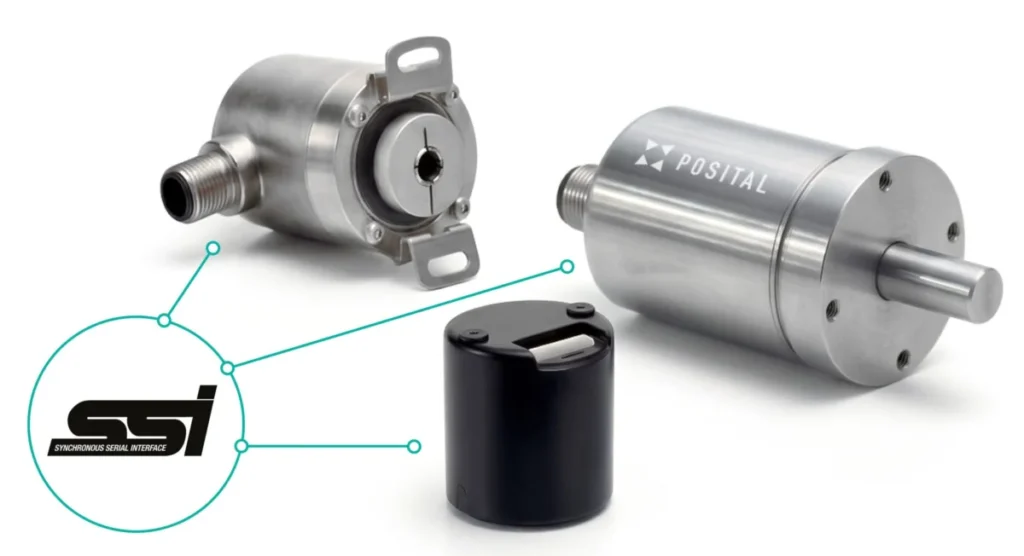
POSITAL, a leading innovator in industrial position and motion sensors, has significantly expanded its offering of Synchronous Serial Interface (SSI) communication options across its comprehensive IXARC absolute rotary encoder product line. This strategic enhancement makes SSI functionality available for a broad spectrum of IXARC encoders, encompassing both modular kit encoders designed for integration into OEM equipment and robust industrial encoders built for demanding environments. Notably, this expansion also includes availability within POSITAL’s recently introduced 20 mm miniature form factor, addressing a growing market demand for compact, high-performance sensing solutions.
The integration of SSI across such a wide range of products underscores POSITAL’s commitment to providing flexible, reliable, and application-specific solutions for the industrial automation sector. SSI, known for its simplicity, robustness, and widespread compatibility, remains a cornerstone communication protocol for numerous industrial control systems globally. This move is poised to empower engineers and system integrators with greater choice and adaptability when designing and upgrading automated machinery, particularly in applications where straightforward, high-speed data transmission is paramount without the overhead of more complex industrial networks.
The Strategic Importance of SSI in Modern Automation
Synchronous Serial Interface (SSI) is a venerable yet highly relevant point-to-point serial communication method widely adopted for connecting sensors directly to digital Programmable Logic Controllers (PLCs) or microcontrollers. Operating on the RS-422 standard, SSI offers several distinct advantages that continue to make it a preferred choice for many industrial applications. Its simplicity of implementation is a key factor; unlike more complex industrial Ethernet or fieldbus networks, SSI requires less sophisticated hardware and software integration, leading to faster development cycles and reduced system costs for smaller to medium-sized control systems.
The protocol supports high transmission rates, ensuring real-time data acquisition crucial for dynamic control applications. Furthermore, SSI connections can extend up to 1,200 meters, providing considerable flexibility in sensor placement within large industrial facilities. Its robustness against electrical noise and interference, inherent in the RS-422 differential signaling, contributes to its reliability in harsh industrial environments. Crucially, SSI is supported by virtually all major PLC manufacturers worldwide, ensuring seamless integration into existing and new control architectures. This pervasive support simplifies design choices for engineers, allowing them to confidently select SSI-enabled devices without concerns about compatibility issues.
The continued relevance of SSI in an era dominated by industrial Ethernet protocols highlights a fundamental truth in automation: there is no one-size-fits-all solution. While Ethernet-based systems offer extensive networking capabilities, remote diagnostics, and higher data bandwidth, they often come with increased complexity, higher cost, and sometimes, latency challenges for critical real-time position feedback. For applications requiring direct, deterministic, and highly reliable position data from a single sensor to a controller, SSI often presents a more efficient and cost-effective solution, striking an optimal balance between performance and simplicity.
Broadening the Product Horizon: From Miniature to Rugged
POSITAL’s expansion of SSI options is not limited to specific form factors but spans its entire IXARC portfolio, offering unparalleled versatility. For larger industrial applications, SSI interfaces are now available in a variety of robust mechanical configurations designed to withstand diverse operational stresses. These include compact 36 mm models, ideal for space-constrained installations; rugged 58 mm versions, engineered for enhanced durability in demanding environments subject to vibration, shock, and contaminants; and specialized 78 mm explosion-proof models that carry ATEX certification. The ATEX certification is critical for applications in hazardous areas where the presence of flammable gases, vapors, mists, or dust could lead to explosive atmospheres, such as in oil and gas, chemical processing, and mining industries. This broad offering ensures that customers can select an SSI-enabled encoder perfectly tailored to their specific mechanical and environmental requirements.
Moreover, in these larger sizes, POSITAL provides customers with the critical choice between magnetic and optical measurement technologies. This choice is significant as each technology offers distinct advantages. Optical encoders typically provide higher resolution and accuracy, making them suitable for applications demanding extreme precision, such as high-end machine tools, robotics, and scientific instruments. Magnetic encoders, conversely, are renowned for their ruggedness, resistance to contamination (dust, moisture, oil), and shock/vibration immunity, making them ideal for heavy-duty industrial machinery, construction equipment, and outdoor applications where environmental resilience is paramount. By offering both, POSITAL caters to the full spectrum of industrial precision and durability needs, ensuring that an optimal solution is always available.
Advanced Sensing Technologies: TMR and Wiegand
The technical prowess of POSITAL’s IXARC magnetic encoders is largely attributed to the sophisticated TMR (Tunneling Magnetoresistance) sensors employed for angular position measurement. TMR technology represents a significant advancement over earlier Hall-effect sensors, which were common in many magnetic encoders. TMR sensors offer several compelling benefits that translate into superior performance and reliability. They exhibit greater stability over time and across temperature variations, ensuring consistent and accurate readings regardless of operational conditions. Their lower temperature sensitivity reduces drift and enhances measurement integrity in environments with fluctuating temperatures. Furthermore, TMR sensors demonstrate a better response to small changes in magnetic fields, leading to higher resolution and improved measurement precision. Finally, their improved energy efficiency contributes to lower power consumption, which is beneficial for overall system design and operational costs.
For multiturn versions of IXARC encoders, POSITAL incorporates an ingenious Wiegand energy-harvesting sensor to power the rotation counting system. This innovative technology is a game-changer for applications requiring continuous, absolute position tracking, even during power outages. The Wiegand sensor generates a small electrical pulse with each rotation of the shaft, which is then used to increment a counter stored in non-volatile memory. The crucial advantage of this system is that it operates autonomously, harvesting energy directly from the shaft’s rotation. This eliminates the need for a backup battery, a common requirement in traditional multiturn absolute encoders. The absence of a battery not only removes a potential point of failure and maintenance burden but also significantly extends the operational lifespan of the encoder, reduces environmental impact, and simplifies logistics by removing battery replacement cycles. This battery-free design ensures that the encoder maintains its absolute position information reliably, even if system power is unexpectedly lost for extended periods, providing unmatched peace of mind for critical applications.
Hybrid Functionality: Absolute and Incremental Measurement

Recognizing the evolving needs of control system designers, POSITAL also offers IXARC encoders with a hybrid communication interface that supports both absolute (SSI) and incremental measurements. This dual-mode capability provides exceptional flexibility, allowing a single device to fulfill multiple roles within an automation system. Absolute measurement, delivered via SSI, is inherently suited for precise positioning tasks, as it provides a unique position value immediately upon power-up without requiring a homing routine. This is invaluable in applications like robotics, CNC machines, and material handling systems where maintaining exact position knowledge is critical for safety and efficiency.
Conversely, incremental encoders are typically used for monitoring rotational speed and direction due to their dynamic response characteristics. They generate a series of pulses as the shaft rotates, and the frequency of these pulses corresponds to speed, while their phase relationship indicates direction. Combining both functions in one device offers control system designers a powerful tool. For instance, an application might initially require only speed monitoring using the incremental output but could benefit from a future upgrade to absolute position measurement without replacing the encoder hardware. This future-proofing capability simplifies system design, reduces inventory, and provides a cost-effective pathway for expanding system functionality. It is particularly advantageous in modular machines or systems that may undergo upgrades or reconfigurations over their lifecycle, providing a seamless transition from dynamic monitoring to precise absolute positioning as requirements evolve.
Programmability and Ease of Configuration with UBIFAST
A hallmark of modern industrial sensors is their adaptability, and POSITAL’s IXARC encoders with SSI interfaces exemplify this through their advanced programmability. Many operating parameters of these encoders can be configured and updated through software, offering unprecedented flexibility for system integrators and end-users. This programmability is facilitated by POSITAL’s proprietary UBIFAST programming tool. UBIFAST (Universal Bi-directional Interface for All Sensors and Transducers) is a powerful, user-friendly software and hardware interface that allows users to easily adjust key parameters such as resolution, direction of rotation, preset values, and various diagnostic functions.
The ability to reconfigure encoders in the field or during the commissioning phase drastically reduces the need for multiple encoder variants, simplifying inventory management and accelerating deployment. For example, a single encoder model can be adapted to different machine axes requiring different resolutions or directions, significantly streamlining the supply chain. Furthermore, software updates via UBIFAST can unlock new features, improve performance, or address specific application challenges, effectively future-proofing the installed base. This level of programmability ensures that POSITAL encoders can seamlessly integrate into diverse and evolving industrial ecosystems, providing long-term value and adaptability for a wide array of applications, from factory automation to mobile machinery.
Market Context and Industry Implications
The global industrial automation market continues its robust growth trajectory, driven by trends such as Industry 4.0, the increasing adoption of robotics, and the ongoing push for greater efficiency and productivity across manufacturing and logistics sectors. Within this landscape, position encoders play a foundational role, acting as the "eyes and ears" of automated systems, providing critical feedback on motion, speed, and position. The market for industrial encoders, valued at several billion dollars annually, is projected to grow steadily, fueled by innovation and the expanding scope of automation.
POSITAL’s strategic expansion of SSI options is a direct response to these market dynamics. While advanced fieldbus and Industrial Ethernet protocols like EtherCAT, PROFINET, and Ethernet/IP are gaining traction for complex, networked systems, there remains a significant and enduring demand for simpler, cost-effective, and highly reliable communication interfaces like SSI. Many existing control systems, particularly in small to medium-sized enterprises (SMEs) or in specific machine segments (e.g., older machinery retrofits, single-axis controls, or safety-critical simple loops), continue to rely on SSI due to its proven track record and ease of integration.
This move by POSITAL reinforces its position as a customer-centric provider, offering a comprehensive portfolio that caters to the full spectrum of industrial requirements. By making SSI available across miniature, standard, and ruggedized form factors, and combining it with advanced TMR and Wiegand technologies, POSITAL is empowering OEMs and system integrators to achieve optimal performance, reliability, and cost-efficiency in their designs. For instance, in compact robotic arms or pick-and-place machines, the 20 mm miniature SSI encoder provides precise feedback without adding bulk. In heavy-duty presses or offshore applications, the rugged 58 mm or ATEX-certified 78 mm SSI encoders ensure continuous operation even under extreme conditions.
The implications are far-reaching. System designers gain unprecedented flexibility, reducing the need to compromise on performance or physical footprint due to communication protocol limitations. Maintenance personnel benefit from the reliability of battery-free multiturn solutions. Procurement teams can streamline their sourcing with a single vendor offering a wide range of compatible solutions. Ultimately, this expansion contributes to more efficient, reliable, and adaptable automated systems, supporting the ongoing evolution towards smarter factories and more capable industrial machinery worldwide.
POSITAL’s Vision for the Future
While POSITAL has not issued a formal statement regarding this specific expansion, the company’s historical trajectory and product development philosophy consistently emphasize innovation, flexibility, and customer value. This latest development aligns perfectly with a strategic vision focused on providing engineers with the tools necessary to build the next generation of industrial machinery. It reflects an understanding that diverse applications demand diverse solutions, and that catering to a broad range of communication protocols, form factors, and measurement technologies is crucial for market leadership.
A hypothetical statement from a POSITAL product manager might emphasize: "Our commitment at POSITAL is to empower engineers with the most reliable and versatile sensing solutions. The widespread availability of SSI across our IXARC encoder range, from our groundbreaking 20 mm miniature models to our ATEX-certified explosion-proof units, is a direct response to the diverse needs of the industrial automation landscape. We understand that while advanced networks have their place, the robust simplicity and proven reliability of SSI remain indispensable for countless applications. By integrating our superior TMR and Wiegand technologies with this widely adopted interface, we offer a compelling combination of performance, ease of integration, and long-term value, ensuring our customers can design and deploy systems with confidence and efficiency."
This strategic enhancement further solidifies POSITAL’s reputation as a key player in the industrial sensor market, continuously adapting its offerings to meet the dynamic demands of a rapidly evolving technological landscape. The move is expected to be well-received by the industrial automation community, offering practical and high-performance solutions for a critical component of modern machinery.






