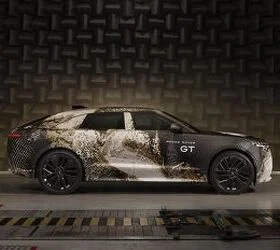
The automotive landscape is undergoing a seismic shift, with established luxury marques embracing electrification and redefining their core identities. In this era of unprecedented change, Land Rover’s Range Rover division has taken a bold and, for some, surprising step. Following in the footsteps of its sibling brand Jaguar, which is undergoing a radical transformation to an all-electric future, Range Rover has announced the upcoming debut of its fifth vehicle, a departure from its traditional lineup of opulent yet highly capable off-roaders. This new entrant, slated for release next year, is not another rugged SUV built to conquer extreme terrains, but rather an all-electric Grand Tourer (GT) – a vehicle designed for sophisticated long-distance travel on paved roads.
This announcement marks a significant inflection point for Range Rover, a brand synonymous with unwavering off-road prowess and a certain aristocratic ruggedness. For decades, Range Rover vehicles have been the ultimate expression of luxury for those who demand the ability to traverse deserts, mountains, and muddy tracks without compromising on comfort or refinement. The very essence of the Range Rover has been its duality: the ability to pilot a stately vehicle through urban boulevards and then, with minimal fuss, to venture into the wilderness. The introduction of a dedicated Grand Tourer, especially one that is purely electric and positioned as a “car” in the traditional sense, challenges these long-held perceptions and signals a strategic pivot aimed at capturing a new segment of the luxury market.
A New Vision for Range Rover: The Electric GT
The forthcoming electric GT, codenamed internally and anticipated to bear a designation yet to be officially revealed, is set to redefine what a Range Rover can be. While details remain somewhat guarded, early indications and industry analysis suggest a vehicle that blends the brand’s characteristic luxury and sophisticated design with the performance and environmental consciousness of electric propulsion. The shape, as described by those privy to early information, is said to be unlike anything previously seen in the Range Rover’s relatively consistent design language. This departure from the established familial resemblance is a deliberate choice, intended to clearly delineate the GT from its SUV brethren and to carve out its own distinct identity within the burgeoning electric luxury vehicle segment.
Sources suggest that the new GT will feature a sleek, aerodynamic profile, a stark contrast to the more upright and commanding stance of the Range Rover Sport or the flagship Range Rover. This emphasis on aerodynamic efficiency is crucial for maximizing the range of an electric vehicle, especially one designed for high-speed cruising. While no direct comparisons have been officially made, some initial observers have noted a passing resemblance to the Cadillac Celestiq, an ultra-luxurious electric sedan, hinting at a sophisticated and avant-garde design aesthetic. However, the core DNA of Range Rover is expected to remain, albeit reinterpreted through the lens of electric performance and GT-specific functionality. This means that while the vehicle will prioritize on-road dynamics and long-distance comfort, it is unlikely to completely abandon the brand’s heritage of quality craftsmanship and premium materials.
The Strategic Shift: Responding to Market Evolution
The decision to introduce an electric GT is not an isolated one, but rather a calculated move within a broader industry trend and Land Rover’s own strategic roadmap. Jaguar, under the leadership of Thierry Bolloré, has already embarked on an ambitious all-electric future, aiming to become a pure luxury electric vehicle brand. This internal precedent undoubtedly influences the direction of Range Rover. The parent company, Tata Motors, has been investing heavily in electrification across its JLR (Jaguar Land Rover) portfolio, recognizing that the future of the automotive industry lies in sustainable mobility.
The global luxury car market is increasingly embracing electric vehicles, with consumers seeking not only environmental benefits but also the silent, instant torque, and advanced technological integration that EVs offer. Established luxury brands like Porsche, Mercedes-Benz, and BMW have already launched successful electric GT models and performance sedans, demonstrating a clear market appetite. Range Rover, by introducing its own electric GT, is positioning itself to compete in this lucrative and rapidly expanding segment. It’s a strategic expansion designed to broaden the brand’s appeal beyond its traditional off-road enthusiast base and attract a new demographic of affluent, tech-savvy, and environmentally conscious buyers.
A Departure from Tradition: Redefining "Range Rover"
The most striking aspect of this new direction is the fundamental redefinition of what a Range Rover can be. For generations, the Range Rover has been the epitome of “go anywhere” luxury. Its silhouette is instantly recognizable, its capabilities legendary. The idea of a Range Rover that is not primarily engineered for extreme off-road conditions might seem contradictory to some purists. The article’s original phrasing humorously highlights this: "One thing’s for sure: you aren’t driving this thing over a moor, crossing a river, and then sitting on the back tailgate for afternoon tea after a fox hunt." This accurately captures the perceived dichotomy.
The new GT will likely forgo the extensive off-road hardware – the locking differentials, the advanced terrain response systems tuned for mud and rock crawling, and the high ground clearance optimized for extreme obstacles. Instead, its engineering focus will shift towards delivering an exceptionally smooth and engaging driving experience on paved surfaces, superior ride comfort for long journeys, and cutting-edge connectivity and infotainment systems. The electric powertrain itself offers inherent advantages for a GT, providing instant acceleration, a quiet cabin environment conducive to conversation and enjoying premium audio systems, and the ability to cover significant distances between charges, especially with the anticipated advancements in battery technology.
Supporting Data and Market Context
The global luxury electric vehicle market is experiencing exponential growth. According to reports from market research firms like Statista and BloombergNEF, sales of premium electric vehicles have consistently outpaced the overall automotive market. For instance, in 2023, global EV sales are projected to reach over 14 million units, with luxury segments showing particularly strong uptake. The demand for high-performance, technologically advanced, and environmentally responsible vehicles is a key driver.
Furthermore, the Grand Tourer segment, while perhaps less voluminous than the SUV market, represents a significant and profitable niche within the luxury automotive space. Buyers in this segment are typically affluent individuals who value performance, comfort, style, and the ability to travel long distances in a refined manner. The convergence of electrification and the GT concept presents a compelling opportunity for brands to attract customers seeking a luxurious and sustainable travel experience.
Land Rover’s parent company, JLR, has outlined its "Reimagine" strategy, which includes substantial investments in electrification, digital technologies, and new vehicle architectures. The launch of an all-electric GT aligns perfectly with this strategy, demonstrating the company’s commitment to innovation and its ambition to remain at the forefront of the luxury automotive industry. The company has committed billions of pounds to its electrification efforts, with a clear objective to transition both Jaguar and Land Rover to predominantly electric lineups in the coming years.
Potential Industry Reactions and Implications
The announcement of Range Rover’s electric GT is likely to elicit a range of reactions from industry insiders, automotive journalists, and consumers.
Enthusiasts and Purists: Some long-time Range Rover enthusiasts and off-road purists may express skepticism or even disappointment. The brand’s identity has been so strongly tied to its off-road heritage that a vehicle deviating so significantly from this core might be met with resistance. They might question the necessity of a Range Rover GT and whether it dilutes the brand’s unique selling proposition.
Luxury Market Analysts: Industry analysts are likely to view this move as a strategically sound diversification. They will recognize the growing demand for premium EVs and the potential for Range Rover to capture market share in the GT segment. The success of this venture will depend on the execution of the vehicle’s design, performance, and integration of Range Rover’s signature luxury elements.
Competitors: Established luxury automakers with existing electric GT offerings, such as Porsche (Taycan), Mercedes-Benz (EQS), and Audi (e-tron GT), will view this as new competition entering their established territory. They will be closely watching the Range Rover GT’s specifications and pricing to gauge its market impact.
Technological Advancements: The development of this GT will likely push the boundaries of Range Rover’s electric powertrain technology, battery management systems, and advanced driver-assistance features. This could lead to trickle-down benefits for future electric Land Rover SUVs.
The Road Ahead: A New Chapter for Range Rover
The introduction of the electric GT signifies a pivotal moment for Range Rover, a brand that has long stood as a beacon of rugged luxury. While the company’s commitment to its traditional SUV lineup remains, this new venture into the Grand Tourer segment demonstrates an understanding of evolving consumer preferences and the relentless march of electrification. The success of this ambitious undertaking will hinge on Range Rover’s ability to seamlessly blend its established reputation for opulence and refinement with the cutting-edge performance and sustainability of electric propulsion, all while creating a vehicle that is both distinctly Range Rover and a bold new statement for the brand. The question that remains for the automotive world is whether this evolution will be embraced, or if the spirit of the moor will forever be inextricably linked to the Range Rover legacy.