The allure of the five-star hotel experience, with its symphony of hushed conversations, gentle piano melodies, and the rhythmic cadence of elevator arrivals, has long captivated discerning travelers. This sensory tapestry is further enriched by the subtle clinking of teacups, the decisive tap of dress shoes on polished marble, and the whisper of luggage wheels gliding across opulent lobbies. For many, the personal sanctuary of a hotel room, complete with panoramic views and the indulgence of plush robes, offers a prelude to the day’s adventures. The ritual of turndown service, the convenience of room service, the nostalgic presence of landlines, and the unparalleled comfort of oversized pillows all contribute to this elevated experience. Yet, for a select group, the ultimate indulgence lies in the aquatic embrace of the hotel pool, a setting that has historically served as an impromptu stage for the display and appreciation of horological artistry.
This appreciation for timepieces in leisure settings is not a new phenomenon. A vivid recollection from the author’s youth, spent amidst the lavish surroundings of a Dubai hotel, paints a picture of a poolside scene teeming with conspicuous consumption. The water’s surface reflected not only the azure sky but also the gleam of high-end wristwatches. The era, as described, was characterized by an uninhibited display of wealth and status, with individuals sporting timepieces that spoke volumes about their standing. The "fat cats" in their Speedos and Rolex Day-Dates, the "shapely concubines" adorned with their partners’ luxury watches, the Russian playboys with their bold Hublot Big Bangs, and the young Khaleeji princes opting for Audemars Piguet Royal Oak Offshores, or their elder counterparts favoring Patek Philippe Nautiluses, all contributed to a vibrant, albeit extravagant, tableau. British expats were noted for their flamboyant Breitlings, while the archetypal "yuppie" might have been seen with a Corum Admiral’s Cup. The scene was further populated by "mystery men" in Panerai Radiomirs, airline pilots with the practical Rolex GMT-Master, and eccentrics sporting Ulysse Nardin timepieces. This was a period, the author reflects, devoid of the subtle trends of "stealth wealth" or ironic sartorial choices, a "simpler time" marked by an overt celebration of fine mechanical craftsmanship.
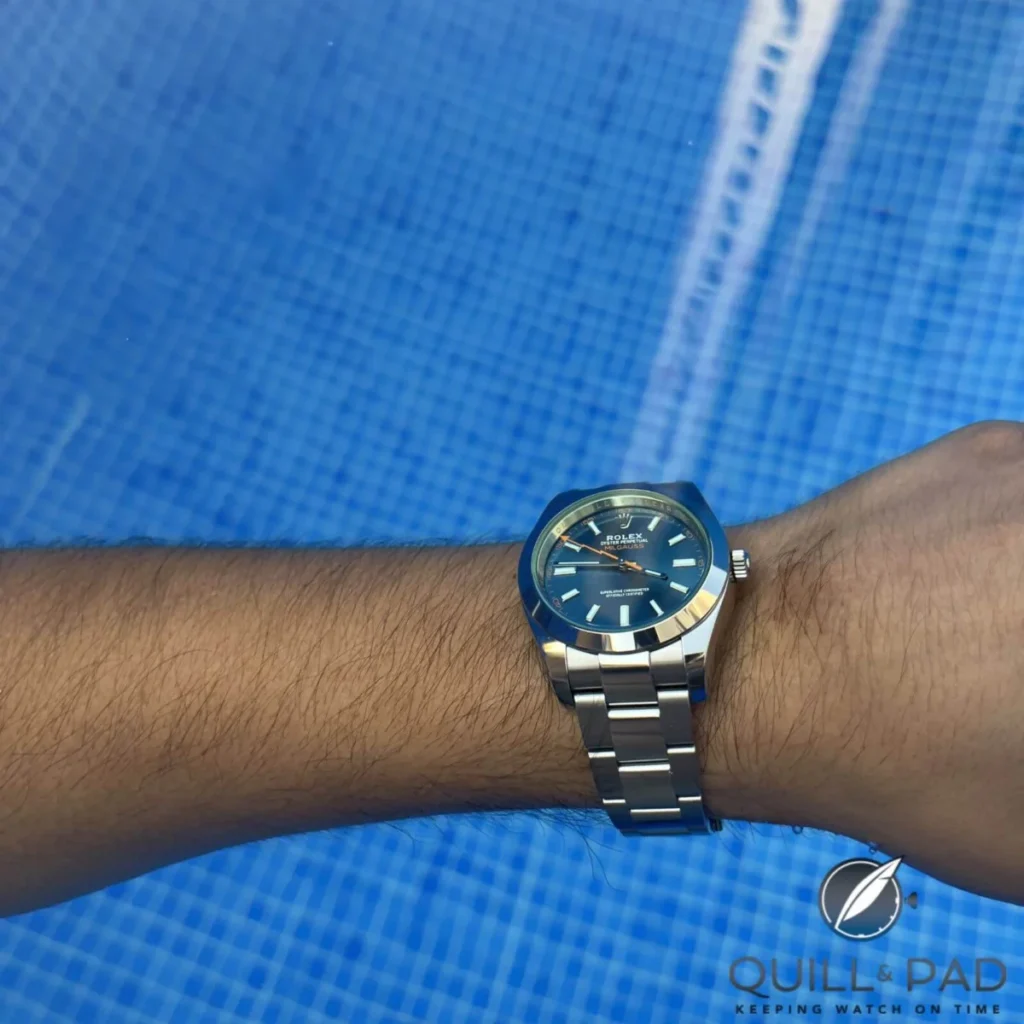
For the author, this youthful observation ignited a lifelong aspiration to own a luxury watch, a singular acquisition initially seeming like an insurmountable goal. Today, that ambition has evolved into the possession of multiple timepieces, each cherished with the same enthusiasm as the day it was acquired. However, one watch, the Rolex Milgauss in its "Z Blue" configuration, has recently become an exception to this rule. The author admits to a fading affection for this particular model, primarily due to its physical dimensions.
The Challenge of Fit and Form: A Milgauss in Question
The Rolex Milgauss, particularly the Z Blue reference, has been a subject of admiration within watch enthusiast circles for its distinctive dial color and the green-tinted sapphire crystal, a unique feature introduced in the 2007 relaunch. Introduced in 1956, the Milgauss was originally designed to withstand magnetic fields up to 1,000 gauss (hence "Mil-gauss"), catering to scientists and engineers working in environments with high magnetic interference. Its robust anti-magnetic properties, achieved through a soft iron inner cage and a paramagnetic alloy for key movement components, made it a functional tool watch. The relaunch in 2007, however, brought a more contemporary aesthetic, with the Z Blue dial and the distinctive green crystal becoming its most recognizable traits.
Despite its technical prowess and distinctive visual appeal, the author finds the Milgauss’s dimensions problematic. Measuring 40mm in diameter, a standard size for many luxury sports watches, its thickness and weight contribute to an imbalanced wearing experience on a 16-centimeter wrist. The author describes the watch as "top-heavy," leading to a noticeable "flap" when the wrist is lowered or raised, a sensation that undermines confidence in wearing the timepiece. This discomfort is compounded by the accumulation of scuffs and scratches over time. The author’s belief that the Milgauss would appreciate in value more than its contemporaries, purchased new for over $7,000 in 2019, has also proven incorrect, further diminishing the ownership experience. This has led to the watch being worn with less "sprezzatura" and more often concealed beneath a cuff, a departure from the author’s ideal of freely enjoying a cherished possession.
The Poolside Revelation: A Watch Reimagined
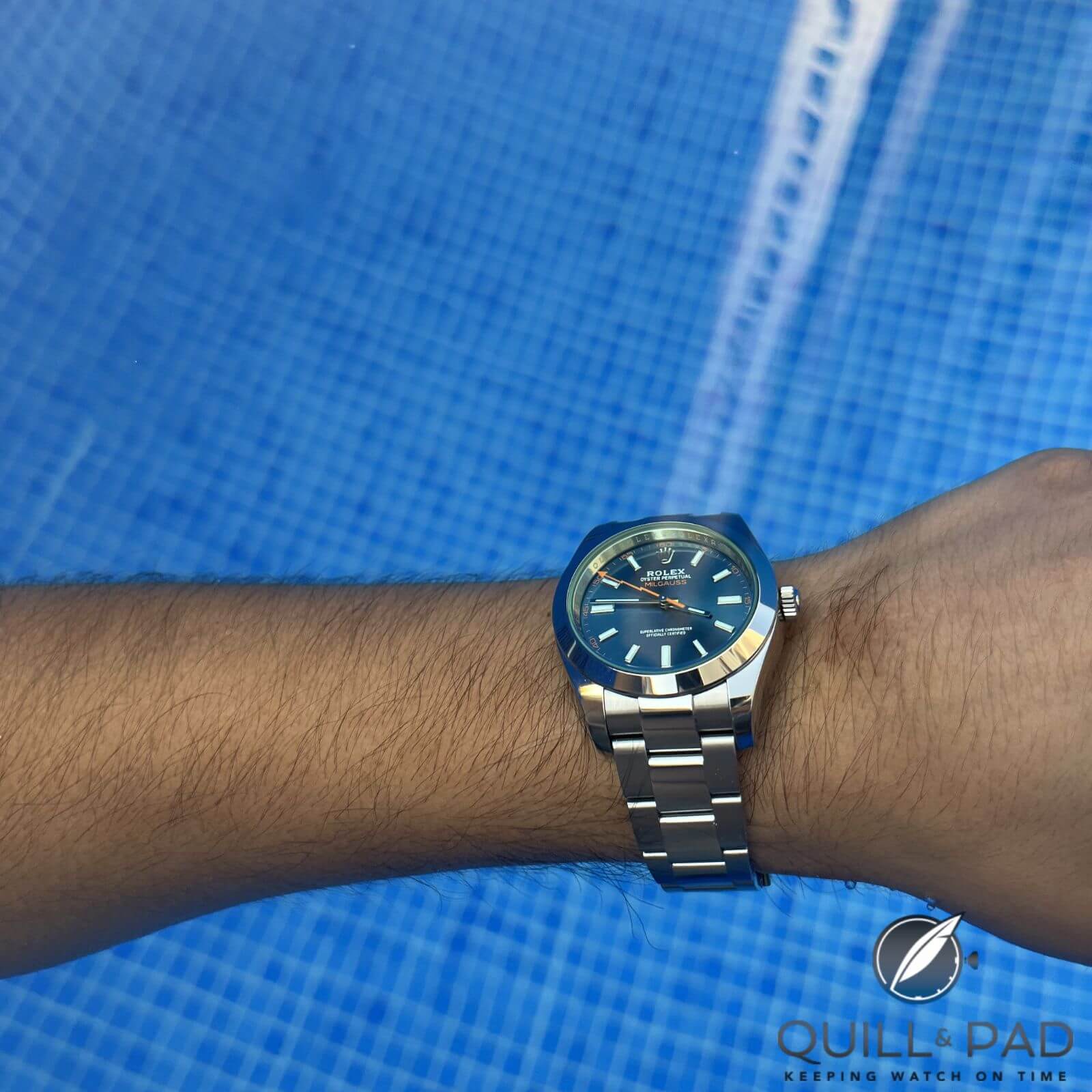
The turning point in the author’s perception of the Milgauss arrives not through a service or a polish, but through a seemingly simple act: taking it for a swim. The setting is idyllic – the Four Seasons pool at "magic hour," a time of soft light and tranquil atmosphere. As the author immerses in the water, a change occurs. The watch, previously a source of self-consciousness and mild regret, transforms under the interplay of sunlight, water, and the vibrant blue of the pool.
The droplet of water cascading down the crystal is no longer seen as a flaw, but as a catalyst for renewed appreciation. The harsh reality of the watch’s imperfections – the scratches and the perceived poor fit – seem to recede when the watch is wet. The Z Blue dial, with its striking jade and aquamarine hues, bursts to life, reflecting the blue depths of the pool. The author likens this visual effect to a nostalgic journey, evoking memories of childhood experiences like skateparks, aquariums, and shared moments in a car. The green crystal, described as a "thin menthol strip," pops against the mosaic tiling, and when viewed head-on, it emits a "radioactive halo." The dial itself, a "prism-lit disc," shifts with iridescent blues, complemented by the sharp, orange "lightning bolt" seconds hand.
In this aquatic environment, the Milgauss is not merely a timepiece; it is a dynamic spectacle. The author posits that the watch "comes alive" when submerged, its scratches temporarily masked by the water’s surface. The fit, too, feels improved when worn with swimming shorts, a more casual attire that lessens the perceived imbalance. In this context, the author is free from comparisons and covetousness. The market value becomes irrelevant, and the risk of theft diminishes significantly. This poolside moment fosters a sense of contentment and restored appreciation for the Milgauss, a feeling of "all’s right with the world."
The Ephemeral Nature of the Poolside Glow
However, this newfound appreciation is intrinsically tied to the environment. As the author dries off and the watch returns to its bone-dry state, the magic begins to dissipate. The fading sunlight and the artificial indoor lighting fail to invigorate the Milgauss. The watch, under these conditions, reverts to feeling "clunky" and "inelegant." The imperfections resurface, and the seconds hand, once a vibrant lightning bolt, becomes merely "jagged and jarring." The author concludes that the Milgauss, particularly in its Z Blue iteration, is not a watch that thrives in its intended environment (CERN) but rather a "pool watch."
The concept of a "natural habitat" for watches is explored, with the author drawing parallels to other iconic timepieces. The Breitling Cosmonaut or the Omega Speedmaster Moonwatch, designed for the rigors of space, are perhaps best appreciated outside their operational theaters. Similarly, Formula 1-themed watches, though created for the racing circuit, are unlikely to be worn by drivers in an actual race due to strict regulations. This leads to a broader observation: the "natural habitat" is not always the most aesthetically pleasing or practical setting for showcasing a watch’s full potential.
The Peacock on the Lawn: Watches and Their Ideal Settings
The author employs analogies to illustrate this point. A peacock, while naturally belonging to the forest, is most striking on a manicured lawn. Timberland boots, designed for construction sites, find their stylistic zenith on a figure embodying urban cool. Blue jeans, originating from the rugged world of gold prospectors, are now a staple of contemporary fashion. These examples highlight how objects, when removed from their utilitarian origins and placed in curated environments, can achieve a higher aesthetic or symbolic value.
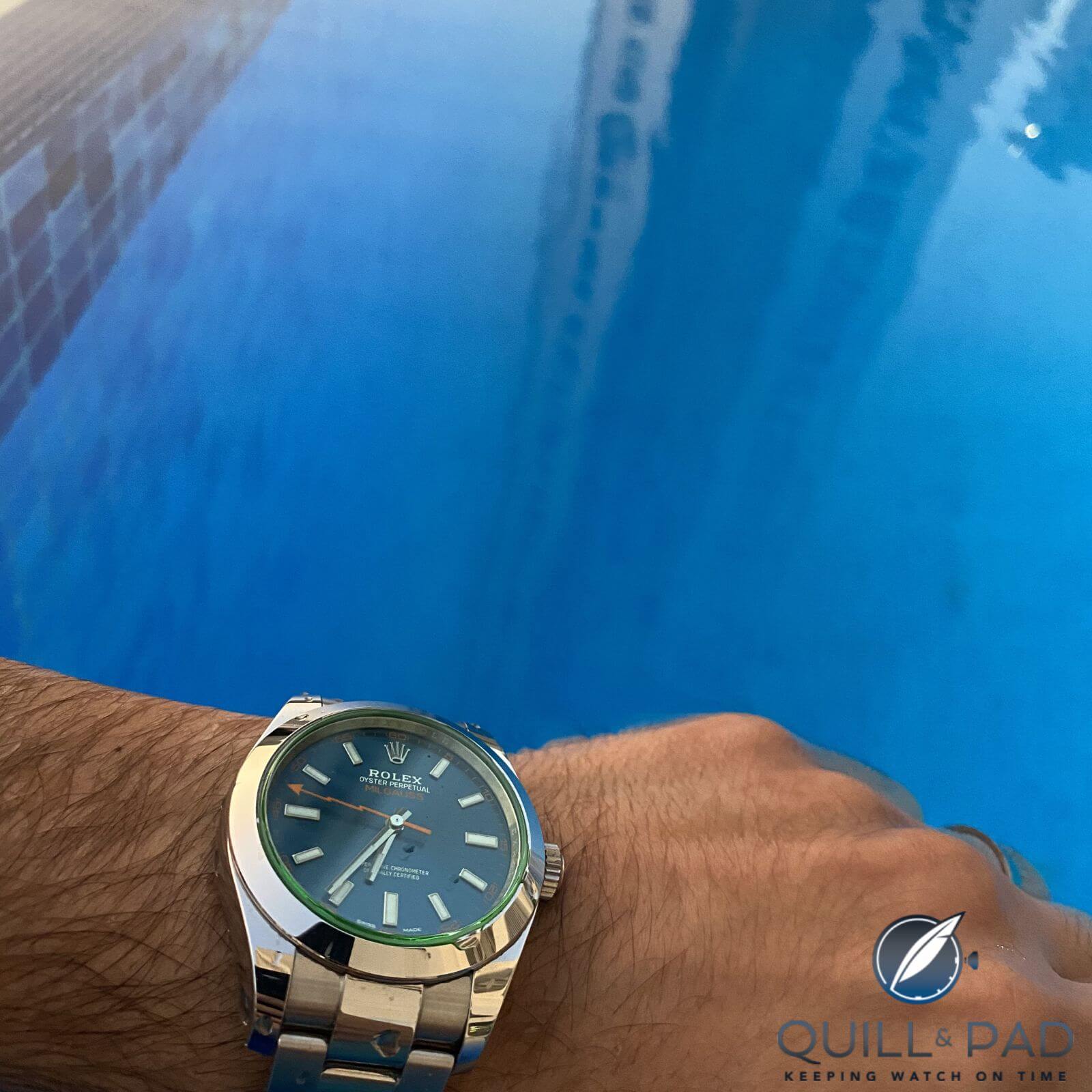
Therefore, the author advocates for embracing this concept for watches. The Milgauss, despite its scientific heritage, finds its true calling not in a laboratory, but by the poolside. The author extends this philosophy to other watch owners, urging them to "bring something that works just as well; natural habitat be damned."
The Poolside Pantheon: Status Symbols and Statement Pieces
The hotel pool, in this context, emerges as a prime location for "status symbols and statement pieces." It is a stage where overt displays of horological taste are not only accepted but, to some extent, expected. The author contrasts the desired "hits" – crowd-pleasing, iconic timepieces – with "deep cuts" – obscure or niche watches. While the author’s personal inclination is towards the latter, having spent years delving into the intricacies of watch forums and online marketplaces like Chrono24 to discover "hidden gems," the hotel pool demands a different approach.
Here, the preference shifts to "starter-kit luxury," "old school staples," and watches that embody a sense of classic indulgence, akin to a "Beef Wellington in watch form." This category includes models like the Audemars Piguet Royal Oak Offshore and Vacheron Constantin Overseas, a pre-Kern Breitling B01 Chronomat, and certain variations of the Omega Speedmaster Moonwatch and Rolex Daytona, particularly in precious metals. Rolex sports models, two-tone "bluesies," and high-water-resistance Richard Mille and Hublot Big Bang models are also deemed suitable. The Patek Philippe Nautilus and Aquanaut families are also recognized as fitting choices.
The author makes a provocative point: watches that might be considered risky or attractive to potential thieves in urban settings like London or Paris are precisely the kind that are "meant for the pool." The suggestion is to keep these valuable timepieces secured in the hotel safe when not in use, bringing them out for a dip and returning them to safety before venturing out for evening activities. This approach acknowledges the inherent risks associated with displaying luxury goods in public while still allowing for the enjoyment of their presence in appropriate, more secure environments.
The article concludes by emphasizing the importance of playing to the audience in such settings. While personal preference may lean towards the unconventional, the hotel pool environment calls for recognizable icons and established luxury markers. It is a space where the enjoyment of a watch is amplified by its context, transforming a functional object into a symbol of leisure, success, and a shared appreciation for fine craftsmanship.