Seurat Technologies, a trailblazer in additive manufacturing technology development and a contract manufacturer, has achieved a significant milestone by initiating production-scale manufacturing of customer parts using its groundbreaking Area Printing system. Emerging from stealth mode in early 2021 with the ambitious goal of revolutionizing metal part production, the company has been diligently working to translate its innovative technology, licensed from Lawrence Livermore National Lab, into tangible manufacturing output. This achievement marks a pivotal moment, signaling the company’s readiness to address the demands of industrial, high-volume additive manufacturing.
The journey to this production-ready stage has involved considerable effort beyond the core printing technology. Seurat has developed custom 3D printers, auxiliary equipment, and proprietary in-house software. This comprehensive approach includes establishing robust production workflows, meticulously developing printing parameters, and cultivating a robust pipeline of business opportunities. The recent commencement of customer part production at rate signifies the culmination of these development efforts and the successful realization of the company’s vision.
James DeMuth, CEO and cofounder of Seurat Technologies, expressed his excitement during a recent visit to the company’s Wilmington, Massachusetts headquarters. "It’s been very exciting for us, having those production systems really cranking away," DeMuth stated, highlighting the significance of reaching production rate as a hard-won but crucial step. This milestone is particularly noteworthy as it validates Seurat’s unique approach to metal 3D printing and its potential to disrupt traditional manufacturing paradigms.
The Genesis of Area Printing: A Pointillist Approach to Metal Manufacturing
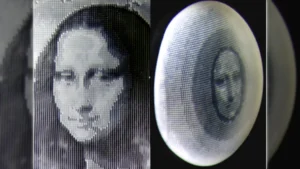
The company’s name, Seurat Technologies, draws inspiration from the Pointillist artist Georges Seurat, renowned for his technique of applying small dots of color. This artistic parallel is mirrored in Seurat’s proprietary Area Printing method. Unlike traditional laser powder bed fusion (LPBF) which meticulously melts individual points of powder, Area Printing operates on a tile-based system. This method embeds a pixelized pattern directly into the laser beam, enabling the simultaneous melting of larger, 3- to 10-millimeter-scale patterned tiles of metal powder.

This innovative approach, combined with powerful, in-house developed laser optics, fundamentally alters the economic calculus of powder-based 3D printing. "Laser powder bed fusion cares about every point; we care about every shot," explained DeMuth. "If I’m gonna fire that tile, I gotta fire that tile. I couldn’t care less what’s in the tile. So that means you get support printing for free. We get bulkiness for free." This means that the print speed is determined by the number of tiles fired per layer, rather than the number of individual points, offering a substantial speed advantage. Each tile can be up to 10,000 times larger than a conventional 100-micron laser spot, dramatically increasing throughput.
The Area Printing process allows for the melting of larger areas of material in a single laser pass. This eliminates the need for complex toolpaths required in standard LPBF when melting more material. Consequently, the presence of intricate features within a tile, whether it’s a single component or hundreds, has minimal impact on the overall cycle time. This efficiency is particularly beneficial for producing dense and bulky structures, complex geometries such as lattices or internal channels, and highly customized parts, all without compromising print speed.
This tile-based methodology is ideally suited for the high-volume, small to medium-sized metal parts that Seurat aims to produce. The company’s internally developed software plays a crucial role by pre-modeling print paths and tile positions to minimize the number of laser shots required, ensuring exceptional repeatability across identical parts within a batch. DeMuth estimates that Area Printing can achieve print speeds that are "a good solid 12 to 40 times faster than your typical LPBF system."
Streamlining the Workflow: Swappable Cartridges and Powder Management
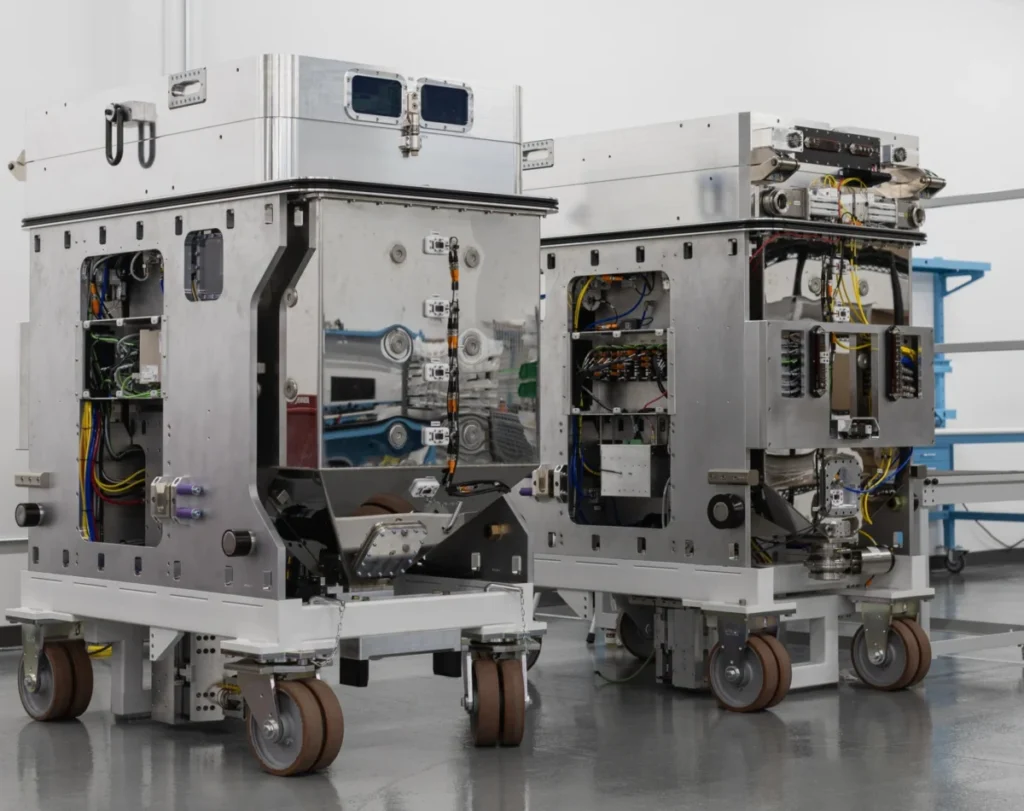
A distinctive feature of Seurat’s 3D printing platform is its innovative swappable print cartridge system. Each cartridge houses the build plate, the recoating mechanism, and the powder required for a specific print. This modular design allows for offline loading and unloading of cartridges, significantly reducing job changeover times. Furthermore, the cartridges are separated from the printer’s delicate laser optics by a protective window, effectively preventing contamination and extending the lifespan of critical components.
Currently, Seurat operates three machines: its initial Alpha machine and two models of its production Gen1 unit. The company has plans to deploy additional production machines as demand grows. The development of the 3D printing hardware is only one facet of Seurat’s comprehensive approach. The company has also engineered a sophisticated powder management system to interface with its custom cartridges. This system, exemplified by their Powder Station, operates in a fully inert environment, which is crucial for handling various metal powders, with steel currently being the primary material, and aluminum and titanium slated for future integration. The Powder Station facilitates efficient depowdering using a programmable rotary table, alongside manual powder removal via a glovebox. Recovered powder undergoes a filtering and blending process before being sieved and loaded into a cartridge for subsequent prints, optimizing material utilization and cost-effectiveness.

Faster, Cheaper, More Productive: A Paradigm Shift in Metal Part Production
Seurat Technologies’ ambition extends beyond merely developing a superior 3D printer. The company operates as a contract manufacturer, leveraging its own advanced equipment to deliver repeatable metal part production. Its core value proposition lies in offering a cost-competitive alternative to traditional manufacturing methods such as casting, forging, machining, and stamping. The ultimate vision is to establish a network of standardized "Print Depots" built upon this industrial production platform. These depots would bring dedicated and flexible manufacturing capacity closer to its customers, enabling them to reduce tooling costs, shorten supply chains, and scale production without the burden of investing in new hardware or facilities.
The initial years of Seurat’s development were dedicated to refining the Area Printing technology and demonstrating its efficacy for metal part contract manufacturing. This foundational work has successfully validated the technology’s potential. Now, the company is focused on leveraging these learnings to enhance both its part production capabilities and its machine manufacturing processes.
The transition from prototype to production has been marked by a rapid learning curve. Following the development of prototype and Alpha printers, Seurat dedicated approximately 10 months to commissioning its first Gen1 production printer, a process that involved subsystem integration and the first successful print. It then took an additional four months to advance from that initial print to the first commercial parts. The subsequent Gen1 system demonstrated a significantly accelerated development cycle, with subsystems integrated and the first print achieved in just three months. Within weeks of that milestone, the machine was actively producing commercial parts.
The machines themselves have undergone continuous streamlining, as has their operation. Seurat has reduced the changeover time for print cartridges to a mere 30 minutes, with an aggressive target to halve this duration in the near future. "There’s 15 minutes of stuff that we believe we can cut out of this process," DeMuth noted, illustrating the ongoing pursuit of efficiency. This future speed will be realized through a combination of software enhancements and workflow optimizations. For instance, by housing the recoater and powder within the cartridge, it becomes feasible to spread the first layer of powder offline, presenting a ready-to-print build plate to the machine upon cartridge insertion.
Since achieving the initial milestone of producing customer parts on the Alpha system in 2024, Seurat has focused on "ramping it up in terms of operational excellence, demonstrating [the printers] can get to very high uptimes and ultimately showing the robustness of the engineering that went into making that happen," DeMuth explained. This operational refinement has facilitated the critical transition from prototyping to full-scale production, as evidenced by their recent commercial success.

With production now underway across multiple systems, Seurat’s engineering teams are prioritizing throughput optimization, automation, and overall operational efficiency. These efforts are fundamental to realizing the company’s long-term vision of networked Print Depots that provide localized, efficient, flexible, and cost-effective metal part manufacturing at scale.
Production Wins: Delivering Complex Geometries and Cost Savings
Early customer applications for Seurat’s Area Printing technology include highly complex geometries such as heat exchangers with sub-200-micron features, sophisticated industrial flow components, specialized fastening hardware, and high-performance consumer products. The ability of Area Printing to produce features as fine as 160 microns, coupled with the inherent design freedoms of additive manufacturing, is driving innovation across a diverse range of applications. In many instances, the significant reduction in lead time offered by Seurat’s technology is a key differentiator.
Craig Colman, head of marketing, highlighted a specific customer part, a nozzle ring, where Seurat’s additive manufacturing achieves the same cost as traditional machining but delivers "market-changing" lead time reductions. "It’s this combination of ‘I want additive features’ and ‘I want better lead time’ while remaining cost-competitive with the conventionally manufactured part. We’re not a one-trick pony," Colman emphasized.
However, it is in cost savings that Seurat’s technology truly shines. One of the most significant current production applications for the company involves a seemingly simple component: T-nuts. "Joiners or fasteners is a $100 billion market worldwide, but a lot of that is stamping," DeMuth stated, underscoring the immense scale of the fastener market. He provided an example of a T-nut available on Amazon for four cents, but this price point is contingent on producing billions of units annually with a standard geometry.
Customized or unique geometries present a significant challenge for stamping processes, making them prohibitively expensive. While CNC machining can address smaller quantities, it introduces substantial costs and still faces design limitations. DeMuth noted that "somewhere around 100,000 units a year, that’s when you should start machining it." The cost for a machined T-nut can range from approximately $1.50 when manufactured in China to $5 when machined in the U.S.

In stark contrast, Seurat’s Area Printing technology can produce each T-nut for less than a dollar, with threads integrated directly into the print and minimal post-processing required. This allows for parts to be manufactured in the exact size, shape, and quantity needed by the customer, eliminating the traditional trade-offs between unique design and manufacturing complexity or cost. The T-nut program exemplifies Area Printing’s potential to make additive manufacturing economically viable at production volumes in the tens of thousands, a scale typically uneconomical for point-scanning LPBF systems. The ability to print larger areas simultaneously significantly reduces the print-time penalty associated with printing more material per layer or per build.
"The machines are our first step on an incredibly scalable platform that we see as an opportunity to just directly compete with castings and forming technologies on a price-per-piece basis, using standard metal powder," DeMuth concluded.
Cost-Effective, Distributed, Fungible: The Future of Manufacturing Networks
Seurat Technologies envisions its ultimate product not as a standalone printer or equipment line, but as the factory itself. Scaling production with Area Printing is the initial phase in building a network of dedicated manufacturing cells. These cells are designed for deployment at or near major customer locations, ensuring consistency in equipment, software, and operational procedures. These cells are intended to function as an integral extension of a customer’s existing manufacturing network, providing qualified production capacity that can grow in tandem with increasing demand.
"We don’t want to have customers have to choose between lowest cost and lowest risk," DeMuth stated. "You can have a digital inventory of your parts. When you want a part made, you can print it where it’s needed." This model represents a significant departure from current practices in casting, stamping, and even machining, where large batches of parts are typically produced in a single location and then transported to their final destinations.
Under Seurat’s proposed model, with multiple distributed factories, metal components could be manufactured in smaller, localized batches. Because production is driven by digital files, the capacity of any given factory can be dynamically shifted between qualified parts and product families without the need for retooling. Such a software-defined network promises to be highly responsive and economically competitive.

Within a single Seurat factory, DeMuth foresees a level of production capacity and flexibility unparalleled by conventional casting or machining. "We have what we call a fungible capacity," he explained. "The same standardized platform can support different materials, parts, and customers. Qualified capacity can be reassigned as demand changes, providing a level of flexibility that does not exist with dedicated casting or stamping infrastructure. Ultimately, that is how we build a truly multi-use manufacturing network."
For the immediate future, Seurat’s focus remains on bringing all its existing printers online and operating at full production schedules. Operational qualification is proceeding concurrently with customer work. Once the initial production facility reaches capacity, Seurat plans to establish its next facility in a new U.S. location, aiming for a capacity of "somewhere between probably 16 and 32 machines." This strategic expansion underscores the company’s commitment to building a distributed, scalable, and highly adaptable manufacturing ecosystem.