ULRICEHAMN, Sweden – In a significant demonstration of how targeted technological enhancements can revolutionize existing infrastructure, Swedish automotive supplier PVI Esskå has successfully halved its cycle times and increased annual production capacity by approximately 500 hours. This remarkable improvement was achieved not through the costly and disruptive replacement of its existing hydraulic presses, but by strategically upgrading the controls and automation systems surrounding them. The project, spearheaded by the automation and pressing technology specialist AP&T, serves as a compelling case study for manufacturers globally, illustrating a powerful alternative to extensive capital expenditure in an increasingly competitive economic landscape.
This strategic move by PVI Esskå underscores a growing trend in manufacturing: leveraging intelligent automation, advanced controls, and seamless integration to unlock the latent potential within operational equipment. Rather than embarking on the often-prohibitive investment in entirely new production lines, companies are finding substantial gains by modernizing the "brains" and "nervous system" of their machinery. For PVI Esskå, a key player in the automotive supply chain known for its precision metal forming, this upgrade translates directly into enhanced competitiveness, reduced operational costs, and greater flexibility in responding to market demands.
The Case Study: PVI Esskå’s Transformative Upgrade
PVI Esskå operates in the highly demanding automotive sector, where efficiency, precision, and cost-effectiveness are paramount. Hydraulic presses, while robust and capable of generating immense force, can often be limited by outdated control systems that hinder speed, accuracy, and overall throughput. Recognizing this bottleneck, PVI Esskå partnered with AP&T to re-evaluate its existing press lines. The objective was clear: achieve a significant uplift in productivity without the massive capital outlay and downtime associated with installing new presses.
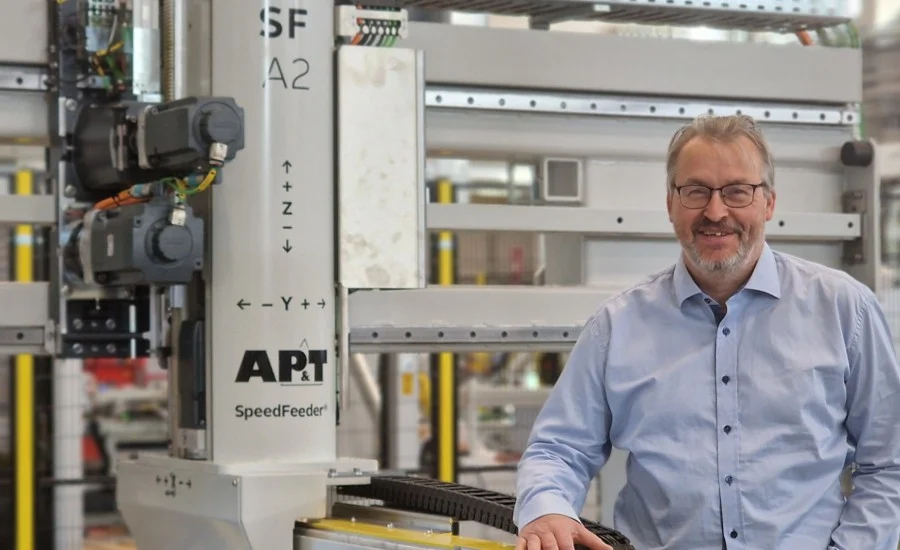
AP&T’s intervention focused on a holistic upgrade of the automation cells around the hydraulic presses. This involved replacing antiquated programmable logic controllers (PLCs) with state-of-the-art industrial control systems, integrating new sensor arrays for real-time data acquisition, and implementing advanced robotic material handling systems where applicable. Crucially, the project also encompassed a complete overhaul of the human-machine interfaces (HMIs), providing operators with intuitive, real-time insights into the production process. The result was a dramatic improvement in the synchronization of press movements, material feeding, and part ejection, eliminating delays and optimizing every phase of the stamping and forming process.
The quantifiable outcomes of this upgrade are impressive. A 50% reduction in cycle times directly translates to a doubling of output capability per press, assuming no other bottlenecks. The additional 500 hours of annual production capacity represents a substantial increase in available manufacturing time, allowing PVI Esskå to take on more orders, reduce lead times, or operate with greater flexibility. In an industry characterized by tight margins and just-in-time delivery, these efficiencies offer a significant strategic advantage.
Rethinking Capital Investment: Modernizing vs. Replacing
The success at PVI Esskå highlights a fundamental shift in manufacturing investment strategy. For decades, the default approach to increasing capacity or improving efficiency often involved purchasing new machinery, a capital-intensive endeavor that requires significant planning, financing, and often entails prolonged production halts for installation. However, as Jörgen Theander, product manager for automation at AP&T, frequently observes, many manufacturers overlook the inherent capabilities of their existing assets.
"We see it again and again: customers who have become blind to what their existing lines are capable of," Theander stated, emphasizing a common oversight. "But with the right automation and integration, we can often double their output using the same presses they already have in place." This perspective challenges conventional wisdom, advocating for a deeper analysis of operational inefficiencies before committing to greenfield investments or wholesale equipment replacement.
AP&T’s approach is highly methodical, beginning with a comprehensive evaluation of the customer’s current production environment. This involves more than just assessing the machinery itself; it delves into the entire manufacturing ecosystem. Key areas of focus include:
- Production Flow Analysis: Identifying how materials move through the facility, from raw input to finished product, to pinpoint bottlenecks and inefficiencies in the sequence of operations.
- Work-in-Process (WIP) Inventory: Excessive WIP is often a clear indicator of disjointed production steps. High levels of semi-finished material waiting between stations signal that the line is not fully connected or synchronized, leading to tied-up capital and extended lead times. As Theander noted, "If they have a lot of semi-finished material waiting between stations, that is a sign that production is not fully connected. Then we can help find a solution that reduces that kind of tied-up capital and gets throughput moving."
- Bottleneck Identification: Pinpointing specific points in the production line where output is restricted, thereby limiting the overall capacity of the entire system. These bottlenecks are often the primary targets for automation and control upgrades.
- Simulation and Cycle-Time Calculations: Before any physical changes are made, AP&T employs advanced simulation software to model different automation scenarios and predict the impact on cycle times and overall output. This data-driven approach allows for optimized solutions to be designed and validated virtually, minimizing risk and ensuring predictable outcomes during implementation.
By integrating presses from multiple manufacturers with its proprietary automation equipment, AP&T demonstrates a vendor-agnostic capability that further expands the applicability of its retrofit solutions. This flexibility is crucial for manufacturers who often operate a diverse array of machinery from various suppliers.

The Dawn of Intelligent Automation: Machine Learning in Press Operations
Beyond conventional automation, AP&T is at the forefront of introducing a new control system for its automation equipment that incorporates machine learning algorithms to optimize production cycles autonomously. This innovative system represents a significant leap towards truly "smart" manufacturing, moving beyond fixed parameters to dynamic, self-optimizing operations.
The machine learning system continuously evaluates each production cycle, collecting vast amounts of data on machine movements, forces, temperatures, and other operational parameters. Through this data analysis, it intelligently adjusts equipment movement in real-time. This means machines can operate faster where the process allows and safely slow down where precision or material integrity demands it. The overarching goal is a multi-faceted optimization: achieving the shortest possible cycle time while simultaneously reducing equipment wear and tear, minimizing downtime, and eliminating small, often unnoticed, production interruptions.
These "micro-stops" are a critical area addressed by machine learning. Individually, an interruption lasting only a few minutes might seem insignificant and is often hard for operators to identify as a systemic issue. However, when repeated across hundreds or thousands of production cycles over a shift, a week, or a year, these seemingly minor pauses can cumulatively consume significant production capacity. They represent lost throughput, increased energy consumption for repeated starts, and potential stress on machinery. By identifying patterns that lead to these micro-stops and proactively adjusting parameters, the machine learning system ensures a smoother, more consistent, and ultimately more productive operation.
Driving Efficiency and Reducing Capital: A Strategic Imperative
In the current economic climate, characterized by fluctuating raw material costs, supply chain disruptions, and intense global competition, manufacturers are under immense pressure to operate leaner and smarter. Theander encapsulates this imperative: "For our customers, it is about eliminating costs and reducing tied-up capital. With the economy the way it is, production needs to become smarter – not just faster." This philosophy drives the development of solutions that deliver not only speed but also resilience, efficiency, and financial prudence.
The new control platform also significantly enhances operational visibility. It is designed to provide operators with richer, more actionable data on production-line performance, empowering them to identify areas where adjustments can lead to improved output. This real-time feedback loop fosters a culture of continuous improvement, enabling operators to make informed decisions that optimize machine performance, anticipate maintenance needs, and prevent costly breakdowns. Enhanced visibility also contributes to better quality control, as deviations from optimal parameters can be detected and corrected promptly.
Expanding Horizons: Opportunities in North America and Beyond
The success story of PVI Esskå and the technological advancements by AP&T have far-reaching implications, particularly for manufacturers operating older manual or semi-automated equipment. Many factories worldwide, especially in mature industrial economies, possess a wealth of robust, mechanically sound machinery that could be given a new lease on life with modern controls and automation. The mechanical integrity of these older presses often far outlasts their electronic and software counterparts, making them prime candidates for such upgrades.
AP&T sees significant opportunities in the United States, a market with a substantial installed base of manufacturing equipment, much of which could benefit from this modernization approach. The home appliance industry, for example, often utilizes large stamping presses that have been in operation for decades. Upgrading these existing presses and production equipment with new controls, robotics, and intelligent automation systems offers a pathway to increased productivity, improved quality, and reduced operating costs without the need for massive capital investment in entirely new facilities or machinery.
This strategy aligns perfectly with broader trends in sustainable manufacturing. By extending the operational life of existing equipment, companies can reduce their environmental footprint by minimizing the demand for new machine fabrication and the associated resource consumption. It also allows for a more incremental and adaptable approach to digital transformation, enabling manufacturers to integrate Industry 4.0 capabilities without a complete overhaul.
In conclusion, the partnership between PVI Esskå and AP&T serves as a powerful testament to the transformative potential of strategic automation and control system upgrades. By focusing on smart enhancements rather than wholesale replacement, manufacturers can unlock significant efficiencies, reduce operational costs, and secure a competitive edge in today’s dynamic global economy. The era of "smarter, not just faster" production is here, driven by innovative solutions that leverage the full potential of both existing assets and cutting-edge technology.