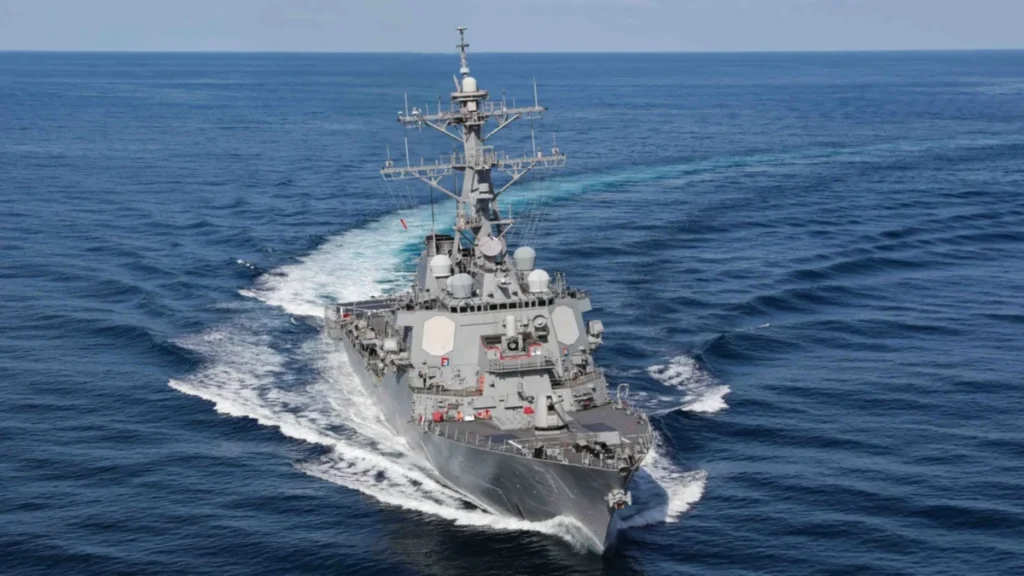
The landscape of global defense is undergoing a profound transformation, characterized by an unprecedented acceleration in military technological development. From the battlefield to the depths of the ocean and the expanse of space, nations are investing heavily in cutting-edge systems designed to enhance precision, autonomy, speed, and resilience. This surge in innovation is not merely about incremental improvements; it represents a fundamental shift in how conflicts are conceived, conducted, and deterred, driven by evolving geopolitical rivalries and the urgent demand for superior capabilities.
The Dawn of Precision and Autonomous Warfare
At the forefront of this technological revolution is the relentless pursuit of precision and autonomy. The objective is clear: to minimize collateral damage, increase operational efficiency, and reduce human risk in hazardous environments. This ambition is manifesting across various domains, from guided munitions to sophisticated robotic platforms.
Guided Munitions and Industrial Reinforcement
A critical enabler of modern warfare is the precision-guided munition. These weapons, capable of hitting targets with pinpoint accuracy, rely on advanced materials and manufacturing processes. Recent reports indicate a significant boost in the production capacity for precision coatings, with a leading US firm quadrupling its output. These specialized coatings are crucial for enhancing the durability, stealth, and aerodynamic performance of munitions, ensuring their effectiveness in diverse operational conditions. The move underscores a broader effort to strengthen the defense industrial base, addressing potential supply chain vulnerabilities and increasing readiness for sustained high-intensity conflicts. This expansion is not isolated; it reflects a strategic imperative to ensure a robust and resilient supply of critical components for next-generation weaponry.
Concurrently, the foundational infrastructure for ammunition production is also seeing substantial investment. A US firm recently broke ground on what is touted as the world’s most modern explosive loading facility for 155mm ammunition. This type of artillery shell has proven indispensable in contemporary conflicts, highlighting the enduring relevance of conventional firepower when paired with modern manufacturing techniques. Such facilities are vital for streamlining production, improving safety standards, and scaling output to meet the demands of global allies and domestic stockpiles. Industry analysts suggest that these investments are a direct response to lessons learned from recent protracted conflicts, where the rate of ammunition consumption often outstripped existing production capabilities.
Autonomous Platforms: Reshaping the Battlefield
Perhaps no area exemplifies the paradigm shift in military technology more than the proliferation of autonomous systems. These platforms, ranging from aerial drones to underwater vessels, are designed to operate with varying degrees of independence from human control, promising enhanced reconnaissance, strike capabilities, and logistical support.
Airborne Autonomy Takes Flight: The concept of "loyal wingman" drones is rapidly transitioning from concept to reality. The US Air Force recently achieved a significant milestone by launching its first missile from Anduril’s semi-autonomous loyal wingman drone. These unmanned aircraft are designed to fly alongside manned fighters, extending their sensor reach, carrying additional ordnance, and acting as decoys, thereby multiplying combat power without risking human pilots. Similarly, the Turkish-made KIZILELMA fighter drone has demonstrated impressive capabilities, hitting targets with a Mach 2.5-speeding supersonic missile. Such advancements point to a future where aerial combat units comprise a mix of manned and unmanned platforms, leveraging the strengths of both.
Further enhancing airborne capabilities, the Pentagon is actively testing containerized drone pods. These innovative systems are designed for rapid deployment, launching, and recovery of drones without direct human piloting at the point of operation. Such modularity and autonomy could revolutionize expeditionary warfare, allowing military forces to deploy aerial surveillance and strike capabilities quickly from virtually any location, significantly reducing logistical footprints and operational response times. The power sources for these burgeoning fleets are also evolving, with new US-made drone battery packs being launched for tactical UAV platforms and other defense equipment, emphasizing the importance of domestic supply and enhanced endurance for autonomous operations.
Naval Autonomy Extends Reach: The maritime domain is equally embracing autonomous systems. An autonomous drone, successfully fired from a submarine torpedo tube, recently completed its first sea trials. This breakthrough represents a significant leap in underwater reconnaissance and strike capabilities, allowing submarines to deploy and recover unmanned assets for extended missions without surfacing, thus maintaining stealth. Complementing this, the US Navy is showcasing an autonomous vessel system, developed by Ghostworks’ MRLN program, built to switch between five distinct naval missions. This versatility could dramatically enhance naval operations, from surveillance and anti-submarine warfare to mine countermeasures, with fewer manned vessels.
Indeed, the threat of naval mines remains a critical concern, and the US has unveiled an end-to-end autonomous system, VATN Sigurd, designed to detect and neutralize these underwater hazards. This system integrates various autonomous components to provide a comprehensive solution for mine warfare, moving away from dangerous human-led operations. These naval advancements collectively underscore a strategic move towards a more distributed, autonomous, and persistent presence across the world’s oceans.
Countering the Drone Threat: The proliferation of drones, particularly low-cost, off-the-shelf models, has introduced new challenges to force protection. In response, innovative counter-UAS (Unmanned Aerial System) technologies are emerging. A new ForceField counter-UAS system has been developed that can stop FPV (First-Person View) drone attacks without emitting detectable signals. This "silent" defense capability is crucial for protecting sensitive sites and personnel without revealing the defender’s position or jamming friendly communications. The US Army is also actively teaming up with Auriga Space to build electromagnetic counter-drone technology, exploring directed energy and electronic warfare solutions to neutralize evolving drone threats effectively. These systems are critical for maintaining air superiority and protecting ground forces in an increasingly drone-centric battlespace.
The Hypersonic Frontier and Advanced Missile Defense
Beyond autonomous platforms, the race for hypersonic capabilities represents one of the most significant strategic competitions of the current era. Hypersonic missiles, capable of traveling at speeds exceeding Mach 5 and executing complex maneuvers, pose an unprecedented challenge to existing missile defense systems.
Accelerating Hypersonic Development: The US is significantly accelerating its hypersonic system development, backed by a recent $400 million funding boost. This investment highlights the urgency felt by major powers to either develop their own hypersonic strike capabilities or robust defenses against them. The strategic implications are immense, as these weapons could drastically reduce reaction times for adversaries, potentially altering the balance of power. Defense analysts frequently cite the "hypersonic gap" as a major driver of current defense spending and research priorities, with the US, Russia, and China all vying for technological superiority.

Missile Modernization and Production Surge: While hypersonics grab headlines, the modernization and mass production of conventional missiles remain critical. Raytheon’s Stinger replacement missile recently scored direct hits in aerial threat tests, demonstrating the continued need for effective short-range air defense against aircraft and drones. Furthermore, the US Air Force is pushing for a 28,000-weapon fleet, partly fueled by the development of 3D-printed affordable cruise missiles (FAMM). Additive manufacturing offers a pathway to rapidly produce complex weapons systems at a lower cost, increasing scalability and reducing reliance on traditional, time-consuming production methods. The US Navy is also racing to boost Standard Missile output, securing a $10 million Mk 104 rocket motor deal with Ursa Major. This focus on increasing production capacity across the missile spectrum, from air-to-air to surface-to-air, underscores a strategic shift towards larger, more readily available arsenals.
Tracking and Defending Against New Threats: The challenge of hypersonic missiles extends to detection and tracking. The US is actively turning to space-based sensors to track these threats from orbit. A network of satellites equipped with advanced infrared sensors and other tracking technologies is being developed to provide persistent global surveillance, offering early warning and trajectory data that ground-based radar systems might miss due to the missiles’ speed and maneuverability. On the defensive side, nations like Iran are also investing in technologies to protect their ballistic missile arsenals from enemy strikes, highlighting the continuous cycle of offensive and defensive innovation. These protective measures, which could include hardened bunkers, mobile launchers, and deceptive tactics, are critical for maintaining deterrence capabilities.
Strengthening the Industrial Base and Supply Chains
The ability to innovate and deploy advanced military technology is inextricably linked to a robust industrial base and secure supply chains. Recognizing this, nations are making strategic investments to ensure their defense industries can meet future demands.
Critical Materials for Advanced Weapons: The US is investing $25 million in Indiana for rare earth refining, specifically for advanced precision-guided weapons. Rare earth elements are indispensable components in modern military technology, used in everything from missile guidance systems and jet engines to night vision goggles and advanced sensors. By investing in domestic refining capabilities, the US aims to reduce its reliance on foreign sources, particularly from geopolitical rivals, and secure a stable supply chain for these critical materials, which are essential for maintaining technological superiority and national security. This investment is part of a broader national strategy to onshore critical mineral processing and manufacturing.
Addressing Production Bottlenecks: The emphasis on new ammunition facilities and boosting missile output directly addresses a long-standing challenge in defense procurement: the ability to scale production quickly in response to emerging threats or sustained conflicts. Legacy systems and complex regulatory environments often lead to slow procurement cycles and production bottlenecks. The current investments aim to streamline these processes, incorporating modern manufacturing techniques, automation, and potentially 3D printing to accelerate the delivery of essential munitions and weapons systems. This is not just about quantity but also about maintaining quality and reliability under increased production pressures.
The Indispensable Role of Communication and Connectivity
In an increasingly complex and interconnected battlespace, seamless and secure communication is paramount. Military forces rely on robust communication networks to coordinate operations, share intelligence, and maintain command and control.
Next-Generation Communication Systems: Powerful deployable systems are being developed to bolster military forces’ communication for critical operations. These systems are designed to be resilient against jamming, cyberattacks, and physical damage, ensuring that commanders can communicate with their units in even the most contested environments. They often incorporate satellite communication, secure radio networks, and advanced data encryption to create a multi-layered, redundant communication architecture. The integration of artificial intelligence and machine learning is also enhancing these systems, allowing for adaptive routing, predictive maintenance, and improved signal processing. This continuous investment in communication infrastructure is fundamental to the effective deployment and coordination of all other advanced military technologies.
Broader Implications and Future Outlook
The rapid evolution of military technology carries profound geopolitical, economic, and ethical implications.
Geopolitical Dynamics: The accelerating arms race, particularly in areas like hypersonics and AI-powered autonomous systems, is reshaping global power dynamics. Nations are investing to maintain deterrence, project power, and protect their interests, leading to a complex web of alliances and rivalries. The development of new capabilities by one nation often spurs similar efforts by others, creating a feedback loop that drives continuous innovation and competition. This dynamic influences international relations, arms control discussions, and the potential for escalation in regional conflicts.
Economic Impact: Defense spending continues to be a major economic driver, fostering innovation, creating high-tech jobs, and driving research and development. The global military technology market is projected to continue its growth trajectory, fueled by national security concerns and technological advancements. However, the immense cost of developing and acquiring these systems also places significant strain on national budgets, requiring difficult trade-offs between defense and other public spending priorities.
Ethical Considerations: The increasing autonomy of military systems raises critical ethical questions regarding accountability, decision-making in lethal contexts, and the potential for unintended escalation. The concept of "human in the loop" versus "human on the loop" for autonomous weapons systems is a subject of intense debate among policymakers, ethicists, and military strategists. The development of electromagnetic counter-drone technologies, for example, highlights the need for careful consideration of non-lethal and proportional responses to threats.
Challenges Ahead: Despite the rapid pace of innovation, significant challenges remain. Cybersecurity threats to interconnected systems are a constant concern, as a compromised network could undermine even the most advanced hardware. Interoperability between different systems, both within and between allied forces, is crucial but often difficult to achieve. The sheer cost of developing, procuring, and maintaining these cutting-edge technologies remains a formidable barrier for many nations. Moreover, the long procurement cycles inherent in defense industries mean that today’s innovations may not be widely fielded for years, raising questions about whether current efforts are adequately preparing for the conflicts of tomorrow.
In conclusion, the current era is defined by a relentless and pervasive wave of military technological innovation. From the microscopic precision of coatings to the vast reach of space-based sensors, and from the autonomous submarines to supersonic drones, the tools of warfare are becoming increasingly sophisticated. This evolution is driven by complex geopolitical forces, technological breakthroughs, and the enduring human imperative for security. As these systems move from laboratories to arsenals, they demand careful consideration of their strategic implications, ethical boundaries, and the profound impact they will have on the future of global stability and conflict. The world watches as these advancements unfold, shaping not only the military capabilities of nations but also the very nature of international relations.






