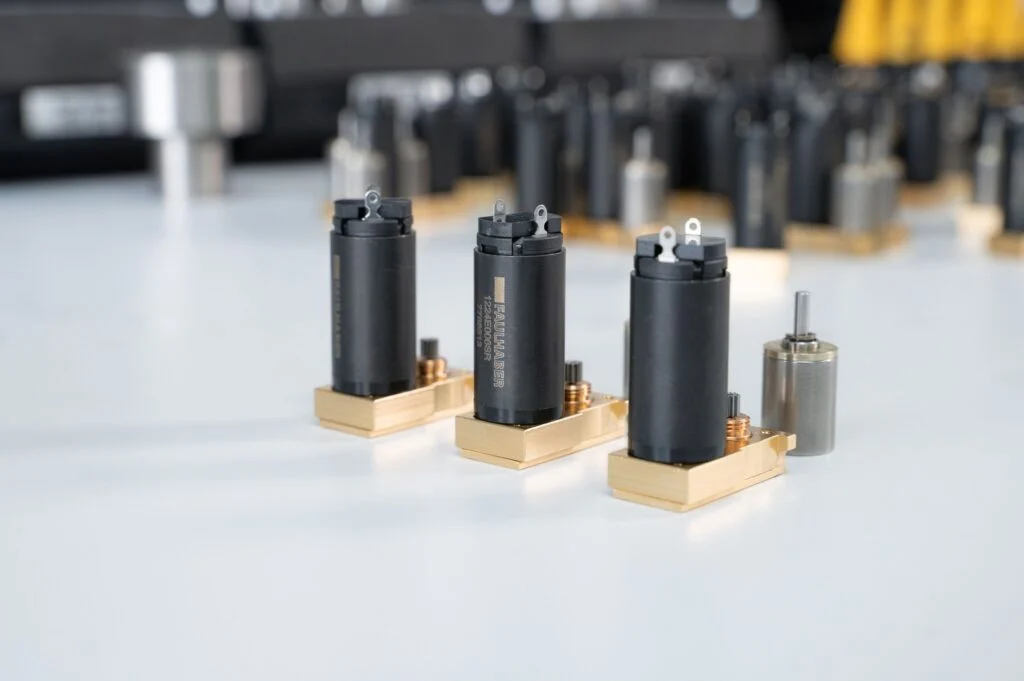
From the whisper-quiet precision needed in advanced medical devices to the unparalleled durability and reliability required in aerospace applications, the fully customized design and manufacturing of gearboxes often emerges not merely as an option, but as an indispensable necessity. This specialized approach addresses the intricate demands of modern engineering, where off-the-shelf solutions frequently fall short, leading to compromises that can hinder overall system performance and operational longevity.
Chris Handcock, Design Lead at Electro Mechanical Systems, underscores this fundamental truth: "From the whisper-quiet precision needed in medical devices to the durability required in aerospace applications, fully customized gearbox design and manufacturing is often the answer." This sentiment encapsulates a growing industry consensus that as technological frontiers expand, so too does the need for motion control solutions tailored with exacting specificity to their operational environments and performance objectives.
The Inadequacy of Standard Solutions: Why Customization Prevails
In an era defined by rapid technological advancement and the miniaturization of complex systems, the limitations of standard, off-the-shelf gearboxes are becoming increasingly apparent. These products, designed for broad applicability, often represent a series of compromises. While they might meet individual requirements for a specific parameter, they frequently fail to optimize overall system performance, leading to inefficiencies, increased wear, or even premature failure. Constraints related to available space, stringent weight limits, or highly specific cost-performance ratios are common drivers compelling engineers towards bespoke solutions.
A comprehensive analysis by the Worldwide Industrial Single-stage Gearbox Market Research Report 2026, Forecast to 2032, highlights a significant market trend: more than 60% of end-users express a distinct preference for customizable options that can meet their unique operational requirements. This data point is not just a statistic; it reflects a paradigm shift in industrial and high-tech sectors, where the total cost of ownership, system reliability, and performance optimization outweigh the perceived initial savings of generic components.
Beyond basic performance metrics, custom solutions become critical when applications demand specialized materials or unique features that are simply unavailable in stock products. Consider environments that are harsh, extreme, or highly specialized. These may necessitate enhanced ingress protection against dust and liquids, the use of non-outgassing materials to prevent contamination in vacuum or cleanroom settings, or application-specific lubricants capable of operating across vast temperature ranges or under extreme pressures. Furthermore, customization frequently enables functional integration, consolidating multiple components into a single, compact gearbox unit. This not only simplifies procurement and assembly processes but also improves overall system robustness by reducing interfaces and potential points of failure.
Sector-Specific Demands: Precision in Healthcare and Aerospace
The medical technology sector provides a compelling illustration of these demands. Devices ranging from surgical robotics to portable diagnostic tools require non-corrosive materials, smooth and easily cleanable surfaces for hygiene, and critically, lightweight designs, particularly for handheld instruments where user fatigue is a significant concern. The complex interplay of these competing requirements – performance, size, weight, and cost – necessitates a meticulous, system-level design approach rather than the isolated optimization of individual components.
Aerospace applications, another high-stakes arena, present an equally stringent set of challenges. Gearboxes in aircraft actuators, satellite positioning systems, or drone propulsion units must withstand extreme temperature fluctuations, intense vibrations, and operate flawlessly in vacuum or low-pressure environments. Here, custom solutions address requirements such as ultra-high power density, exceptional fatigue resistance, and materials that maintain structural integrity under cryogenic or high-thermal conditions, often incorporating exotic alloys or specialized coatings to achieve desired performance envelopes. The cost of failure in these applications is astronomically high, making custom engineering an investment in safety and mission success.
The Design Journey: From Conceptualization to Validation
The path to a fully customized gearbox is a multi-stage process, typically commencing long before fully defined specifications are available. Instead, the journey begins with a comprehensive, system-level definition of the application. This involves rigorous physical modeling and theoretical calculations to ascertain critical operational parameters such as loads, speeds, duty cycles, and expected service life. Design engineers, in collaboration with specialized suppliers like Electro Mechanical Systems, delve deep into the application’s context to unearth every nuance that will influence the gearbox’s design.
In situations where an existing solution is already in place but underperforming, a reverse engineering approach can prove invaluable. This involves analyzing real-world performance data to identify quality or reliability issues stemming from off-the-shelf gearboxes operating beyond their datasheet limits. By instrumenting existing systems with an array of sensors and capturing real-time operating data – including torque, speed, temperature, and vibration – suppliers can assist design engineers in developing accurate, data-driven specifications. This iterative process ensures that the custom solution not only addresses performance deficiencies but also fits within an existing design’s available space and operational behavior, minimizing the need for extensive system redesigns.
Navigating the Trade-offs: Cost, Performance, Size, and Weight
The pursuit of gearbox customization is inherently a balancing act, a careful negotiation between competing priorities. Chief among these trade-offs are performance versus cost, and performance versus size or weight. Design engineers are perpetually seeking the elusive combination of high torque density, compact packaging, and an extended service life, all delivered at a competitive price point. Effectively managing these often-conflicting demands is paramount to a successful custom design project.
Mike Guilliford, author of Apex Dynamics’ "Servo Gearbox Secrets," emphasizes the burgeoning importance of precision in contemporary gearbox technology. He states, "The demand for higher accuracy, efficiency, and reliability in components across industries is increasing… and [the importance of] gearbox selection is often underestimated." This highlights a critical oversight: treating the gearbox as a mere commodity rather than a precision-engineered component integral to the entire motion control system can lead to significant downstream problems.

Meeting clearly defined requirements for load, speed, and duty cycle inevitably incurs a cost, particularly when bespoke components, specialized manufacturing processes, or high-end materials are required. To mitigate this, expert suppliers of custom gearing often employ sophisticated strategies. These may include optimizing component counts, judiciously specifying fully bespoke parts only when absolutely warranted, and leveraging proprietary components where appropriate. In some instances, functionality may be strategically simplified to achieve a more favorable balance between cost and performance without sacrificing critical operational integrity.
The selection of the motor plays a pivotal role in these trade-offs. High-performance motors can deliver the necessary power within tight spatial constraints, but their associated cost must be factored into the overall system budget alongside the gearbox design. The ultimate solution is rarely a gearbox-only decision but rather a holistic, system-level compromise that optimizes the entire drive train for its intended application.
The Challenge of Constraints: Size, Weight, and Over-Specification
Constraints related to size and weight are particularly challenging, especially in applications like portable medical devices, robotics, or aerospace. When the available envelope is fixed, maintaining critical performance metrics may necessitate adjustments elsewhere in the design, such as strategically reducing safety factors or optimizing material selection. This demands rigorous verification calculations to ensure that critical components, such as gear teeth and bearings, remain robust and reliable even when operating within highly constrained dimensions.
Safety factors are typically incorporated into designs to account for real-world uncertainties, including load variations, thermal effects, and manufacturing tolerances that cannot be perfectly simulated. Gear teeth and bearings, for example, are often designed with margins of 1.5 to twice the expected operating load, ensuring that stresses remain well below material yield limits. These margins are continually reviewed and refined throughout the prototyping and testing phases, allowing for design reinforcements if required by real-world data.
Material choice is another cornerstone of custom gearbox design. While commercial-grade steels offer cost-effectiveness and are well-understood, applications in medical technology and aerospace frequently demand lighter, corrosion-resistant, or higher strength-to-weight ratio materials. Stainless steels, titanium alloys, or advanced composites are often specified, enabling compact, lightweight designs that can withstand extreme conditions. However, these specialized materials are often more challenging to verify and manufacture, underscoring the indispensable role of comprehensive prototyping and rigorous testing to confirm their performance characteristics under operational loads.
Validating Performance: Simulation, Prototyping, and Real-World Testing
The validation of a custom gearbox design relies on a symbiotic relationship between simulation, prototyping, and rigorous physical testing. The effectiveness of each method, however, is directly proportional to the fidelity with which operating conditions are understood and replicated. Computational simulation, employing techniques such as Finite Element Analysis (FEA) for stress analysis or Computational Fluid Dynamics (CFD) for lubrication flow, can be invaluable for analyzing individual components or simplified load cases. These tools can predict gear tooth stresses, housing deflection, or bearing loads under known conditions.
However, many real-world applications involve highly complex duty cycles, unpredictable shock loading, significant thermal variations, and environmental factors that are exceedingly difficult to model with absolute accuracy. Consequently, the utility of simulation outputs is intrinsically linked to the availability of accurate use data – data that is often incomplete or unavailable during the early stages of development.
For this reason, production-representative prototyping and real-world validation are critically important. Leading suppliers focus on developing prototypes that are intended to operate precisely as they would in service, rather than merely serving as proof-of-concept models optimized purely in software. By validating gearboxes within the customer’s actual application environment, potential issues can be identified that would be extremely difficult, if not impossible, to predict through simulation alone. This includes uncovering failures that manifest only under specific environmental conditions or unique operational scenarios.
Testing methodologies often incorporate accelerated life testing (ALT) or highly accelerated life testing (HALT) to condense years of operational life into shorter timeframes. This is achieved by applying representative loads, speeds, and control electronics under varied environmental stresses. This comprehensive approach allows for a realistic assessment of performance, durability, and potential failure modes, while accounting for many of the variables present in real-world use. Depending on the program, specialized suppliers may validate defined aspects of the specification internally, while design engineers conduct broader system-level testing to ensure seamless integration and functionality.
This meticulous validation process aligns perfectly with the overarching goal of designing the gearbox as an integral component of a complete drive system, rather than treating it in isolation. Custom drive solutions enable the gearbox to be precisely matched to the motor’s operating characteristics, whether the customer’s primary priority is maximum power density, superior efficiency, or an extended lifecycle. For instance, a motor might be capable of delivering high power within a small envelope, but achieving a long service life may necessitate operating it at a lower speed. In such cases, selecting a specific gearbox ratio can shift the operating point accordingly, optimizing the entire system. This holistic approach extends to selecting appropriate bearing arrangements, developing tailored lubrication strategies, and designing a housing that supports these specific operating conditions.
Holistic Integration and Future Implications
At the mechanical interface level, custom housings offer a significant advantage: they can be designed to integrate directly and seamlessly with the customer’s existing subsystem. This eliminates the need for cumbersome adaptor plates or secondary fixtures, which are often required when attempting to integrate off-the-shelf gearboxes. This level of consolidation not only improves alignment and reduces assembly complexity but also significantly enhances overall system robustness. The result is a gearbox that functions flawlessly and integrates elegantly into its intended application, contributing to higher reliability and reduced maintenance over its operational lifespan.
The broader implications of this trend towards custom gearbox solutions are profound. It signifies a maturation in engineering practices, where the pursuit of optimal performance and reliability takes precedence over generic, lowest-cost solutions. For industries at the cutting edge, this approach is a catalyst for innovation, enabling the development of next-generation devices and systems that push the boundaries of what is currently possible. It also fosters deeper, more collaborative relationships between design engineers and specialized manufacturers, leading to shared expertise and faster development cycles. As technology continues its relentless march forward, the demand for precision, tailored motion control will only intensify, cementing the critical role of custom gearbox design in shaping the future of engineering.
Electro Mechanical Systems | ems-limited.co.uk






