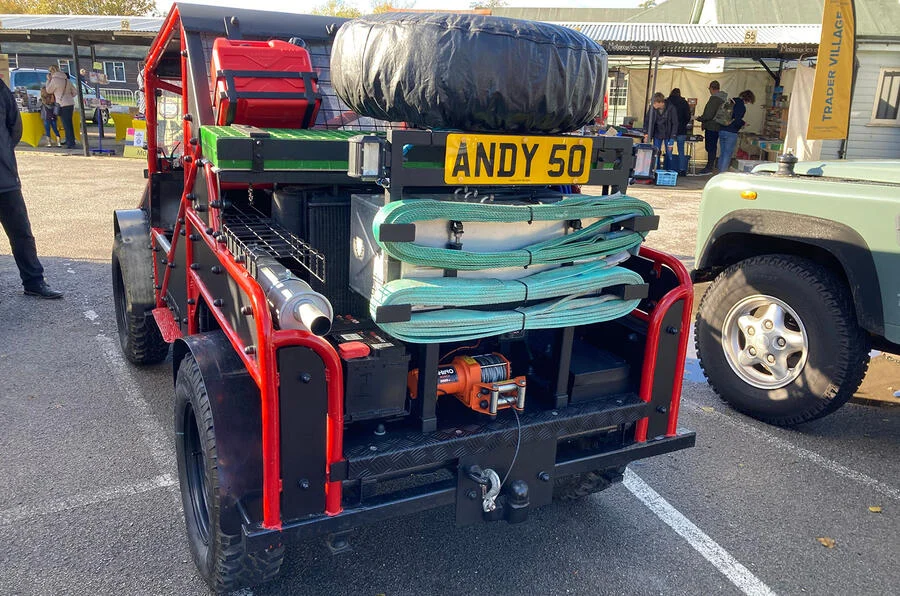
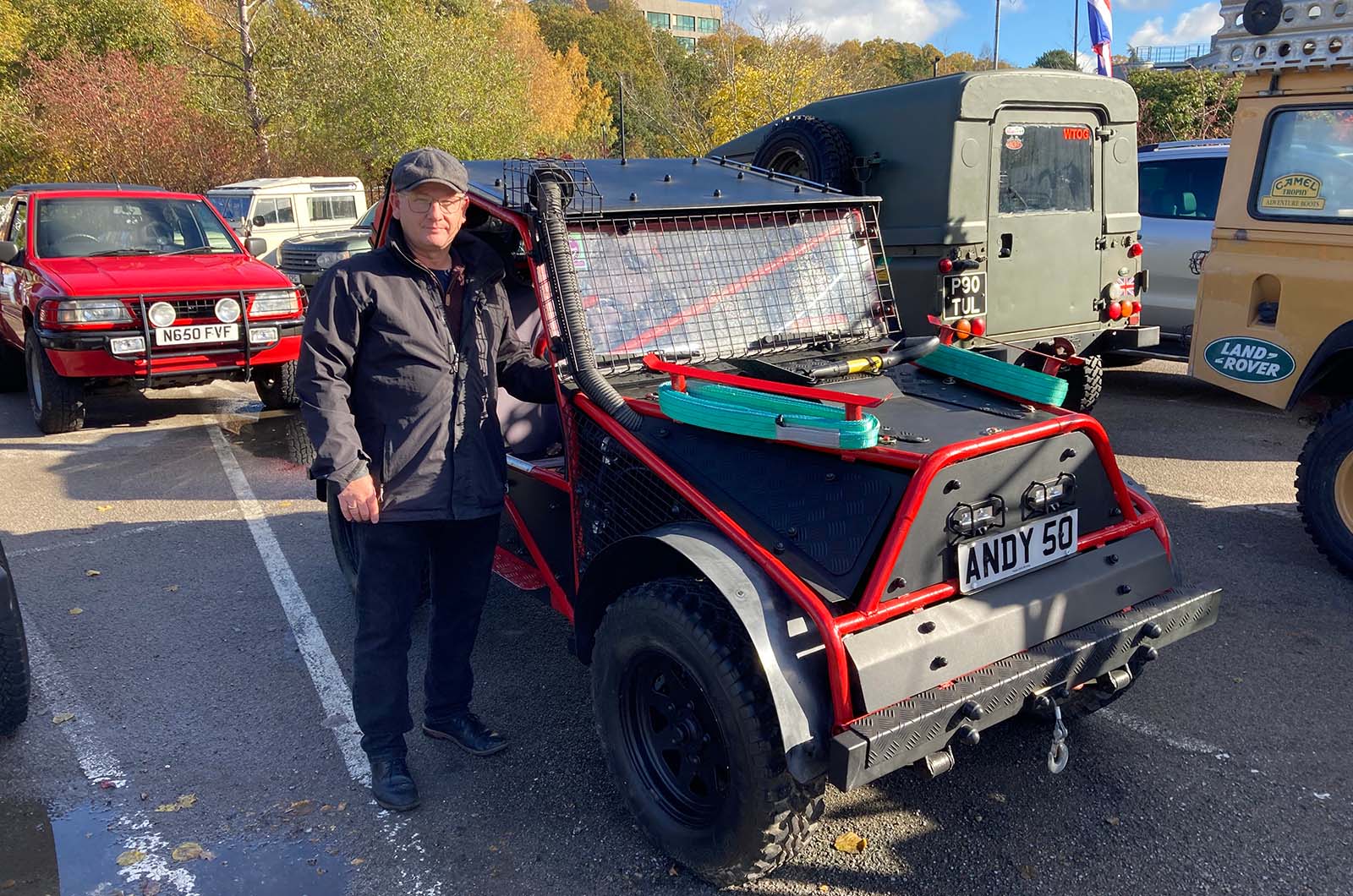
The automotive world is no stranger to the unconventional, the radical, and the downright bizarre. Yet, the creation of Andy Racher, a dinky-size 4×4 that bears only a passing resemblance to its Suzuki origins, pushes the boundaries of what many would consider a vehicle. This unique machine, a testament to a father-son collaboration and an exercise in uninhibited fabrication, emerged not from a design studio or a factory floor, but from the unguided enthusiasm of two individuals armed with a welding torch and a plentiful supply of thin-gauge tubular steel.
The genesis of this "Frankenstein’s monster," as it might be colloquially described, lies in the shared passion and practical skills of Andy Racher and his late father, a seasoned welder. Their approach was anything but conventional. "My late dad, who was a welder, and I fabricated a tubular frame, making it up as we went along," Andy Racher explained. "Whatever we decided at the time, we did. What you see is simply the result of the many challenges we faced building it. Basically, it was led by ‘Where are we going to put this and where are we going to put that?’." This pragmatic, ad-hoc methodology, driven by the immediate requirements of construction rather than a pre-conceived blueprint, has resulted in a vehicle that defies easy categorization.
The narrative of this vehicle’s creation is intrinsically linked to a period of collaborative endeavor between Andy and his father. While the exact timeline of its construction is not detailed, the mention of Racher’s "late dad" suggests a project that spanned a significant period, likely culminating in its completion after his father’s passing, or perhaps being a project they worked on together until the end. The absence of a formal design process underscores the organic and improvisational nature of the build. This "making it up as we went along" philosophy is a powerful indicator of the hands-on, problem-solving approach that characterized their work. Each weld, each bent tube, was a response to a tangible challenge encountered during the build.
A Foundation Reimagined: The Suzuki’s Unseen Influence
While the visual outcome is a radical departure from any standard production vehicle, the underlying mechanicals are rooted in a Suzuki. The specific model of Suzuki that served as the donor vehicle is not immediately apparent from the provided information, but the choice of a Suzuki chassis or powertrain is significant. Suzuki has a long-standing reputation for producing robust, compact, and capable off-road vehicles, particularly in its historical lineup of small 4x4s like the Jimny and its predecessors. These vehicles are known for their durable ladder frames, relatively simple mechanicals, and excellent off-road articulation, making them ideal platforms for modification and custom builds, especially for those looking to enhance their off-road prowess or simply embark on unique projects.
The thin-gauge tubular steel that forms the vehicle’s distinctive exoskeleton is not merely an aesthetic choice but a fundamental structural element. This material allows for the creation of complex shapes and provides a lightweight yet strong framework. The decision to utilize tubular steel for the frame is common in custom vehicle fabrication, particularly for off-road applications where weight reduction and chassis rigidity are paramount. It also offers a high degree of flexibility for integrating various components and addressing the spatial challenges Racher described.
The Engineering Philosophy: "Where Are We Going to Put This?"
Racher’s background in engineering undoubtedly played a crucial role in translating his and his father’s vision into a functional reality. However, his description of the build process highlights a departure from theoretical engineering principles towards a more empirical and adaptive engineering approach. The phrase "led by ‘Where are we going to put this and where are we going to put that?’" speaks volumes about the practical constraints and opportunities that shaped the vehicle’s design. This iterative process, where component placement dictated structural and aesthetic decisions, is a hallmark of highly specialized custom fabrication, often seen in motorsport or experimental vehicle development where bespoke solutions are the norm.
This approach can lead to highly innovative solutions, born out of necessity. For instance, the placement of the engine might have dictated the angle of the exhaust system, which in turn influenced the design of the chassis bracing. Similarly, the need to accommodate suspension components or fuel tanks could have led to unique interpretations of the bodywork. The "many challenges" Racher mentions are precisely these moments where a standard solution is unavailable, and a new one must be devised on the spot.
Potential Applications and Market Context
While the article focuses on the creation of this singular vehicle, its existence prompts consideration of its potential applications and the broader context of custom vehicle building. Such bespoke 4x4s often find their way into niche markets. They can be:
- Off-Road Enthusiast Vehicles: Designed for extreme off-roading, mud bogging, or rock crawling, where their unique construction can offer advantages in terms of ground clearance, suspension travel, and maneuverability. The lightweight tubular frame could also contribute to better power-to-weight ratios, crucial for tackling challenging terrain.
- Show Vehicles: Exhibited at automotive shows and events, attracting attention for their unique design and craftsmanship. The visual impact of such a vehicle is often a significant draw for enthusiasts and the general public alike.
- Experimental Platforms: Used by their creators as a testbed for new ideas in vehicle dynamics, suspension design, or powertrain configurations. The unconstrained nature of the build allows for experimentation without the limitations imposed by mass production.
The custom vehicle industry, while a fraction of the mainstream automotive market, is a vibrant sector driven by passion and a desire for individuality. The global custom car market size was valued at USD 108.2 billion in 2022 and is projected to grow, indicating a strong demand for unique and personalized vehicles. Racher’s creation fits squarely within this segment, albeit at the more extreme end of custom fabrication.
The "Frankenstein" Analogy: A Double-Edged Sword
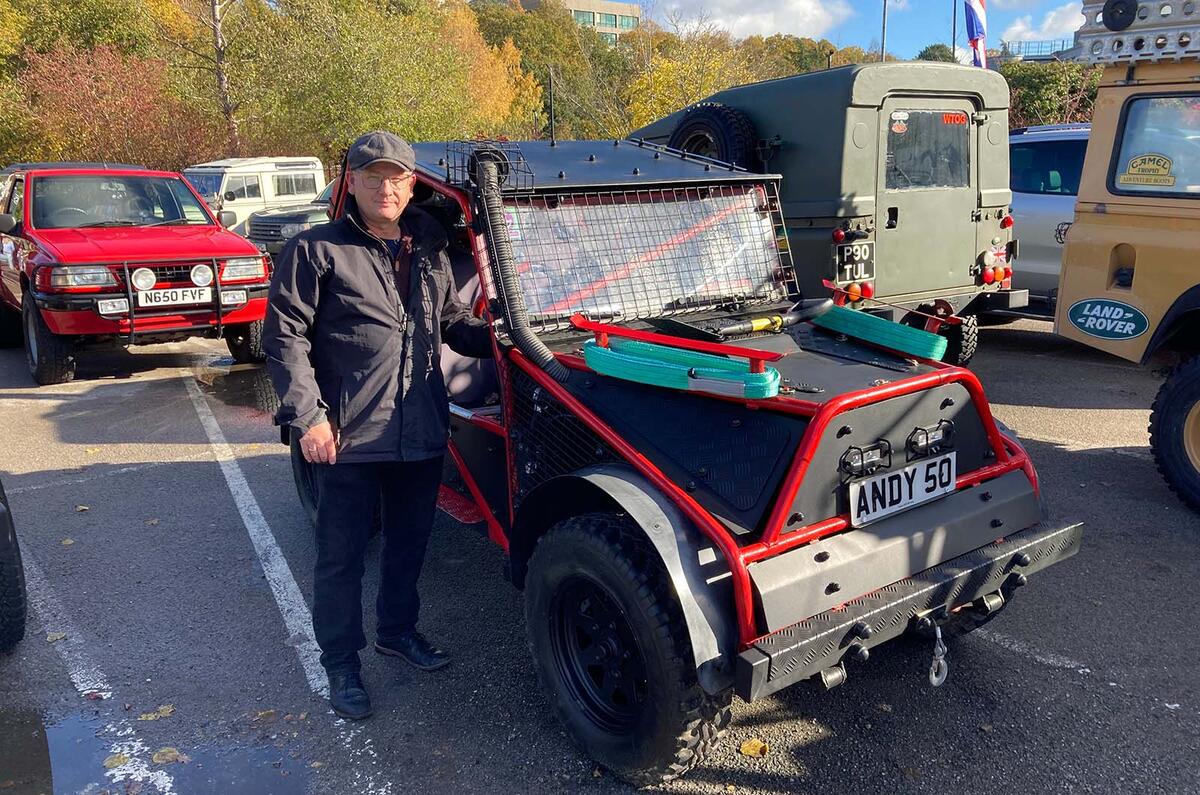
The descriptor "Frankenstein’s monster" is a powerful metaphor, evoking images of a creature assembled from disparate parts, unique and perhaps a little unsettling. In the context of Racher’s vehicle, it speaks to its unconventional assembly and its departure from recognizable automotive norms. However, unlike the fictional monster, Racher’s creation is likely a testament to ingenuity and a functional piece of engineering, albeit one that prioritizes form following function in a highly personal and adaptive manner.
The success of such a build lies not just in its visual impact but in its operational capabilities. For Racher and his father, the "result" is not just the assembled metal but the realization of a shared vision and the overcoming of numerous engineering hurdles. The inherent challenges in building a vehicle from scratch, especially one that deviates so significantly from established designs, require a deep understanding of mechanics, structural integrity, and problem-solving.
Broader Implications and Future Possibilities
The existence of vehicles like Racher’s custom Suzuki-based 4×4 highlights several key aspects of automotive culture and engineering:
- The Democratization of Design: While mass-produced vehicles are the norm, such projects demonstrate that with the right skills and resources, individuals can create highly personalized and functional machines.
- The Value of Hands-On Experience: The "making it up as we went along" approach underscores the importance of practical, on-the-ground problem-solving, which can often lead to more innovative solutions than purely theoretical design.
- The Enduring Appeal of Off-Roading: The robust nature of Suzuki vehicles and the adaptability of tubular steel fabrication cater to the persistent interest in off-road exploration and adventure.
- The Legacy of Collaborative Creation: The father-son aspect of this build adds a layer of emotional resonance, emphasizing the power of shared projects to create lasting legacies and foster strong bonds.
While the article provides a glimpse into the creation of this remarkable vehicle, further details about its performance, specific modifications, and any public appearances would offer a more complete picture. However, the narrative of Andy Racher and his father’s unique automotive endeavor stands as a compelling example of how passion, skill, and an unconventional approach can result in a truly one-of-a-kind machine that pushes the boundaries of what we expect from a vehicle. The Suzuki’s DNA may be present, but the resulting creature is entirely its own, a testament to the creative spirit and the enduring allure of the open road, or perhaps, the unpaved trail.