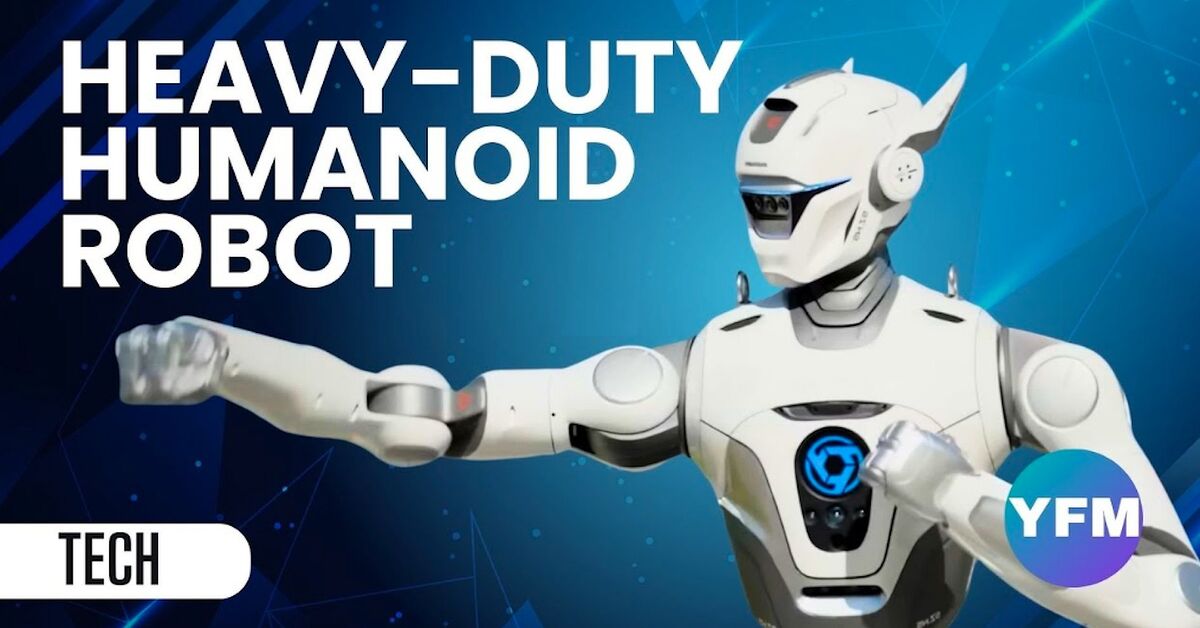
The world of robotics continues its relentless march towards a future once confined to the realms of science fiction, and the unveiling of the T800 by EngineAI marks a significant step in this evolution. This full-size humanoid robot, designed with a focus on robust strength, advanced mobility, and practical real-world applications, promises to redefine the capabilities of autonomous machinery in human-centric environments. Standing between 5.7 and 6 feet tall and weighing under 190 pounds, the T800 strikes a balance between imposing presence and maneuverability, making it a potentially versatile asset across a range of industries.
EngineAI’s T800 is not merely a technological curiosity; it represents a tangible advancement in the pursuit of robots that can seamlessly integrate into and augment human workflows. The company’s design philosophy appears to prioritize a blend of physical prowess and agility, crucial for tasks that require more than just static manipulation. Its dimensions suggest it can operate within spaces designed for human beings, navigating doorways, corridors, and workstations with relative ease. This consideration for human-scale environments is a critical differentiator in the practical deployment of advanced robotics.
Engineering for Performance and Durability
At the core of the T800’s capabilities lies its sophisticated engineering. The robot boasts over 40 degrees of freedom, a metric that quantifies the number of independent joints or movements it can execute. This extensive range of motion allows for remarkably flexible and human-like articulation of its arms, legs, and torso. Such fluidity is essential for performing complex tasks that require intricate coordination, balance, and adaptation to dynamic surroundings.
The structural integrity of the T800 is underpinned by an aluminum-alloy frame, chosen for its strength-to-weight ratio and inherent durability. This robust chassis is complemented by high-torque joints, enabling the robot to handle significant loads and perform demanding physical operations. This combination of a strong frame and powerful actuators suggests that the T800 is engineered not just for delicate manipulation but also for heavy-duty applications where resilience is paramount.
Powering this sophisticated system is a modular solid-state battery. EngineAI estimates an operational lifespan of 2 to 4 hours per charge, a figure that will naturally vary based on the intensity and nature of the workload. While this duration might seem modest compared to prolonged human work shifts, it is a common characteristic of advanced robotics and a key area for ongoing development. The modular design also implies potential for quick battery swaps, minimizing downtime and maximizing operational efficiency in industrial settings. The development of solid-state batteries in general has been a significant area of research, promising higher energy density, faster charging, and improved safety compared to traditional lithium-ion technologies. If EngineAI has indeed incorporated advanced solid-state battery technology, it would represent a further layer of innovation within the T800’s design.
Navigational Prowess and Application Potential
To navigate the complexities of real-world environments, the T800 is equipped with an array of advanced sensors, including lidar and vision systems. Lidar (Light Detection and Ranging) uses laser pulses to measure distances and create detailed 3D maps of its surroundings, enabling precise object detection and spatial awareness. Integrated vision sensors, likely comprising cameras and other optical devices, provide additional data for object recognition, environmental understanding, and path planning. This sophisticated sensor suite is crucial for autonomous operation, allowing the robot to perceive its environment, avoid obstacles, and execute tasks without constant human supervision.
Promotional materials and demonstrations have showcased the T800 performing dynamic, combat-style movements. While this may evoke images of its fictional namesake, EngineAI is clear in its positioning of the T800 for practical, non-military applications. The robot is being targeted towards industrial, logistics, and commercial sectors. This includes potential roles in warehousing, manufacturing assembly lines, material handling, and potentially even hazardous environment operations where human presence is undesirable or dangerous. The ability to perform dynamic movements, even if not explicitly for combat, suggests a high degree of adaptability that could be valuable in tasks requiring quick responses or intricate maneuvers.
A Nod to the Iconic, A Leap Towards the Practical
The choice of the "T800" moniker is an undeniable and likely intentional nod to the formidable antagonist from the Terminator film franchise. This branding strategy, while potentially controversial due to the fictional character’s destructive nature, effectively captures attention and highlights the robot’s perceived strength and advanced capabilities. However, EngineAI’s emphasis on industrial and commercial applications underscores a commitment to harnessing this technological prowess for productive and beneficial purposes. The stark contrast between the fictional doomsday machine and the real-world utility robot serves to emphasize the transformative potential of AI and robotics in enhancing human endeavors.
The historical context of robotics development reveals a trajectory from early mechanical automatons to increasingly sophisticated AI-driven systems. Initial advancements focused on repetitive tasks in controlled environments, such as early industrial robots on assembly lines. Over time, driven by breakthroughs in artificial intelligence, sensor technology, and computational power, robots have become more capable of independent decision-making, complex manipulation, and navigating unstructured environments. The T800 represents a contemporary manifestation of this ongoing evolution, pushing the boundaries of what humanoid robots can achieve in terms of physical capability and environmental interaction.
Broader Implications and Future Trajectory
The development and potential deployment of robots like the T800 carry significant implications for various sectors. In logistics and warehousing, such robots could automate inventory management, order picking, and material transportation, leading to increased efficiency, reduced labor costs, and faster fulfillment times. The manufacturing sector could see enhanced automation, with humanoid robots performing tasks that are currently too complex or dangerous for traditional robotic arms, or those requiring a degree of human-like dexterity.
Furthermore, the T800’s capabilities could extend to areas such as disaster response or infrastructure inspection in hazardous environments, where its mobility and strength could be invaluable for data collection and preliminary assessment. The question of human-robot collaboration will also become increasingly pertinent. As robots become more capable and integrated into workplaces, understanding how humans and robots can work together effectively and safely will be crucial. This includes addressing concerns about job displacement and the need for reskilling and upskilling the workforce to adapt to these new technological paradigms.
The timeline for large-scale real-world deployment of the T800 is still in its early stages. While promotional footage showcases impressive capabilities, transitioning from a controlled demonstration to widespread operational use involves numerous challenges. These include rigorous testing and validation, ensuring safety protocols are robust, addressing regulatory frameworks, and demonstrating cost-effectiveness for businesses. The long-term impact will depend on the robot’s reliability, its ability to adapt to diverse operational demands, and the ongoing advancements in AI and battery technology that will further enhance its performance and longevity.
EngineAI’s T800 is a compelling example of how the field of robotics is rapidly maturing, moving beyond specialized industrial applications towards more versatile and adaptable humanoid forms. While the name might conjure images of science fiction dystopia, the reality of this T800 points towards a future where advanced robotics can serve as powerful tools to augment human capabilities and drive progress across a multitude of industries. The journey from concept to widespread adoption is complex, but the emergence of robots like the T800 signals a tangible shift towards a more automated and technologically integrated future.