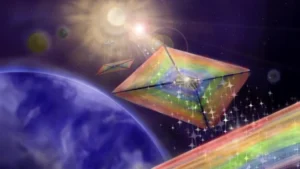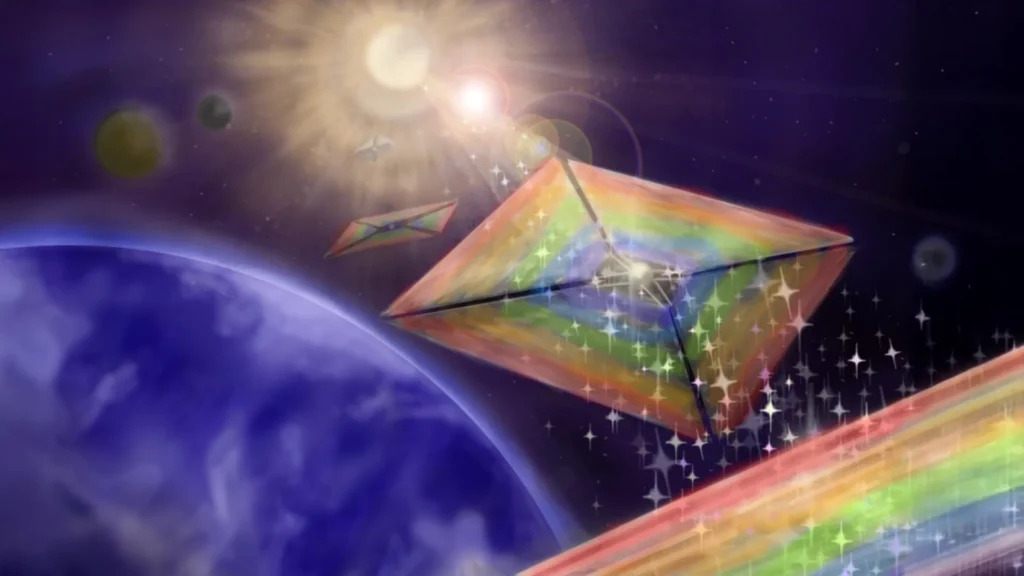
Reaching another star within a practical amount of time will require something far more capable than chemical rockets. While conventional chemical propulsion systems are sufficient for interplanetary travel within our solar system, the immense distances to even the nearest star systems render them impractical. For instance, a journey to Alpha Centauri, approximately 4.24 light-years away, would demand tens of thousands of years using current rocket technology – a timescale far exceeding any realistic mission duration for human or robotic probes. This profound challenge has propelled scientists and engineers to explore revolutionary propulsion concepts, with the solar sail emerging as one of the most promising candidates. Envisioned as a vast, ultralight reflective structure, a solar sail harnesses the momentum of photons, much like a conventional sailing ship catches the wind. If propelled by extremely powerful, ground-based lasers, these sails could theoretically accelerate to speeds well beyond what current propulsion systems can achieve, potentially reducing interstellar transit times to mere decades. However, recent research suggests that this ambitious vision may encounter an unexpected physical impediment once a lightsail begins traversing the cosmos at a significant fraction of the speed of light.
The Quest for Interstellar Flight: A Grand Challenge
The concept of using light for propulsion is not new, tracing its roots back to pioneering scientific minds. Johannes Kepler, in the 17th century, observed comet tails always pointing away from the sun and correctly inferred that sunlight exerted pressure. Centuries later, Konstantin Tsiolkovsky and Friedrich Zander, early 20th-century rocket scientists, further developed the theoretical underpinnings for solar radiation pressure as a means of spacecraft propulsion. Fast forward to the modern era, and projects like Breakthrough Starshot epitomize the contemporary drive for interstellar travel. This ambitious initiative, backed by figures like Yuri Milner and Stephen Hawking, proposes sending a fleet of gram-scale "nanocraft" equipped with lightsails to Alpha Centauri, propelled by colossal ground-based laser arrays generating up to 100 gigawatts of power. The goal is to accelerate these sails to 20% of the speed of light, potentially reaching the star system within approximately 20 years. Such endeavors highlight the critical need for propulsion systems capable of achieving relativistic velocities, making the detailed understanding of light-sail dynamics paramount.
Unveiling a Relativistic Roadblock: The Shen and Li Study
A new paper, published on the preprint server arXiv by researchers Chao Shen and Jiaze Li of the Harbin Institute of Technology, introduces a nuanced and potentially critical challenge to the relativistic solar sail concept. Their study posits that the very light used to propel the sail could, paradoxically, produce a drag effect once the spacecraft attains a substantial fraction of the speed of light. This finding introduces a new layer of complexity to the already formidable engineering and physics challenges associated with interstellar flight. The Harbin Institute of Technology, renowned for its strong focus on aerospace engineering, materials science, and physics, provides a credible institutional backdrop for such advanced theoretical research, which often precedes experimental validation in the field of space exploration.
The Mechanics of Light Propulsion: A Refresher
To understand the researchers’ findings, it’s essential to first grasp how light propels a solar sail at lower, non-relativistic speeds. Shen and Li categorize the forces exerted by photons striking a solar sail into three primary contributions:
- Incident Light: This is the strongest contribution, stemming directly from the raw momentum of photons as they initially strike the sail’s surface. Each photon carries a tiny amount of momentum, and when billions upon billions of them bombard a reflective surface, their cumulative effect generates a measurable thrust.
- Specular Reflection: When photons bounce perfectly off the sail’s surface, they impart additional momentum. This is akin to a billiard ball hitting a cushion; the change in the photon’s direction of motion transfers momentum to the sail. Highly reflective materials are designed to maximize this effect.
- Diffuse Scattering: This is the weakest contribution. It occurs when photons are absorbed by the sail material and then re-emitted in random directions. While some momentum is still transferred, the randomness of re-emission makes this component less efficient for directed thrust compared to specular reflection.
At relatively low speeds, these three effects uniformly contribute to pushing the sail forward, providing the necessary acceleration. However, the situation becomes significantly more intricate once the spacecraft begins to approach relativistic velocities – speeds that are a considerable fraction of the speed of light (approximately 299,792,458 meters per second in a vacuum).
The Doppler Effect’s Diminishing Returns
As the lightsail accelerates and races away from its laser source, the incoming light experiences an increasingly pronounced Doppler shift. The Doppler effect, familiar from the changing pitch of a siren as it moves towards or away from an observer, applies equally to electromagnetic waves like light. As the source (the laser) and the observer (the sail) move apart at high speeds, the frequency of the incoming light decreases, causing a "redshift."
The energy of a photon is directly proportional to its frequency (E = hf, where ‘h’ is Planck’s constant and ‘f’ is frequency). A decrease in frequency, therefore, means a decrease in the energy of individual photons. Since momentum is also related to energy (p = E/c for photons, where ‘c’ is the speed of light), a reduction in photon energy translates directly to a reduction in the momentum each photon carries. Consequently, the thrust produced by all three components – incident light, specular reflection, and diffuse scattering – diminishes. The laser’s ability to impart momentum to the sail becomes progressively less efficient. This means that continued acceleration requires increasingly more power from the laser source to maintain the same rate of speed increase. The faster the sail travels, the harder it becomes for the laser to effectively keep increasing its speed. This relativistic weakening of thrust represents the first major challenge identified by Shen and Li.
Relativistic Aberration and the Onset of Drag
The situation undergoes an even more dramatic transformation once the lightsail reaches approximately 75% of the speed of light. At this velocity, another fundamental phenomenon of special relativity becomes critically important: relativistic light aberration.
Light aberration describes how the apparent direction of light changes based on the relative motion of the observer. Imagine standing in the rain: if you stand still, the rain appears to fall straight down. If you run, the rain appears to come from ahead of you. Similarly, as the lightsail hurtles through space at relativistic speeds, the incoming laser light, from the sail’s perspective, appears to come from a slightly different direction than it would for a stationary observer.
Crucially, the Shen and Li study highlights how this effect impacts diffusely scattered light. For a stationary observer on Earth, the light that is diffusely scattered by the sail (absorbed and re-emitted in random directions) begins to be directed forward, specifically towards the direction in which the sail is traveling. This is where the unexpected drag effect manifests. According to Newton’s third law of motion – for every action, there is an equal and opposite reaction – radiation directed forward must produce a force in the opposite direction. This means that the diffusely scattered light, which at lower speeds contributed weakly to forward thrust, begins to act as a drag force once the sail surpasses roughly 75% of the speed of light.
While diffuse scattering is admittedly the weakest of the three forces contributing to propulsion, its reversal into a drag force significantly impacts the overall efficiency of the propulsion system. The laser is still pushing the sail forward due to the dominant effects of incident and specularly reflected light, so the total force on the sail does not become negative, meaning the sail won’t slow down due to this effect alone. However, the net forward thrust is substantially reduced, making further acceleration even more challenging and power-intensive. This finding necessitates a recalculation of the power requirements and mission profiles for future interstellar probes.
Implications for Interstellar Mission Design
The findings by Shen and Li have profound implications for the design and planning of future interstellar missions utilizing laser-driven lightsails. Understanding these relativistic effects is not merely an academic exercise; it is fundamental to the engineering reality of sending a probe to another star.
Recalibrating Acceleration Profiles
Mission designers will need to account for the diminished efficiency caused by the Doppler effect and the onset of relativistic drag from diffuse scattering. This means that achieving target velocities, such as the 0.2c (20% of the speed of light) proposed by Breakthrough Starshot, will require even more powerful laser arrays or longer acceleration phases than initially calculated based on non-relativistic models. The acceleration profile of the sail will not be linear; it will become increasingly difficult to add speed as the sail approaches relativistic velocities. Engineers might need to optimize the laser power delivery schedule, perhaps using higher power in the initial acceleration phases and then carefully managing the power output as the drag effects become more prominent. This could also influence the optimal "turn-off" point for the laser, after which the sail would coast, relying on its accumulated momentum.
The Broader Relativistic Environment
It is important to note that the Shen and Li study focuses specifically on radiative dynamics. For simplicity, it models the lightsail as an idealized mirror and deliberately excludes several other complex factors that real solar sails would encounter in the interstellar medium:
- Non-radiative effects: This includes collisions with interstellar gas and dust. Even in the vacuum of space, the interstellar medium is not entirely empty; it contains sparse hydrogen and helium atoms, dust grains, and cosmic rays. At relativistic speeds, even these tiny particles can become dangerous projectiles, causing erosion or damage to the sail, and contributing their own form of drag.
- Thermal limits: A real sail exposed to an extremely powerful, multi-gigawatt laser beam would experience immense thermal loads. Sail materials would need to withstand temperatures that could potentially cause overheating, structural degradation, or even melting. The thermal management of such a sail is a critical engineering challenge, requiring materials with extremely high melting points and excellent radiative cooling properties.
- Spacetime curvature: For interstellar distances, particularly across vast cosmological scales, the curvature of spacetime (as described by Einstein’s theory of general relativity) could also have subtle effects on trajectory and travel time, though for travel within our galactic neighborhood, special relativistic effects are generally more dominant.
These additional factors underscore the immense complexity of interstellar flight and highlight that the Shen and Li paper addresses only one, albeit crucial, piece of a much larger puzzle.
Addressing the Challenges: The Role of Advanced Materials
The challenges identified by Shen and Li are not insurmountable but necessitate a concentrated effort in materials science and advanced engineering.
Beyond Idealized Mirrors: Metamaterials and Photonic Crystals
The study simplifies the lightsail as an idealized mirror. However, real spacecraft would undoubtedly employ much more sophisticated materials. Engineers are actively investigating advanced metamaterials and photonic crystals specifically designed for interaction with particular laser wavelengths. These cutting-edge materials possess engineered structures at the nanoscale that allow for unprecedented control over light. For instance, they could be designed to maximize specular reflection while minimizing diffuse scattering, thereby reducing the drag effect identified by Shen and Li.
Intriguingly, such advanced materials might even be engineered to take advantage of the aberration effects described in the study. By carefully designing the reflective properties of the sail’s surface, these materials could potentially help a lightsail automatically correct its orientation and stabilize its trajectory. Imagine a sail that inherently adjusts its reflectivity or phase response in different regions to maintain its position within the laser beam, even as it experiences relativistic aberration. This self-correcting capability would be invaluable for maintaining a stable and efficient acceleration path over vast distances. Materials like graphene, with its exceptional strength-to-weight ratio and tunable optical properties, or dielectric mirrors with many layers optimized for specific wavelengths, are at the forefront of this research.
Thermal Management: A Critical Hurdle
The thermal limits of sail materials remain a significant practical hurdle. A laser beam powerful enough to accelerate a sail to 0.2c would generate immense heat. Materials currently under consideration, such as aluminum, silicon carbide, or diamond-like carbon, have melting points ranging from thousands of degrees Celsius. The challenge lies in creating sails that are both ultralight and capable of radiating away this intense heat efficiently, without distorting or degrading. Innovations in thin-film technology, radiative cooling coatings, and even active cooling systems (if weight permits) will be crucial for the survival of the sail during its acceleration phase.
Expert Perspectives and Future Outlook
While Shen and Li’s paper doesn’t include direct quotes, the implications of their findings suggest a cautious but determined approach from the scientific community. Researchers involved in projects like Breakthrough Starshot would likely acknowledge these relativistic effects as expected complexities, emphasizing that theoretical models continually refine our understanding of such ambitious endeavors. The study serves as a critical data point, reinforcing the notion that interstellar flight is a multi-generational scientific and engineering challenge, requiring a meticulous understanding of every conceivable physical interaction.
"This research underscores that pushing the boundaries of physics for interstellar travel means confronting effects that are negligible at terrestrial speeds but become dominant at relativistic velocities," an expert in advanced propulsion, who wished to remain anonymous due to not being directly involved in the study, might comment. "It’s not a showstopper, but a crucial piece of the puzzle that informs our material science and mission planning efforts. Every new insight, even one that highlights a challenge, brings us closer to a realistic roadmap for reaching the stars."
A Stepping Stone to the Stars
A fully operational interstellar solar sail remains a distant prospect, a testament to the colossal scale of the undertaking. The journey across interstellar distances introduces a myriad of additional complications, from navigating through uncharted stellar neighborhoods to ensuring the longevity and autonomy of a probe over decades.
Even so, the work of Chao Shen and Jiaze Li, published on arXiv, represents an important step in mapping out the complex physics governing such journeys. By elucidating these high-speed effects, particularly the nuanced interplay of light and relativistic motion, their research contributes vital data to the ongoing effort to determine how such spacecraft might eventually work. If humanity is someday to send a probe to another star, whether for scientific exploration or as a testament to our enduring curiosity, engineers will need a detailed and comprehensive understanding of every force – propulsive or resistive – that could affect its journey. The path to the stars is long and fraught with challenges, but each theoretical breakthrough and technological advancement brings that distant dream a little closer to reality.