The Vauxhall Mokka GSE represents a significant departure for the popular electric crossover, transcending its role as a mere aesthetic enhancement of the standard Mokka Electric. While subtle visual cues hint at its more potent nature, the true transformation of the Mokka GSE lies beneath the surface, meticulously engineered to deliver a driving experience far removed from its conventionally styled brethren. This focus on dynamic capability suggests the GSE could emerge as a potent "Q-car" – a vehicle with understated looks but formidable performance, capable of surprising unsuspecting road users.
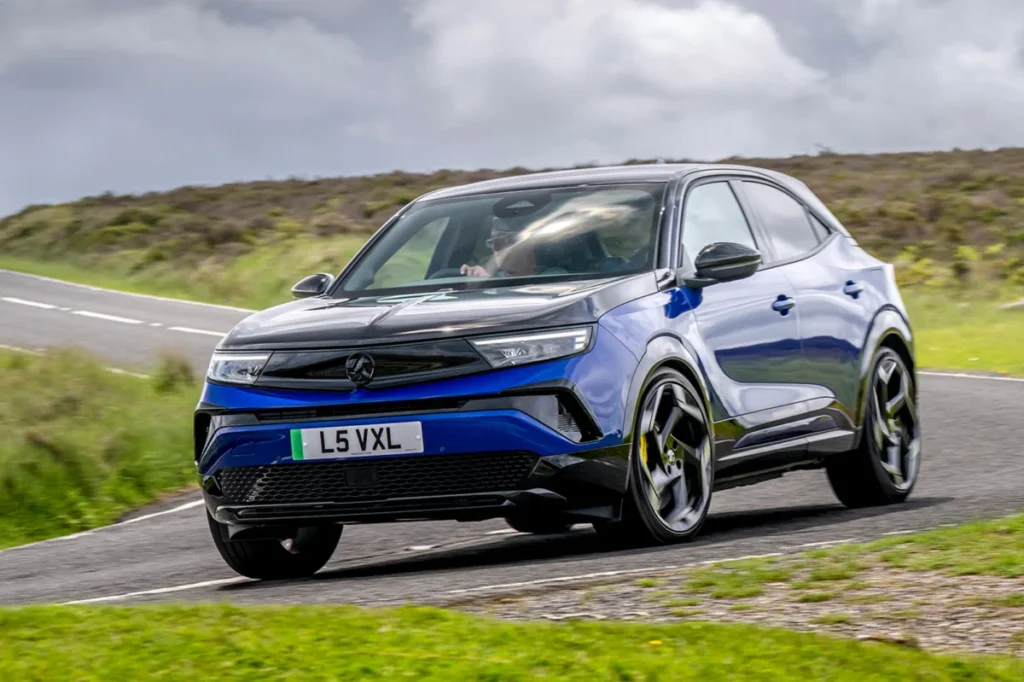
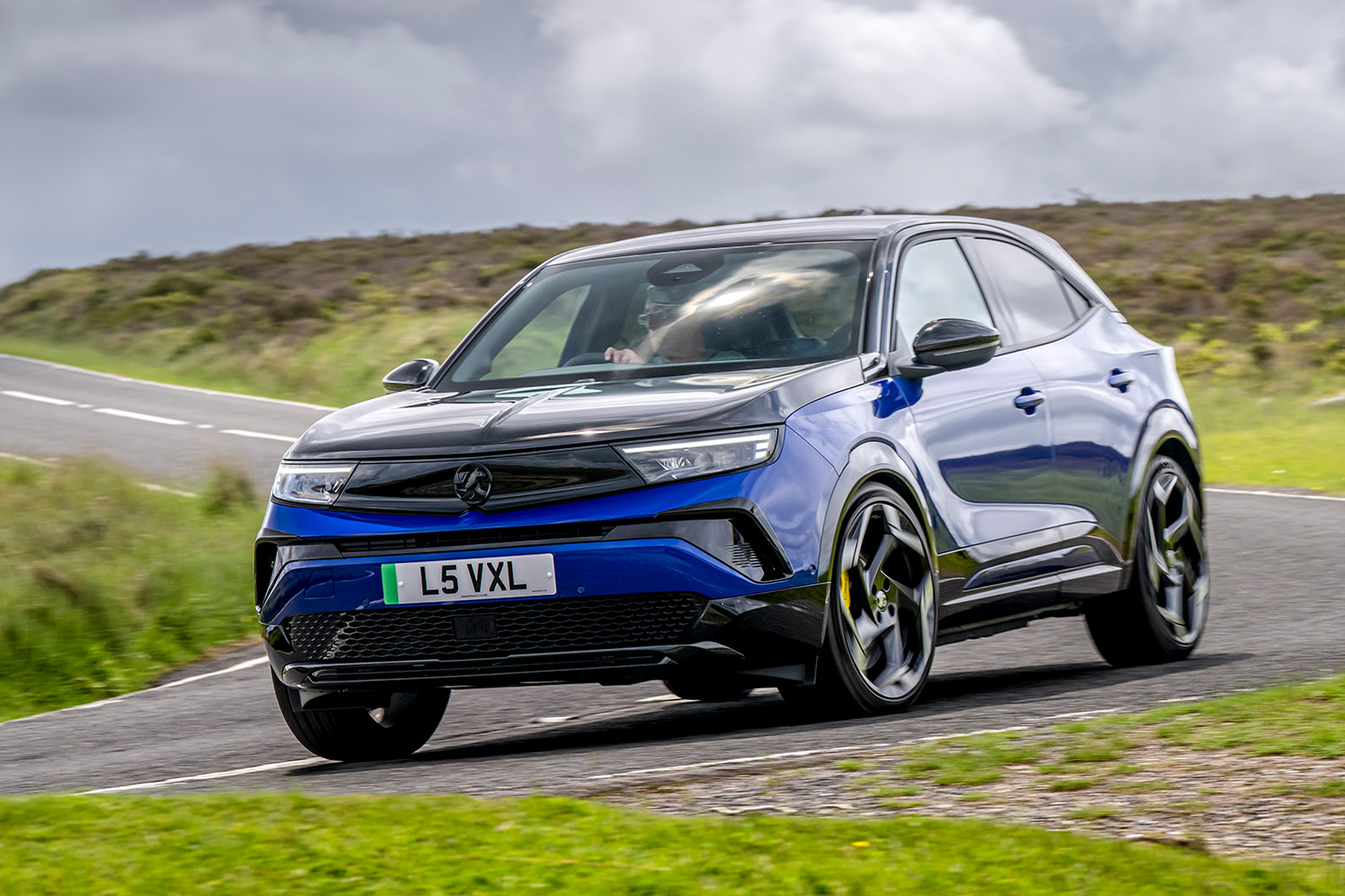
The exterior modifications, while not overtly aggressive, are indicative of the enhanced performance on offer. A closer inspection by discerning enthusiasts will reveal fatter bumpers, redesigned grilles, and striking 20-inch alloy wheels. These wheels are notably fitted with a healthy degree of negative camber, a characteristic often associated with performance-oriented hot hatches and performance crossovers, contributing to a more planted and aggressive stance on the road. These visual cues, while understated, are clear indicators to those in the know that this is no ordinary Mokka Electric.
Further external detailing includes vibrant yellow flashes and prominent GSE badging, signaling its sporting intent. A standard black roof, which can be omitted at no additional cost, contributes to a more contemporary and athletic silhouette. For an additional £250, a contrasting black bonnet can be specified, a design element that evokes the spirit of classic Opel and Vauxhall rally cars, adding a touch of heritage and motorsport flair to the modern electric package. These visual enhancements, though subtle, serve to differentiate the GSE from its standard counterpart, providing a visual prelude to the mechanical enhancements that define its performance.
The most significant advancements in the Mokka GSE are not immediately apparent, residing deep within its chassis and suspension architecture. The GSE rides on larger wheels than the standard Mokka Electric, complemented by a suspension system that has been lowered by 10 millimetres. This reduction in ride height contributes to a lower centre of gravity, a fundamental principle in improving vehicle dynamics and reducing body roll.
The engineers have implemented substantial revisions to the spring rates, with a notable increase of 49% at the front and 35% at the rear. These stiffer springs are crucial in controlling body movements during dynamic driving manoeuvres, such as cornering and braking. Complementing these spring revisions is the introduction of a Torsen locking front differential. This sophisticated mechanical component offers a 36% lock-up under acceleration and 34% under braking, effectively distributing torque between the front wheels to maximize traction and reduce the likelihood of wheel spin. This is a significant upgrade, particularly for an electric vehicle where instant torque delivery can often overwhelm the front axle.
The rear suspension has also undergone a substantial upgrade. A new 30.8mm anti-roll bar has been fitted to the torsion-beam rear suspension. This significantly stiffer bar increases rear roll stiffness by an impressive 189%. When combined with the aforementioned front suspension stiffening, the overall roll stiffness of the Mokka GSE is increased by 48%. This holistic approach to suspension tuning aims to create a more cohesive and controlled driving experience, minimizing body lean and enhancing responsiveness through corners.
Further enhancing the front suspension’s capabilities, the Mokka GSE features new knuckles on its MacPherson strut system. While these are not as advanced as the ‘Hiperstrut’ technology found in performance models like the old Astra VXR, which were specifically designed to combat torque steer, they serve a crucial purpose in the GSE’s design. These redesigned knuckles are lighter and are engineered to provide sufficient clearance for the larger wheels within the lowered bodywork. Crucially, they also increase the Ackermann angle, which governs how the wheels turn in relation to each other during a turn. This adjustment allows the wheels to turn further, a critical factor in maintaining a tight turning circle. Despite the performance-oriented modifications, the Mokka GSE retains a respectable 10.41-meter turning circle, ensuring urban maneuverability remains uncompromised. This intricate engineering, reminiscent of the detailed suspension discussions from the mid-2000s, underscores Vauxhall’s commitment to delivering a genuinely engaging driving experience.
The steering system has also been re-engineered to complement the chassis enhancements. The Mokka GSE features a new steering rack with a more direct 14.5:1 ratio, a noticeable reduction from the 16.2:1 ratio found in the standard Mokka. This sharper ratio translates to quicker steering responses, allowing the driver to make more precise inputs. The steering now requires just 2.7 turns between full lock, further contributing to the feeling of agility and responsiveness.
Braking performance has been significantly upgraded to match the enhanced dynamic capabilities. The Mokka GSE is equipped with substantial 380mm ventilated front discs, paired with 268mm rear discs. A particularly noteworthy feature for performance enthusiasts is the elimination of regenerative braking when the vehicle is set to its sportiest of three drive modes. This deliberate choice aims to replicate the feel and feedback of a traditional internal combustion engine performance car, providing a more consistent and predictable brake pedal response. This approach to brake pedal tuning is a trait shared with ultra-high-performance vehicles such as the Lotus Evija hypercar, highlighting Vauxhall’s ambition to elevate the Mokka GSE’s driving credentials.
The choice of tyres plays a critical role in a vehicle’s performance, and the Mokka GSE is fitted as standard with 225/40 Michelin Pilot Sport EV tyres. These performance-oriented tyres are designed to offer optimal grip and handling characteristics for electric vehicles. For those seeking an even more engaging driving experience, Goodyear Eagle F1 tyres are available as a £100 option. Interestingly, the tyre choices have a marginal impact on the vehicle’s official range, with the standard Michelins offering a WLTP range of 201 miles, extending to 209 miles with the optional Goodyears. This subtle increase in range underscores the delicate balance between performance and efficiency in the electric vehicle landscape.
Beyond the dynamic enhancements, the Mokka GSE retains core electric vehicle attributes. It is equipped with a 54kWh (total) battery pack, capable of accepting DC fast charging at a rate of up to 100kW. While this charging speed is not at the cutting edge of current EV technology, which can exceed 250kW, it remains competitive within its segment and is comparable to rivals such as the Alpine A290. A 10-80% charge is estimated to take approximately 30 minutes under optimal conditions, a timeframe that facilitates convenient long-distance travel and minimizes downtime. This blend of performance-focused engineering with practical EV charging capabilities positions the Mokka GSE as a compelling option for those seeking a versatile and engaging electric vehicle.
The development of the Mokka GSE likely stems from Vauxhall’s strategic push to expand its electric vehicle portfolio and cater to a broader range of consumer preferences. As the automotive industry accelerates its transition to electrification, manufacturers are increasingly recognizing the demand for performance-oriented EVs that don’t compromise on driving pleasure. The GSE designation, historically associated with Vauxhall’s performance models, signals a deliberate effort to imbue the Mokka with a sportier character, building upon the success of its more conventional electric variant.
This move also aligns with a broader trend in the automotive market, where performance SUVs and crossovers are gaining popularity. By offering a high-performance electric version of its compact SUV, Vauxhall aims to capture a segment of the market that might otherwise look towards traditional internal combustion engine performance vehicles or more established performance EV brands. The emphasis on handling and driver engagement, rather than outright power figures alone, suggests a strategic approach to differentiate the Mokka GSE in a competitive landscape.
The technical specifications highlight a significant engineering effort. The substantial increases in spring rates and anti-roll bar stiffness, coupled with the Torsen differential, are indicative of a chassis tuned for agility and responsiveness. The choice of larger wheels and lower suspension, while enhancing the visual appeal, also contributes to a wider track width and a more dynamic footprint. The increased Ackermann angle, a seemingly minor detail, is crucial for maintaining a manageable turning radius despite the wider track and larger wheels, demonstrating a holistic approach to vehicle dynamics.
The decision to omit regenerative braking in sport mode is a particularly interesting one, reflecting a desire to provide a more traditional driving feel. This move acknowledges that while EVs offer inherent advantages in terms of instant torque and efficiency, some drivers still value the nuanced feedback and control offered by conventional braking systems. This nuanced approach to powertrain and braking calibration suggests Vauxhall is attempting to bridge the gap between the perceived advantages of EV technology and the ingrained preferences of performance car enthusiasts.
The tyre choices, while seemingly straightforward, also carry implications. The standard Michelin Pilot Sport EVs are designed to balance performance with the specific demands of electric vehicles, including rolling resistance and tread wear. The optional Goodyear Eagle F1s suggest a further step up in outright grip, potentially appealing to more demanding drivers. The slight range variation between the two highlights the ongoing challenge of optimizing EV performance without compromising efficiency.
From a market perspective, the Mokka GSE could serve as a halo model for Vauxhall’s electric range, demonstrating the brand’s capability to produce engaging and dynamic EVs. Its success could pave the way for further performance-oriented electric models in the future. The pricing strategy for the GSE will be a critical factor in its market reception. If positioned competitively, it could attract a significant customer base looking for a blend of practicality, style, and spirited driving dynamics in an electric package.
The implications of the Mokka GSE extend beyond its immediate market segment. It signifies a maturation of electric vehicle technology, moving beyond purely efficiency-focused applications to embrace performance and driving enjoyment. As battery technology continues to advance and charging infrastructure expands, the development of performance EVs like the Mokka GSE will likely become more prevalent, offering consumers a wider array of choices that cater to diverse driving needs and desires. The integration of sophisticated chassis and suspension tuning, once the exclusive domain of performance internal combustion engine vehicles, is now a key differentiator in the electric vehicle market, and the Mokka GSE appears poised to capitalize on this trend.