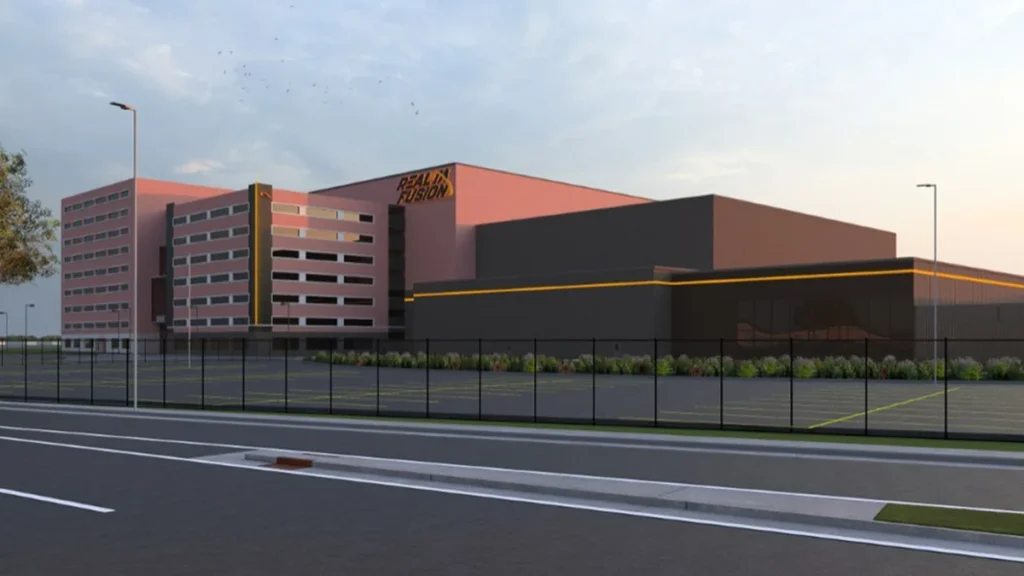
Wisconsin has formalized a substantial commitment of up to $55 million in incentives, successfully securing Realta Fusion’s new headquarters and a cutting-edge fusion research facility in Madison. This strategic investment marks a pivotal moment for the state, positioning it at the forefront of the burgeoning global fusion energy industry and reinforcing its ambition to become a significant hub for advanced energy technologies. The multi-faceted funding package is designed to facilitate the development of "The Realta Forge," a state-of-the-art facility situated at OM Station, the revitalized site of the former Oscar Mayer plant. Here, Realta Fusion plans to construct its prototype magnetic mirror fusion machine, known as Hammir, a critical step towards demonstrating the commercial viability of its fusion approach. This ambitious undertaking is projected to generate over 600 new technical and non-technical jobs, providing a significant boost to Wisconsin’s high-tech employment landscape.
The decision by Realta Fusion to establish its foundational facility in Wisconsin represents a culmination of an extensive evaluation process. The company meticulously assessed potential locations across several states, including Illinois, New Jersey, New Mexico, and Tennessee, before ultimately choosing to remain in its home state where it was founded. This decision underscores the effectiveness of Wisconsin’s proactive economic development policies and its commitment to fostering an environment conducive to pioneering scientific and technological advancements. The incentive package itself is comprehensive, comprising approximately $37.5 million in state sales and use tax exemptions, up to $15 million in performance-based enterprise zone tax credits from the Wisconsin Economic Development Corporation (WEDC), and an additional $2.8 million in tax increment financing (TIF) from the City of Madison. This layered approach demonstrates a collaborative effort across state and local government entities to attract and retain high-value enterprises.
The Promise of Fusion Energy and Realta’s Vision
Fusion energy, often heralded as the "holy grail" of clean energy, holds immense promise for addressing global energy demands without the environmental drawbacks of conventional power sources. Unlike nuclear fission, which splits heavy atomic nuclei to release energy, fusion involves combining light atomic nuclei, typically isotopes of hydrogen, under extreme temperatures and pressures. This process, which powers the sun and stars, releases vast amounts of energy with virtually no long-lived radioactive waste and, crucially, no carbon emissions during operation. The primary fuel sources for fusion, deuterium and tritium, can be derived from seawater and lithium, respectively, offering an almost inexhaustible energy supply. However, achieving controlled, sustained fusion on Earth presents formidable scientific and engineering challenges, primarily centered around confining superheated plasma at temperatures exceeding 100 million degrees Celsius.
Realta Fusion’s approach to this grand challenge is based on the magnetic mirror concept, a distinct method of plasma confinement compared to the more widely known tokamak or stellarator designs. The company’s CoSMo fusion systems utilize sophisticated magnetic fields to create a "mirror" effect, trapping the high-temperature plasma and preventing it from interacting with the reactor walls. This innovative design aims for a more compact and potentially more efficient fusion reactor. The Hammir prototype, slated for construction at The Realta Forge, will be instrumental in validating Realta’s specific magnetic mirror configuration and demonstrating its capability to achieve the necessary plasma conditions for energy generation, paving the way for future commercial deployment. The success of such a prototype would mark a significant milestone in the global quest for practical fusion power.
A Strategic Site for Innovation: The Realta Forge at OM Station
The selection of OM Station as the location for "The Realta Forge" carries significant symbolic and practical weight. The former Oscar Mayer meatpacking plant, a historic industrial landmark in Madison, is undergoing a substantial redevelopment to transform it into a vibrant mixed-use district. This revitalization project aims to breathe new life into an iconic site, fostering a modern innovation hub. Realta Fusion’s commitment to OM Station aligns perfectly with the broader vision for the site, converting a legacy industrial footprint into a beacon of future energy technology. The facility, once completed, will not only serve as Realta’s corporate headquarters but also as a dedicated research and development center, providing an advanced ecosystem for engineers, scientists, and technicians to push the boundaries of compact magnetic mirror fusion technology.
Kieran Furlong, Realta CEO, articulated the strategic nature of their location choice, stating, "We spent the better part of the past two years searching across the country to find the most favorable business environment and the most attractive site to build our R&D facility, and we found it in our own backyard." This sentiment underscores the competitive landscape for attracting high-tech industries and highlights Wisconsin’s successful efforts in presenting a compelling case. The company expects to break ground on the facility before the end of the year, signaling an aggressive timeline for project initiation and a commitment to rapid progress in fusion energy development.
Wisconsin’s Proactive Legislative and Economic Development Framework
Wisconsin’s success in attracting Realta Fusion is not merely a matter of financial incentives but is deeply rooted in a forward-thinking legislative framework. Earlier this year, Wisconsin made history with the passage of Act 165, becoming the first standalone state law in the United States to exempt capital expenditures on fusion energy projects from state sales tax. This landmark legislation sends a clear signal to the emerging fusion industry that Wisconsin is committed to fostering its growth and is willing to enact specific policies to reduce the financial burden on companies pioneering next-generation energy technologies. This legislative innovation positions Wisconsin as a leader in creating a supportive regulatory environment for advanced energy, potentially serving as a model for other states looking to attract similar high-tech investments.
Governor Tony Evers emphasized the multifaceted benefits of this strategic direction, stating, "Fusion energy is not only good for our planet and our power grid, but it plays to all of our strengths as a state with our world-class research universities, research laboratories, and an incredible manufacturing and supply chain network supported by our dedicated and highly skilled workforce." This statement encapsulates Wisconsin’s holistic approach, recognizing that a robust innovation ecosystem requires not only financial incentives and favorable legislation but also a strong foundation of academic excellence, industrial capabilities, and a skilled labor pool. The presence of institutions like the University of Wisconsin-Madison, a renowned research powerhouse, provides a natural synergy for Realta Fusion, offering potential collaborations and a pipeline of talent.
The local contribution from the City of Madison, specifically the $2.8 million in tax increment financing, is particularly noteworthy. This TIF package, tied directly to job creation metrics at the OM Station redevelopment, is the city’s first such incentive for private-sector job creation in a decade. This signifies Madison’s strong commitment to economic growth and its willingness to utilize sophisticated financial tools to stimulate local employment and foster innovation within its urban core. The city’s investment demonstrates a belief in the long-term economic returns and the prestige associated with hosting a leading fusion energy company.
Broader Impact and Implications for Wisconsin and the Nation
The establishment of The Realta Forge in Madison is poised to have profound economic, technological, and environmental implications, not just for Wisconsin but potentially for the broader national landscape of clean energy development. Economically, the creation of over 600 technical and non-technical jobs will provide high-skilled employment opportunities across various disciplines, including advanced engineering, physics, materials science, manufacturing, and administrative support. This influx of talent and capital will stimulate local economic activity, generate tax revenues, and potentially attract ancillary businesses and suppliers, further solidifying a regional innovation cluster. The revitalization of OM Station itself is a testament to the transformative power of such projects, turning former industrial sites into engines of future growth.
Technologically, this project reinforces Wisconsin’s position as a burgeoning hub for advanced research and development. By hosting a leading-edge fusion facility, the state will draw attention from other innovative companies and researchers, fostering a dynamic environment for scientific exchange and collaboration. Realta Fusion’s success could inspire further investment in related fields, from advanced materials to control systems and high-power electronics, creating a diversified high-tech sector. Dominick Bindl, Realta VP of Technical Development, highlighted the significance, remarking, "In terms of cash today, avoided costs tomorrow, and accelerating progress, this is the most impactful state-supported fusion deal ever done in the United States." This bold claim underscores the perceived value and strategic importance of Wisconsin’s commitment.
Environmentally, Realta Fusion’s work contributes directly to the global imperative of decarbonization. The successful development and commercialization of fusion energy could provide a virtually limitless, clean, and safe power source, dramatically reducing reliance on fossil fuels and mitigating climate change. While fusion remains a long-term endeavor with inherent scientific and engineering challenges, every step forward, such as the construction of the Hammir prototype, brings humanity closer to realizing this transformative energy future.
Looking ahead, Realta Fusion’s facility will serve as the epicenter for the advancement of its magnetic mirror fusion technology. The journey from prototype demonstration to commercial deployment is lengthy and capital-intensive, but the initial commitment from Wisconsin provides a crucial foundation. The project’s success could establish Wisconsin as a model for how states can proactively leverage policy and economic incentives to cultivate leadership in critical emerging technologies, driving both local prosperity and national energy security. The collaboration between government, industry, and academia in Wisconsin exemplifies a forward-thinking approach to innovation, setting the stage for a new era in clean energy.