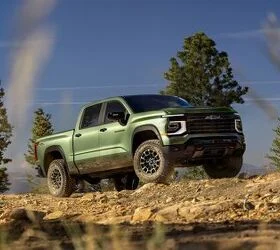
The automotive landscape for full-size pickup trucks is on the cusp of a significant transformation with the highly anticipated arrival of the 2027 Chevrolet Silverado and GMC Sierra. General Motors has signaled a substantial overhaul of its flagship truck offerings, introducing a pair of all-new Small Block V8 engines and a revamped TurboMax four-cylinder. However, in a move that has generated considerable discussion among industry observers and truck enthusiasts, the automaker appears poised to retain the proven 3.0-liter I6 LZ0 turbodiesel Duramax engine without any power or torque enhancements. While GM has maintained a measured silence regarding the specific future of its oil-burner, leaked figures and industry insights paint a clear picture of its unchanged status for the upcoming model year.
Duramax Diesel: A Tale of Consistency Amidst Change
According to sources closely aligned with GM’s product development, the 2027 iterations of the Silverado and Sierra will continue to feature the robust 3.0-liter I6 LZ0 turbodiesel Duramax engine. The reported output figures are identical to those of the current 2026 model year: a formidable 305 horsepower generated at 3,750 rpm and a substantial 495 lb-ft of torque delivered at 2,750 rpm. These specifications, first unveiled for the 2020 model year and subsequently refined with the LZ0 designation, have consistently placed the Duramax as a highly capable and sought-after powertrain option.
The implications of this carryover are noteworthy. In an environment where manufacturers often strive to showcase incremental improvements across their entire engine lineups with each model refresh or redesign, the decision to maintain the diesel’s existing performance metrics suggests a strategic confidence in its current capabilities. While the headline-grabbing announcements for the 2027 models are likely to focus on the fresh gasoline V8s and the enhanced TurboMax, the Duramax diesel is expected to continue its role as a workhorse, prioritizing its established strengths.
Powertrain Evolution: Gasoline’s Grand Entrance
The decision to retain the diesel’s current output stands in stark contrast to the significant evolutionary leaps planned for the gasoline engine options. The outgoing 2026 Silverado 1500 lineup currently comprises four distinct engine choices: the turbocharged 2.7-liter I4 L3B TurboMax (310 hp, 430 lb-ft), the naturally aspirated 5.3-liter V8 L84 (355 hp, 383 lb-ft), the naturally aspirated 6.2-liter V8 L87 (420 hp, 460 lb-ft), and the aforementioned LZ0 Duramax diesel.
For the 2027 model year, GM is retiring the well-regarded 5.3-liter L84 and the potent 6.2-liter L87 V8 engines. These will be replaced by an entirely new generation of Small Block V8s, designated as Gen 6. The initial offerings in this new V8 family include a 5.7-liter V8 under the RPO code L76 and a larger 6.6-liter V8 badged as L78. Both of these RPO codes represent a return to familiar nomenclature within GM’s V8 history, signaling a commitment to the heritage of its iconic engine architectures.
GM has already made bold claims regarding the L78, asserting it will be "the most powerful naturally aspirated V8 in the full-size pickup segment." While specific horsepower and torque figures for the L78 have yet to be officially released, industry speculation, as reported by outlets like GM Authority, suggests that GM’s pronouncements likely point to an output exceeding 470 horsepower. This positions the L78 as a significant upgrade for truck buyers prioritizing raw, naturally aspirated V8 power. Furthermore, the TurboMax four-cylinder engine is also slated to receive enhancements for the new generation, indicating GM’s ongoing commitment to optimizing its turbocharged offerings for both performance and efficiency.
Diesel’s Unwavering Dominance in Towing and Torque
The prevailing narrative surrounding the 2027 Silverado and Sierra powertrain updates is one of contrast: the gasoline engines are set for dramatic performance enhancements, while the diesel engine is expected to maintain its current, highly competitive, standing. This strategy is rooted in the fundamental strengths and target demographics of each powertrain.
The LZ0 Duramax diesel has, since its introduction, been lauded for its exceptional torque delivery and impressive towing capabilities. For the 2026 model year, the diesel engine boasts the highest towing rating within the Silverado and Sierra lineup, capable of hauling up to 13,300 pounds. This figure slightly edges out the outgoing 6.2-liter V8 L87, which is rated for 13,200 pounds. For buyers whose primary concerns revolve around towing trailers, boats, or heavy equipment, the diesel’s torque-rich performance and its proven towing prowess are paramount.
The decision to keep the diesel’s output unchanged can be interpreted as a strategic move to reinforce its established position as the towing champion within the lineup. In a segment where towing capacity and torque figures are often treated as critical benchmarks, maintaining a class-leading or near-class-leading towing capability without a power bump is a testament to the engine’s inherent design and efficiency. Truck buyers actively seeking the diesel option are typically driven by these specific attributes, and the LZ0 already delivers them in abundance. Therefore, from a buyer’s perspective focused on utility and heavy-duty tasks, the absence of a power increase is unlikely to be a deterrent.
Analysis: A Strategic Approach to Market Segmentation
The powertrain strategy for the 2027 Chevrolet Silverado and GMC Sierra reflects a nuanced understanding of market segmentation within the highly competitive full-size pickup truck segment. General Motors appears to be strategically allocating its development resources and marketing emphasis to align with the distinct priorities of different buyer groups.
The introduction of the new Gen 6 Small Block V8s, particularly the L78, is clearly aimed at capturing the attention of performance-oriented buyers and those who value the visceral experience of a powerful, naturally aspirated V8 engine. The claim of "most powerful naturally aspirated V8 in the full-size pickup segment" is a direct play for market leadership in a category where horsepower figures are often a significant selling point. The enhanced TurboMax further caters to buyers seeking a balance of efficiency and capable performance in a more compact package.
Conversely, the decision to retain the diesel engine’s specifications suggests a deliberate strategy to solidify its position as the premium towing and long-haul option. The LZ0 Duramax has earned a reputation for its fuel efficiency, smooth operation, and robust torque, making it an attractive choice for commercial users, fleet operators, and individuals who frequently tow or carry heavy loads. By keeping the diesel unchanged, GM can focus its marketing efforts on highlighting its established towing leadership and its proven reliability, rather than on incremental power gains that might not significantly alter its appeal to its core demographic.
This approach allows GM to present a diverse and compelling powertrain portfolio that addresses a wide spectrum of consumer needs and preferences. It avoids diluting the impact of the new gasoline engines with a diesel that might be perceived as simply "keeping up," instead positioning the diesel as a specialized, best-in-class solution for a specific set of demands.
The Question of Value and Premium Pricing
While the technical aspects of the powertrain updates are clear, a lingering question for consumers is the pricing strategy for the 2027 models, particularly concerning the Duramax diesel. Historically, diesel engines in pickup trucks have commanded a premium price over their gasoline counterparts, reflecting the added complexity, durability, and specific performance advantages they offer. The LZ0 Duramax has consistently been positioned as a premium option within the Silverado and Sierra lineups.
The decision to retain the diesel’s output without enhancement raises questions about whether its premium pricing will remain justified in the eyes of consumers, especially when contrasted with the potentially significant power increases offered by the new gasoline V8s. Will the established towing superiority and fuel efficiency of the diesel be enough to command the same or an increased price premium? This will be a critical factor for GM to address in its marketing and product positioning.
The ongoing debate about the total cost of ownership for diesel vehicles, including fuel prices, maintenance, and potential resale value, will also play a role in consumer decision-making. However, for many in the target market, the tangible benefits of the diesel’s torque and towing capacity often outweigh these considerations.
Conclusion: A Calculated Strategy for a Mature Market
The powertrain strategy for the 2027 Chevrolet Silverado and GMC Sierra represents a calculated move by General Motors to cater to distinct buyer priorities within the mature full-size pickup truck segment. The introduction of potent new gasoline V8s and an enhanced four-cylinder signals a commitment to pushing the boundaries of performance and efficiency. Simultaneously, the decision to retain the well-regarded Duramax diesel without power upgrades underscores the engine’s existing strengths and its established position as a leading option for towing and heavy-duty applications.
While the headline-grabbing figures will undoubtedly belong to the gasoline offerings, the diesel engine’s continued presence and its unwavering capability for the tasks it excels at ensure that the 2027 Silverado and Sierra will offer a comprehensive and compelling package for a wide array of truck buyers. The success of this strategy will ultimately hinge on GM’s ability to effectively communicate the value proposition of each powertrain and to price them appropriately within the competitive landscape. For now, the message is clear: the 2027 pickups are undergoing a significant transformation under the hood, with the exception of the engine that arguably needed it least.