The landscape of additive manufacturing continues to evolve with significant developments in material distribution, space-based applications, and the innovative repurposing of historical artifacts. This weekend’s 3D Printing News Briefs highlights these diverse advancements, commencing with a strategic partnership poised to enhance the accessibility of high-performance metal powders across Europe, progressing to a milestone achievement in orbital manufacturing, and concluding with a fascinating fusion of ancient history and cutting-edge technology.
6K Additive Expands European Reach Through AMPERE Alloys Partnership
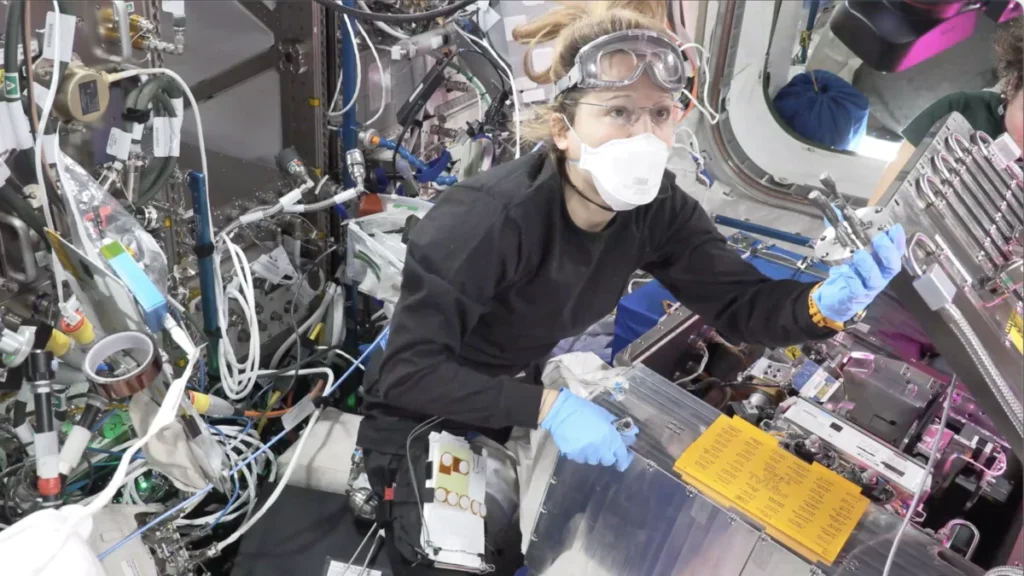
In a move set to bolster the availability of advanced metal powders for additive manufacturing (AM) throughout Europe, U.S.-based 6K Additive has officially appointed AMPERE Alloys as its premier European distributor. This strategic alliance is designed to provide European manufacturers with streamlined and direct access to 6K Additive’s comprehensive portfolio of high-performance, sustainable metal powders. These materials encompass critical categories such as refractory metals, titanium, and nickel-based superalloys, all produced using 6K Additive’s proprietary UniMelt microwave plasma technology.
AMPERE Alloys, a distinguished European specialist in metals and ferro-alloys for industrial sectors, will integrate 6K Additive’s advanced powders into its extensive product offerings. The partnership leverages AMPERE’s established regional expertise, robust distribution logistics, and strong commercial network. Crucially, AMPERE’s unwavering commitment to stringent quality system management aligns perfectly with 6K Additive’s dedication to producing premium, reliable materials for demanding applications.
Under the terms of the agreement, AMPERE Alloys will assume responsibility for powder sales, localized inventory management, and providing first-line technical support. This localized approach will be facilitated through AMPERE’s network of 12 warehouses strategically positioned across Europe, ensuring efficient and responsive service to customers.
Frank Roberts, CEO of 6K Additive, emphasized the strategic importance of this collaboration. "Expanding our footprint into Europe requires a partner that shares our uncompromising dedication to quality, regulatory compliance, and customer satisfaction," Roberts stated. "AMPERE Alloys is the ideal partner to champion our sustainable metal powders in Europe. Their established logistical network and technical expertise will ensure that aerospace, defense, medical, and energy customers across the continent can rapidly integrate our premium materials into their production workflows."
The implications of this distribution agreement are significant for the European AM sector. By making these advanced materials more accessible, 6K Additive and AMPERE Alloys are poised to accelerate innovation and adoption of metal 3D printing across key industries. The emphasis on sustainability in 6K Additive’s powder production, facilitated by the UniMelt process, also aligns with growing environmental consciousness and regulatory pressures within European manufacturing. This partnership is expected to drive increased production of critical components for sectors that rely on high-strength, lightweight, and often custom-designed parts.
ESA’s Metal 3D Printer Technology Demonstrator Achieves Significant Milestone in Orbit
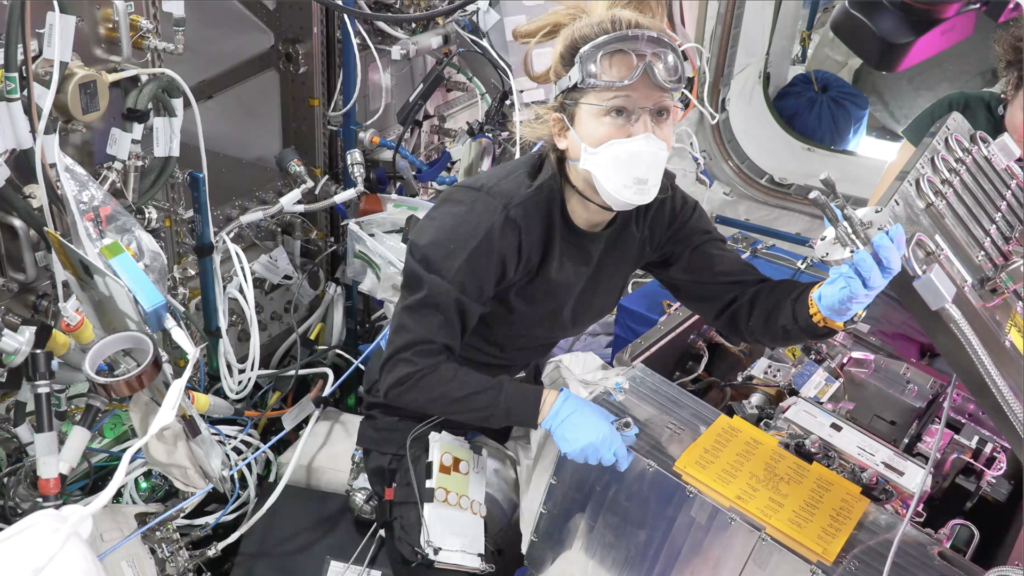
The European Space Agency’s (ESA) pioneering Metal 3D Printer Technology Demonstrator, launched to the International Space Station (ISS) in 2024, has successfully produced its fifth sample. This achievement marks another crucial step in validating the potential of in-space manufacturing and enhancing crew autonomy during extended space missions.
The successful retrieval of the fifth printed sample was personally overseen by ESA astronaut Sophie Adenot during the Epsilon mission. The ability to perform in-situ manufacturing, particularly using metal 3D printing, is becoming increasingly vital for long-duration space voyages. Carrying extensive inventories of spare parts for every conceivable failure scenario is logistically prohibitive and economically unfeasible. Onboard 3D printing offers a transformative solution, enabling astronauts to fabricate necessary components on demand, thereby reducing reliance on Earth-based resupply missions.
Each print executed by the Metal 3D Printer Technology Demonstrator is meticulously designed to assess and characterize different aspects of the technology’s performance and capabilities in the unique microgravity environment. This systematic approach allows ESA to gather invaluable data and refine the printing process for future applications.
To date, three of the previously printed metal samples have been returned to Earth for comprehensive analysis. These samples have undergone rigorous examination at ESA’s ESTEC facility and the Technical University of Denmark. The findings from these analyses are expected to be published soon and will provide critical insights into the material properties and structural integrity of 3D-printed metal parts manufactured in space.
The fifth sample, now also back on Earth aboard the CRS SpX-34 spacecraft, will undergo similar testing. The data generated from these samples will be instrumental in developing standardized procedures and qualifying metal 3D printing for a wider range of applications in space exploration, from repairing equipment to fabricating new tools and structural elements.
Astronaut Sophie Adenot expressed her enthusiasm for the project, highlighting its profound implications for the future of human spaceflight. "3D printers are far from being simple gadgets, and I’m delighted to have worked on this European technology demonstration for the future of human spaceflight," Adenot remarked. "Congratulations to everyone involved, and thank you to the CADMOS User Support Centre teams who guided me throughout the process!"
The successful production of multiple metal 3D printed parts in orbit underscores ESA’s commitment to advancing space exploration capabilities. This technology not only enhances mission resilience but also paves the way for more ambitious and self-sufficient space missions, potentially enabling longer stays on the Moon, Mars, and beyond. The ability to manufacture and repair critical components in situ significantly reduces mission risk and opens up new possibilities for crewed and uncrewed exploration.
Ancient Board Game Revived Through Advanced 3D Scanning and Printing
A remarkable fusion of archaeology and cutting-edge technology has brought an ancient Roman board game back to life. Researchers at Newcastle University have successfully used 3D scanning and printing to create a playable replica of Ludus Latrunculorum, a strategy game discovered at the Vindolanda Roman frontier fort in Northumberland, England.
The original artifact, a stone board split into five pieces, was excavated at Vindolanda in 2019. While it was later repurposed as a flagstone, historical evidence indicates it was originally a popular board game, likely played by soldiers and civilians alike. Its discovery outside the main fort suggests that women and children also engaged in this strategic pastime. Vindolanda itself was occupied between approximately 85 CE and 200 CE, providing a rich historical context for the game’s origin.
To recreate this ancient pastime, a team from Newcastle University employed a handheld Artec 3D Spider scanner. This advanced device meticulously captured the intricate details of each fragment of the original stone board, generating a high-resolution virtual 3D model. This digital blueprint then served as the foundation for fabricating a physical replica using 3D printing technology. The resulting playable version of the game was printed using PLA, a common and versatile 3D printing filament.
The recreated game board is now accessible to the public at the Roman Army Museum, offering visitors a tangible and engaging way to connect with Roman daily life. Sophie Westlake, the activity and diversity officer for the Vindolanda Trust, highlighted the significance of this initiative. "It was amazing to be involved in the actual scanning process and to see something so complex and historical be realistically recreated," Westlake stated. "It will be very beneficial for the Vindolanda Trust to have a replica Roman game board and 3D interactive model, both whilst the original Roman board is on loan and to create a more engaging, tactile experience for the visitor."
While the exact rules of Ludus Latrunculorum are not definitively known, historical descriptions and scholarly interpretations suggest it was a game of strategy akin to checkers. The objective likely involved players attempting to capture their opponent’s pieces by strategically positioning their own pieces to surround and trap them. The creation of a playable replica allows researchers and enthusiasts to experiment with these inferred rules and gain a deeper understanding of ancient Roman leisure activities.
This project exemplifies the power of 3D scanning and printing in heritage preservation and education. By digitally preserving and physically recreating historical artifacts, such technologies ensure that cultural heritage remains accessible and engaging for future generations. The Vindolanda project not only revitalizes an ancient game but also serves as a compelling demonstration of how modern technology can illuminate and interact with the past, offering immersive experiences that go beyond traditional museum exhibits. The virtual 3D model also serves as a crucial digital archive, safeguarding the artifact’s information even when the original is on loan or subject to conservation efforts.