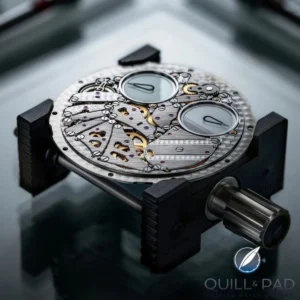
The intricate world of haute horlogerie often centers on the nuanced distinctions that elevate a timepiece from mere timekeeping to an object of art and engineering. In the hallowed grounds of Glashütte, Germany, a town synonymous with precision watchmaking, two brands, Moritz Grossmann and A. Lange & Söhne, stand as pillars of this tradition. Though operating in close proximity, these esteemed manufacturers maintain a carefully orchestrated, almost imperceptible, dialogue through their respective collections. This article delves into the unique characteristics that define Moritz Grossmann watches, exploring how they carve out their distinct identity within the competitive landscape of German watchmaking, subtly yet significantly differentiating themselves from their renowned neighbor.
The Genesis of a Subtle Rivalry: Shared Roots, Divergent Paths
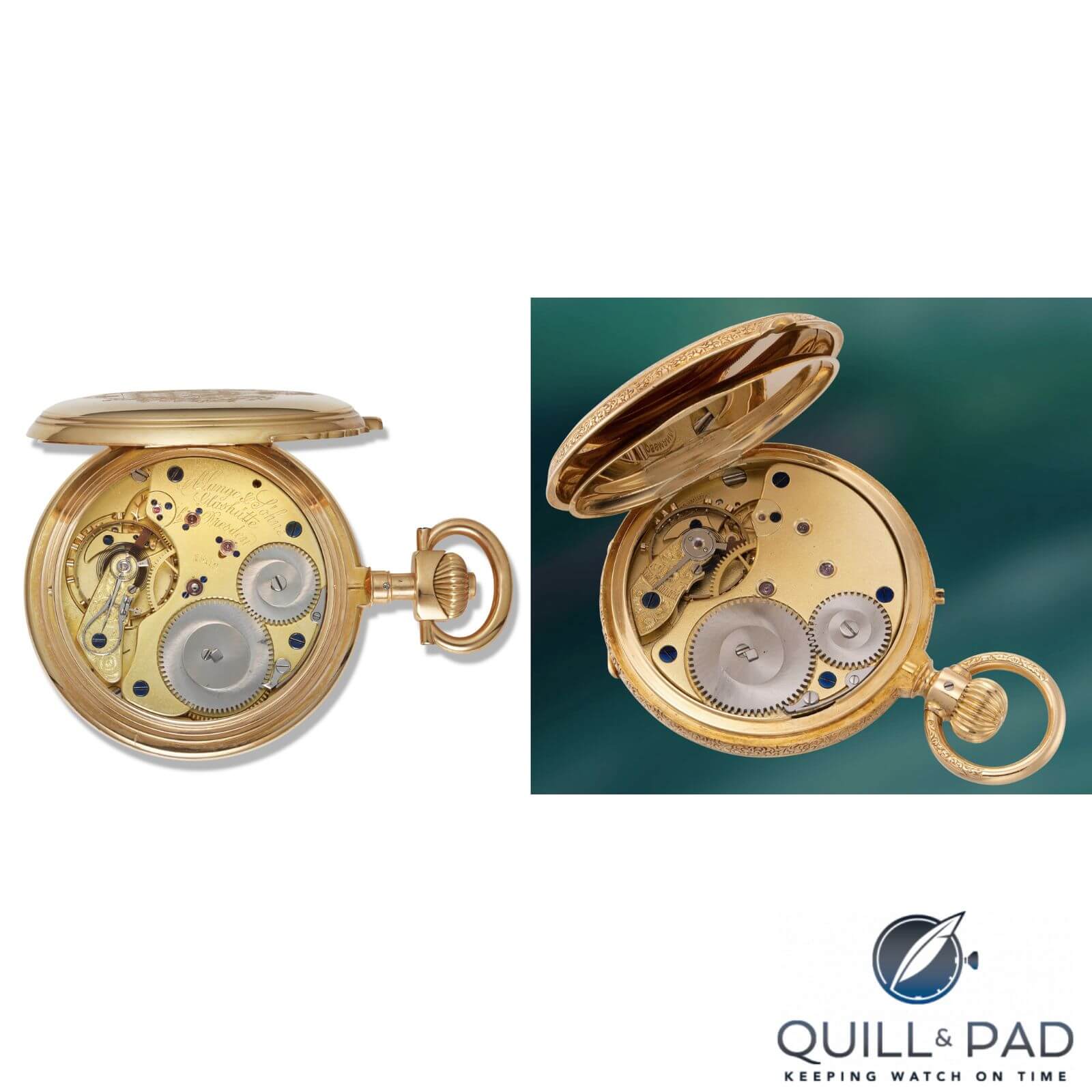
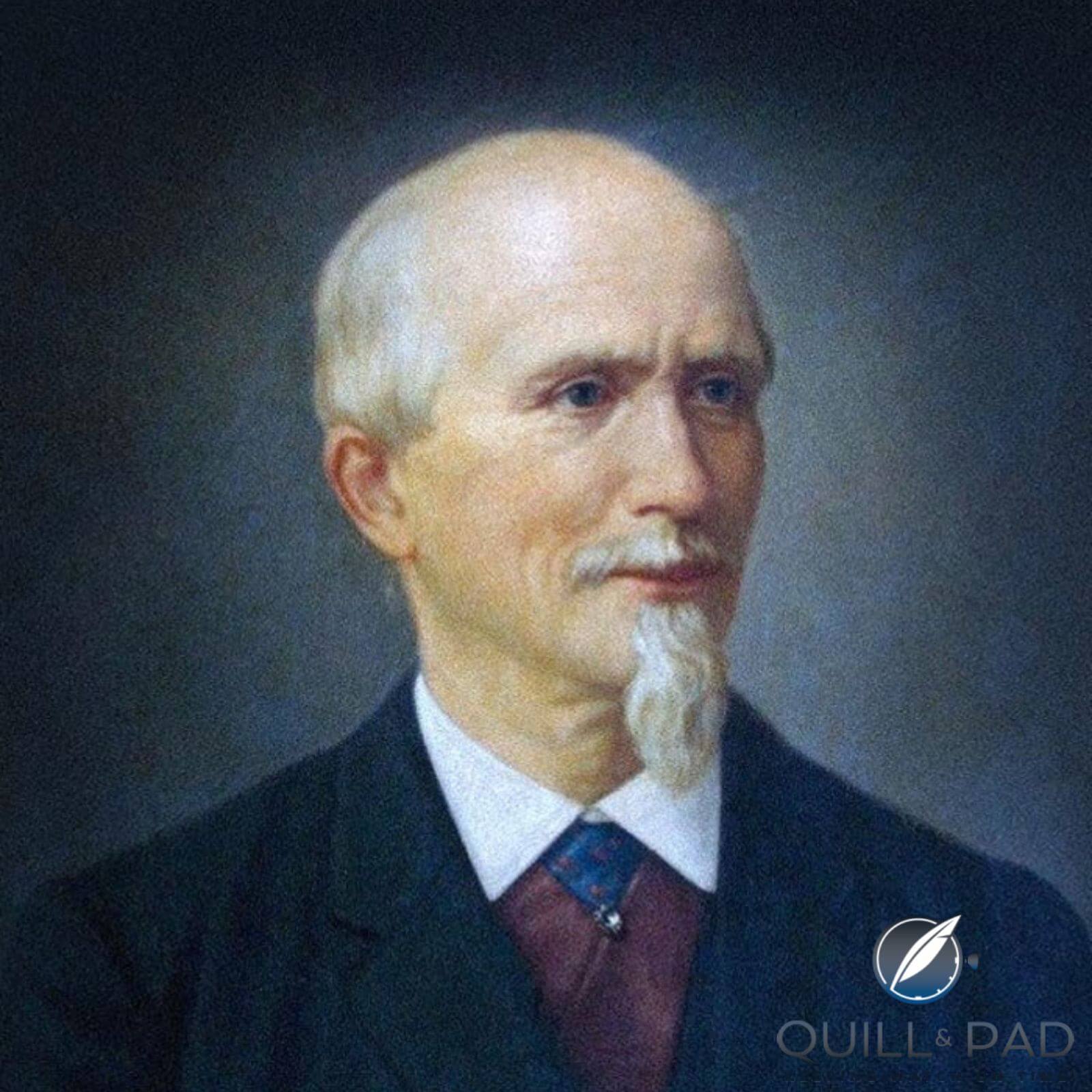
The narrative of Moritz Grossmann and A. Lange & Söhne is deeply intertwined with the very foundation of Glashütte’s watchmaking prowess. Ferdinand Adolf Lange’s pioneering efforts in the mid-19th century laid the groundwork for an entire ecosystem of horological enterprise. Moritz Grossmann, a contemporary and peer of Lange, emerged within this fertile environment, developing his own independent watchmaking business in 1854. Historical records and auction results showcasing surviving pocket watches from both brands underscore a shared heritage, not only in their geographical origin but also in the fundamental caliber architecture of their era. Both brands utilized nickel silver for their plates and bridges, featured traditionally engraved balance cocks, and employed gold chatons for jewels. However, even in these early days, subtle differences began to emerge, hinting at distinct design philosophies.
The modern revival of these brands offers a fascinating lens through which to examine their ongoing, albeit unspoken, dialogue. A. Lange & Söhne re-emerged in 1990, unveiling its first contemporary collections in 1994, setting a benchmark for the revival of German high horology. Moritz Grossmann followed suit, with its re-establishment and the launch of its first watches in 2010. This chronological pattern suggests a dynamic where A. Lange & Söhne often pioneers new technical or design territories, with Moritz Grossmann subsequently charting its own course, drawing inspiration while simultaneously forging a unique identity. This "implied debate," as it were, has fostered an environment of innovation and differentiation, enriching the offerings of both brands and, by extension, the broader watchmaking community.
Distinguishing Features: The Moritz Grossmann Difference
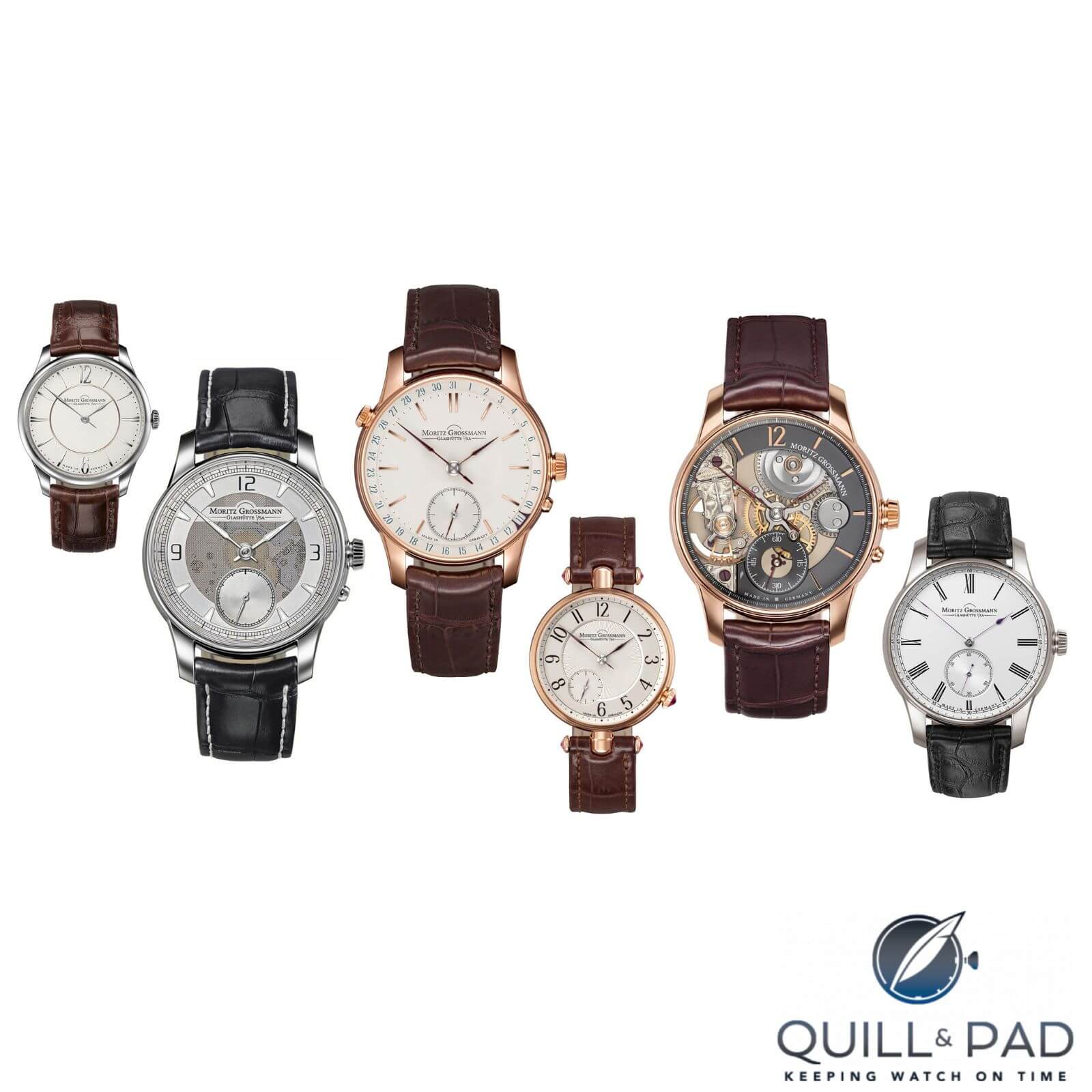
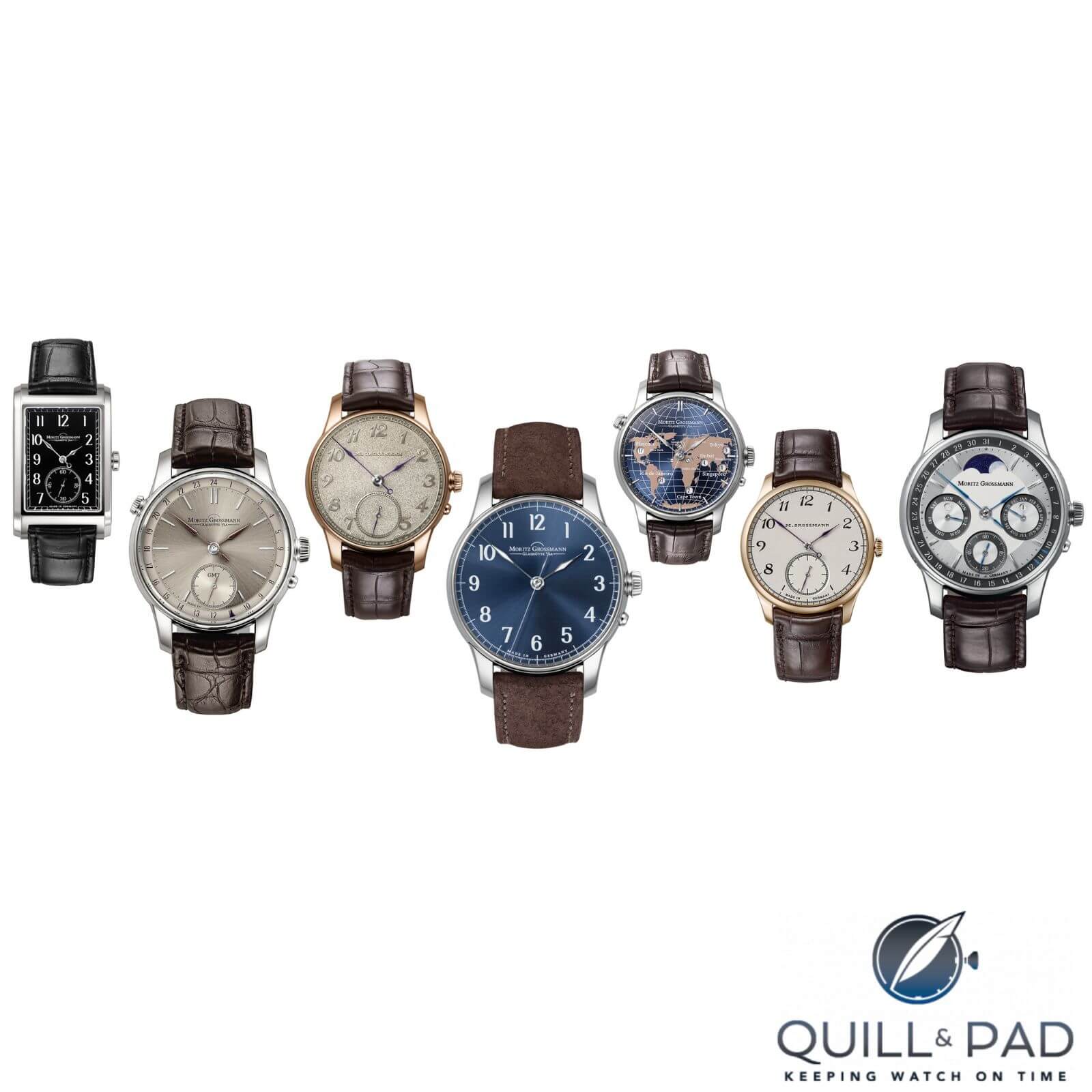
Moritz Grossmann distinguishes itself through a deliberate focus on intricate details and a commitment to traditional craftsmanship, often incorporating unique technical solutions and aesthetic choices. While A. Lange & Söhne is celebrated for its masterful execution of classic complications and design elements, Moritz Grossmann consistently explores avenues that offer a distinct horological experience.
1. Meticulous Reflector Accents
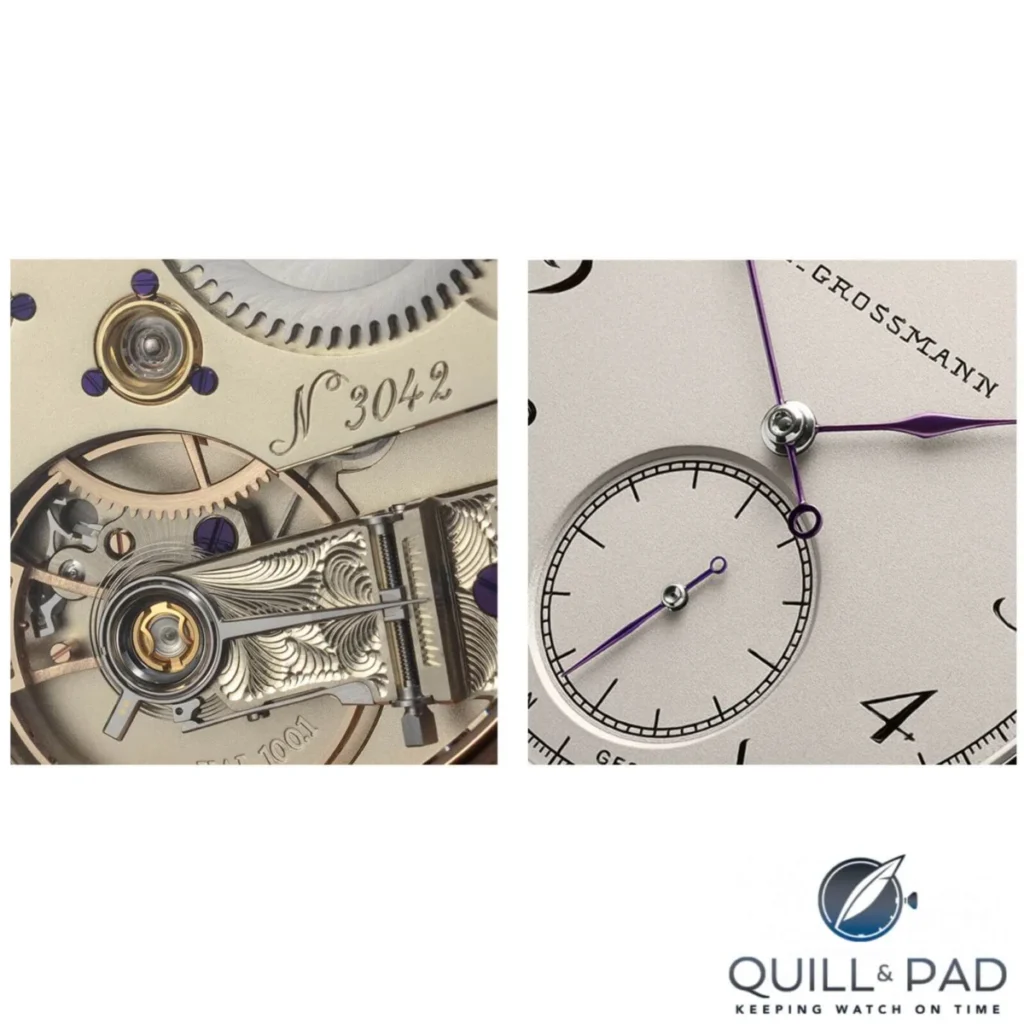
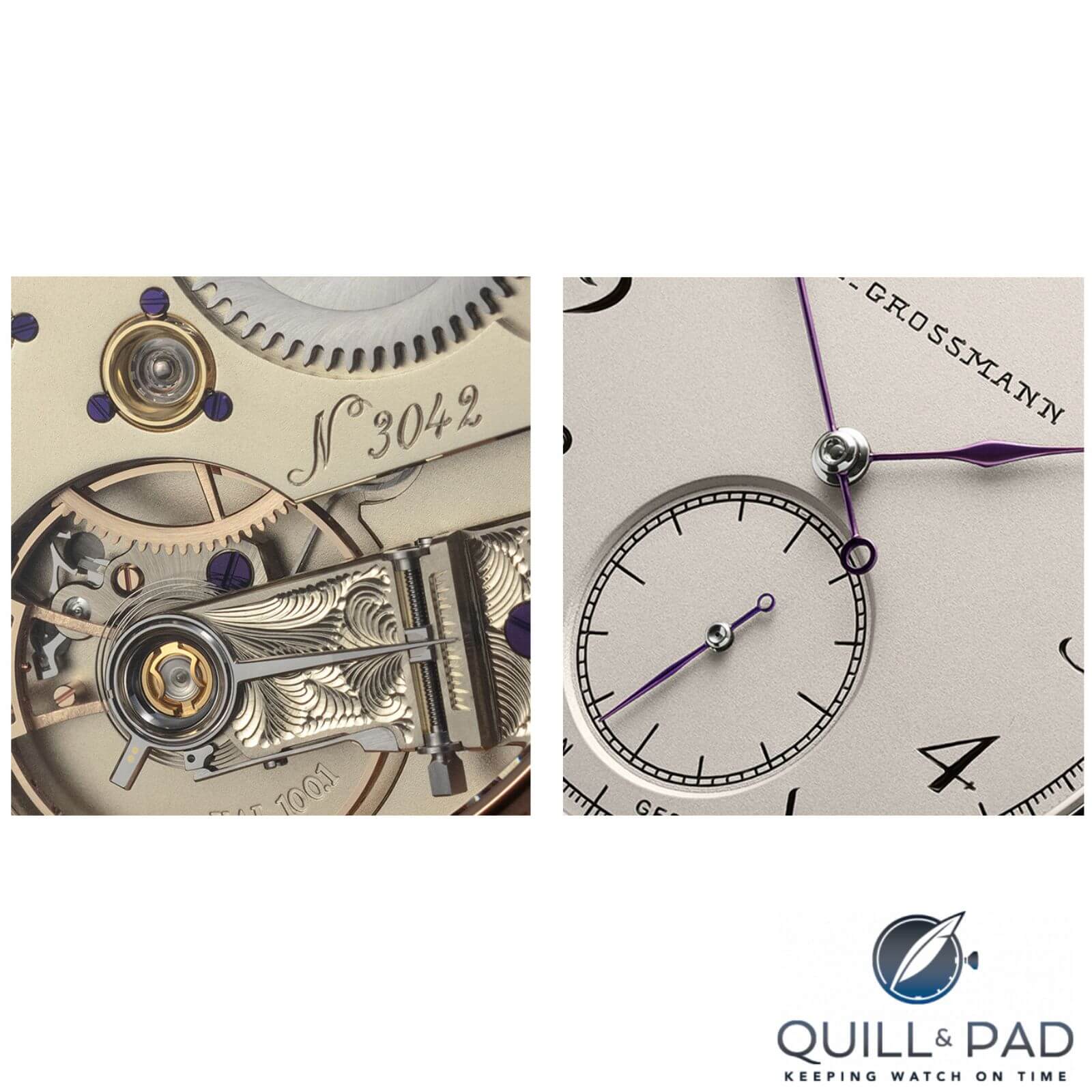
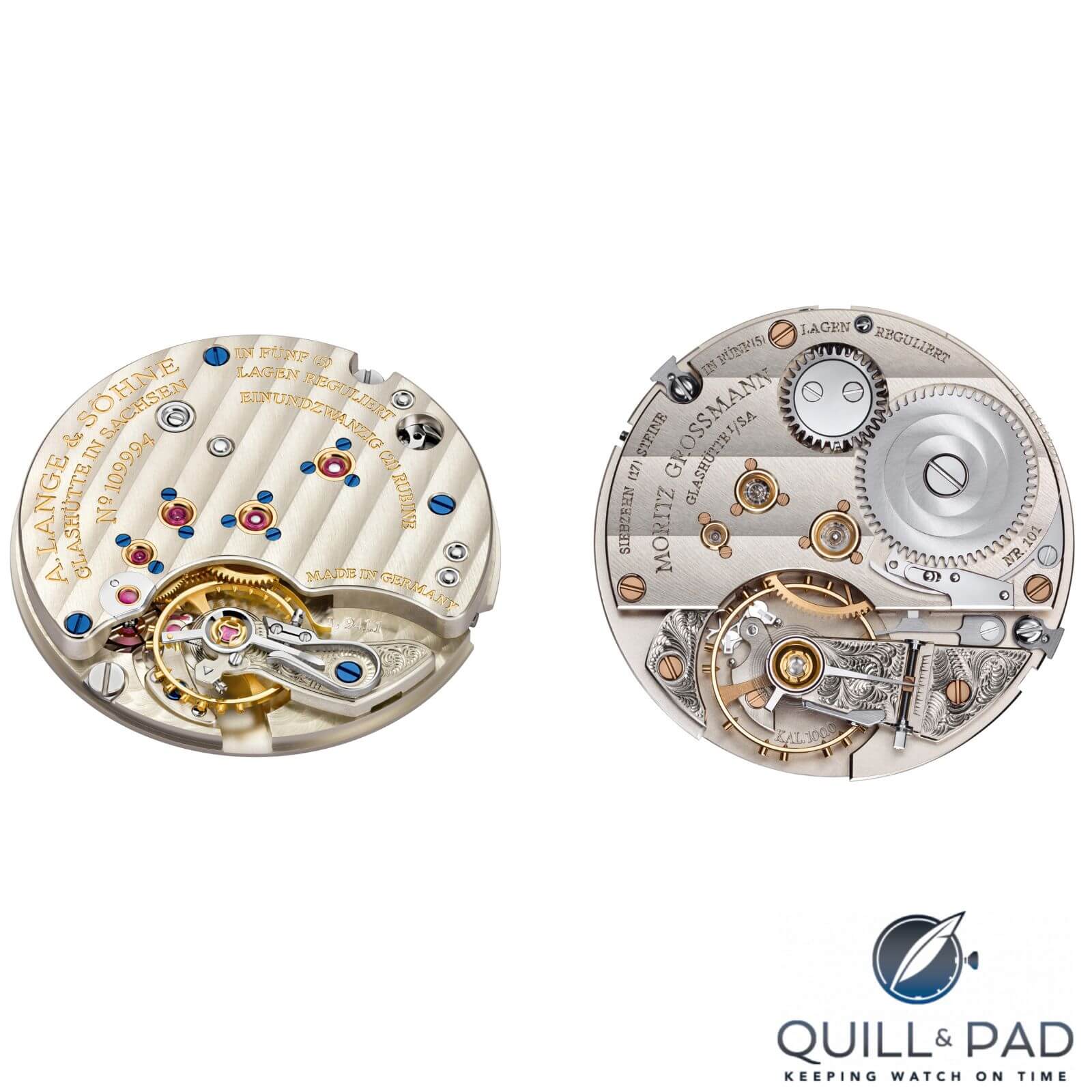
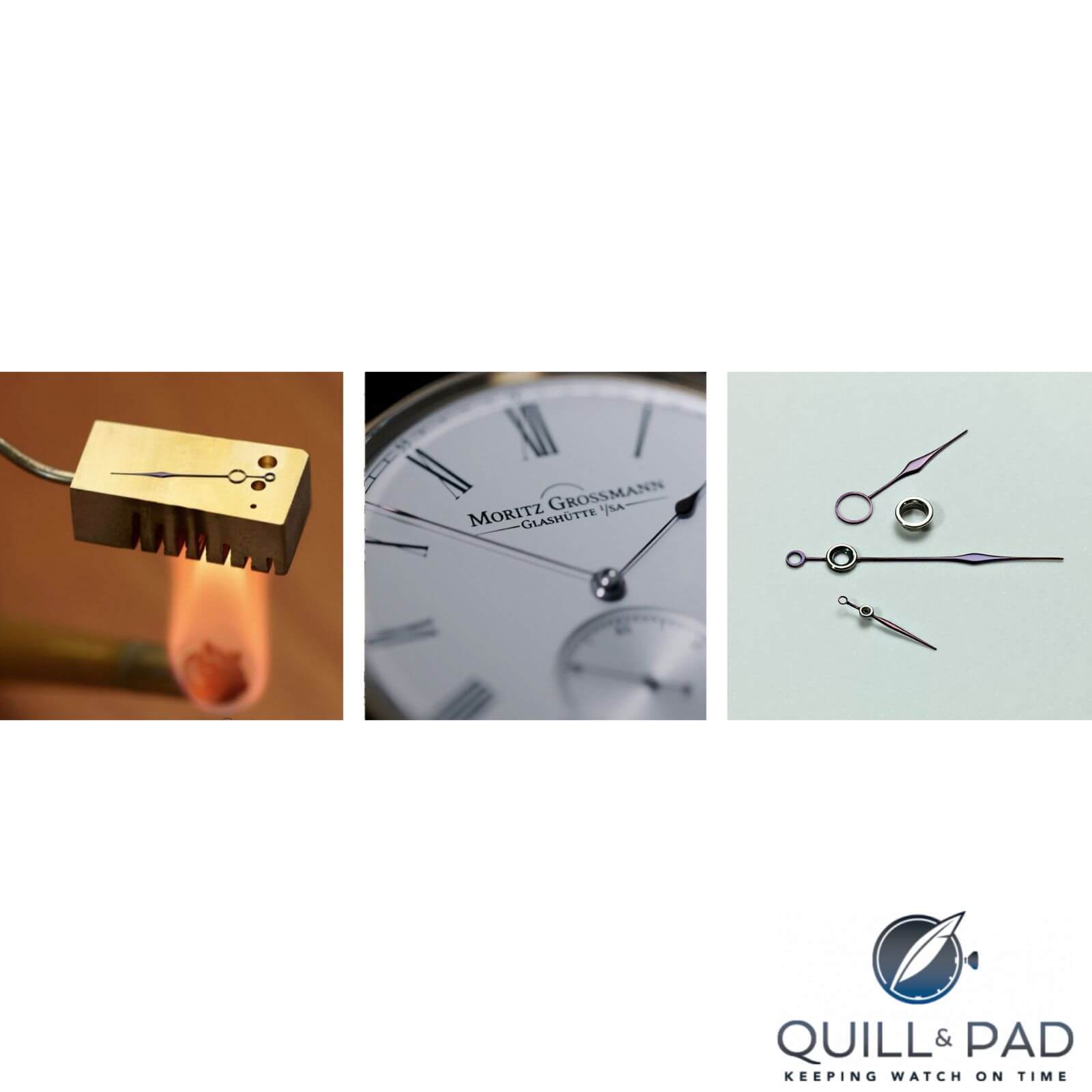
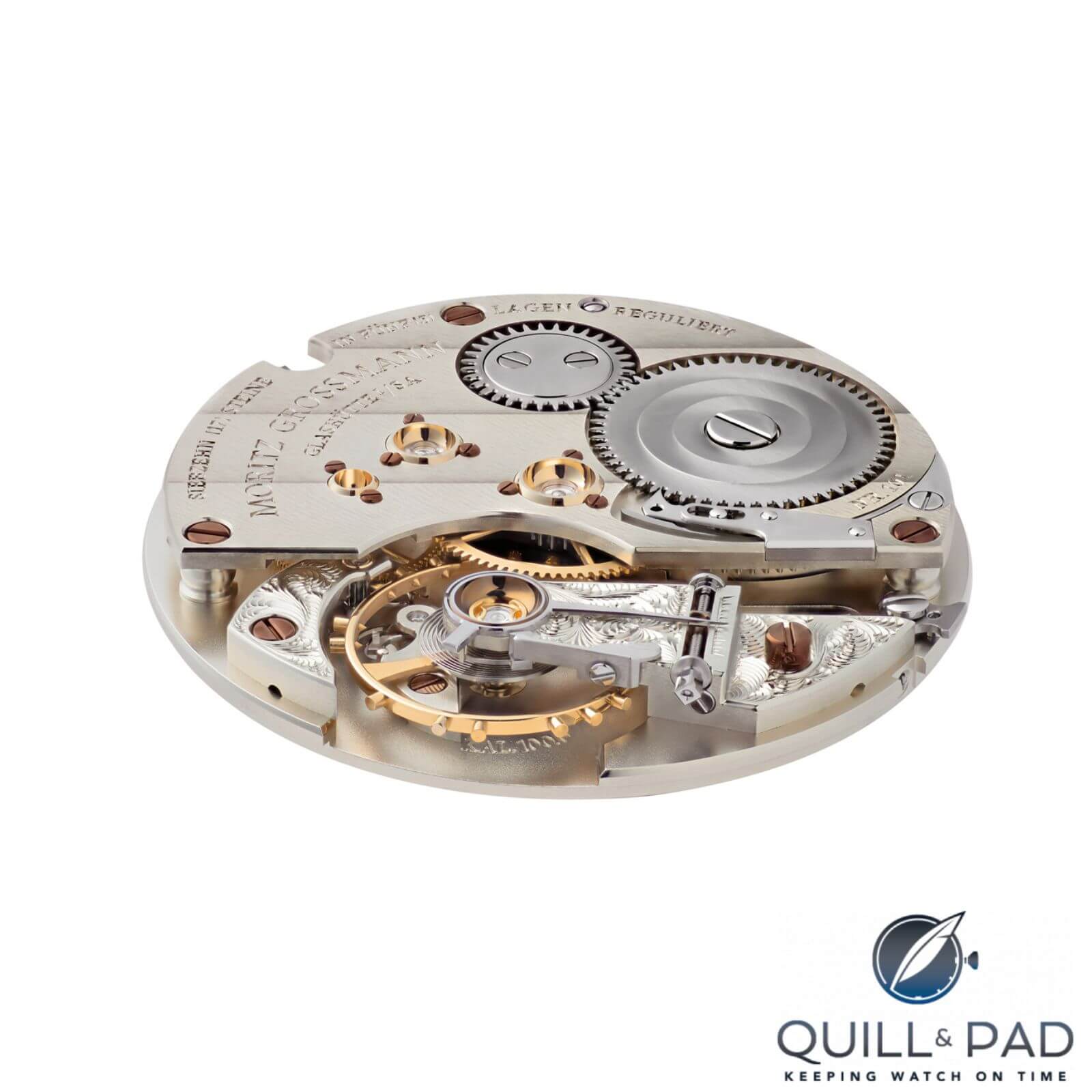
One of the most striking initial impressions of a Moritz Grossmann watch is the subtle yet captivating interplay of light. This is most evident in the highly polished, concave, spherical internal sections of the minute hand collet and the small seconds hand collet. These small, reflective elements surrounding the cannon pinion shaft create an unexpected brilliance emanating from the dial’s center. This attention to detail extends to the movement, where the chatons housing the jewels are not flush-mounted but protrude, featuring a similarly reflective finish. This consistent design philosophy, bridging the dial and the caliber’s finishing, contributes to a visually arresting and sophisticated aesthetic.
2. Unique Blued Steel Hue
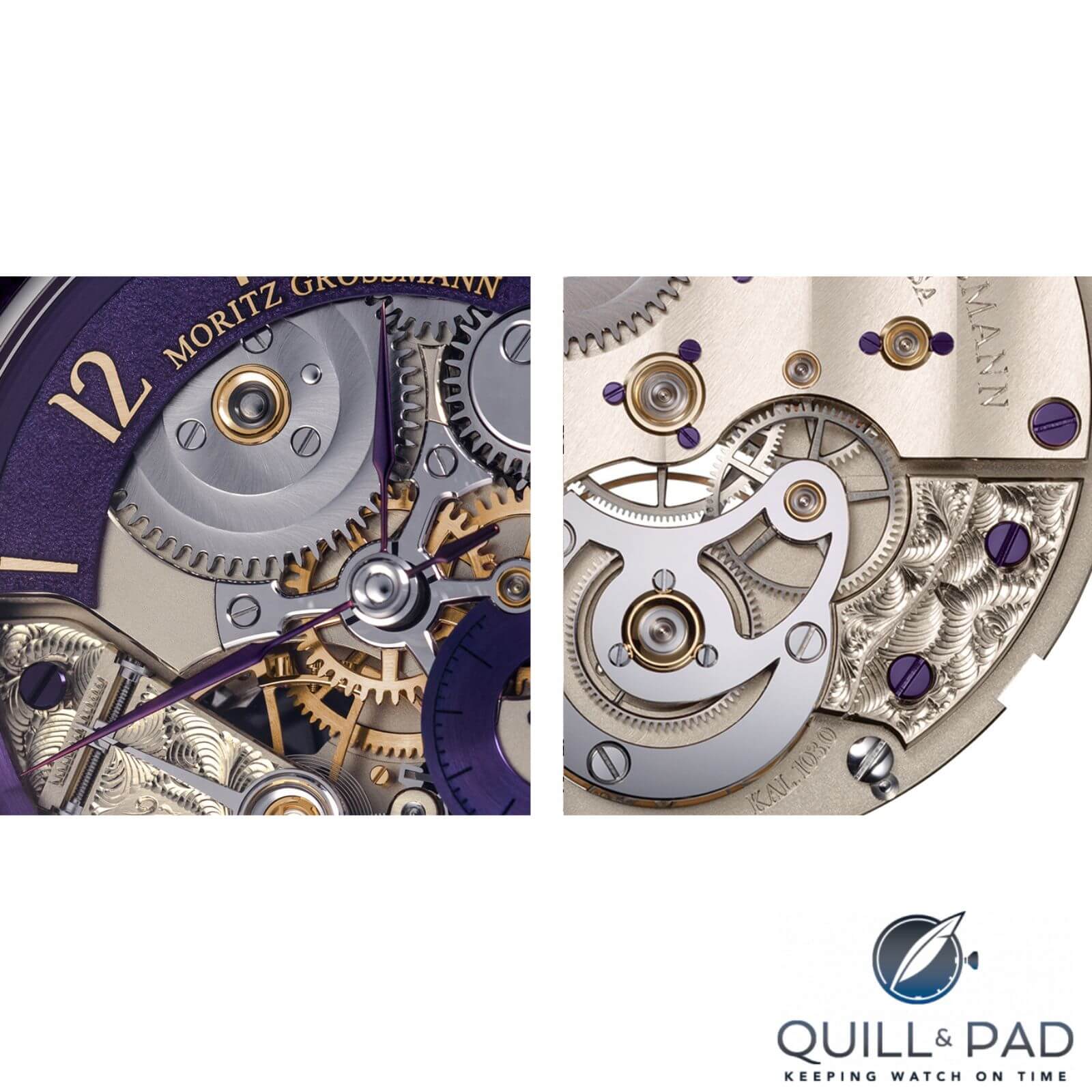
The bluing of steel components in watchmaking is a time-honored technique, but Moritz Grossmann imparts its own signature to this process. The blued hands and screws exhibit a unique hue, often described as a deep brownish-violet, ripe cherry, or purple, a departure from the more common cornflower blue. Achieving this specific shade requires meticulous control over the heating process, a testament to the artisan’s skill and the brand’s pursuit of distinctive visual characteristics. This nuanced coloration adds a layer of visual richness and originality to the watches.
3. Refined Hand Craftsmanship
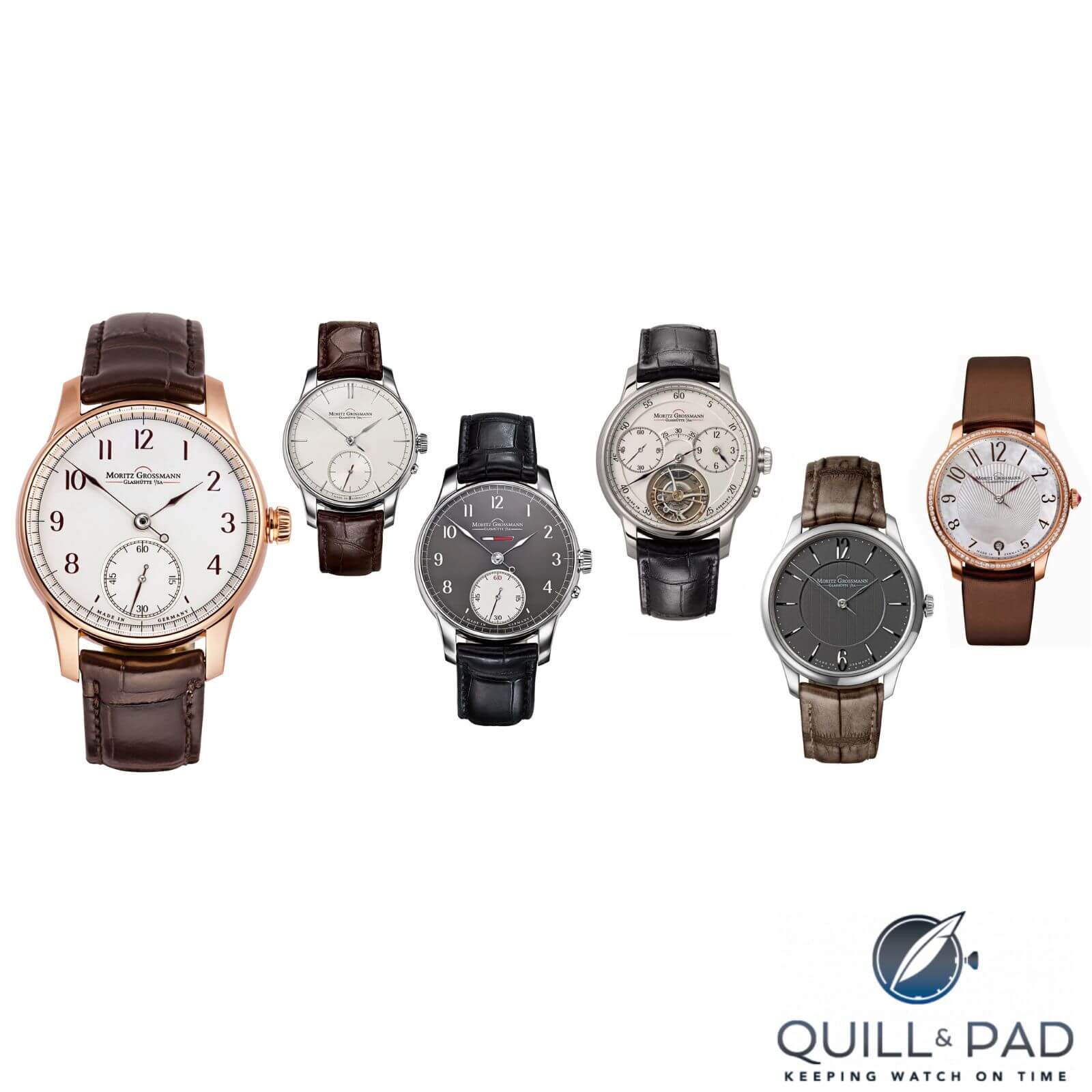
Moritz Grossmann is recognized for producing some of the most refined watch hands in contemporary horology. The meticulous brushing and polishing of the tips ensure a sharp, precise aesthetic. The brand employs two primary styles: elongated and very narrow lozenge hands, a classic shape popular in the 1930s, and an adapted version of traditional spade and whip hands, seen in models like the Hamatic. This focus on the aesthetic and tactile quality of the hands elevates the overall perception of craftsmanship.
4. In-House Caliber Construction: The Pillar-and-Plate Legacy
A fundamental aspect of Moritz Grossmann’s identity lies in its commitment to developing and producing all its calibers in-house. This ensures exclusivity and a direct lineage to the brand’s horological vision. Intriguingly, many of these movements utilize a pillar-and-plate construction, a design principle rooted in historical German watchmaking. This approach, distinct from the more common bridge-caliber construction found in many Swiss and French watches, harks back to the early days of Glashütte horology, demonstrating a profound respect for regional heritage.
5. The Breguet Overcoil: A Commitment to Precision
The inclusion of a balance spring with a Breguet overcoil in many Moritz Grossmann calibers speaks volumes about the brand’s dedication to chronometer-quality components. While modern watchmaking sometimes omits this feature due to its production complexity and cost, Moritz Grossmann’s decision to integrate it underscores a commitment to precision and enduring quality, reflecting a discerning taste and respect for the customer.
6. The "Strap Winder" and Precise Restart Mechanism
Moritz Grossmann has developed a sophisticated manual winding system, often referred to as a "strap winder," which offers a perfect restart of the movement after precise time setting. This system, a modified remontoire, halts the movement when the crown is pulled. Upon pressing a dedicated pusher, the watch restarts without the common issue of minute hand shift that can occur with traditional remontoire systems. This intricate mechanism exemplifies the brand’s dedication to perfectionist solutions.
7. Diverse Click Designs
A fascinating, albeit niche, detail that sets Moritz Grossmann apart is the variety of click designs employed across its calibers. The observation of five distinct types highlights an unusual yet intriguing aspect of the brand’s engineering. The sliding-action ratchet wheel click, found in the original caliber 100.0, is particularly noteworthy for its elegant solution to relieving mainspring tension during winding.
8. Elaborate Ratchet Wheel Finishing: Three-Band Snailing
The ratchet wheel of the winding barrel receives an exceptional level of finishing. Moritz Grossmann frequently applies a rare and elaborate three-band snailing technique, most notably in calibers like 100.0 and its derivatives. This traditional finishing, while not strictly necessary for functionality, adds a significant visual flourish and highlights the brand’s dedication to decorative artistry within the movement.
9. The Grossmann Micrometer Screw Regulator
Modern Moritz Grossmann watches utilize the Grossmann micrometer screw regulator system for fine-tuning the balance spring. This system features a long micrometer screw and a sliding bolt, allowing for precise adjustments. The presence of two variations of this regulator – one fully open and another semi-open – adds a layer of technical intrigue and historical connection, as the design is believed to have originated with Carl Moritz Grossmann himself.
10. Colorless Sapphire Jewels: A Distinctive Aesthetic Choice
While traditional watchmaking often favors red or blue jewels, Moritz Grossmann opts for colorless sapphire jewels in many of its calibers. While technically neutral, this choice diverges from the aesthetic expectations associated with high-quality mechanical movements. This decision contributes to a unique visual identity, even if it sparks discussion among purists who might prefer the traditional ruby accents.
11. Hand-Engraved Inscriptions: A Mark of Master Craftsmanship
In an era where CNC machining dominates, Moritz Grossmann distinguishes itself by employing hand-engraved inscriptions on its two-thirds mainplates. This meticulous technique, devoid of machine-assisted precision, imbues the watches with the unmistakable touch of a master craftsman, reinforcing the brand’s commitment to artisanal horology and the creation of unique timepieces.
12. Exquisite Hand-Engraved Scroll Motif
Beyond simple inscriptions, most Moritz Grossmann movements (excluding the 200-series calibers) feature an elaborate hand-engraved scroll motif. This extensive engraving, covering nearly the entire visible surface of the balance cock and escapement wheel bridge, showcases a high level of artistic execution and contributes significantly to the aesthetic appeal of the movement.
13. "Tremblage" Dial Finish
The introduction of the "tremblage" dial finish in 2021 represents a modern interpretation of a vintage technique. This chaotic yet uniform engraved texture, particularly when applied to nickel silver, develops a patina over time, creating a dramatic and vintage-inspired aesthetic. While other brands have explored similar techniques, Moritz Grossmann’s application, especially on nickel silver, offers a particularly compelling and evocative result.
14. Silver-Plating by Friction: A Rare 19th-Century Technique
Moritz Grossmann revives the rare 19th-century technique of "silver-plating by friction" for its dials. This artisanal method, involving the application of a silver powder mixture, creates a fine matte texture with an airy, warm, and soft quality, reminiscent of an eggshell. This technique, combined with engraved numerals and contrasting tempered steel hands, results in unforgettable color combinations and a distinctive, antique charm.
Broader Implications and the Future of Glashütte Horology
The existence of Moritz Grossmann, with its unique approach to watchmaking, alongside A. Lange & Söhne and Glashütte Original, creates a rich and diverse horological ecosystem in Glashütte. This proximity and shared heritage foster a subtle yet productive competition, pushing each brand to refine its identity and innovate. The detailed craftsmanship and distinctive features of Moritz Grossmann watches offer collectors a compelling alternative, demonstrating that tradition and innovation can coexist harmoniously. As Moritz Grossmann continues to evolve its collections, its unwavering commitment to these "delicious" details ensures its place as a significant and fascinating player in the world of haute horlogerie. The brand’s trajectory suggests a future where its unique horological narrative will continue to captivate and impress, solidifying its position as a purveyor of exceptionally crafted timepieces.