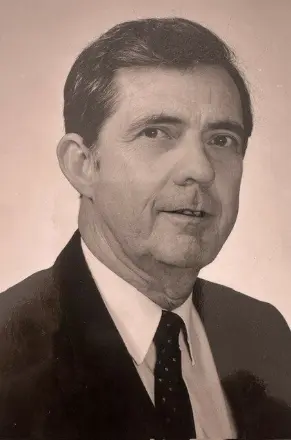
Gerald "Gerry" F. Marsters, a distinguished figure in the global aerospace community whose career spanned pioneering military service, transformative academic contributions, and influential leadership in aviation policy and research, passed away on August 11, 2026. He was 93 years old. His passing marks the end of an era for Canadian and international aerospace, leaving behind a legacy of innovation, dedication, and unwavering commitment to the advancement of flight.
Marsters’ illustrious career began in 1952 when he joined the Royal Canadian Air Force (RCAF) as a Pilot Officer. By 1953, he had earned his pilot’s wings, a testament to his early aptitude and dedication. His military service saw him ascend to the rank of Lieutenant Commander, where he not only served as a pilot but also as a vital pilot trainer. During this formative period, he logged significant flight hours in iconic aircraft such as the Harvard trainer and the potent Sabre and Silver Star jet fighters, honing his skills and gaining invaluable practical experience in aerial operations. This foundation in military aviation provided him with a unique perspective that would inform his later academic and policy work.
Following his distinguished service in the RCAF, Marsters embarked on a path of higher learning. He first attended Queen’s University, laying the groundwork for his future academic pursuits. His intellectual curiosity and passion for the complexities of flight led him to Cornell University, where he was awarded a prestigious full doctoral scholarship. In 1967, he achieved a significant academic milestone, earning his Ph.D. in Aerospace Engineering from Cornell, an institution renowned for its rigorous programs in the field. This doctoral achievement solidified his transition from a skilled aviator to a leading aerospace scientist and engineer.
Returning to his alma mater, Queen’s University, Marsters assumed a professorship, where he dedicated himself to inspiring and educating the next generation of aerospace professionals. His lectures were imbued with the practical insights gained from his military experience and the theoretical depth of his doctoral studies. He possessed a unique ability to connect complex engineering principles with real-world applications, fostering a deep appreciation for aerospace among his students. During his tenure at Queen’s, Marsters also took advantage of sabbaticals to engage directly with the cutting edge of the aerospace industry. He contributed his expertise to De Havilland, a historic Canadian aircraft manufacturer, and worked within the high-speed aerodynamics laboratory at the National Aeronautical Establishment. These experiences allowed him to remain at the forefront of aerospace research and development, bridging the gap between academia and industry.
A pivotal moment in Marsters’ career came in 1982 when he accepted a significant appointment as Director of Airworthiness at Transport Canada. In this crucial role, he was instrumental in shaping the future direction of Canadian aerospace. His leadership extended beyond regulatory oversight; he actively contributed to policy development and strategic visioning for the sector. A key area of his focus was the enhancement of international aviation cooperation. Marsters played a leading role in advocating for and developing a new Bilateral Aviation Agreement between Canada and the United States. This agreement was designed to streamline aviation standards, foster greater collaboration, and promote the growth of both countries’ aerospace industries. His tireless efforts and significant contributions to this initiative were recognized by the Federal Aviation Administration (FAA) of the United States, which awarded him a gold medal. This honor is bestowed upon a select few individuals, and the citation accompanying his award acknowledged his profound impact: "Dr. Marsters has earned the respect of the world aviation community." This recognition underscored his standing as a respected and influential figure on the global aviation stage.
In 1987, Marsters transitioned to a new leadership position as Director General of the Institute of Aerospace Research at the National Research Council of Canada (NRC). In this capacity, he oversaw a broad spectrum of cutting-edge research projects that advanced Canadian aerospace capabilities. His leadership guided critical initiatives involving the development of advanced technologies such as bird strike simulation ("bird gun" testing), state-of-the-art wind tunnel facilities, sophisticated artificial vision systems for aircraft, and highly realistic flight simulation platforms. Notably, during his tenure at the NRC, Marsters was also a pioneer in the burgeoning field of uncrewed aerial vehicles (UAVs), recognizing their immense potential and guiding early research and development in this area. His foresight in this domain helped position Canada as an early player in UAV technology.
Upon retiring from government service, Marsters continued to leverage his extensive knowledge and experience by establishing a private consultancy named AeroVations Associates. This venture allowed him to offer his expertise to a wider range of clients, advising on complex aerospace challenges and fostering innovation within the private sector. His consultancy work further cemented his reputation as a sought-after expert and a trusted advisor in the aerospace industry.
Beyond his professional roles, Marsters was deeply committed to advancing the aerospace community through professional organizations. He served as president of the Canadian Aeronautics and Space Institute (CASI), where he played a vital role in shaping national discussions and strategies for the future of Canadian aviation. His leadership within CASI helped to foster collaboration and set ambitious goals for the sector. He also extended his influence internationally, serving on the AIAA Corporate Member Committee in the early 1990s. His dedication to both national and international aerospace bodies highlights his commitment to the broader advancement of the field.
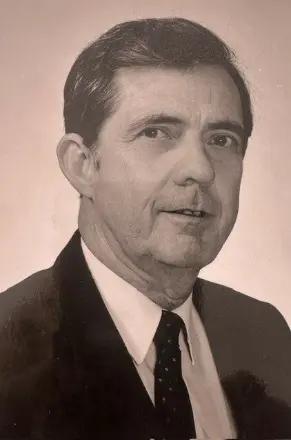
Gerald F. Marsters was recognized for his exceptional contributions to aerospace by being elected a Fellow of both the American Institute of Aeronautics and Astronautics (AIAA) in 1992 and the Canadian Aeronautics and Space Institute. These fellowships are among the highest honors bestowed by these prestigious organizations, signifying peer recognition of his outstanding achievements and leadership.
The passing of Dr. Marsters is a profound loss to the aerospace world. His career trajectory—from military aviator to esteemed academic, influential policy leader, and innovative researcher—is a testament to his multifaceted talents and unwavering dedication. He not only contributed significantly to the technological advancements in aviation but also to the policies and educational frameworks that underpin the industry’s growth and safety.
A Chronology of a Distinguished Career:
- 1952: Joins the Royal Canadian Air Force (RCAF) as a Pilot Officer.
- 1953: Awarded RCAF pilot wings.
- Mid-1950s: Serves as Lieutenant Commander and Pilot Trainer, flying Harvard, Sabre, and Silver Star aircraft.
- Post-RCAF Service: Attends Queen’s University.
- 1960s: Receives a full doctoral scholarship to Cornell University.
- 1967: Earns Ph.D. in Aerospace Engineering from Cornell University.
- Late 1960s – Early 1980s: Returns to Queen’s University as a Professor, sharing his expertise.
- During Sabbaticals: Contributes to De Havilland and the National Aeronautical Establishment’s high-speed aerodynamics lab.
- 1982: Appointed Director of Airworthiness at Transport Canada.
- Mid-1980s: Leads efforts towards a new Bilateral Aviation Agreement between the United States and Canada, receiving an FAA gold medal.
- 1987: Becomes Director General of the Institute of Aerospace Research at the National Research Council of Canada (NRC).
- Late 1980s – Early 1990s: Guides projects on bird strike simulation, wind tunnels, artificial vision, flight simulation, and pioneers in uncrewed aerial vehicles at NRC.
- Early 1990s: Serves on the AIAA Corporate Member Committee.
- 1992: Inducted as a Fellow of the American Institute of Aeronautics and Astronautics (AIAA).
- Post-Government Service: Establishes private consultancy, AeroVations Associates.
- Throughout Career: Serves as president of the Canadian Aeronautics and Space Institute (CASI) and is a Fellow of CASI.
- August 11, 2026: Passes away at the age of 93.
Enduring Impact and Legacy:
Dr. Marsters’ career exemplifies a profound dedication to the advancement of aerospace, from its fundamental scientific principles to its practical application in military and civilian domains. His work at Transport Canada and the NRC directly influenced Canadian aviation policy and research infrastructure, fostering an environment conducive to innovation and safety. The development of the Bilateral Aviation Agreement, in particular, had significant long-term implications for cross-border aviation, facilitating smoother operations, increased trade, and enhanced passenger and cargo movement between Canada and the United States. The FAA’s gold medal for this achievement underscores the international recognition of his diplomatic and technical prowess.
His pioneering work in uncrewed aerial vehicles at a time when the technology was nascent highlights his forward-thinking vision. Today, UAVs are integral to numerous sectors, including defense, logistics, surveillance, and environmental monitoring, a testament to the early foresight of leaders like Marsters. His influence as an educator at Queen’s University ensured that his passion and knowledge were passed down to generations of engineers and scientists, perpetuating his legacy through their own contributions to the field.
The dual fellowship with AIAA and CASI speaks volumes about his commitment to fostering collaboration and excellence across national borders. His leadership within these professional bodies helped to elevate the profile of Canadian aerospace research and development on the global stage.
The aerospace community mourns the loss of Gerald F. Marsters, a true luminary whose multifaceted contributions have indelibly shaped the trajectory of aviation. His life’s work serves as an enduring inspiration for all who strive to push the boundaries of flight and to ensure its continued safe and progressive development.