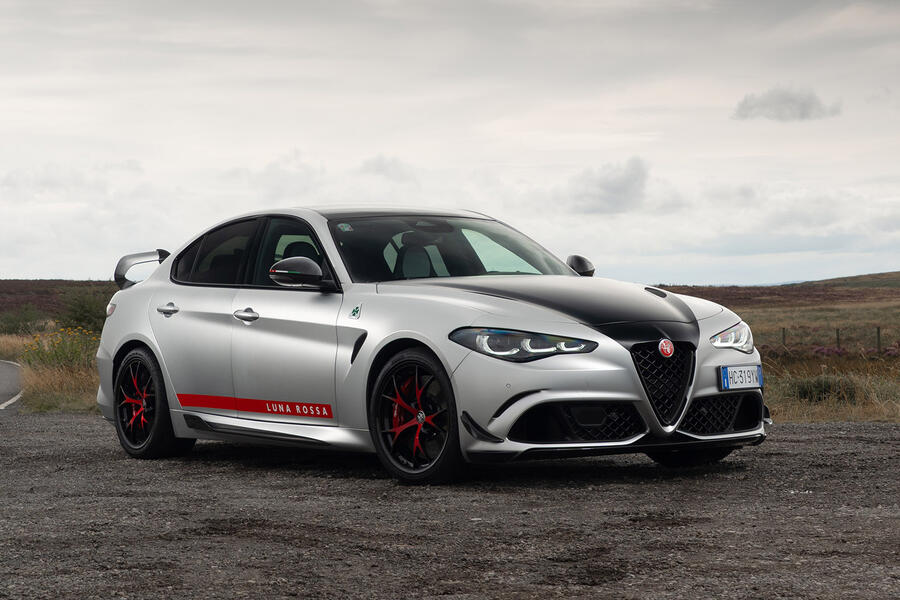
The Alfa Romeo Giulia Quadrifoglio Luna Rossa, a special edition variant of the already lauded Giulia Quadrifoglio, offers a compelling, albeit peculiar, chapter in the Italian marque’s performance sedan lineage. While the tested prototype exhibited certain manufacturing inconsistencies, a closer examination of its driving dynamics and the broader context of the Giulia Quadrifoglio’s appeal reveals a vehicle that, despite its quirks, continues to captivate enthusiasts with its raw, analogue driving experience. This iteration, inspired by the Luna Rossa sailing team, brings subtle aesthetic enhancements and a renewed focus on the core strengths that have cemented the Giulia Quadrifoglio’s status as a benchmark super-saloon.
Design and Interior: A Blend of Novelty and Familiarity
The Giulia Quadrifoglio Luna Rossa prototype presented a mixed bag in terms of interior execution. While the integration of a novel grey "life jacket" fabric for certain interior elements, particularly the seats, injects a fresh and visually arresting aesthetic that successfully brightens the cabin, this innovative touch was unfortunately marred by a lack of attention to detail in the prototype’s assembly. Loose trim pieces, a misaligned seat adjustment button, and fabric panels affixed with Velcro suggest that while the design intent was laudable, the build quality of this particular pre-production unit left something to be desired. This raises a pertinent question regarding the expected fit and finish of customer-bound vehicles, a critical factor for a car in this premium performance segment.
Beyond these specific concerns, the interior largely retains the familiar architecture of the standard Giulia Quadrifoglio. While some might perceive certain elements as slightly dated or lacking the perceived solidity of direct competitors, the overall design remains a strong suit. The emphasis on physical controls, a refreshing departure from the increasingly prevalent touchscreen-dominated interfaces, contributes to an intuitive and engaging user experience, allowing drivers to maintain focus on the road ahead. The new red Alfa badges, a subtle nod to the performance heritage, were noted to be showing early signs of fading on the prototype, another indicator of potential long-term material durability questions that would ideally be addressed in production models.
Aerodynamics and Performance: Subtle Enhancements, Proven Prowess
The Luna Rossa edition boasts aerodynamic modifications purportedly designed to generate an impressive 140kg of downforce at a blistering 186mph (300kph). While these figures are substantial and indicative of advanced engineering, the reviewer’s test drive on the demanding roads of the Midlands failed to elicit a perceptible difference in aerodynamic grip. This suggests that the benefits of these aero enhancements are likely to manifest at significantly higher speeds than those encountered during typical road driving scenarios.
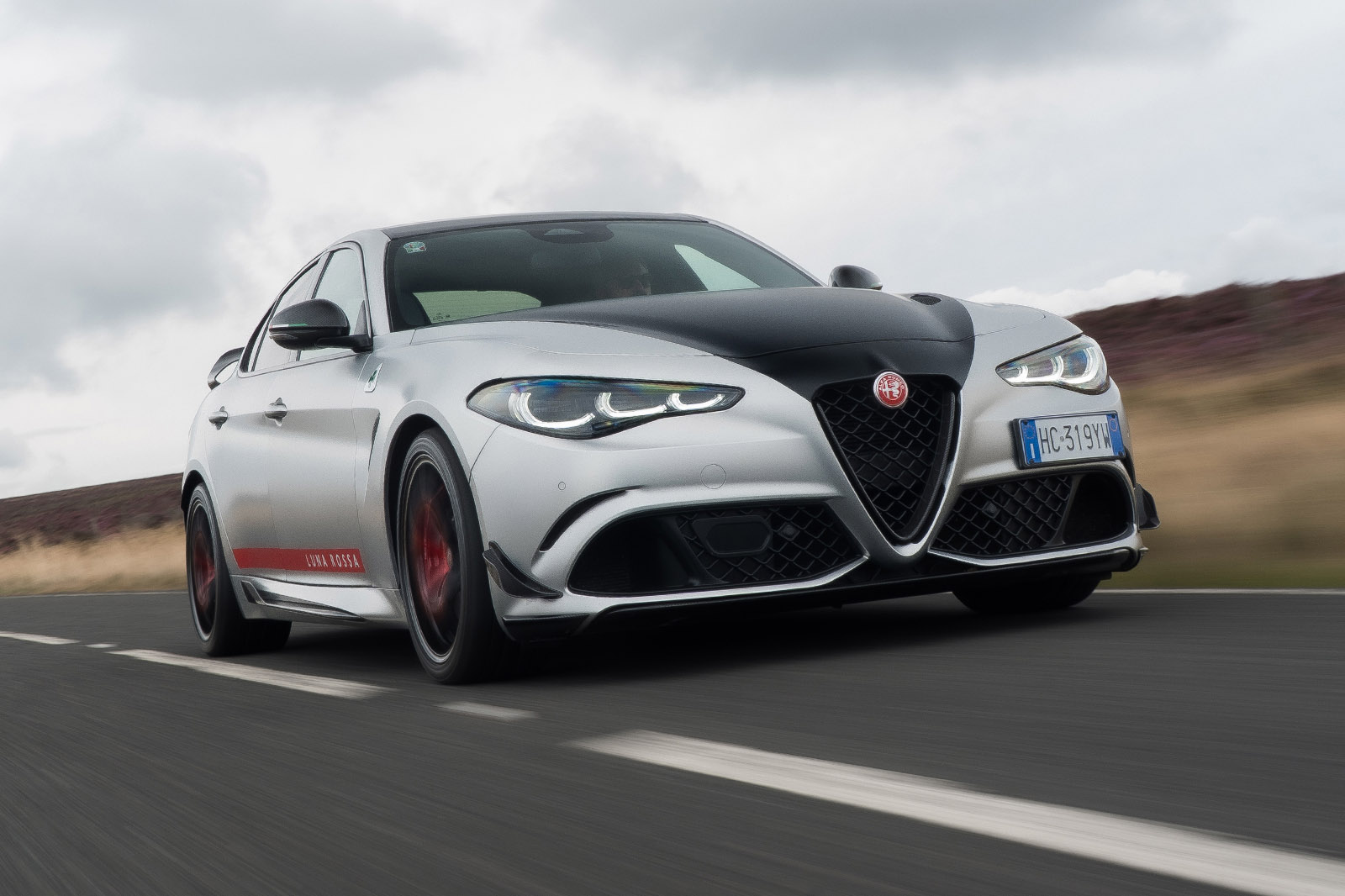
Crucially, the Luna Rossa edition makes no mechanical alterations from the standard Giulia Quadrifoglio. This decision, while potentially a point of contention for those seeking outright power increases, is a testament to the already exceptional performance envelope of the base model. For drivers who have experienced the standard Giulia Quadrifoglio, the absence of mechanical upgrades is unlikely to be a disappointment, as the car’s existing capabilities are already extraordinary.
Driving Dynamics: An Analogue Masterpiece in a Digital Age
In a direct comparison with its nominal rival, the Audi RS5, which also features a turbocharged V6 engine, the Giulia Quadrifoglio Luna Rossa underscores its unique character. The Audi RS5, while a potent machine, leans towards a more modern, technologically driven performance experience. The Giulia, conversely, champions a remarkably analogue and old-school approach. Its steering is exceptionally quick, not through complex variable-ratio systems, but due to a fundamentally rapid rack. While this requires an initial period of adjustment, drivers quickly acclimatize to the immediacy and directness of the feedback.
This razor-sharp steering is ably supported by a front end that bites with conviction and a chassis that exhibits impressive body control, ensuring that the car’s rapid responses are consistently backed by composure. Power delivery is equally unadulterated, with all 513bhp channeled exclusively to the rear wheels. This potent output is managed through a straightforward mechanical locking differential, eschewing the electronic complexity found in many contemporary performance vehicles. This mechanical purity contributes significantly to the Giulia’s engaging and visceral driving experience.
The Thrill of Race Mode and Progressive Handling
The Giulia Quadrifoglio Luna Rossa, like its standard counterpart, presents a tiered approach to driver engagement. Initially, the car may not feel overtly aggressive, particularly in modes other than "Race." In these less aggressive settings, the engine’s power delivery can feel somewhat restrained, even before the traction control system intervenes. Engaging "Race" mode is a more definitive step, disabling all driver aids. While the decision to completely switch off electronic nannies might be a point of debate for some, it undeniably embodies the car’s old-school ethos and provides an exhilarating, high-stakes driving experience for those who relish pushing the limits without a safety net.
This commitment to an unvarnished driving experience is rewarded with beautifully progressive handling. When powering out of a corner, the rear axle exhibits a controlled, gentle slip, reminiscent of the engaging character found in cars like the Toyota GT86, albeit on a significantly grander scale. This predictable and manageable breakaway allows drivers to exploit the car’s power with confidence, fostering a deep connection with the machine. Furthermore, the ride quality remains remarkably compliant for a vehicle of such sporting intent, striking a commendable balance between agility and everyday usability.
The Engine and Transmission: A Familiar Tune, A Missed Opportunity
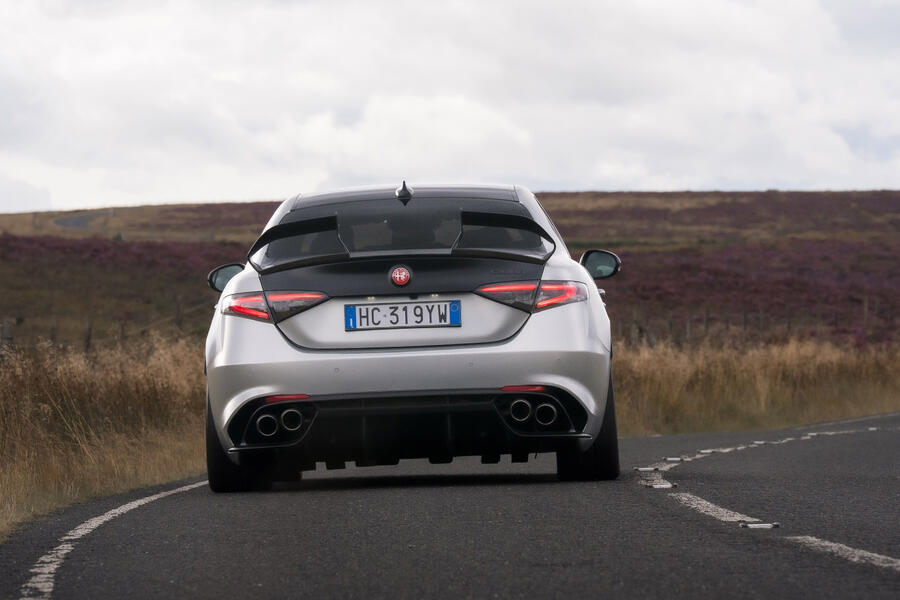
The V6 engine powering the Giulia Quadrifoglio Luna Rossa is undeniably potent and exhibits decent responsiveness. However, the characteristic gruffness and aural intensity often associated with modern high-performance six-cylinder engines, amplified by the Akrapovič exhaust system, might not appeal to all tastes. While the eight-speed automatic transmission performs its duties competently, executing shifts with expected efficiency, the purist in many enthusiasts will inevitably yearn for a manual gearbox. The historical precedent for a manual transmission, with a six-speed option briefly available at launch, suggests that the mechanical underpinnings for such a setup exist. The introduction of a manual transmission option for a special edition like the Luna Rossa would have been a truly compelling proposition, a rare opportunity for a unique and highly desirable variant.
Broader Implications and Conclusion
The Alfa Romeo Giulia Quadrifoglio Luna Rossa, in its current form, is unlikely to be a catalyst for a dramatic turnaround in Alfa Romeo’s sales figures. It exists more as a celebratory gesture, a delightful footnote in the ongoing narrative of the Giulia Quadrifoglio. Its primary value lies in its ability to remind automotive enthusiasts and potential buyers of the inherent brilliance of the Giulia Quadrifoglio platform. It serves as a powerful testament to Alfa Romeo’s enduring legacy of crafting emotionally engaging and dynamically superb performance sedans.
The Luna Rossa edition, with its unique aesthetic touches and unwavering commitment to a driver-focused experience, stands as a curious but ultimately commendable special edition. It reinforces the notion that even in an era increasingly dominated by electrification and autonomous driving technologies, there remains a fervent appreciation for vehicles that prioritize raw driving pleasure, precise engineering, and an almost visceral connection between driver and machine. The enduring appeal of the Giulia Quadrifoglio, exemplified by this special edition, lies in its ability to stir the soul and deliver an uncompromised super-saloon experience that continues to resonate with those who truly value the art of driving. The manufacturing inconsistencies noted in the prototype, however, serve as a crucial reminder that while the spirit of Alfa Romeo remains strong, meticulous attention to detail in production remains paramount for sustained success in the competitive luxury performance market.
Contextual Background: The Giulia Quadrifoglio’s Legacy
The Alfa Romeo Giulia Quadrifoglio has, since its introduction, been positioned as a formidable competitor in the high-performance sedan segment. Launched as part of the revitalized Giulia lineup, the Quadrifoglio variant was engineered to challenge established titans from Germany and elsewhere. Its development saw significant investment from Fiat Chrysler Automobiles (now Stellantis), with considerable engineering input from Ferrari’s former technical director, Philippe Krief, during its development. The car’s core philosophy centered on a lightweight chassis, a potent engine derived from Ferrari technology (though significantly adapted), and a rear-wheel-drive bias for maximum driver engagement. The Quadrifoglio name itself harks back to Alfa Romeo’s historic racing pedigree, a symbol of performance and sporting excellence.
The Luna Rossa edition’s inspiration from the Luna Rossa sailing team signifies a collaboration that taps into a shared ethos of cutting-edge design, precision engineering, and a spirit of competition. The America’s Cup challenger, known for its innovative designs and high-performance sailing vessels, provides a thematic link to Alfa Romeo’s own pursuit of automotive excellence. This partnership, while not affecting the car’s core mechanicals, adds a layer of prestige and a distinct visual identity to this limited-run model, aiming to appeal to a discerning clientele who appreciate both automotive engineering and the broader world of high-performance pursuits.
Timeline of Relevance
The Alfa Romeo Giulia Quadrifoglio was initially unveiled in 2015, with production commencing shortly thereafter. It quickly established itself as a benchmark for performance sedans, lauded for its dynamic capabilities and unique Italian flair. Over the years, Alfa Romeo has introduced various updates and special editions to maintain interest and cater to specific market segments. The Luna Rossa edition represents a more recent iteration, likely introduced in the latter half of the Giulia’s lifecycle, serving as a celebratory send-off or a niche offering to invigorate the model’s appeal. The prototype’s testing and subsequent review would have occurred in the period leading up to or shortly after its official market introduction, providing a snapshot of its development status and initial reception.
Broader Impact and Implications
The enduring appeal of the Giulia Quadrifoglio, as highlighted by the Luna Rossa edition, underscores a significant trend in the automotive industry: the persistent demand for engaging, analogue driving experiences. Despite the rapid advancements in electric vehicle technology and the increasing sophistication of driver-assistance systems, a core segment of the automotive market remains devoted to the tactile feedback, communicative steering, and raw power delivery that traditional internal combustion engine performance cars offer.
For Alfa Romeo, special editions like the Luna Rossa serve multiple purposes. Firstly, they generate excitement and publicity around the brand and its flagship models. Secondly, they offer opportunities to test new design elements or niche configurations without the risk associated with a full model redesign. Thirdly, and perhaps most importantly, they reinforce Alfa Romeo’s brand identity as a manufacturer of desirable, emotionally resonant vehicles. In an era where many performance cars are beginning to feel homogenized, the Giulia Quadrifoglio, in all its iterations, stands out for its distinct personality and unwavering commitment to the driving enthusiast. The success of such models, even in limited numbers, is crucial for maintaining Alfa Romeo’s image as a purveyor of sporty, stylish, and engaging automobiles, a legacy that has been cultivated over a century of automotive history.