The global transportation landscape is currently experiencing an unprecedented period of innovation, marked by significant strides across air, land, and sea. Driven by a pressing need for sustainability, efficiency, and enhanced connectivity, engineers and innovators are pushing the boundaries of what’s possible, from the nascent stages of urban air mobility to the radical decarbonization of maritime shipping and the electrification of ground vehicles. This dynamic evolution is not merely theoretical; it’s manifesting in real-world applications, regulatory breakthroughs, and substantial investment, promising to reshape how goods, people, and information move around the planet.
The Ascent of Advanced Air Mobility and Aviation’s Next Chapter
Aviation is witnessing a profound shift, with the emergence of electric Vertical Take-Off and Landing (eVTOL) aircraft and the continuous evolution of traditional airliners. One of the most significant recent developments in this arena is Beta Technologies’ electric VTOL aircraft receiving landmark market survey approval from the Federal Aviation Administration (FAA) in the U.S. This critical clearance paves the way for commercialization and underscores the growing maturity of eVTOL technology, demonstrated by a recent 39-mile flight completed in just 20 minutes. This achievement signals a clear path towards integrating these novel aircraft into the national airspace, potentially revolutionizing regional travel and logistics.
The vision of flying vehicles extends beyond commercial applications. Florida recently deployed America’s first flying police vehicle, capable of reaching speeds of 63 mph. While details about the specific model are limited, such deployments highlight the potential for aerial platforms in public safety, offering enhanced surveillance, rapid response capabilities, and improved access in challenging terrains. This move could set a precedent for other jurisdictions looking to leverage advanced aerial technology for law enforcement.
Further pushing the boundaries of personal aerial transport, Alef Aeronautics marked its 1,000th test flight, showcasing its "flying car" flying over a Tesla Roadster in a widely circulated video. While Alef’s design focuses on a road-legal car with flight capabilities, the spectacle highlights the diverse approaches to creating personal air vehicles. Elon Musk, too, has been teasing the "flying car" capabilities of the next-generation Tesla Roadster in high-octane stunts in Texas, although these demonstrations typically involve extreme acceleration and limited "hops" rather than sustained flight. These high-profile showcases, while sometimes more about marketing, maintain public interest and investor confidence in the future of personal air mobility.
In a competitive twist, the iconic DeLorean brand has announced its entry into electric air racing, signaling that even legendary automotive names are looking to the skies. This move suggests a broader industry belief in the viability and excitement surrounding electric aviation, potentially fostering innovation through competition. Meanwhile, Vertical Aerospace is developing a new flying taxi that aims to combine 30G crash seats with a Northrop Grumman navigation system, emphasizing safety and reliability as core tenets for passenger air transport. Such rigorous engineering and integration of advanced defense-grade systems are crucial for building public trust and meeting stringent aviation standards.
Beyond these futuristic concepts, the established aviation sector continues its methodical advancements. Boeing’s largest 230-seat 737 MAX 10 jet recently received FAA approval after 2,000 flight hours. This certification is a critical milestone for Boeing, allowing it to move forward with deliveries and regain market share following past challenges with the MAX family. The approval, based on extensive testing and safety enhancements, reassures airlines and passengers about the aircraft’s reliability. Furthermore, in an effort to enhance sustainability and reduce waste, research indicates that jet engine blades, typically exposed to extreme temperatures of 1,832°F (1,000°C) and removed after thousands of flights, could be reused after 5,000 flights. This potential for extending the lifespan of critical components offers significant cost savings and environmental benefits by reducing material consumption and manufacturing energy.
Electrifying the Ground: Advancements in EV and Battery Technology
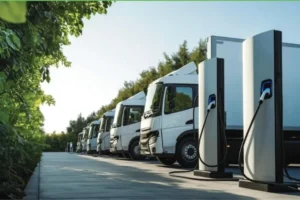
The electric vehicle (EV) revolution is accelerating, fueled by relentless innovation in battery technology and charging solutions. A significant challenge in the EV sector has been optimizing battery utilization, particularly for heavy-duty applications. Chinese giant CATL has made a breakthrough, unlocking 95% EV battery utilization with a swappable heavy-duty truck setup. This innovation is transformative for commercial logistics, allowing trucks to quickly exchange depleted battery packs for fully charged ones, drastically reducing downtime and overcoming range anxiety for long-haul operations. This model has the potential to accelerate the adoption of electric heavy-duty vehicles, which are critical for reducing emissions in the freight sector.
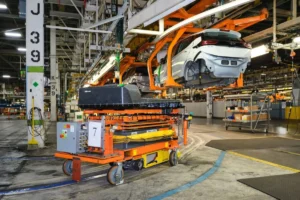
BMW is also making substantial progress, beginning production of its 6th-generation EV batteries in China. These new batteries boast a 20% higher energy density, translating to longer ranges and improved performance for future BMW electric models. Increased energy density is a continuous goal for battery developers, directly impacting vehicle utility and consumer acceptance. Concurrently, BYD, another Chinese automotive powerhouse, is pushing the envelope with its new luxury car powered by solid-state EV batteries. Solid-state batteries promise greater safety, higher energy density, and faster charging times compared to conventional lithium-ion batteries, representing a holy grail in battery research. BYD has also filed a patent for a dual-chamber battery design that submerges cells in a cooling liquid, addressing thermal management, a critical factor for battery longevity, safety, and performance, especially during rapid charging and discharge cycles.
Charging infrastructure remains a bottleneck for widespread EV adoption. Honda is exploring a radical solution by building a wireless EV charging system directly into roads, designed to power cars while driving. This "dynamic wireless charging" technology could eliminate range anxiety entirely, allowing EVs to continuously replenish their batteries on equipped highways, making long journeys seamless. While still in experimental stages, it represents a bold vision for future EV infrastructure.

On a more immediate and practical front, real-world studies are providing valuable insights into optimizing existing EV technology. Seventy-two real-world BMW trips suggest that regenerative braking can significantly spare EV battery range. Regenerative braking, which converts kinetic energy back into electrical energy during deceleration, is a standard feature in most EVs. This data-driven validation reinforces the importance of driver behavior and efficient energy recovery systems in maximizing an EV’s practical range, contributing to overall energy efficiency and reducing the frequency of charging.
Revolutionizing Ground and Maritime Freight for a Sustainable World
Beyond passenger vehicles, the freight and maritime sectors are also undergoing profound transformations aimed at enhancing efficiency and drastically cutting emissions. For land-based logistics, an innovative 30-lb trailer gadget is poised to save U.S. truckers approximately 3 gallons of diesel every 1,000 miles. This seemingly small gain translates into significant fuel cost reductions and emission savings across the vast U.S. trucking industry, highlighting how incremental technological improvements can have a massive cumulative impact. Given the millions of miles logged by commercial trucks annually, such a device could save billions of dollars and millions of tons of carbon emissions.
Rail freight is also seeing a resurgence of innovation, with self-propelled Panther railcars receiving a $100 million boost for commercial rollout. These autonomous, electric railcars from Parallel Systems promise to make rail freight more flexible and efficient, especially for "first mile" and "last mile" deliveries that traditionally rely on trucks. By operating individually or in small platoons, these railcars can directly serve facilities without extensive shunting, potentially diverting more freight from congested highways to underutilized rail networks, thus reducing fuel consumption and traffic.
The maritime industry, a significant contributor to global emissions, is exploring radical new propulsion methods. The U.S. is actively exploring nuclear-powered ships and floating reactors in a new agreement. This initiative seeks to leverage the immense power density and zero-emission operational capabilities of nuclear fission for long-distance shipping, potentially offering a solution for large cargo vessels that require sustained power over vast oceanic routes. While regulatory and safety hurdles are substantial, nuclear propulsion could be a game-changer for decarbonizing global trade.
Further cementing the push for green shipping, the world’s first major ammonia-powered bulk carrier has entered service for Australian iron ore. Ammonia, as a hydrogen carrier, offers a carbon-free fuel option that can be produced sustainably. This 210,000-ton vessel represents a monumental step in demonstrating the viability of alternative fuels for the largest ships, paving the way for wider adoption of ammonia and other green fuels in international shipping.
In a different vein of maritime innovation, China plans a giant 11,000-ton ship designed to drill into the seabed at depths of 16,400 feet (5,000 meters). This specialized deep-sea survey vessel underscores a growing global interest in oceanographic research, resource exploration, and understanding the planet’s geology. Such vessels are critical for scientific advancement, mapping ocean floors, and potentially accessing new sources of minerals or energy, representing a specialized but crucial segment of advanced transportation.
A Converging Future for Global Mobility
The flurry of innovations across all transportation modalities paints a picture of a future defined by intelligence, efficiency, and sustainability. The advancements in Advanced Air Mobility are poised to redefine personal and regional travel, but face challenges in regulatory harmonization, infrastructure development, and public acceptance. The EV sector’s rapid evolution, particularly in battery technology and charging solutions, promises cleaner ground transport, yet demands significant investment in grid upgrades and charging networks. Meanwhile, the freight and maritime industries are embracing a diverse array of solutions, from fuel-saving gadgets and autonomous rail to entirely new, carbon-free propulsion systems, to address their unique operational demands and immense environmental footprint.
The common thread weaving through these diverse developments is a relentless pursuit of solutions to complex engineering challenges, often with an overarching goal of reducing environmental impact and enhancing operational efficiency. The integration of artificial intelligence, advanced materials, and sophisticated sensor technologies is accelerating these changes, enabling safer, more reliable, and ultimately, more sustainable transportation systems. However, the path forward is not without obstacles. Regulatory frameworks must adapt quickly to emerging technologies, public infrastructure requires massive investment, and the economic viability of many nascent solutions still needs to be proven at scale.
As these innovations mature and converge, they hold the potential to create a seamlessly integrated, multi-modal transportation network that is not only faster and more convenient but also fundamentally cleaner and more resilient. The ongoing work of engineers and scientists in these fields is laying the groundwork for a future where mobility is transformed from a source of environmental concern into a pillar of sustainable global development.